
Burcum: Did outsourcing social services leave Minnesota vulnerable to fraud?

If we don’t scrutinize — and fix — systemic flaws, new bad actors will simply replace the old ones.

Columnist Icon
The Minnesota Star Tribune
January 4, 2026 at 11:00AM
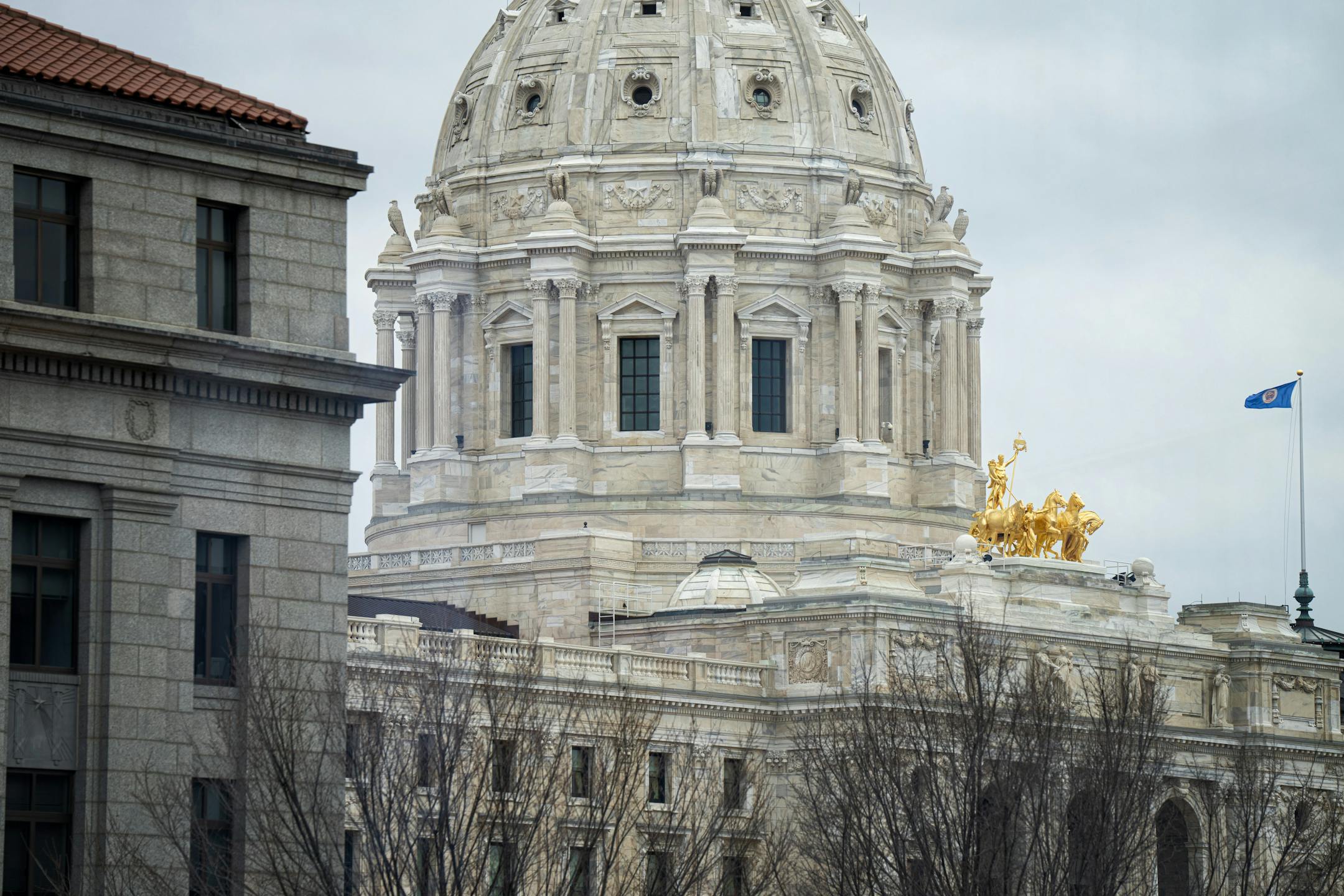
The Minnesota State Capitol. (Glen Stubbe/The Minnesota Star Tribune)

Opinion editor’s note: Strib Voices publishes a mix of commentary online and in print each day. To contribute, click here.

•••

Rarely does a press release leave me gobsmacked. But one from UCare in early 2011 did just that. Bear with me, because this distant memory is relevant to the mess Minnesota finds itself in after a viral video recently put a national spotlight on social services fraud here.

UCare is a well-known health insurer, one whose finances drastically changed for the worse recently. But 15 years ago, it was so flush that it announced a voluntary $30 million “donation” to Minnesota’s public coffers. The intentions were good: to offset state government budget struggles at that time.

The insurer’s leaders expected a hearty thanks. What they got instead was a public-relations nightmare, not just for UCare but the rest of the state’s nonprofit insurers.

The reason: The insurers ranked then and still do among the state government’s largest vendors. The state outsources the administration of much of its Medical Assistance (MA) program to private health plans. MA covers health care for the needy, disabled and elderly.

UCare’s donation raised understandable questions. Was the state overpaying UCare for this? By extension, was the same true about the other insurers? If so, where were the “donations” from the others?

A state-commissioned report would later confirm that the plans’ profit margins from this publicly funded line of business exceeded targeted margins from 2002 to 2011. The excess paid by the state amounted to $207 million.

As I wrote about this at the time, I often used the term “autopilot” because few staffers at the state Department of Human Services (DHS) seemed to be monitoring, or care, whether the profit margins had been exceeded. The state just continued overpaying until UCare’s move drew scrutiny.

So here’s why I’ve been thinking about the UCare donation after influencer Nick Shirley’s video, which generated far more heat than light.

Much of the conversation in its wake has understandably focused on who’s to blame for the fraud found across various state assistance programs. Accountability is indeed critical and those who engaged in fraud or neglected their professional duties to find it should face serious consequences. But the “heads-should-roll” response is only a partial solution.

A deeper question is whether these fraud issues, or the kind of waste identified in the UCare episode, stem from structural design challenges, including Minnesota’s decadeslong shift toward outsourcing social services to private organizations. High-profile cases like Feeding Our Future and housing stabilization providers illustrate how outside contractors, in programs intended to help vulnerable populations, can become points of failure if oversight lags.

While this line of inquiry isn’t likely to instantly generate millions of social media clicks like the Shirley video, it’s a nuts-and-bolts issue that requires serious examination by the state’s lawmakers. If we don’t tackle all of the fraud’s upstream causes, and the system remains vulnerable, new fraudsters will simply replace the old ones.

Delivering social services via this model is nothing new nor unique to Minnesota. But the state was a comparatively early and enthusiastic adopter. The reasons were legit. Among them, promises of private-sector efficiency over traditional government administration. That many contractors would be nonprofits or run by members of the particular community the dollars were intended to help add to the allure.

The inherent problem with this approach is one that Minnesota’s former Republican Gov. Arne Carlson summed up succinctly in a recent interview.

“The more distance there is from the source of the money to the eventual user, the more challenging it is to manage it,” said Carlson, who served as state auditor before serving as governor from 1991 to 1999.

Preventing fraud under this model requires investment in oversight staff and technology as well as a culture shift in state government. It’s unclear at best whether those investments kept pace in Minnesota. Or whether the necessary mission shift took place at agencies like DHS, shifts needed to aggressively police a privatized delivery network. The same question applies to state lawmakers, whose duties include financial oversight.

I remember being frustrated in 2011 after I started asking questions about UCare’s donation. I was flummoxed by the deference shown to health plans by DHS’ leadership and by lawmakers of both parties though substantive reforms followed.

Minnesota’s long tradition of social services generosity and innovation likely compounded this delivery model’s vulnerabilities. State lawmakers, with good intentions, have layered on additional services, putting more money into the system. One of them: the housing stabilization program launched in 2020.

A web of outside businesses and individuals, many clustered in the same St. Paul low-rent office building, quickly developed to exploit the new housing program. Annual costs rose from initial estimates of $2.6 million to an eye-watering $104 million in 2024. Yet the program continued, seemingly on autopilot, until bravura journalism by KARE-11’s A.J. Lagoe spotlighted outside organizations billing the program for millions in dubious services or services not rendered at all.

The state terminated the program in late October, noting “widespread fraud.”

Carlson served as Minnesota’s governor for two terms. Reforming government to reduce waste and cost and to improve efficiency was one of his signature policies.

It’s not a glamorous issue. It’s a lot of work and rarely ignites the public’s passion. But as Carlson reminded me, it is an essential, ongoing obligation for officeholders.

That’s always good advice, but especially relevant right now with fraud allegations at hurricane force here. I asked Carlson if he had any advice for the beleaguered state.

His first recommendation was a newsy one: “You gotta stop the bleeding. The first thing is for Gov. Walz to announce that he is not running for re-election. So let’s get rid of that political piece right now. And then agree to focus on what it is that has to be done to restore Minnesota.”

Carlson’s other key recommendations involved tapping leaders from the state’s world-class businesses to serve as advisers, or even as executives on loan to assist agencies like DHS.

Carlson also lamented the role that wealthy political lobbies have in shaping legislation at the state and federal levels, with accompanying reforms necessary.

Involving the business community and analyzing whether the pendulum has swung too far toward outsourcing social services won’t trend on TikTok. It won’t satisfy those looking for easy villains.

But heavy lifting like this is urgent to ensure that programs meant to help the most vulnerable Minnesotans don’t instead fill future fraudsters’ pockets.

about the writer

about the writer

Jill Burcum

Editorial Columnist

See Moreicon