Vang: This Hmong family is one of many being torn apart by Trump’s deportation chaos

The children of deportees are often the ones who shoulder the burden while grappling with the trauma of being separated from a parent.

Columnist Icon
The Minnesota Star Tribune
August 25, 2025 at 11:00AM
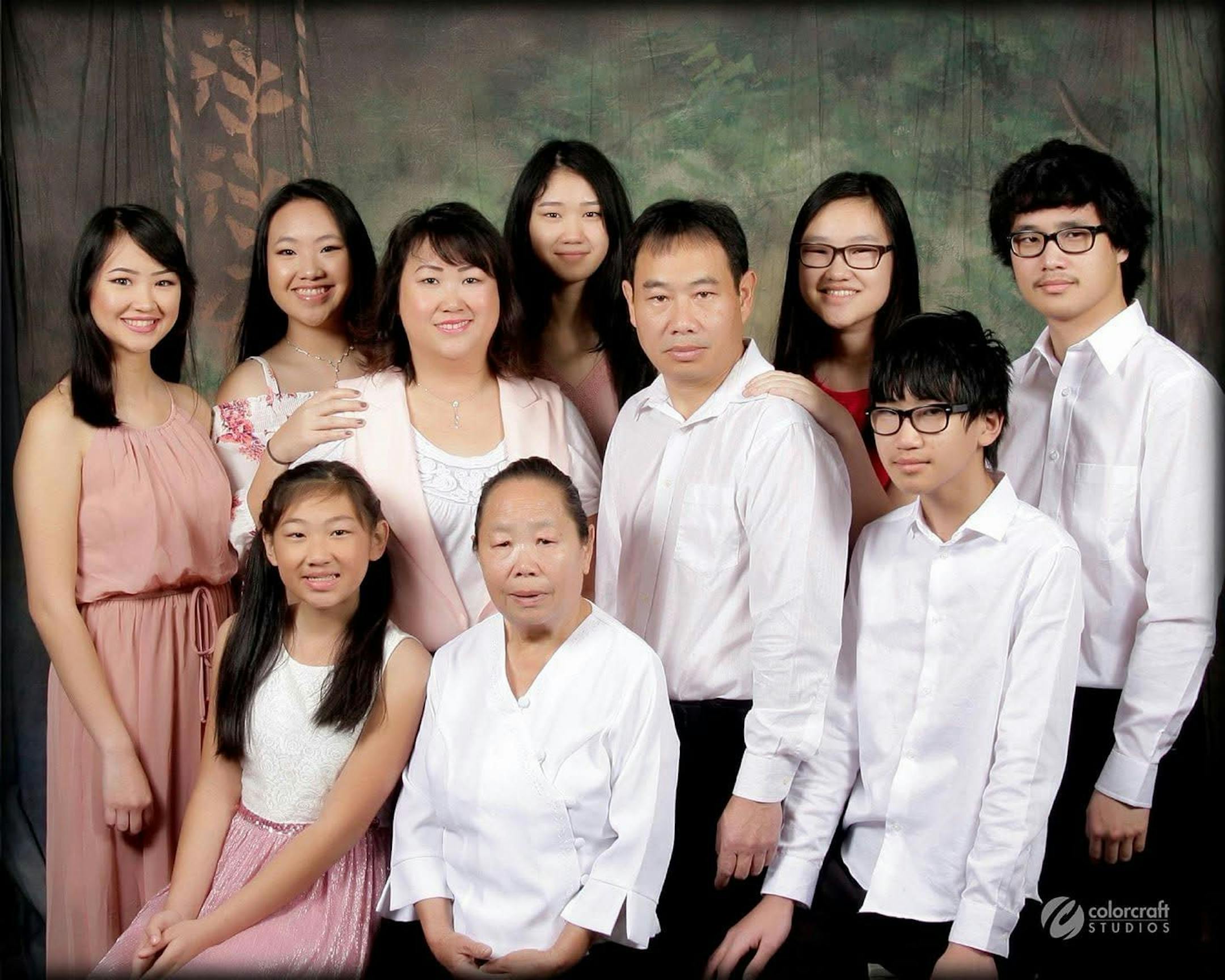
"The lives of Sheena and her siblings — ranging in age from 19 to 28 — have been split apart. Her two brothers who were living with their father have now moved to Texas to live with an aunt. Others remain in Oklahoma. Their 76-year-old grandmother, now separated from the son who has cared for her daily needs, calls Sheena every day in tears," Ka Vang writes. (Provided by Sheena Vang)

Opinion editor’s note: Strib Voices publishes a mix of material from 11 contributing columnists, along with other commentary online and in print each day. To contribute, click here.

•••

When Sheena Vang turned 27, she expected her biggest worries would be running her nail salon or helping younger siblings navigate school and first jobs. She didn’t expect to become the emotional anchor for six brothers and sisters, an ailing grandmother and a father detained by Immigration and Customs Enforcement (ICE).

But this is her reality.

This is not the life she imagined. It is the life handed to her by a system that treats Hmong families as collateral damage in the Trump administration’s relentless pursuit of deportation.

Sheena grew up in Milwaukee and later moved to Tulsa, Okla. Her father, Chao, was detained and is now awaiting deportation to Laos — a country he hasn’t known since childhood.

He fled the war in Laos, survived years in a refugee camp, sought asylum in France and eventually built a life in the U.S. She said he has no criminal record and no history of violence. His “crime” is overstaying a visa three decades ago.

When Sheena drove her father to his ICE check-in appointment in Oklahoma City last June, she thought it would be like every other year. He had been allowed to stay for decades under supervision, a fragile but stable arrangement that let him raise a family and contribute to his church as a deacon.

But that day, the ICE officers didn’t let him leave. Sheena was the last to see him. A guard later walked out and handed her father’s bank cards to her. That was when she broke down.

“It wasn’t until that moment it became real,” she told me. “I just started crying.”

Now her father sits in the Alexandria Staging Facility in Louisiana, a grim place that doubles as a jail and a deportation airport. It has become one of President Donald Trump’s main hubs for deportation flights. Deportees cycle through this rural airstrip, often with little communication allowed with their families.

The human cost of the current deportation policies is borne most heavily by the children left behind. That is why I interviewed Sheena — because the voices of the family harmed by Trump’s unjust policies have been largely absent from the public conversation.

The lives of Sheena and her siblings — ranging in age from 19 to 28 — have been split apart. Her two brothers who were living with their father have now moved to Texas to live with an aunt. Others remain in Oklahoma. Their 76-year-old grandmother, now separated from the son who has cared for her daily needs, calls Sheena every day in tears.

“Our family was always close,” she said. “We’ve never been more than 30 minutes away from each other. Now we’re scattered.”

There is no counseling offered by ICE, no family support services, no acknowledgment of the emotional trauma caused by these separations. The government simply detains and deports, leaving children like Sheena scrambling to hold together what remains. “It’s overwhelming,” she admitted. “Everyone is relying on me.”

Alyssa Kaying Vang, a psychologist in Woodbury, described Sheena’s experience as “ambiguous loss” — a type of grief that is confusing, unresolved and impossible to fully close. In this heartbreak, the loved one is physically gone, yet continues to inhabit every thought, every memory, every corner of the heart. It’s a pain that lingers in the quiet moments.

The Trump administration has justified the separation of families and these deportations under the banner of “law and order.” But law without justice is cruelty. Deporting elders who fled war as children, who have built decades of life here and who pose no danger to society, is not about security. It is about punishment and fear.

The Hmong community knows this story too well. During the Vietnam War and the Secret War in Laos, the U.S. recruited Hmong men and boys as allies. Many risked and lost their lives fighting for America’s interests. Decades later, their children and grandchildren are still paying the price — treated as disposable, their loyalty forgotten.

From the stories shared on Hmong social media, and from the conversations I heard at Hmong festivals this summer, I must proclaim this truth: The Hmong people in America are living under a cloud of collective trauma.

Across the country, Hmong families live with the constant threat of a knock on the door, an ICE check-in that turns into permanent separation. Children are growing up with anxiety, fearing their parents will disappear. Families fracture. Grandmothers grieve. And communities, already marginalized, are further destabilized.

“It’s one of those things you don’t know what to do or how to respond unless it happens to you or someone you know,” said Sheena. “It was so shocking.”

Minnesota knows this story, too. With the largest urban Hmong population in the U.S., our state is home to tens of thousands of families who carry the same refugee history as Chao Vang. Deportation flights from Louisiana don’t just disrupt families in Oklahoma — they reverberate through Hmong neighborhoods in St. Paul, Brooklyn Center and across the Twin Cities.

Alyssa Kaying Vang offered this guidance on how individuals — and the Hmong community as a whole — can begin to heal from deportation anguish and grief. She emphasized starting by naming our feelings, then exploring personal methods to relieve the pain, whether through conversation, exercise, or even massage, ultimately moving toward a sense of peace.

“Our body keeps the story,” she explained, describing the profound ways ambiguous trauma can be held within us.

When I asked Sheena what she wanted readers to know about her father, she didn’t hesitate: “He is 100% a good person and a genuine person. He went through so much trauma in refugee camps, but he never let it define him. He tried to fix what he missed from his own father by giving us love. He raised us to succeed in school. He gave us the American dream.”

Her words remind us of the human cost of policies made in faraway Washington offices. Deportation is not just a line in a political speech. It is a 27-year-old woman crying in her car outside an ICE office. It is a grandmother calling every day, desperate to hear her son’s voice. It is a family scattered, a community wounded, and children who carry scars that may never heal.

Chao Vang deserves better. The Hmong community deserves better. And America can do better so families like this one are not torn apart.

about the writer

about the writer

Ka Vang

Contributing Columnist

Ka Vang is a contributing columnist for the Minnesota Star Tribune. She focuses on historically marginalized communities.

See Moreicon

More from Contributing Columnists

See More
card image
Jeff Wheeler/The Minnesota Star Tribune

The loss of more than a billion dollars that’s occurred on the governor’s watch makes him unfit for further service to the state.

card image