
University of Minnesota starts Midlife Academy for older adults seeking next chapter, new connections

Similar programs for retirees and seniors are offered by Harvard University, the University of Notre Dame and others.

The Minnesota Star Tribune
August 31, 2025 at 11:00AM
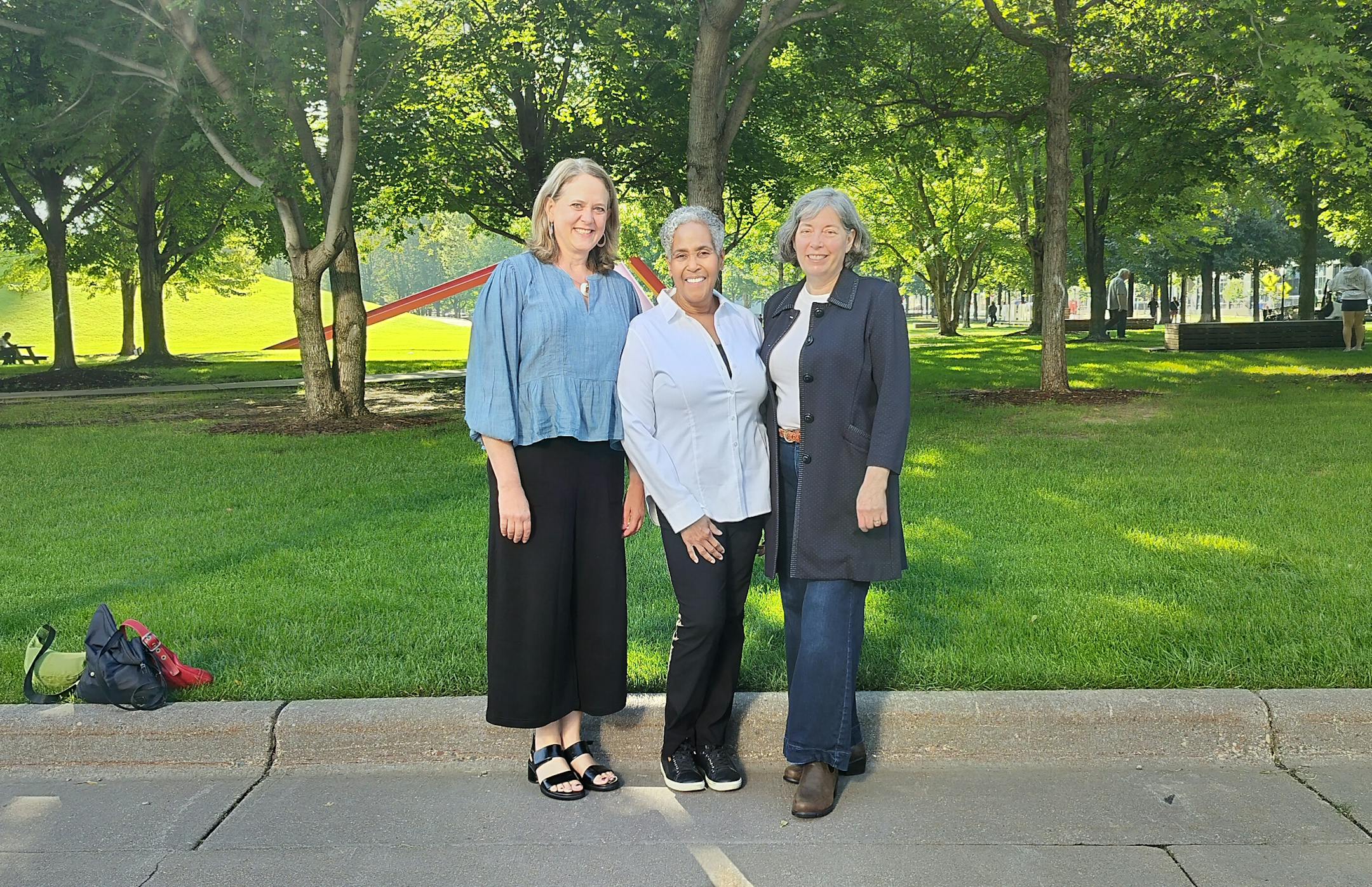
From left, Megan Voorhees, Courtney Burton and Kate Schaefers stand for a portrait on Thursday, Aug. 28, 2025. Schaefers is the University of Minnesota’s new Midlife Academy program director. Voorhees and Burton are teachers, or facilitators, of the fall and winter classes, respectively. (Erin Adler/The Minnesota Star Tribune)

A new University of Minnesota initiative aims to help middle-aged people imagine the next chapters of their lives, part of a national trend that’s sending older folks back to college campuses.

The Midlife Academy’s first class begins Wednesday. The program provides a structured way for people in middle age and beyond — an age range the U doesn’t formally define — to determine their purpose through reading, journaling and other hands-on assignments, accompanied by others looking for the same thing.

Think of it as a weekly retreat, said class instructor Megan Voorhees.

The eight-week, noncredit class meets at Coffman Memorial Union on the U’s East Bank once a week and costs $1,200; so far, 16 people, mostly women, have signed up.

People are living and working longer these days, said Kate Schaefers, the program’s director, and may not want or need a conventional retirement.

“What we’re finding is people need help navigating those transitions to get on paths that make sense for how they’re living their lives now,” Schaefers said. “They’re also wanting to look ahead for what’s next.”

Across the country, institutions, including Harvard University, Stanford University and the University of Notre Dame, have pioneered more formal programs with the same goal. There are now about 10 schools with such efforts, including the U.

Many programs involve retirees moving on or near campus and taking classes with undergraduates for nine months for the same price traditional students pay, though scholarships are available, said Tom Schreier, who founded and teaches at Notre Dame’s “Inspired Leadership Initiative”. About 100 “fellows” have gone through the program since its launch in 2017.

“We love the fact that institutions are taking different approaches,” Schreier said. “People find these programs to be extremely useful.”

The U’s Midlife Academy had planned to start last spring but not enough students registered, so the program retooled for fall. It offers “shorter bites” than programs at some other universities, Schaefers said, and is more affordable.

“We’re just trying to figure out with working professionals what approach is going to make the most sense for them,” she said. “They’re pressed for time.”

Seeking a purpose

The first class, called “Cultivating Purpose,” will be offered in-person this fall and repeated in the winter online. A second class — “Next Chapter Reset: Creating Momentum” — will be added online in the spring.

Students in the “Cultivating Purpose” class will learn from each other, so the smaller size is ideal, Voorhees said.

Many people today work with coaches to meet various individual goals, but there’s value in being part of a group, she said.

“It’s a community experience,” Voorhees said. “My goal is for every Wednesday to feel like a mini retreat.”

Voorhees, previously a program director and teacher for a social entrepreneurship program at the U’s Institute on the Environment, said today’s college-educated adults are living longer, some to more than 100 years old.

“That research really hit me,” said Voorhees, who is 55. “We also know the research suggests that we’ll live healthier, both mentally and physically, lives if we do have purpose and something that’s really giving life meaning.”

Every week will have a theme, such as choosing a perspective, the importance of social connections and life transitions. Student will have to complete three weekly assignments: taking a daily 10-minute “pause,” writing reflections in a journal and finishing an action activity. That action could include connecting with people who are living the life they want or volunteering at a place they might want to work, she said.

Voorhees said women who have been in caregiving roles may be especially apt to seek out a class like this.

Finding purpose is one of the reasons Julie Fulton enrolled in the U program, drawn to its academic underpinnings.

Fulton, 59, still works full-time as a writer, but she’s been trying to figure out her plans since her husband died 18 months ago. At other crossroads in life, like finishing high school or college, she said, there’s an expected path forward with incentives along the way.

“Then midlife, you’re at this ladder and there’s no really clear-cut thing that’s next,” said Fulton, who lives in southwest Minneapolis. “It’s vast and it’s scary.”

‘The value of having a cohort’

People who have enrolled in the class have said they’re seeking the opportunity, in part, to build community and make new friends.

Becky Pearson, 64, said she’s kept busy since her retirement from Wells Fargo almost five years ago. She’s traveled and volunteered as a tutor through AmeriCorps. Pearson also takes classes with the U’s Osher Lifelong Learning Institute, which offers a variety of classes to people aged 50 or older for a yearly fee.

But retirement “was more challenging than she thought it would be” so she signed up for Voorhees’ class.

“I’m a big, big believer in the value of having a cohort,” Pearson said, adding that she wants to develop new relationships.

She also hopes the class will help her formulate a plan for the rest of her life.

Lynette Kroll, 51, initially hired a life coach to help her with diet and exercise, and is now working with her on “life stuff” as well. With her youngest child a senior in college, she wants to figure out what “the next iteration of me” looks like.

She said calls her future self “Lynette 2.0.”

Kroll, an IT consultant from Blaine who works 30 hours per week, said people have commented on how great her life seems.

“And I’m like, ‘Yes, it is,’” she said. “But it just feels like there should be more to it.”

about the writer

about the writer

Erin Adler

Reporter

Erin Adler is a news reporter covering higher education in Minnesota. She previously covered south metro suburban news, K-12 education and Carver County for the Minnesota Star Tribune.

See Moreicon