
Advertisement

U.S. Bancorp: Checking change ahead

Like its rivals, the bank will alter the sorts of checking accounts it offers and may raise the fees it charges in a move to recoup lost income.

January 20, 2011 at 5:26AM
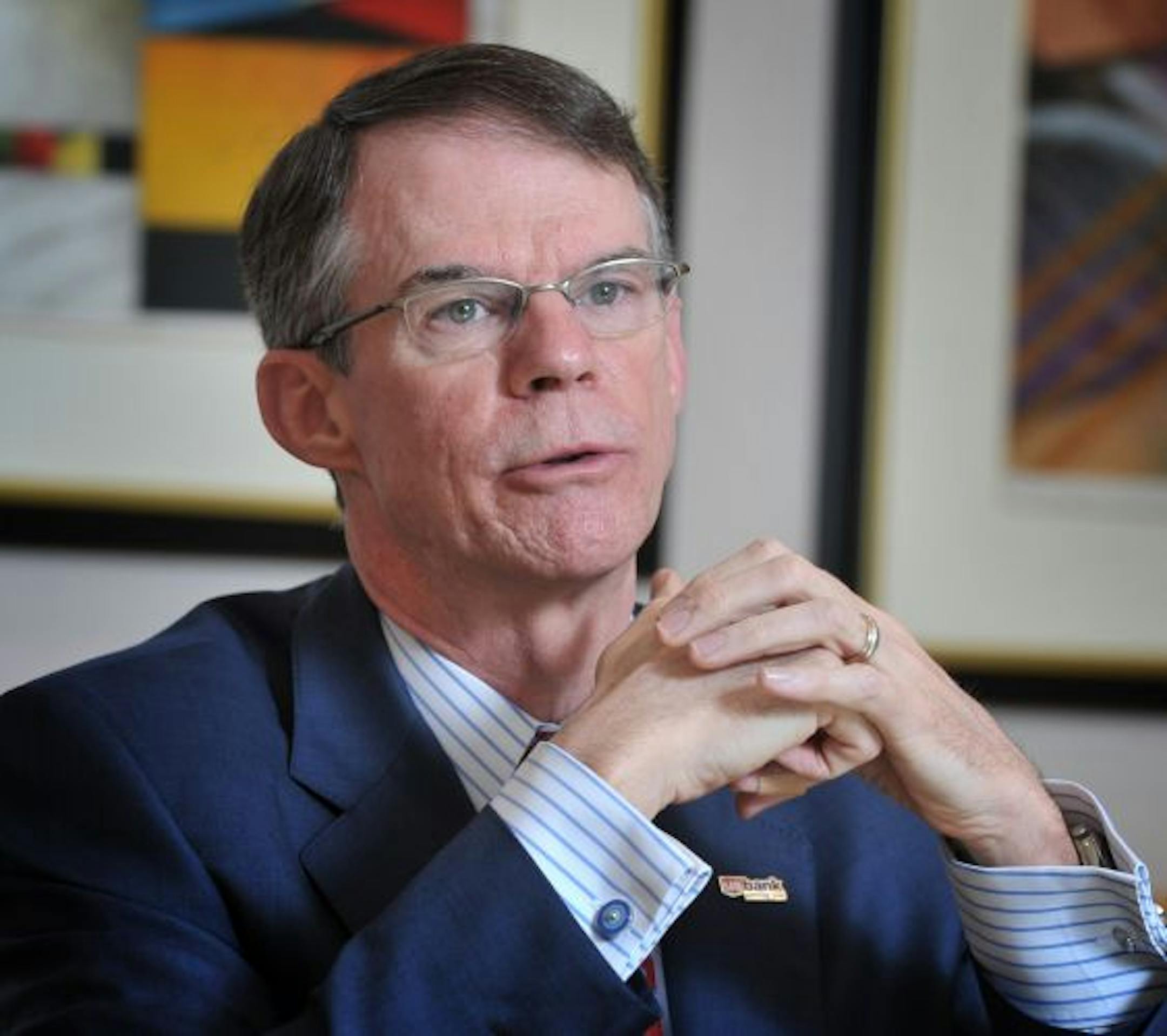
Richard
Davis
Richard Davis (Star Tribune/The Minnesota Star Tribune)
Advertisement

U.S. Bancorp customers will soon get an array of new checking account choices -- and possibly higher fees -- as the bank looks to recoup hundreds of millions of dollars in revenue lost to strict new regulatory limits on bank fees.

The Minneapolis-based bank's decision to overhaul its checking-account offerings -- disclosed Wednesday in a conference call with analysts -- comes as something of a surprise. Less than three months ago, Chief Executive Officer Richard Davis said the bank was performing so well that it had "the luxury of waiting" as its big-bank rivals tried to figure out how to adjust to new regulations.

But regulatory changes will take a much bigger bite out of banks' fee income than many industry experts had expected, prompting banks to scramble for new sources of revenue.

In December, the Federal Reserve proposed capping the so-called "swipe" or "interchange" fees that banks collect from retailers each time someone swipes a debit card. The proposed limit of 12 cents per transaction is far below the current average of 44 cents. And under a new rule that went into effect in July, banks must get permission from account holders before providing overdraft services -- a change that will dramatically curtail banks' overdraft income.

U.S. Bancorp estimates that, taken together, the new limits on debit-card and overdraft fees will slash its fee income by more than $800 million a year, which amounts to about 75 percent of the bank's credit- and debit-card revenue. "We no longer have the luxury of waiting, not for our shareholders anyway," Davis said.

The bank said Wednesday it is now seeking to recoup about half of that lost income by the end of the year through a combination of account and fee changes. Among other changes, the bank will introduce a monthly fee for checking account customers who do not maintain certain minimum balances. It also will reduce or eliminate reward programs on its debit cards. Currently, U.S. Bancorp offers perks such as cash rewards of 1 percent on purchases made with certain Visa debit cards.

U.S. Bancorp is hardly alone in making changes. Starting last summer, a bevy of big banks, including Wells Fargo & Co., Bank of America and J.P. Morgan Chase, introduced monthly fees on accounts that previously had none. Banks also began hiking charges for basic services, like wire transfers and printouts of recent transactions.

Both Wells Fargo and J.P. Morgan have also announced plans to increase their overdraft protection transfer fee, charged when money is moved from one account to another to cover an overdrawn account.
Advertisement

"All of these changes will be a bill that will be ultimately charged to the consumer," said Greg McBride, a senior financial analyst at Bankrate.com. "It's an unintended consequence of the regulatory changes."

But the new limits on fees could affect more than just the structure of checking accounts. Wednesday, U.S. Bancorp executives suggested the changes could also affect where and how the bank decides to expand its branch network. With fee income constrained, branches in supermarkets, airports and universities -- which turn a profit more quickly than traditional, stand-alone locations -- will begin to look more attractive, executives said.

Andrew Cecere, chief financial officer at U.S. Bancorp, said the bank is not closing any branches but may look to open fewer of the traditional, larger branches on street corners. "The mix may change," he said.

For now, the bank is in a better position than the rest of the industry to experiment, analysts say. Wednesday, U.S. Bancorp reported fourth-quarter earnings that rose sharply to beat Wall Street estimates, on strong consumer loan growth and lower provisions for loan losses. The bank has made a profit in every quarter since the financial crisis began.

The bank, Minnesota's second-largest by deposits, said net income rose 62 percent to $974 million, or 49 cents a share. Analysts, on average, forecast profit of 47 cents.

"We are larger and stronger than we were at the beginning of this year and continue to gain momentum during this economic cycle," Davis said in a written statement.

Advertisement

Like many of its rivals, the bank was able to set aside less money to cover future loan losses. U.S. Bancorp set aside $912 million for credit losses, down 34 percent from $1.39 billion a year earlier.

U.S. Bancorp also reported the strongest loan growth in nearly three years, though commercial loan activity remains tepid. The bank's total loans increased 1.5 percent over a year ago to $185.4 billion.

It was the latest in a string of strong earnings from the nation's largest banks. Also on Wednesday, Wells Fargo said fourth-quarter profits rose 21 percent to $3.41 billion, or 61 cents a share. Like U.S. Bancorp, Wells Fargo reported stronger loan volumes and a dramatic reduction in provisions for bad loans. Both Citigroup and J.P. Morgan also reported stronger profits from a year earlier.

However, disappointing results from Goldman Sachs Group sent shares of many large financial companies downward Wednesday. U.S. Bancorp fell 79 cents, or 2.9 percent, to $26.52 a share. Wells Fargo fell 68 cents, or 2.1 percent, to $31.81 cents a share.

Chris Serres • 612-673-4308

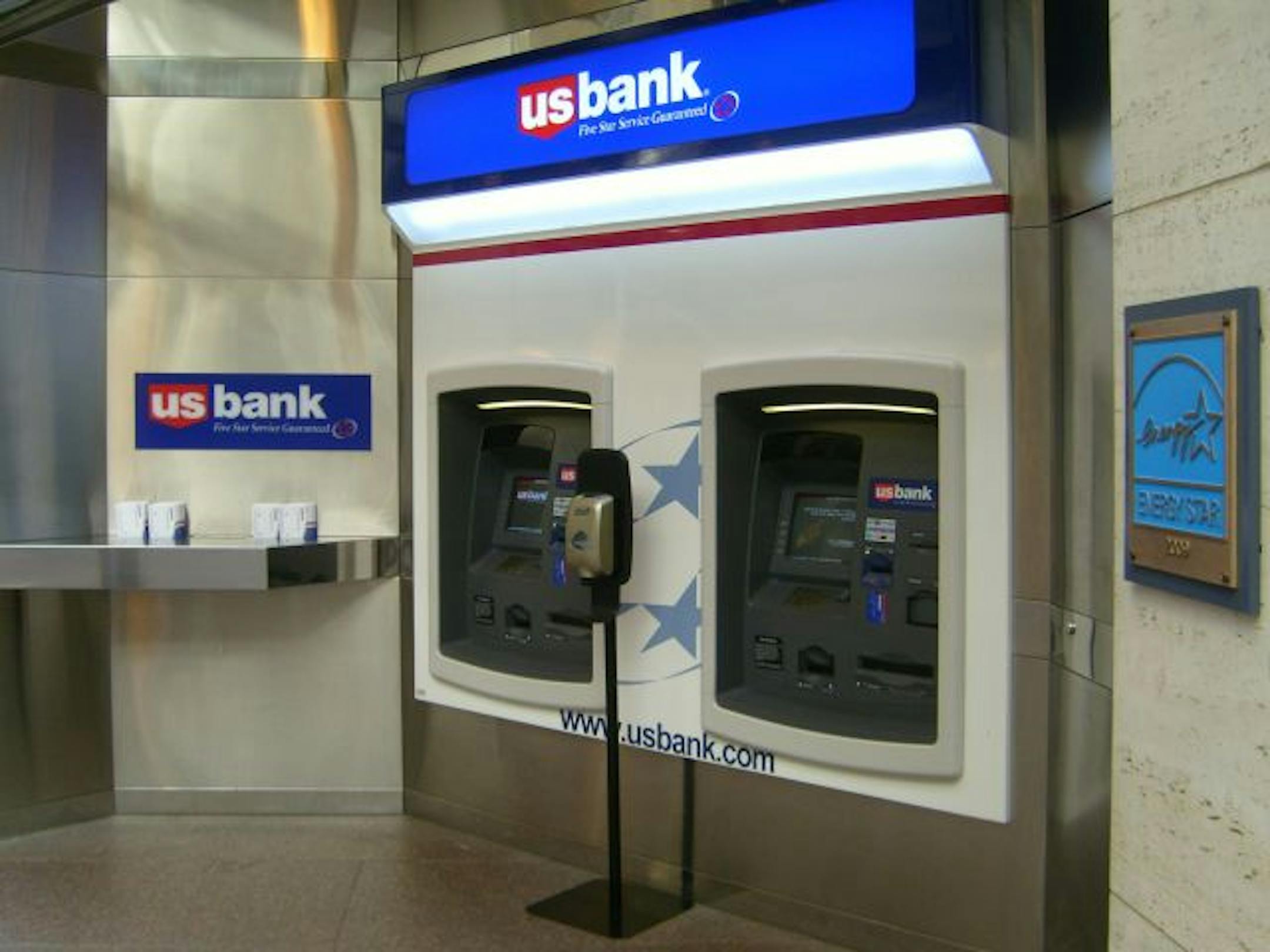
U.S. Bancorp estimates new limits on debit-card and overdraft fees will slash fee income at least $800M a year.
U.S. Bancorp estimates new limits on debit-card and overdraft fees will slash fee income at least $800M a year. (Star Tribune/The Minnesota Star Tribune)
about the writer

about the writer

Chris Serres

Reporter

Chris Serres is a staff writer for the Star Tribune who covers social services.

See Moreicon

More from Business

See More
Cirrus Vision SF 50. Photo credit: Cirrus Aircraft Corp.
card image
Advertisement