Editor's Pick

Editor's Pick

Trump officials discussed sending elite Army division to Portland, text messages show

A high-ranking White House official was indiscreetly texting about the Portland, Ore., planning last weekend, according to messages shared with the Minnesota Star Tribune.

The Minnesota Star Tribune
October 3, 2025 at 11:59PM
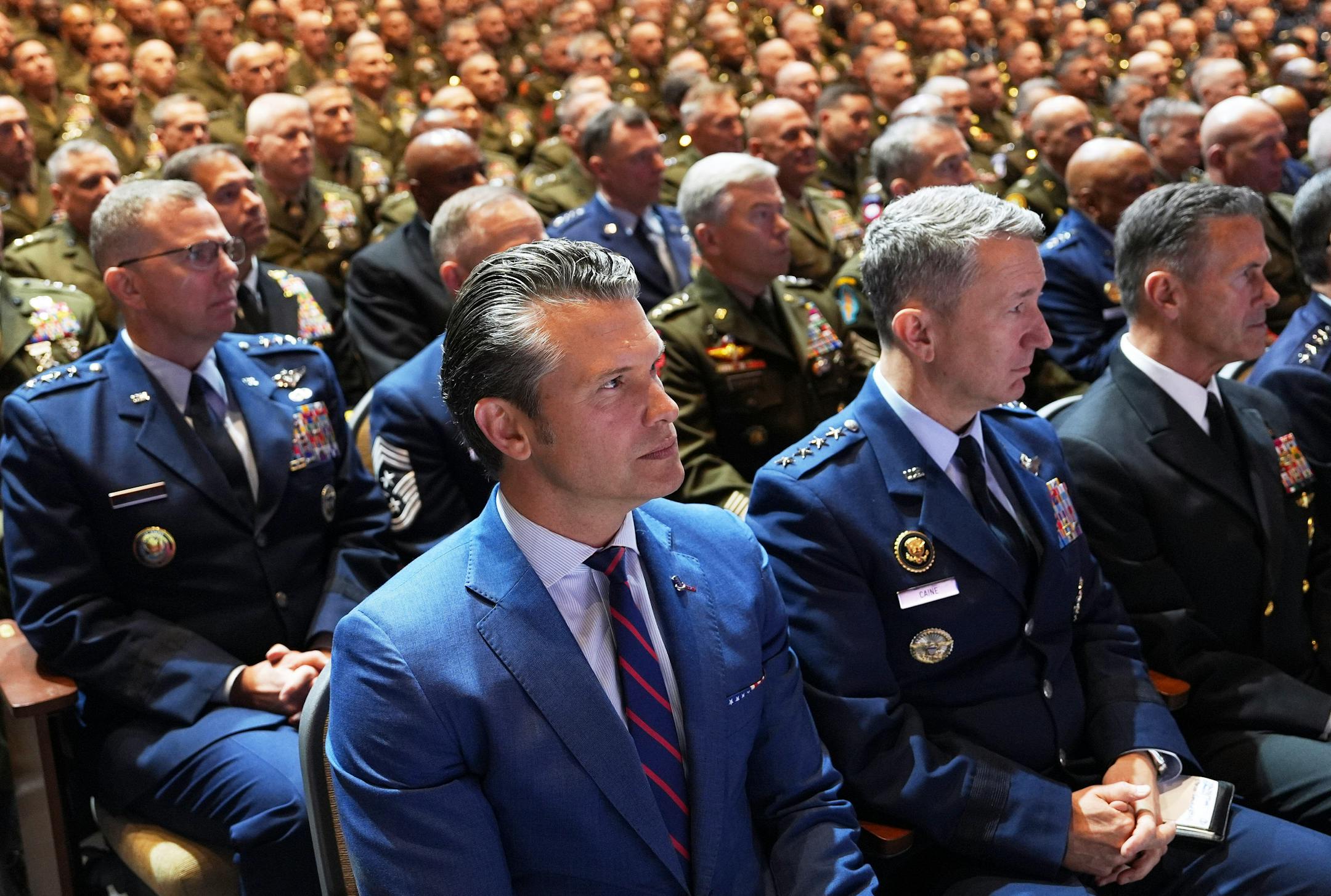
Defense Secretary Pete Hegseth, center, with U.S. military senior leadership as they listen to President Donald Trump at Marine Corps Base Quantico in Quantico, Va., on Tuesday. (Evan Vucci/The Associated Press)

Secretary of Defense Pete Hegseth considered sending an elite U.S. Army strike force to Portland, Ore., to quell protests that President Donald Trump has characterized as “lawless mayhem,” according to images of messages provided to the Minnesota Star Tribune.

The messages, casually exchanged last weekend in a crowded, public space, show high-level officials in the Trump administration discussing the deployment of the Army’s 82nd Airborne, an infantry division that has been deployed to combat zones in both world wars, Vietnam and Afghanistan. If the administration were to send in the Army division, it would almost certainly be challenged in court under federal laws limiting how the military can be used domestically.

The Trump administration ordered National Guard troops — not the 82nd Airborne — to Portland this week. The messages suggest that the once-extraordinary step of sending military troops into an American city has been normalized within the administration, the subject of a chat in a public place.

Anthony Salisbury, a deputy to White House top policy adviser Stephen Miller, sent the texts over the private messaging app Signal while traveling in Minnesota and in clear view of others. Troubled by seeing sensitive military planning discussed so openly, a source contacted the Star Tribune and allowed a reporter to review images of the texts.
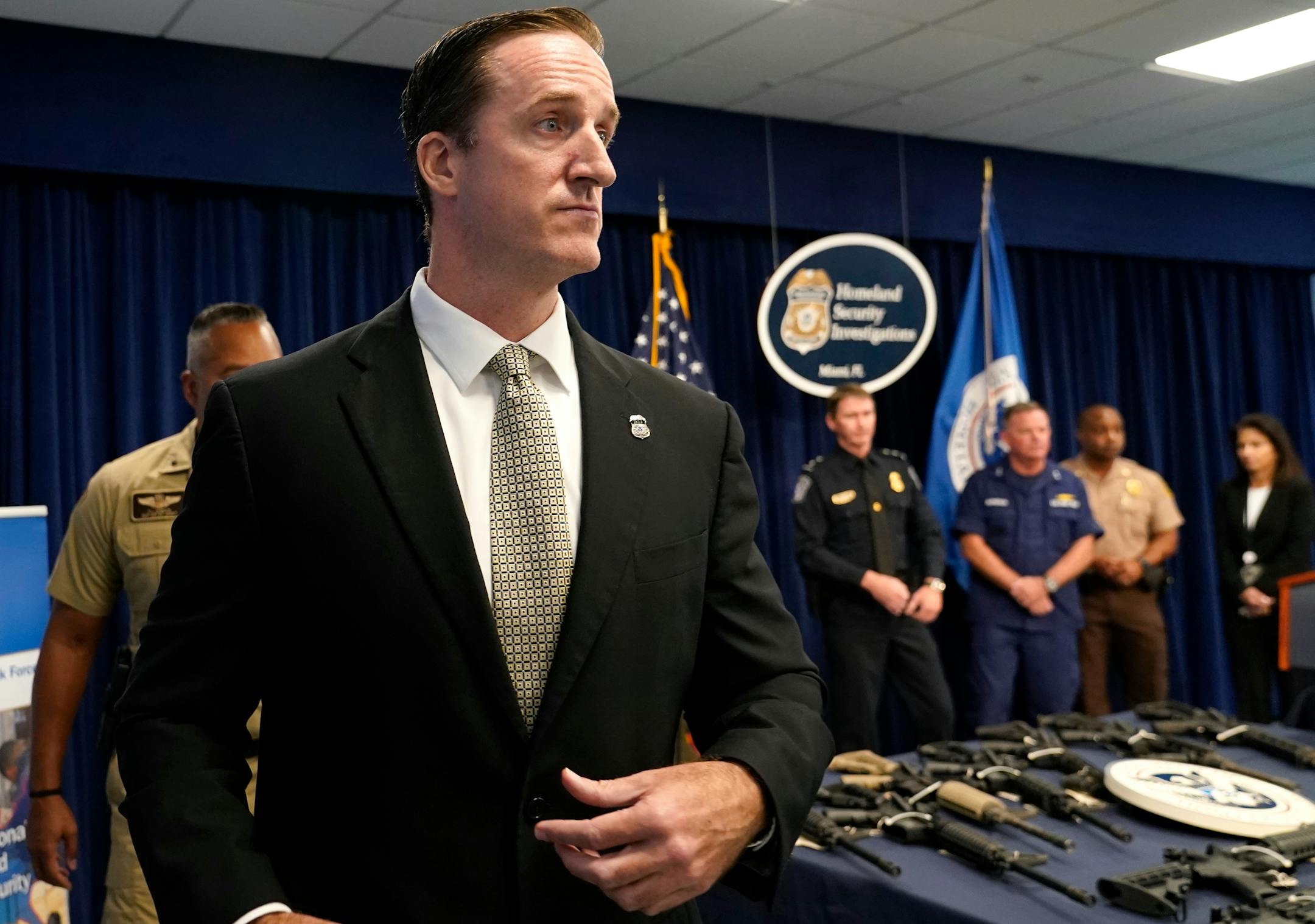
Anthony Salisbury, seen in 2022 when he was special agent in charge of Homeland Security Investigations Miami, is now deputy Homeland Security adviser on the White House Homeland Security Council. (Lynne Sladky)

Over the course of several conversations, totaling dozens of messages, Salisbury chatted candidly, and at times profanely, about a wide range of matters with Hegseth’s adviser Patrick Weaver and other high-ranking federal officials.

According to Weaver, Hegseth wanted Trump to expressly tell him to send troops into the American city.

“Between you and I, I think Pete just wants the top cover from the boss if anything goes sideways with the troops there,” Weaver wrote.

He acknowledged the potential political ramification of deploying Army troops to a U.S. city. Hegseth preferred to send the National Guard, he wrote.

“82nd is like our top tier [quick reaction force] for abroad. So it will cause a lot of headlines,” he added. “Probably why he wants potus to tell him to do it.”

Hegseth deployed 200 National Guard troops into Portland on Sept. 28. The state of Oregon and the city of Portland have sued to stop the deployment. Trump has publicly called Portland “war ravaged,” and he said the troops were needed to protect the city and ICE facilities from groups he recently designated “domestic terrorists.”

The source shared the images on the condition of anonymity for fear of retribution. The Star Tribune agreed not to disclose the exact time, location or other details of the chats.

The individual confirmed Salisbury was the one sending the messages after reviewing photographs and video of him. The Star Tribune used facial recognition technology to confirm Salisbury’s identity and took additional steps to verify the authenticity of the messages.

Abigail Jackson, a White House spokeswoman, did not respond to questions about the messages.

She said Salisbury was in Minnesota to serve as a pallbearer at his uncle’s funeral.

“Despite dealing with grief from the loss of a family member, Tony continued his important work on behalf of the American people,” Jackson said in a written statement. “Nothing in these private conversations, that are shamefully being reported on by morally bankrupt reporters, is new or classified information.”

Defense Department officials also did not answer questions for this report but said the messages show officials were “working around the clock.” A spokesman criticized the Star Tribune for denying requests to view the images or transcripts of the messages.

“The Department of War is a planning organization and does not speculate on potential future operations,” Sean Parnell, a Pentagon spokesman, said in a statement. “The Department is continuously working with other agency partners to protect federal assets and personnel and to keep American communities safe.”

Earlier this year, Democrats in Washington lambasted Hegseth for being reckless with military intelligence after he coordinated an operation in Yemen on a Signal group chat that inadvertently included a journalist from the Atlantic magazine.

Politico later reported that former National Security Adviser Mike Waltz routinely used the chat app to coordinate government policy in foreign countries, again raising questions about whether administration officials are following protocols meant to safeguard information.

The messages also offer a rare glimpse of high-ranking government officials chatting about a range of other topics. Salisbury’s messages with a close-knit circle of security officials discussed border patrol operations in Chicago, the need to reinstate an ICE agent who had been fired for throwing a woman to the ground in New York City and internal politics.

Several exchanges included information that has since played out publicly, including a planned mass arrest of suspected Tren de Aragua gang members in Chicago.

Salisbury wrote that Vice President JD Vance wanted to pursue criminal cases against two Florida influencers who were “preaching violence” on social media. The messages did not specify the identities of the pair and said prosecutors had declined one of the cases.

In a separate exchange, Salisbury celebrated FBI Director Kash Patel’s decision to fire several agents who were photographed kneeling during a 2020 protest. He suggested Trump would approve of the action, then insulted Patel.

“This is how Kash survives,” Salisbury wrote. “He will do this stuff for the man but day to day giant douche canoe.”

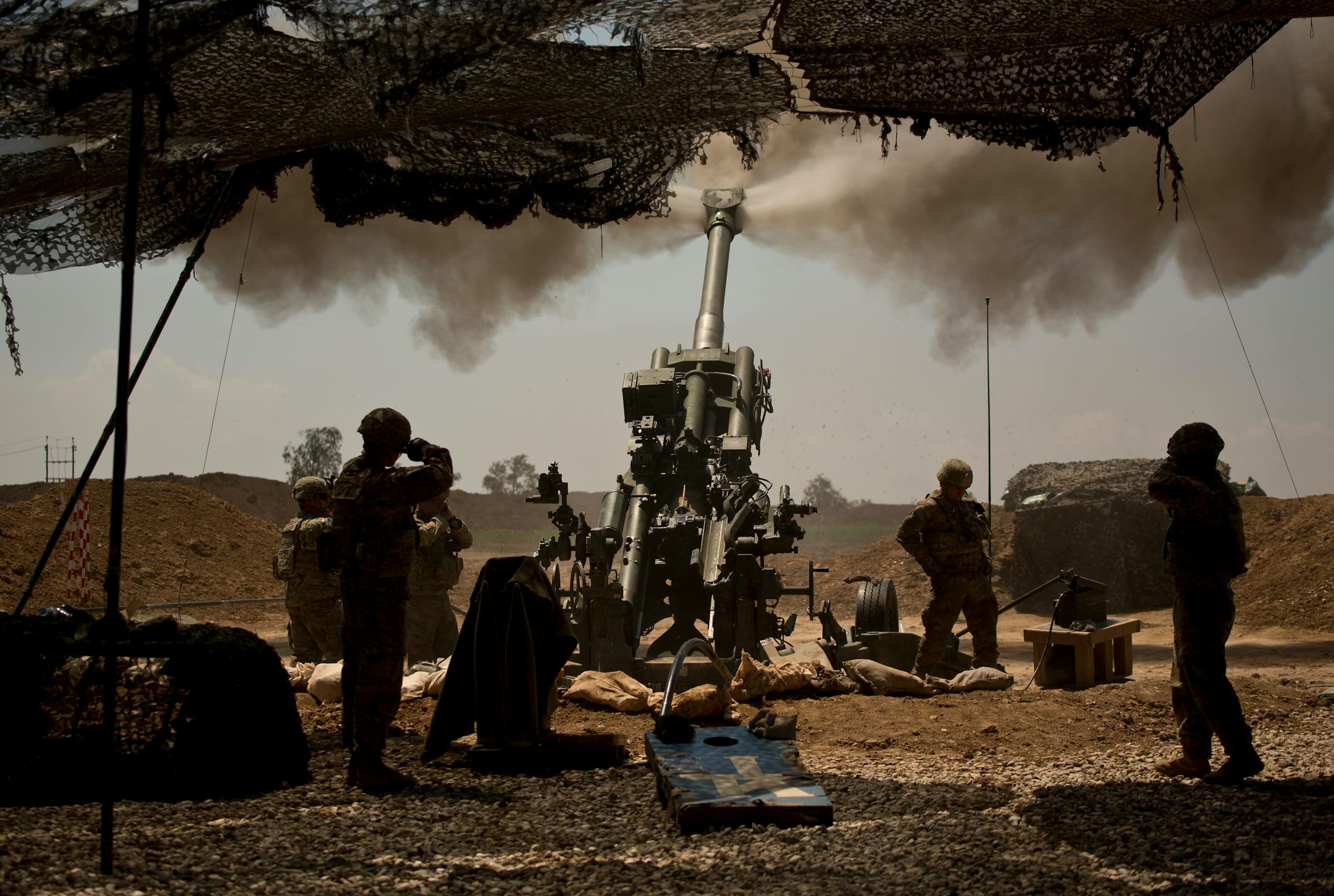
U.S. soldiers from the 82nd Airborne Division fire artillery on April 17, 2017, in support of Iraqi forces fighting ISIS militants from their base east of Mosul. (Maya Alleruzzo)

‘War from within’

At one point in the conversation, Salisbury typed out a question: “82nd is part of this trained element you guys have been building for this very [thing] right?”

It was unclear from the images if he hit send on the message.

The Washington Post reported this summer that the Trump administration was considering a plan to establish a “Domestic Civil Disturbance Quick Reaction Force” to deploy National Guard members to U.S. cities. It was unclear if Salisbury was making reference to this effort.

Days after the Signal exchanges took place, Trump told a crowd of military leaders in Quantico, Va., that he had instructed Hegseth to use American cities as “training grounds” for the armed forces.

“We’re going to straighten them out one by one, and this is going to be a major part for some of the people in this room,” Trump said in the appearance alongside Hegseth. Leaders of U.S. military branches, including the Army, were in attendance.

“It’s war from within,” Trump said.

In the messages reviewed by the Star Tribune, Weaver wrote that White House Counsel David Warrington was working on the Portland plans and intended to set up a call with the president and Hegseth.

The messages appear to acknowledge legal hurdles to sending troops into American streets.

The Posse Comitatus Act, passed in the Reconstruction period after the Civil War, forbids federal troops from enforcing state or local laws. The National Guard is usually exempt because those troops report to their state’s governor and are subject to state laws, though in Portland the Trump administration is seeking to federalize the Guard.

The Trump administration deployed 700 Marine Corps troops to Los Angeles in June to protect federal property. A federal judge later ruled the action a violation of the Posse Comitatus Act. The Justice Department has appealed the decision.

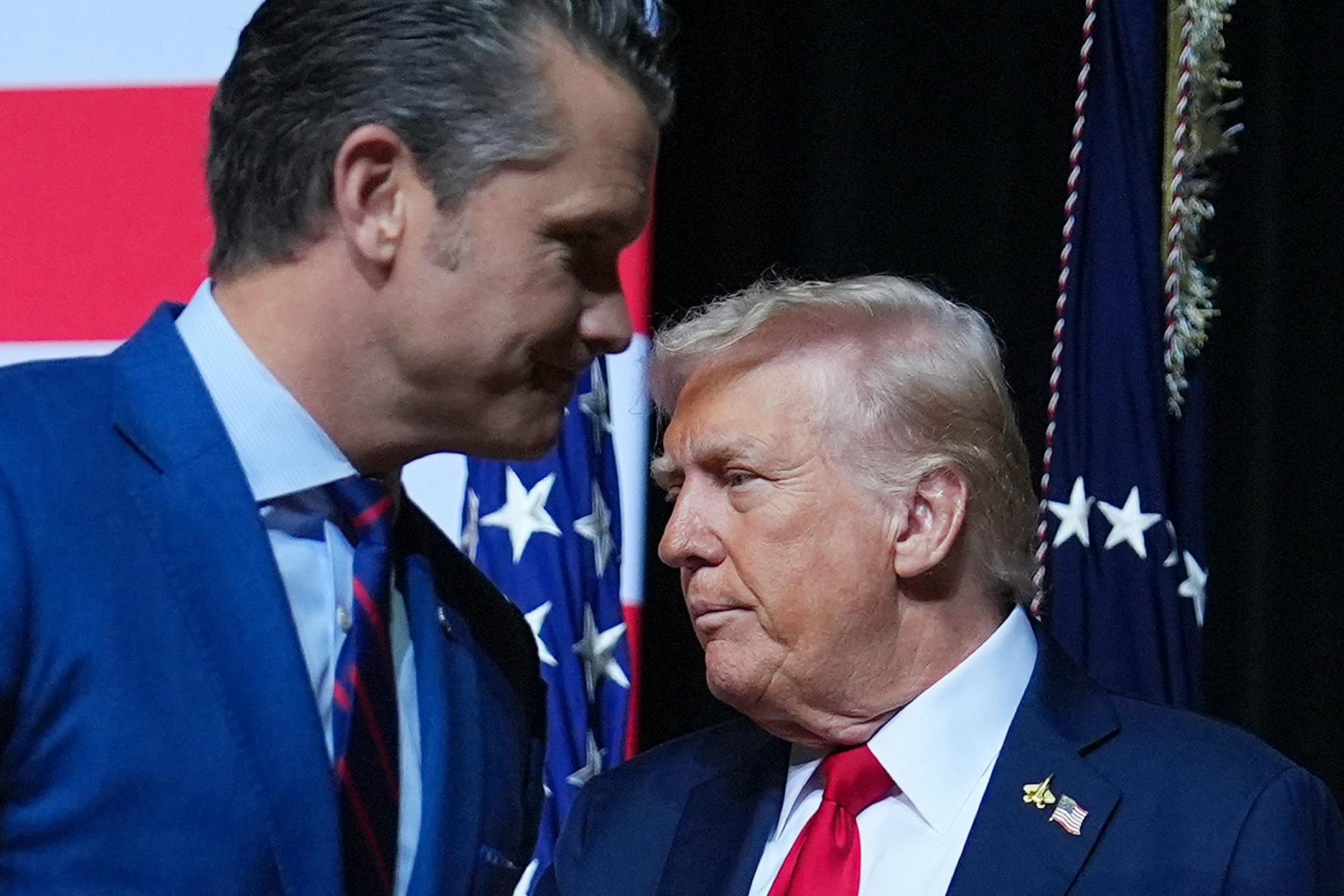
President Donald Trump is greeted by Defense Secretary Pete Hegseth before speaking to a gathering of top U.S. military commanders at Marine Corps Base Quantico in Quantico, Va., on Tuesday. (Evan Vucci/The Associated Press)

Presidents have deployed the 82nd Airborne domestically in rare circumstances.

President Lyndon Johnson sent the 82nd Airborne Division and 6th Cavalry Regiment into several American cities in 1968, when mass riots erupted after the assassination of civil rights leader the Rev. Martin Luther King Jr. In 1992, George Bush Sr. deployed the Army during unrest following the Los Angeles police beating of Rodney King.

Created in 1917 and based at Fort Bragg, N.C., the 82nd boasts of its ability to deploy within 18 hours of notification. The division is nicknamed “All-American,” and its troops have fought in the most dangerous wartime missions in modern history, including the D-Day assault in 1944.

Trump wanted to deploy the 82nd into American cities during social justice protests in 2020 after the police killing of George Floyd in Minneapolis, according to multiple accounts. Trump fired Secretary of Defense Mark Esper after Esper publicly announced his opposition to the plan.

“I thought there was a fair chance that Trump was going to order the 82nd Airborne Division into the streets, and maybe even direct them to shoot the protesters,” Esper wrote later in his autobiography.

The text messages suggest Hegseth would not put up similar resistance. Weaver repeatedly states that the secretary would follow Trump’s order and boasts about using his sway to influence the decision.

“I’ll get us to yes. I always find a way,” he wrote.

Jeff Meitrodt contributed reporting. John Wareham and Brian Prichard contributed research. MaryJo Webster contributed fact-checking.

Correction: A previous version of this story mischaracterized the 82nd Airborne's method of deployment.
about the writer

about the writer

Andy Mannix

Minneapolis crime and policing reporter

Andy Mannix covers Minneapolis crime and policing for the Minnesota Star Tribune.

See Moreicon