
Editor’s Note: How we reported on text messages between senior Trump administration officials

A source approached the Minnesota Star Tribune with photographs of sensitive messages exchanged by a key Trump administration official in a public place. Here are the steps we took to confirm the facts.

The Minnesota Star Tribune
October 4, 2025 at 12:00AM
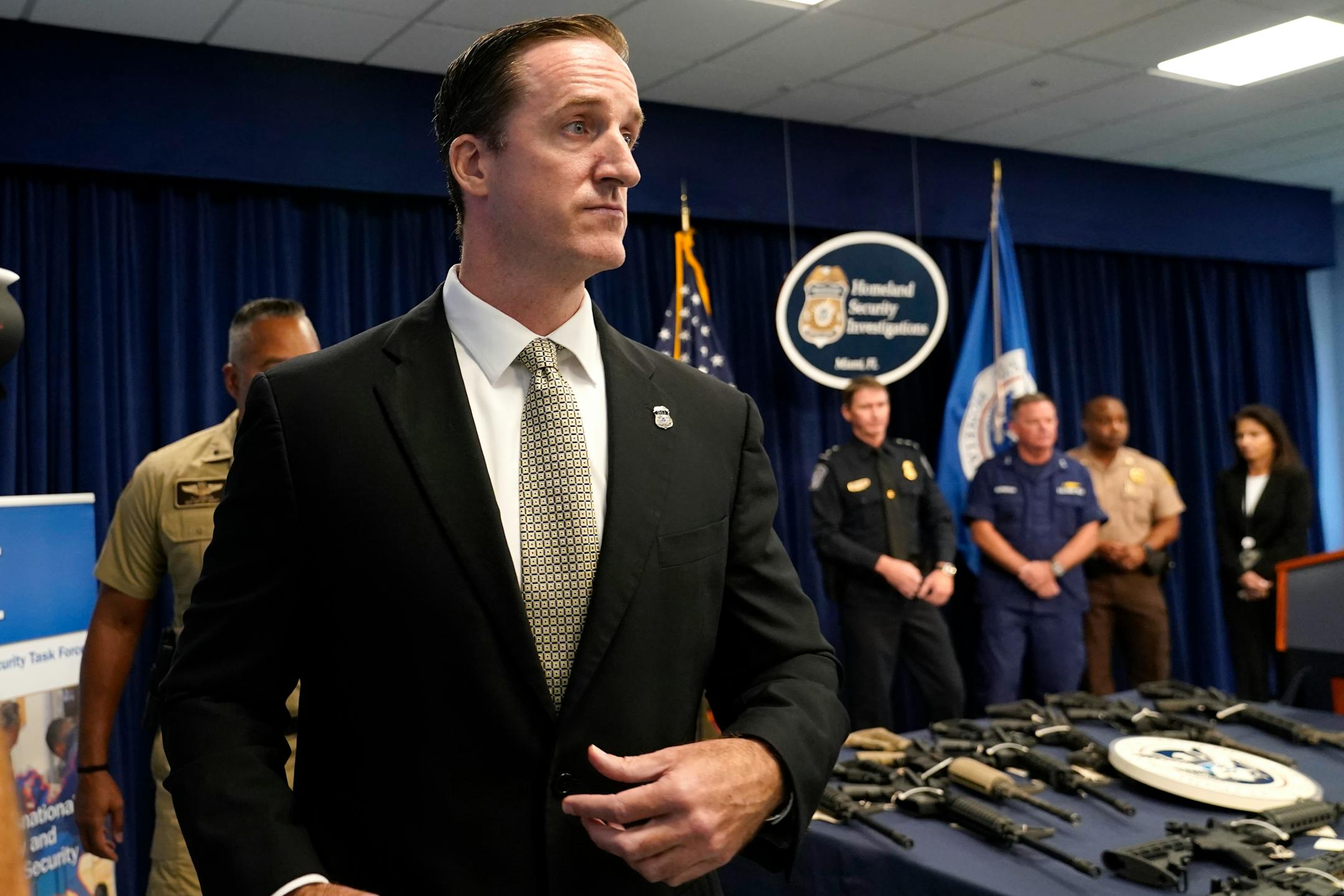
Anthony Salisbury, seen in 2022 when he was special agent in charge of Homeland Security Investigations Miami, is now deputy Homeland Security adviser on the White House Homeland Security Council. (Lynne Sladky)

A person contacted Minnesota Star Tribune investigative reporter Andy Mannix recently with a tip that a top government official was indiscreetly discussing sensitive government information via cellphone. The source had pictures of the text messages and believed they were a matter of public interest.

After agreeing to provide anonymity and promising to not disclose the time and location where the exchange took place, we reviewed more than 200 images of messages. The source also shared a photo of the government official, later identified as Anthony Salisbury, deputy Homeland Security adviser on the White House Homeland Security Council.

We determined the messages, if authentic, had news value because they revealed discussions about sending the U.S. Army’s 82nd Airborne – a venerable military division known for combat operations in conflicts around the globe – into Portland, Ore., in response to civilian protests at an ICE facility. The messages also raise questions about whether Trump administration officials are taking security precautions with their communications.

But we were also mindful that politically aligned interest groups have planted false information with media organizations in recent years. Here are some of the steps we took to verify the messages, confirm the identity of Salisbury and vet the source.

Identifying Salisbury

Several of the messages contained key identifiers to the person our source witnessed sending and receiving messages, including the name, Tony.

A Google search of “Anthony,” “Tony,” “Homeland Security” and “Trump” produced stories, news releases, images and video of Anthony Salisbury. Numerous colleagues and friends also referred to Salisbury as “Tony” in LinkedIn posts.

We shared photos and video with the source, who was confident it was him. We also used facial recognition to verify it was Salisbury. The White House later confirmed that Salisbury was in Minnesota to attend a funeral of a family member.

The messages also included full names of Trump administration officials such as Defense Secretary Pete Hegseth, Hegseth’s Chief of Staff Patrick Weaver, Assistant U.S. Attorney Andrea Goldberg, FBI Director Kash Patel, FBI official Mark Civiletto and Customs and Border Protection Commander Gregory Bovino.
Salisbury sent direct messages to Weaver, Goldberg and Civiletto. Other message channels were entitled “Melting ICE,” “Portland” and “HSC/SAPs.”

Authenticating the messages

The actions Salisbury and others on the group discussed in the chats were borne out by subsequent events, including:

  • An announcement that the White House intends to send troops to Portland.
    • A Chicago immigration raid that targeted alleged members of the Tren de Aragua gang.
      • The reinstatement of an ICE officer who was “relieved of his duties” after pushing a woman to the ground.
        • Sending additional Homeland Security personnel to a Chicago-area immigration facility.

          We also confirmed the cellphone number for Bovino, which was listed in the messages.

          And we reviewed the photographs of the messages to rule out the possibility that the messages were doctored.

          Who is our source?

          The person who contacted the Star Tribune said they witnessed the exchange of messages and described to the Star Tribune where it occurred. The source captured the messages in a crowded, public location where there would be no reasonable expectation of privacy.

          We reviewed the photos to determine their news value and authenticity. We also agreed to take several steps aimed at preserving the source’s anonymity. We agreed not disclose the source’s name, the specific time and location that the source took the photos, and not to publish the messages to avoid revealing the location.

          We met with the source on a video call and conducted an extensive background check to verify their identity, occupation and other personal and professional associations.

          about the writer

          about the writer

          Tom Scheck

          Team leader

          Tom Scheck is investigations editor for the Minnesota Star Tribune.

          See Moreicon