
Rash: Trump’s ‘alarming’ and ‘incoherent’ stand on nuclear testing

The U.S. hasn’t had a detonation test since 1992 and shouldn’t begin conducting them again.

Columnist Icon
The Minnesota Star Tribune
November 4, 2025 at 9:45PM
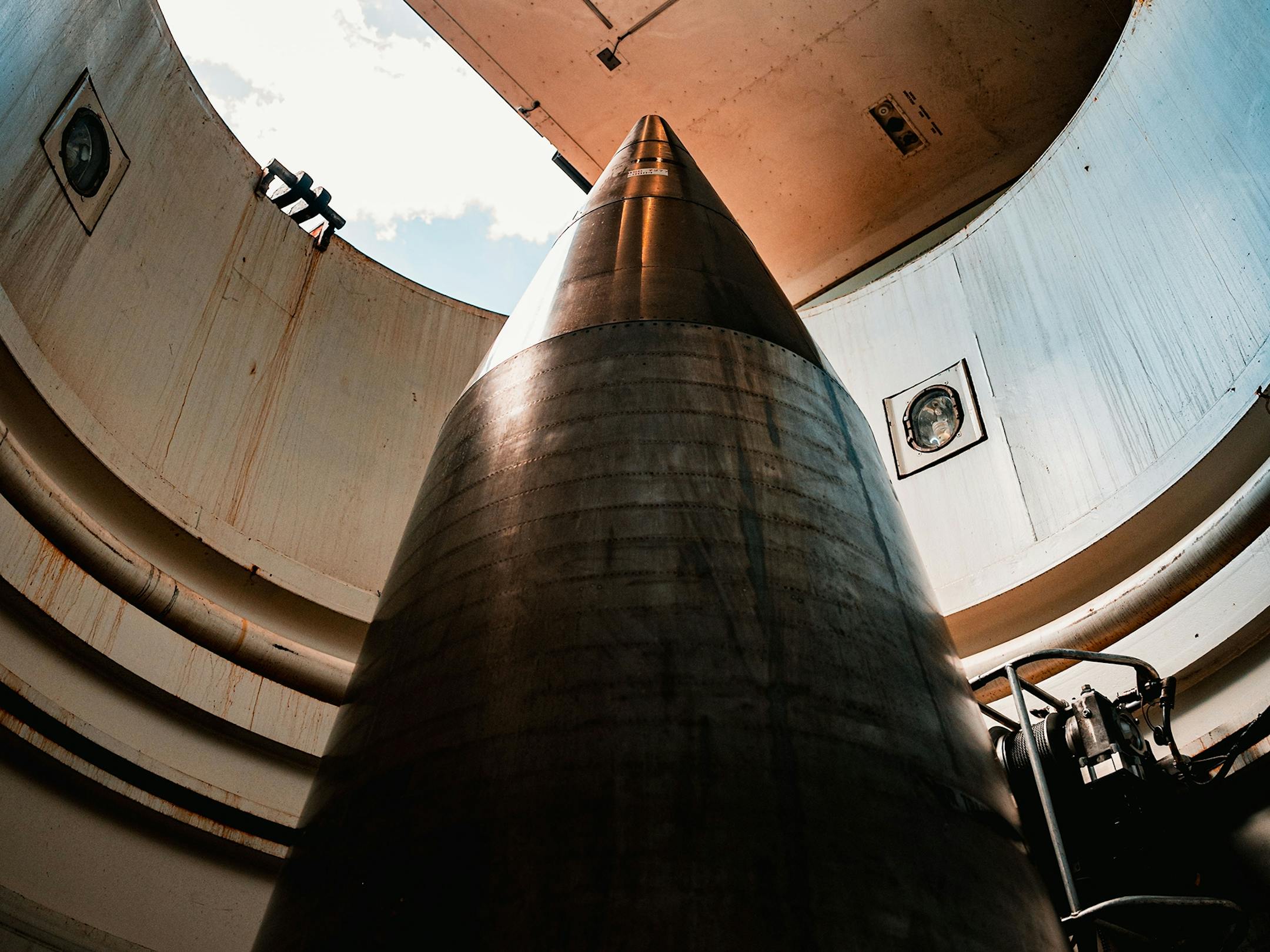
An unarmed Minuteman III missile sits inside a silo at F.E. Warren Air Force Base in Wyoming on July 9. (Michael A. Richmond/Tribune News Service)

Opinion editor’s note: Strib Voices publishes a mix of commentary online and in print each day. To contribute, click here.

•••

Twice last week, in international and domestic affairs, President Donald Trump called for the nuclear option.

Regarding U.S. politics, he used the euphemism in calling for the Senate to jettison the filibuster in order to end the government shutdown. “It is now time,” the president posted on Truth Social, “for the Republicans to play their ‘TRUMP CARD,’ and go for what is called the Nuclear Option – Get rid of the Filibuster and get rid of it, NOW!”

Regarding geopolitics, the president’s proverbial nuclear option involved resuming detonation tests of nuclear weapons, which this country hasn’t conducted since 1992.

“Because of other countries testing programs, I have instructed the Department of War to start testing our Nuclear Weapons,” he wrote, again on Truth Social.

The startling statement was “incredibly unclear and it could mean a whole range of things,” University of Minnesota associate professor of political science Mark Bell said, explaining that it could signal no shift, or a huge shift, in policy.

Bell, expert on nuclear-weapons issues, said that tests of delivery systems or other components would be routine. But detonation would be a figurative (if not literal) seismic shift, couldn’t be done immediately, and would be conducted by the Department of Energy, not Defense (as the administration’s “Department of War” is still officially called).

Trump’s call was concurrently “really alarming” and “very incoherent,” agreed Alicia Sanders-Zakre, the policy and research coordinator for the Geneva-based International Committee to Abolish Nuclear Weapons (ICAN), which won the 2017 Nobel Peace Prize “for its work to draw attention to the catastrophic humanitarian consequences of any use of nuclear weapons and for its ground-breaking efforts to achieve a treaty-based prohibition of such weapons.”

By Sunday, U.S. Energy Secretary Chris Wright tried to clarify that any tests would not involve “nuclear explosions” but “the other parts of a nuclear weapon.” His comments came four days after the president’s missive included misstatements about adversaries’ testing.

But on the same day, Trump insisted in a “60 Minutes” interview that Russia and China had conducted secret detonation tests. “They test, and we don’t test,” he said. “We have to test.”

Just last week, Trump’s assertion was contradicted by Navy Vice Adm. Richard Correll, his own nominee to lead the U.S. Strategic Command, who told Congress that “neither China or Russia have conducted a nuclear explosive test” — a view mostly echoed by experts on nuclear issues.

Meanwhile, CIA Director John Ratcliffe claimed Trump “was right” about Russia and China. And an Energy Department spokesman told the New York Times that Wright “is proudly following President Trump’s direction to expand nuclear testing.”

The continued confusion is dangerous. And detonation testing could be counterproductive, said Bell, because it could scrap the cap on similar tests that Moscow and Beijing have generally upheld, despite the Comprehensive Nuclear-Test-Ban Treaty not being ratified by Washington.

What triggered Trump may have been news that Russia had tested delivery systems of a nuclear-powered cruise missile and a large torpedo. But notably, neither test involved a nuclear detonation.

The U.S., Bell said, historically has had more tests and thus more data, and so “the thought has been if you’re the United States, you actually want to maintain this testing moratorium for as long as possible because if that goes away it’s actually going to be to the advantage of your adversaries.”

More testing could mean more peril. “It’s always difficult to really put a specific assessment of nuclear risk,” Sanders-Zakre said, adding that some experts “estimate we are at the highest level of nuclear risk than at any point in the Cold War.”

In January, the most noted experts at the Bulletin of Atomic Scientists set their seminal Doomsday Clock to 89 seconds to midnight — “the closest it’s ever been to catastrophe.”

That’s the feeling the film “A House of Dynamite” gives viewers. From Oscar-winning director Kathryn Bigelow, the Netflix feature about a single, unattributed missile shot at Chicago rattles the nerves of the fictional political and defense officials — as well as real-life viewers of Netflix’s most-watched movie, which is scarier than anything screened last Halloween weekend.

It seems to have also rattled the Pentagon, which disagreed on the depiction of the reliability of Ground-Based Interceptors tasked with shooting down an incoming missile.

Bigelow defended in turn, recently saying that similar films in previous eras have “trailed off.” The prospect of using nuclear weapons, she said, “has become normalized. We don’t think about it, we don’t talk about it. And it’s an unthinkable situation. So, my hope was to maybe move it to the forefront of our lives.”

That’s the ethos behind ICAN’s can-do efforts as well, said Sanders-Zakre, who said that “it’s really important to use arts to educate about the risks of nuclear weapons.”

Bell said it’s not surprising that “as we move into an era in which nuclear weapons are a prominent feature of international politics” that movies like “Oppenheimer” and “A House of Dynamite” become “more prominent in our collective consciousness.”

So far, 95 nations have made it part of their country’s collective consciousness by signing the Treaty on the Prohibition of Nuclear Weapons. This diplomatic development comes despite — or perhaps because of — geopolitical crises, said Sanders-Zakre. “It’s actually been at times of enhanced international tension and crisis that there has been forward movement on nuclear arms-control agreements.”

To some, ICAN’s quixotic quest is naïve. But what’s naïve, said Sanders-Zakre, is “to think that nuclear weapons will continue to exist and not be used.”

Mutual deterrence, she said, which assumes nations “know how to signal correctly so there’s never a mistake or miscalculation or accident,” is met with the truth “that people are fallible.” It’s easier to see this now “with some of the leaders that we have in the world today, but it’s always true, and we simply can’t rely on luck to keep us alive.”

Getting to a nuclear-weapons “global zero,” concluded Sanders-Zakre, is “the only safe way to prevent nuclear catastrophe.”

Republican senators rebuffed Trump’s call for the filibuster “nuclear option.” Regarding the real thing, Republicans and Democrats alike should unite in opposition to detonation testing.

about the writer

about the writer

John Rash

Editorial Columnist

John Rash is an editorial writer and columnist. His Rash Report column analyzes media and politics, and his focus on foreign policy has taken him on international reporting trips to China, Japan, Rwanda, Kazakhstan, Turkey, Lithuania, Kuwait and Canada.

See Moreicon

More from Columnists

See More
Travis Pennings uses a pair of binoculars to look for deer in the early morning hours, Nov. 3, 2018, during opening weekend of the season in Sandstone, Minn.
Anthony Soufflé/The Minnesota Star Tribune

The crisp November weather and a healthy deer population make this season a great setting for a first-time hunter.

card image
card image