
Rash: Jerome Powell defends the Fed – and the nation

Central bank independence is central to a successful economy.

Columnist Icon
The Minnesota Star Tribune
January 17, 2026 at 10:59AM
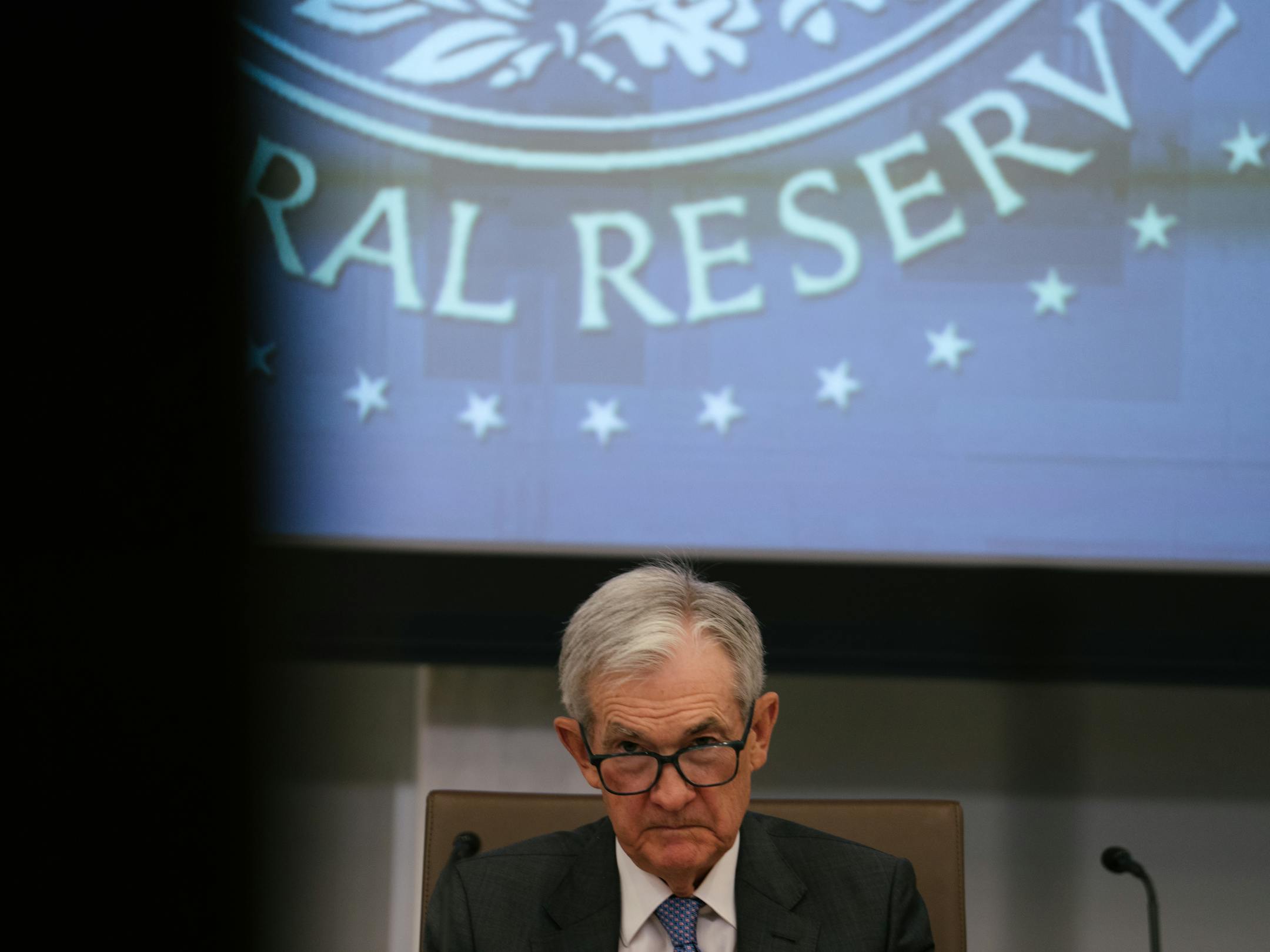
Jerome Powell, chair of the Federal Reserve Board of Governors, in Washington on Oct. 24, 2025. (CAROLINE GUTMAN/The New York Times)

Opinion editor’s note: Strib Voices publishes a mix of commentary online and in print each day. To contribute, click here.

•••

With characteristic caution, Federal Reserve Chair Jerome Powell long ignored the ignoble insults from a petulant President Donald Trump, who viciously criticized the Fed chair professionally and personally for not immediately heeding his demand to lower interest rates. So it was all the more powerful when Powell effectively defended his individual and institutional honor in a video statement reacting to a criminal investigation over his congressional testimony about the renovation of the Fed’s headquarters.

“I have deep respect for the rule of law and for accountability in our democracy,” Powell said in a two-minute message. “No one — certainly not the chair of the Federal Reserve — is above the law. But this unprecedented action should be seen in the broader context of the administration’s threats and ongoing pressure.”

His testimony and the renovation itself are “pretexts,” Powell said, adding: “The threat of criminal charges is a consequence of the Federal Reserve setting interest rates on our best assessment of what will serve the public, rather than following the preferences of the president.” Not to mention that the chair is only one vote of a broader committee that sets interest rates.

Soon, scores of former Fed chairs, Treasury secretaries, leaders of international institutions and even a few Republican senators, sensing an attack not just on Powell but on Fed independence, lent their voices.

The inquiry “is an unprecedented attempt to use prosecutorial attacks to undermine [the Fed’s] independence,” read the resolute statement from former Fed chairs Alan Greenspan, Ben Bernanke, Janet Yellen and about a dozen other leaders who served in administrations of both parties. “This is how monetary policy is made in emerging markets with weak institutions, with highly negative consequences for inflation and the functioning of their economies more broadly. It has no place in the United States whose greatest strength is the rule of law, which is at the foundation of our economic success.”

Similar sentiments were expressed by the president of the Federal Reserve Bank of Minneapolis, Neel Kashkari, who told the New York Times that the administration’s actions were “really about monetary policy.” It’s a moment, he added, “to explain to our constituents and the American people why Fed independence is so important to the health and the vibrancy of the American economy.”

There’s no better expert to explain that than Gary Stern, a previous president of the Minneapolis Fed. Stern, currently on the Advisory Board of the University of Minnesota’s Heller-Hurwicz Economics Institute, said that since the early 1980s, the U.S. economy “has performed quite well, maybe better than any other large industrial economy.” Some of that is due, Stern said, to the Fed policies that contributed to growth, high employment and price stability.

“Will political interference enhance that?” he rhetorically asked, answering: “I think the clear answer is no.”

Political interference, like the relentless, reckless efforts by Trump, can in fact be counterproductive. Most of the time, Stern said, the interference is “going to push for lower interest rates, irrespective of what the economic evidence might suggest, irrespective of what the forecasts of future economic performance indicate.”

History is replete with ruinous political interference in central-bank matters. Most infamously in interwar Germany, whose hyperinflation gave rise to radicalization, as well as Turkey, Argentina and Venezuela in the postwar era, said Art Rolnick, former director of research at the Minneapolis Fed.

“We know from a lot of history, when a central bank is controlled by the political system, politicians tend to think in the short run,” Rolnick said, adding that artificially lowering rates can backfire. “Politicians generally aren’t economists, and you can see why.” Conversely, central bankers rely “on the best evidence and the best theory. And to lose that independence is really risking inflation and a lot of destruction and a lot of uncertainty. And over and over, economists will tell you uncertainty is one of the worst things you can do for economic growth.”

That includes economists like Tyler Schipper, an associate professor at the University of St. Thomas, who concurs with Rolnick and Stern on the need for Fed independence. In countries where a central bank answers to politicians, Schipper said, the result is often “economic failure, inflation, instability and capital flight.” The U.S., he said, “has kind of been this shining light in terms of the importance of the Federal Reserve in keeping stability.”

Stability of another sort is also a key consideration, said Schipper. However imperfect, institutions like the Fed, he said, are what “keeps the economy responding somewhat equally to people’s efforts and dreams. And so this seems to me like how the American dream quietly erodes; that the economy then starts to only respond to people that already have power or already have money when there are no rules or institutions and norms to guide it.”

The institution is worth defending. And with Powell as impressive as Trump is impulsive, both Rolnick and Stern think that he was right to address the issue — and the American people — directly.

“In the past, it’s been moral suasion with other presidents,” said Rolnick. “This is not moral suasion. He’s got the Department of Justice investigating him. That is outrageous, and it deserved Powell’s response, and I think that should help give the kind of credibility the Fed has built up over all these years.” The matter “is an insult, in many ways, to the system and to the way we’ve been operating.”

Stern said that “this is totally unlike anything I experienced” during his Fed tenure. “I agree with what Powell said fundamentally; it’s an act of intimidation. And it goes beyond him personally to presumably anybody who’s involved in making monetary policy in the U.S. and I would guess in other areas of responsibility in public policy in the U.S. as well.”

Ultimately, said Stern, “you want policy made objectively by people with integrity, doing the best they can in a world of uncertainty.” Seemingly succinctly describing Powell’s public persona, Stern added that “you want them to undertake their work as objectively as possible, as scientifically as possible, as seriously as possible.”

Stern said that Powell is right on the issue’s substance. And then, considering Powell’s public response, Stern concluded with a call that all lawmakers, policymakers and citizens should hear and heed: “I think there needs to be more of that personally by people who are being criticized or bullied by the administration.”

about the writer

about the writer

John Rash

Editorial Columnist

John Rash is a columnist.

See Moreicon

More from Columnists

See More
card image
card image