
Editor's Pick

Editor's Pick

The Minnesota mom who ignited RFK’s vaccine concerns and today’s MAHA movement

Sarah Bridges’ advocacy followed a seven-year fight to get the federal government to recognize her son’s disability as a vaccine injury.

The Minnesota Star Tribune
December 13, 2025 at 11:15AM
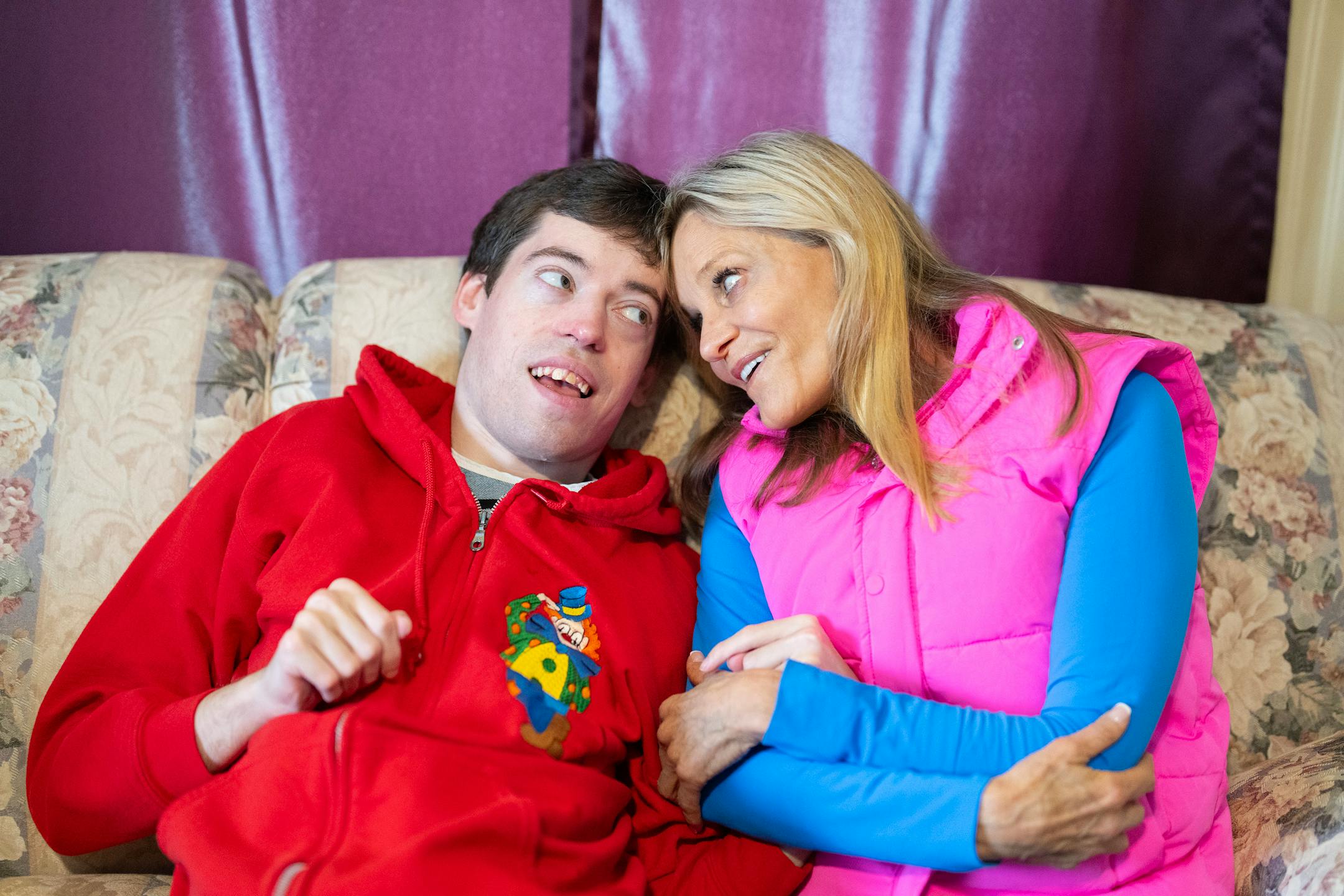
Sarah Bridges, right, spent nearly seven years pushing the federal government for compensation for her son Porter Bridges-Parlet's developmental disabilities, which manifested following a pediatric whooping cough vaccination. (Alex Kormann/The Minnesota Star Tribune)

The coastal sun was shining on Sarah Bridges, she recalled, when she decided to stage a one-person protest on Robert F. Kennedy Jr.’s porch in Hyannis Port.

The Minnesota mom would sit there — after showing up unannounced in 2005 with an 18-inch stack of documents — until the famed environmental attorney agreed to read the reports she had amassed about vaccine side effects.

Kennedy told her he wasn’t interested, and was taking friends sailing. But Bridges hadn’t traveled to the Kennedy Compound in Massachusetts to accept rejection — not when Kennedy had the clout and connections to do something about an issue that had fractured her family.

So she waited.

“You’re still here,” Kennedy said when he returned hours later.

“I will leave,” she recalled saying, “if you’ll read even a few of these articles.”

She didn’t know it at the time, but Bridges was sparking the modern MAHA movement.

President Donald Trump kickstarted the “Make America Healthy Again” movement this year by appointing Kennedy, his former political opponent, to run the United States’ massive health and human services bureaucracy. Part of the mandate includes re-examining the nation’s reliance on preservatives in foods and drugs, as well as vaccines.
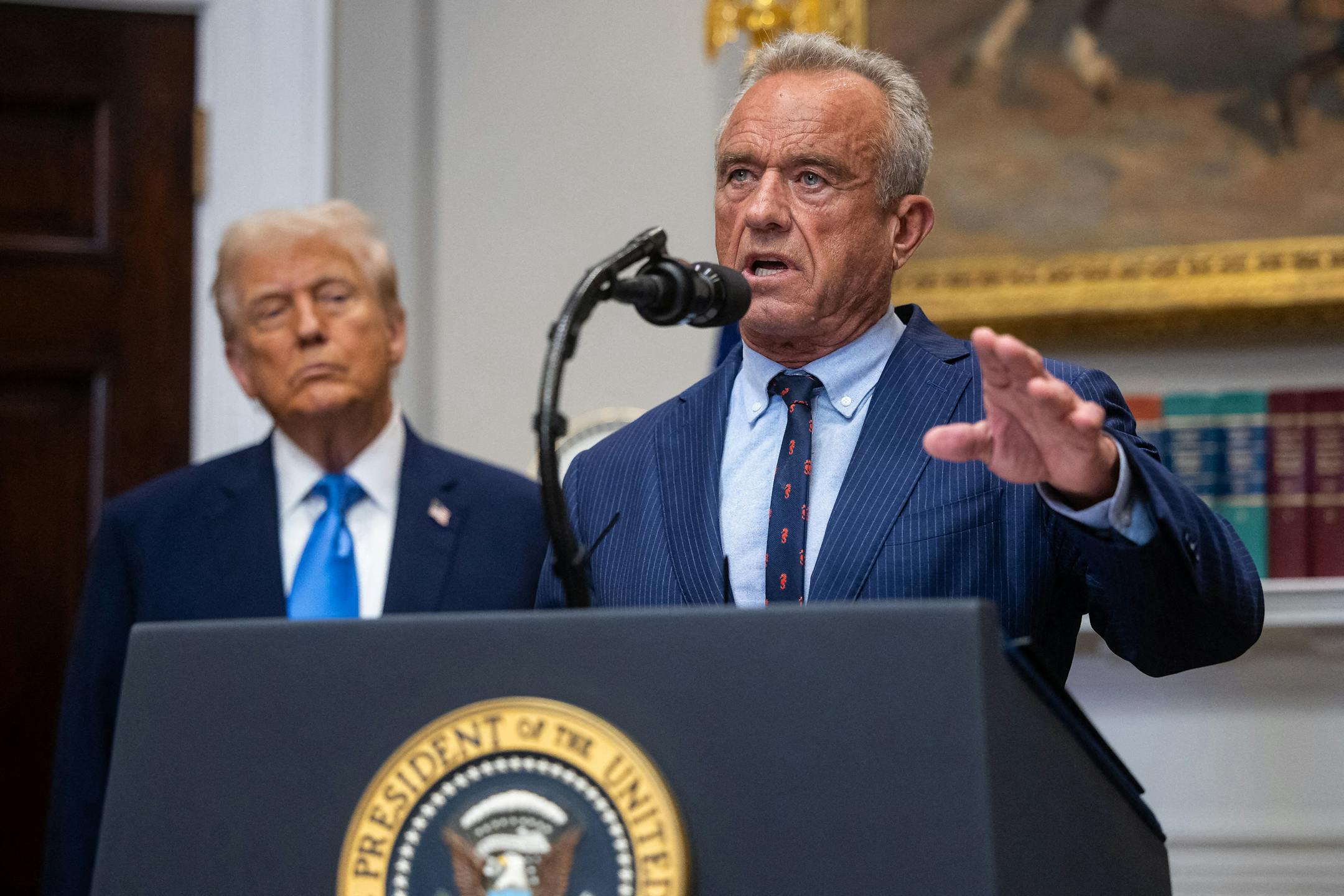
President Donald Trump and Health and Human Services Secretary Robert F. Kennedy Jr. make announcements on autism in the Roosevelt Room at the White House on Sept. 22. (Francis Chung/Abaca Press)

But it was Bridges’ persistence years earlier that convinced Kennedy to take on the dicey issue of vaccine safety.

The trip was motivated by Bridges’ sense of helplessness back home in Richfield and a desire to help others. Her own son suffered unexplained seizures and developmental delays shortly after receiving a pertussis vaccination as an infant, and he was getting worse.

“I understood so little,” she said, “and was wanting so badly to make sense of this.”

Kennedy has spoken in the past about Bridges and how she motivated him into a position over which he initially was reluctant — one that branded him anti-vaccine and anti-science.

“I didn’t want to do that with my life,” Kennedy said in an article Newsweek published in 2021. “I wanted to work on rivers and energy.”

Vaccines nonetheless are at the heart of his controversial MAHA message: that even effective immunizations pose greater safety risks than the medical establishment is acknowledging, and that the nation needs to rethink when and if children receive them.

Longtime public health advocates fiercely oppose that message, arguing that it contradicts decades of scientific research on vaccine safety and blaming Kennedy for weakening the nation’s immunization shield against infectious and even deadly diseases. As more parents refuse recommended shots for their kids, cases of pertussis, or whooping cough, have been rising in recent years, along with measles.

Bridges was well-versed in patience when she approached Kennedy 20 years ago. Her second child, Porter, had suffered a 90-minute seizure the night after he received his infant pertussis vaccination in 1993. He would endure multiple hospitalizations in his first year of life, including one night when he stopped breathing and paramedics revived him.

Porter Bridges-Parlet holds hands with his mother, Sarah Bridges, at the home of Porter’s longtime caretaker and “second mother,” Ramona Bolton. (Alex Kormann/The Minnesota Star Tribune)

Doctors often explain such temporal events as coincidences; the sheer volume of pediatric vaccinations in the U.S. means some children will have unrelated health problems shortly after receiving shots.

In this case, Porter’s doctors were implicating the DTP vaccine, a whole-cell vaccine that would be phased out of the U.S. marketplace by 1996 because of rare side effects. (The current DTaP combination vaccine includes acellular components that still protect against whooping cough but with fewer side effect risks.)

An ER doctor encouraged Bridges to file a claim with the National Vaccine Injury Compensation Program, which shields manufacturers from liability expenses that otherwise would drive them out of business while recognizing that injuries happen.

Even with medical opinion on her side, it took Bridges nearly seven years to get her claim approved and federal compensation for Porter’s lifelong medical needs. Federal officials had demanded proof and medical tests that ruled out numerous other causes.

The government in the end agreed to bankroll a trust to pay for Porter’s needs, estimated at $20 million over the course of his expected lifetime, without resolving whether the vaccine was at fault. (Some studies have linked the whole-cell pertussis vaccine to short-term seizures, but not necessarily longer-term neurologic complications.) But the fight, and Porter’s worsening condition, had caused stress and depression in the family. Bridges separated from Porter’s father.

“It was overwhelming,” Bridges said, “and then you’re coming to terms with a kid who is not going to be OK — and today, I think he is OK. But, you know, at the time you’re kind of grieving over what you think he could have been.”

Ramona Bolton holds the hand of Porter Bridges-Parlet while his mother, Sarah Bridges, reads to him at Bolton’s home. (Alex Kormann/The Minnesota Star Tribune)

Porter was far behind developmentally as he approached his grade-school years, prone to fits of hyperactivity and impulsivity, in addition to the seizures that put him at risk for falls and injuries. Once he wriggled out of his car seat during a trip to the grocery store and was hit by a car in traffic.

Having earned a doctorate in neuropsychology from the University of Minnesota, Bridges was comfortable interpreting studies that could support her son’s compensation claim. Over time, she amassed reports that raised concerns about other vaccines, and about the use of a mercury-based preservative, thimerosal, to extend the shelf-life of multidose vaccine vials.

She thought Kennedy would be receptive because his environmental work had focused on mercury contaminants in the food supply. That wasn’t the reason she chose him specifically, though. In college, Bridges befriended his sister-in-law, who thought Kennedy might be interested.

“It’s not like I had a million great connections,” she said. “I had a connection that at least would probably get him to open the door.”

Kennedy’s encounter with Bridges in 2005 wasn’t the first of its kind; parents with claims of vaccine injuries had approached him before when he lectured on mercury risks. But this was the first at his residence.

The future U.S. health secretary eventually accepted the box of studies and agreed to reconnect with Bridges the next day. He kept reading into the middle of the night.

“I was four or five inches down in that pile,” he said in the Newsweek article, when he became convinced that vaccine adverse events were more of a concern than publicly recognized.

Kennedy reached out almost immediately to political and family connections in health care and penned an article titled “Deadly Immunity” in Rolling Stone and Salon.com that raised concerns about thimerosal.

Both publications later retracted the article, because it overstated mercury exposure from childhood vaccines and contained multiple factual errors. (Thimerosal was removed from pediatric vaccines in the U.S. as a precaution in 2001, but subsequent research found no link to autism. The brain disorder has increased in prevalence despite thimerosal’s absence.)

The impact of Kennedy’s advocacy since then is disputed. Leading medical organizations have criticized him, both as an advocate and now as health secretary, for making controversial claims about vaccines and their links to autism. Six former U.S surgeons general wrote an editorial, calling Kennedy’s policies a “profound, immediate and unprecedented threat” to the nation’s public health.

At the very least, Kennedy helped expose a vulnerability in the nation’s public health approach to vaccines — an overconfidence that people would treat them as a “social compact” and receive them without question, even if nobody explained their personal risks vs. benefits.

Known risks of vaccines include soreness and redness at the injection site as well as fevers, which aren’t surprising because vaccinations by design are stimulating responses from the immune system. But there are more serious concerns, including severe allergic reactions.

Nurse practitioner Muna Farah gives a boy vaccines during a vaccination clinic at Corcoran Park put on by the Minneapolis Department of Health in 2024. (Renée Jones Schneider/The Minnesota Star Tribune)

Pediatric doses of seasonal influenza vaccines carry slightly elevated risks of Guillain-Barré syndrome, a nervous system disorder that causes muscle weakness and numbness. The problem comes when such risks aren’t explained in context, said Dr. Gregory Poland, director of the vaccine research group at Mayo Clinic in Rochester. Guillain-Barré is frightening, but the one-in-a-million risk from the shots is far lower than the risk for unvaccinated people who suffer influenza, he said.

“It’s really a massive job of reintroducing trust by educating people and being very transparent about what vaccines can do and what they can’t do, what their risks are and what their benefits are,” Poland said on a recent podcast.

Kennedy earlier this year removed the entire federal Advisory Committee on Immunization Practices and appointed members who have long expressed concerns about vaccine safety. The panel this fall urged “individual decision-making” rather than a universal recommendation of pediatric COVID-19 vaccines, and last week recommended delaying the first dose of the highly effective hepatitis B vaccine for most infants.

Bridges said she doesn’t agree with Kennedy on all things related to vaccines. Her view is pragmatic: Public health leaders should do more research on risks vs. benefits and communicate the results.

“You can have something that is good for the vast majority of people, but it’s bad for a minority,” she said.

Researching her own family history, she has found others who suffered vaccine reactions. She urged more studies on genetic susceptibilities, perhaps starting with the children who suffer side effects that are widely accepted in medical literature.

“These are the ones we all agree on, right?” she said. “Shouldn’t we be studying these kids?”

Bridges runs her own corporate consulting firm and raised four children, although she recognized early on that Porter had needs beyond her ability as a caregiver. She hired a specialist in Minneapolis to take him in when he was in grade school, and Porter, now 32, remains in her care.

Porter used to be mobile and play basketball, but today is wobbly on his feet and mostly inactive. Doctors have diagnosed him with a seizure disorder, developmental delay and autism. A broad smile emerges whenever food is put in front of him or his parents or siblings visit. Porter also lights up watching “Winnie the Pooh.”

“I feel like there is a Zen master in there,” Bridges said, “because the things he loves, he just loves.”

Bridges’ surprise visit with Kennedy in 2005 started a friendship. Kennedy kept in contact and met Porter, including in 2019 when he came to Minneapolis to speak with state lawmakers about vaccine risks.

The secretary recently texted Bridges about a possible new treatment option for autism.

“I feel like there is a Zen master in there,” Sarah Bridges said of her son, Porter Bridges-Parlet, 32, “because the things he loves, he just loves.” (Alex Kormann/The Minnesota Star Tribune)
about the writer

about the writer

Jeremy Olson

Reporter

Jeremy Olson is a Pulitzer Prize-winning reporter covering health care for the Star Tribune. Trained in investigative and computer-assisted reporting, Olson has covered politics, social services, and family issues.

See Moreicon

More from Business

See More
card image
Aaron Lavinsky/The Minnesota Star Tribune

As the end of the year nears, look back at the volatile times and the financial choices you made during them.

card image