
TCMediaNow gives Twin Cities’ local TV clips new life in the digital era

Tom Oszman says the Minnesota nonprofit is working through years of film and video to capture “unique artifacts.” He shares five of his favorites.

The Minnesota Star Tribune
January 7, 2026 at 12:00PM
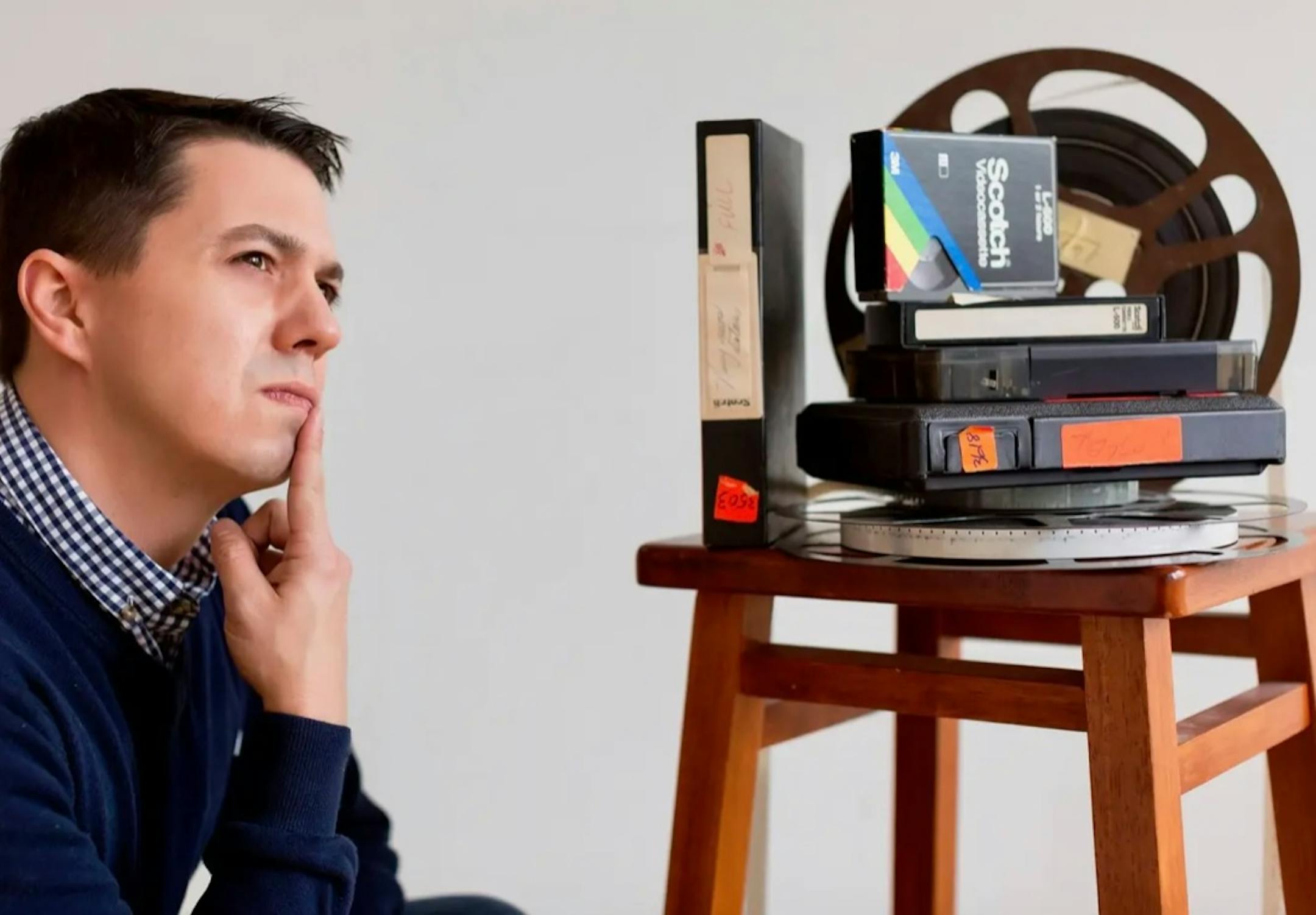
Tom Oszman started TCMediaNow in 2009 with a mission to crowdsource, preserve and showcase lost gems from Twin Cities' local TV broadcast history. (Provided)

Tom Oszman, whose TCMediaNow showcases old local TV footage, says there’s one clip he’d love to track down.

“David Letterman did an audition at Channel 9 in the 1970s. He was going to do weather here potentially,” Oszman said. “People have claimed they’ve seen it.”

Oszman founded the nonprofit in 2009 to crowdsource, preserve and showcase lost gems from the Twin Cities’ broadcast history.

“People weren’t able to hit the record button, even broadcasters, until the 1970s and a little bit in the ‘60s,” Oszman said. “The more modern it gets, the more available it is. That’s why the scope of my website tends to kind of sunset about the year 2000 or so.”

The preservation work builds on Oszman’s childhood in Maplewood, where he compiled a personal archive of favorite material after his family picked up one of the first VCRs available commercially. As he started digitizing his collection, he expanded into discarded videotape and video equipment.

After graduating from the University of St. Thomas with a journalism degree, he found available jobs in short supply. He said he started converting content for people, and then “for fun started putting my materials on YouTube when it was first launched.”

Attention and news stories about his hobby brought Oszman more material, leading to the creation of TCMediaNow. He is working through a backlog of material (years worth, he says) to showcase it to people like him, interested in the local broadcast history of the Twin Cities, to help create an available archive of video material that has mostly lived on in people’s memories.

He calls the nonprofit the only Twin Cities organization “actively taking donations like film and video and then putting it online.” The nonprofit has a five-member board, an intern and a steady group of volunteers who, like him, have regular jobs and take no compensation from the nonprofit.

That continuing mission keeps transforming, too, with Oszman trying to transition to a role that he calls “content archive curator, vs. the physical art of transferring, even though that’s kind of what we started at.”

The backlog of material also has Oszman raising money for TCMediaNow, to transfer the footage to a format that can be posted online at TCMediaNow’s website and YouTube page.

“To keep up, we do use third-party archivers to digitize material as funding allows,” he said, adding that the nonprofit has received grants along with the donations.

“About a quarter or a third of [digitizing] is done directly at the office, and then we outsource probably like two-thirds of it, just because people are doing it full time at a much [more] expeditious rate.”

Another goal, along with fundraising and getting more footage and equipment: “Lean into historical collections and topics,” Oszman said.

How the content is viewed online has transformed over the years. At first, it was at the nonprofit’s website. But now, Oszman’s work finds viewers on YouTube.

“Originally I wanted everything on my own website, away from YouTube. I thought YouTube was giving it all away,” he said.

But now, the YouTube viewership, which Oszman calls TCMediaNow’s “primary vehicle,” can help support the mission financially via ad revenue.

The past couple of years have been busy for Oszman and TCMediaNow. He was part of the Cathy Wurzer-Twin Cities Public Television “Broadcast Wars” documentary that debuted in 2024, and worked with Fox 9 last year to highlight Edmund Fitzgerald material for the 50th anniversary of the freighter’s sinking as part of its Doc 9 series. TCMediaNow also partners with the Pavek Museum of Electronic Communication (Oszman is a Pavek board member) and the Minnesota Broadcasters Association.

Oszman sees changes and challenges: People not going to websites, even moving away from social media, shortening attention spans, with more of modern life showing up on video, even the chore of finding a working VCR and integrating 1970s technology into what powers 21st-century video.

That goal of finding that David Letterman footage from late-night TV might be less of a coup soon.

“As the years go by and David Letterman is more of a memory than it is a relevant current show, maybe it’s not as fun or as important as it was 15 years ago, 20 years ago,” he said.

But Oszman says as long as there is an audience, he’s going to keep at it, likening the film and video pieces like old buildings that might not have gotten saved as landmarks.

“They are unique artifacts or unique assets, that are when they’re gone, they’re gone. And that’s why I never say no to video, because there might be that one piece that someone’s been looking for or someone needs.”

Here’s a look at some of the content TCMediaNow features, via clips that Oszman described as five of his favorites:

about the writer

about the writer

Vince Tuss

Night home-page producer

Vince Tuss is an audience editor and newsletter editor. Previously, he spent a decade updating the StarTribune.com home page most evenings. Before that, he was a copy editor and a night police reporter.

See Moreicon

More from TV and Media

See More
card image
Provided

Tom Oszman says the Minnesota nonprofit is working through years of film and video to capture “unique artifacts.” He shares five of his favorites.