
Minnesota’s Sun Country Airlines to be acquired by Allegiant in $1.5B deal

The companies say deal will combine route networks to offer Minneapolis-St. Paul International Airport to more mid-sized markets and vacation destinations.

The Minnesota Star Tribune
January 12, 2026 at 3:16AM
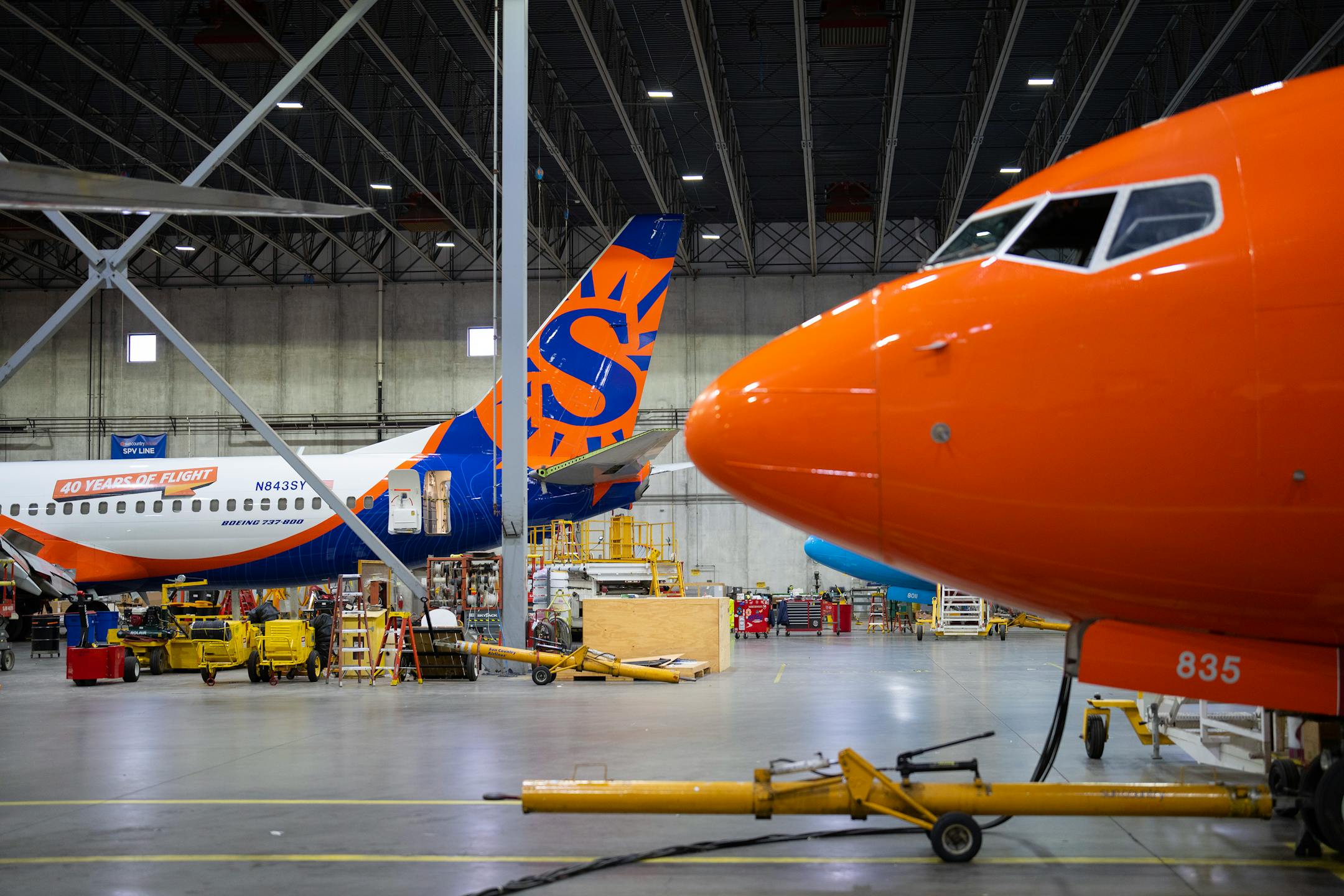
Sun Country Airlines to be bought by rival Allegiant in $1.5 billion deal. (Alex Kormann/The Minnesota Star Tribune)

Hometown leisure carrier Sun Country Airlines will be acquired by Las Vegas-based Allegiant Air in a deal valued at $1.5 billion.

The combined company will be headquartered in Las Vegas and led by Gregory Anderson, the current CEO of Allegiant. The move, which is meant to fuel growth, brings an end to MSP’s long history as hometown to a mainline U.S. airline.

In announcing the deal on Sunday, Jan. 11, both companies pledged to maintain a significant presence at Minneapolis-St. Paul International Airport (MSP), which has been the heart and center of Sun Country’s entire 43-year history.

CEOs of both companies said the marriage would ultimately benefit air travelers and Minnesota.

“It’s pro-consumer and pro-Minneapolis,” Sun Country CEO Jude Bricker said in an interview Sunday, Jan. 11.

Bricker said the deal should allow it to overcome hurdles that have stymied Sun Country’s ability to grow.

Allegiant and Sun Country said combining their route networks will lead to more mid-sized markets and vacation destinations for MSP travelers.

Bricker, a former Allegiant executive, will join Allegiant’s board of directors, along with two fellow Sun Country members.

Pilots and flight crews will still be able to reside in Minnesota. Anderson said it was too soon to know about layoffs, but Allegiant is “very committed to maintaining a significant presence in MSP” and “honoring the deep roots of Sun Country there.”

If approved by regulators and investors, the Twin Cities will be without a scheduled service commercial airline for the first time since the Great Depression. Northwest Airlines was based in the Twin Cities for about 80 years until its 2009 merger with Delta.

The deal is part cash and part stock. Sun Country shareholders are to receive a nearly 20% premium on Sun Country’s stock, valued Friday, Jan. 9, at $15.77 per share. A call with investors is scheduled for early Monday.

The two airlines will operate independently until the Federal Aviation Administration provides an operating certificate to consolidate the operations.

‘More routes ... more airplanes’

Sun Country in recent years notched profits in an industry weathering significant turbulence during and after the COVID-19 pandemic. Executives have pointed to its diversified business model — flying chartered planes and air cargo for Amazon — as instrumental to its survival and growth during those rocky years for the industry.

Yet, Bricker said, Sun Country had trouble finding enough airplanes and crew members needed to scale up its passenger service base out of MSP. Investing more of its resources in flying cargo last year added strain on the passenger business, forcing Sun Country to cut back on commercial service.

Those problems, he said, will be solved by combining with Allegiant.

“We’re going to add more routes, we’re going to add more airplanes and we’re going to have more frequency so that seats become cheaper,” Bricker said, “and that’s important because we have a near monopoly carrier in Delta.”

Sun Country ranks a distant second to Delta in market share at MSP.

MSP’s leisure travel market

Though lesser known outside Minnesota, Sun County has flourished in capturing much of the Twin Cities’ leisure market.

Other low-cost airlines have struggled at MSP. Allegiant stopped offering service at the airport in August. Competitors Spirit Airlines and JetBlue also left within the span of roughly one year.

Anderson said the partnership would benefit the relationship with MSP.

“Really what it’s about is growth and opportunity,” he said. “Over time, that’s what we’re really going to be focused on: continuing to grow the combined company in the right ways.”

The CEOs said the two airlines have very little overlap. One out of the 650 routes between Allegiant and Sun Country — Appleton, Wis., to Fort Myers, Fla. — is duplicative.

Executives expect the merger ultimately will lead to $140 million in annual cost savings within three years of closing the deal.

Sun Country said customers will see no immediate changes as a result of the merger and can continue to fly and book as usual.

Minnesota’s hometown airline

Sun Country formed in 1983, the product of Twin Cities-based pilots and flight attendants of the now-defunct Braniff International Airways, which had closed the year before. In the 1990s, it was owned by a Milwaukee travel agency. The airline closed after the Sept. 11, 2001, terror attacks.

A group of former executives and local investors revived Sun Country in 2003. Minnetonka businessman Tom Petters purchased the company before putting it into bankruptcy in 2008, separating it from other assets when he was charged with the biggest business fraud in Minnesota history.

Mitch and Marty Davis, brothers from Mankato whose holdings include Cambria, bought Sun Country in 2011. Bricker became chief executive in 2017.

In 2018, New York investment firm Apollo Global Management bought the airline. It became a public corporation listed on the NASDAQ exchange in March 2021.

Sun Country has been viewed as a potential candidate to combine with another airline. However, the news surprised many industry analysts.

“I did not have this combination on my airline merger bingo card,” said Henry Harteveldt, of Atmosphere Research Group.

Harteveldt said the two airlines together can bring greater scale, and it offers Allegiant an easy path to international routes. How big a presence the combined airline maintains in the Twin Cities, though, is far from clear or certain.

Harteveldt said job losses may result from the headquarters moving out of town.

“I’m sure that the political leaders will want to extract some” assurances of maintained jobs, he said.

Kyle Potter of Thrifty Traveler said Sun Country’s growth in Minnesota has helped keep airfares lower. He said consumers may feel the difference in their wallets should Allegiant decide to someday scale down its Twin Cities operations.

“At the end of the day, there is going to be less competition” with the merger, Potter said.

Brian Sumers of the Airline Observer said, “It’s a pretty logical combination.”

Both airlines maintain similar operating models, Sumers said, and the cultures of the two are close.

“You always like to have more discount airlines than fewer,” Sumers said, adding an airline typically tends to oversupply its hometown market.

“The executives fly you,” he said, ”their neighbors fly you.”

about the writer

about the writer

Bill Lukitsch

Reporter

Bill Lukitsch is a business reporter for the Star Tribune.

See Moreicon

More from Business

See More
card image
Fairview Health Services

The school is changing an elective course while still working with the Eden Prairie-based health care giant after students raised concerns.

This transmission electron microscope image shows SARS-CoV-2, the virus that causes COVID-19, isolated from a patient in the U.S., emerging from the surface of cells cultured in the lab. (NIAID/TNS) ORG XMIT: 1659810
card image