State pushes to improve Minnesota's can-recycling rates

An exhibit at the State Fair underlines an effort to increase Minnesotans' recycling rate of cans from a paltry 40 percent.

January 13, 2014 at 3:47PM
icon0:40
(Star Tribune/Star Tribune)

If you've ever guzzled a Coke and chucked the can, the state has two words for you: Stop it.

Minnesotans recycle just 40 percent of their aluminum cans. The national average is 65 percent and expected to hit 75 percent in 2015.

"We throw away 3.6 million cans a day. That's enough aluminum to make thousands of airplanes," said Wayne Gjerde, the Minnesota Pollution Control Agency's recycling market-development coordinator.

Determined to get more Minnesotans to recycle, the Minnesota Legislature required the MPCA to draft a plan last spring showing how a new return-deposit program could double aluminum recycling rates to 80 percent.

The agency is also sending its own strong message at this year's Minnesota State Fair with an exhibit of 12,000 cans purchased from the Rexam Beverage Can factory in St. Paul. The hulking display of recycled cans serves as a reminder that consumers should look for recycling containers instead of trash cans.

"An education program like Minnesota's, we think it is very valuable," said Charles Johnson, policy vice president of the Aluminum Association in Arlington, Va. "There is a profound lack of knowledge among consumers when it comes to the recycling stream process and the value of the material that is being land filled."

The MPCA is also distributing 480 giant bottle-shaped collection containers to local high schools and is sponsoring Minnesota GreenCorps to spread the word that recycled aluminum cuts energy costs and spurs jobs.

The latest efforts are sorely needed, because Minnesota is behind the times, said Greg Brooke, the U.S. spokesman for the London-based Rexam. The company makes billions of aluminum cans for Coke, Pepsi, Dr Pepper and breweries across the United States. Its St. Paul factory alone makes 2.1 billion cans each year.
Skyscrapers of cans

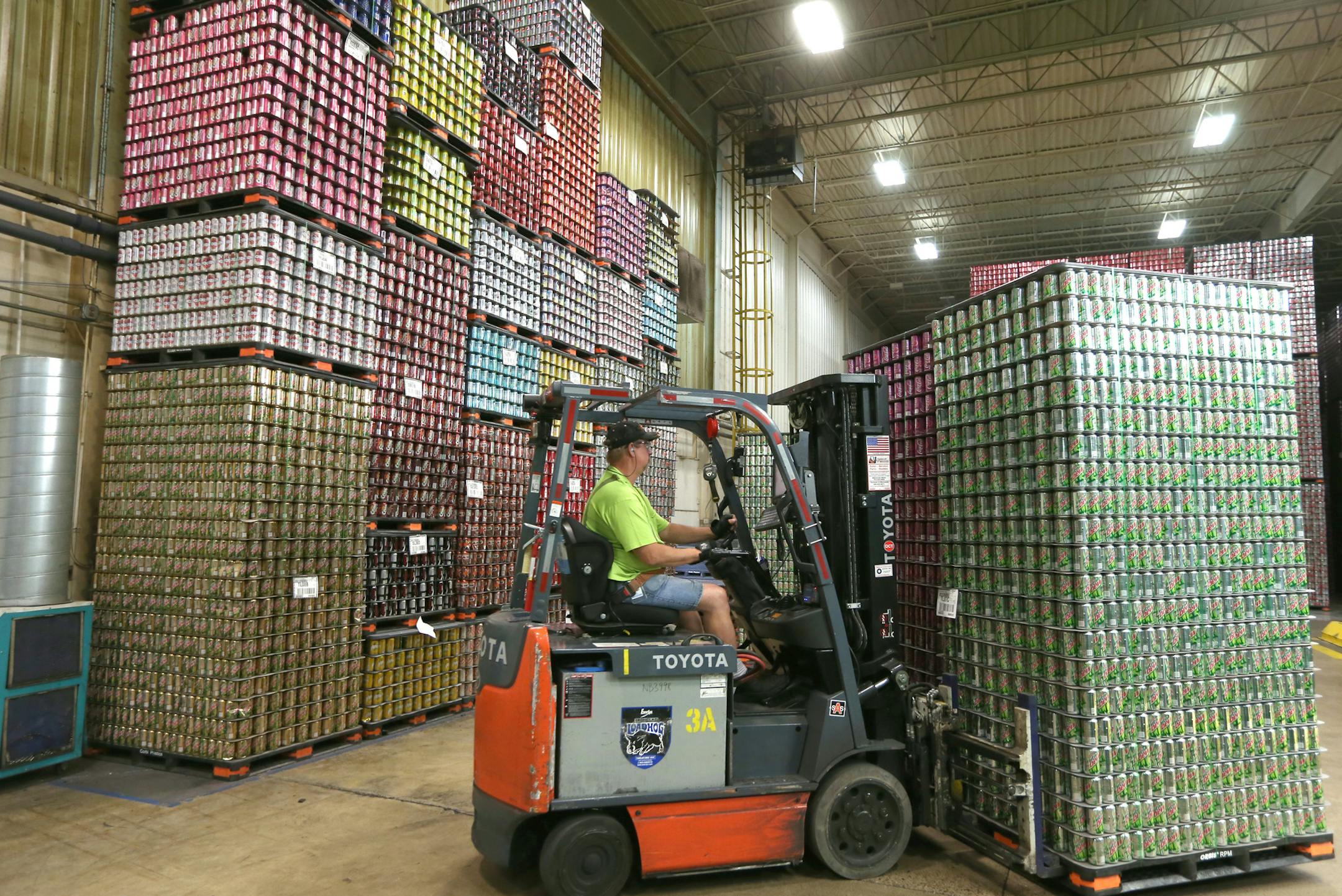
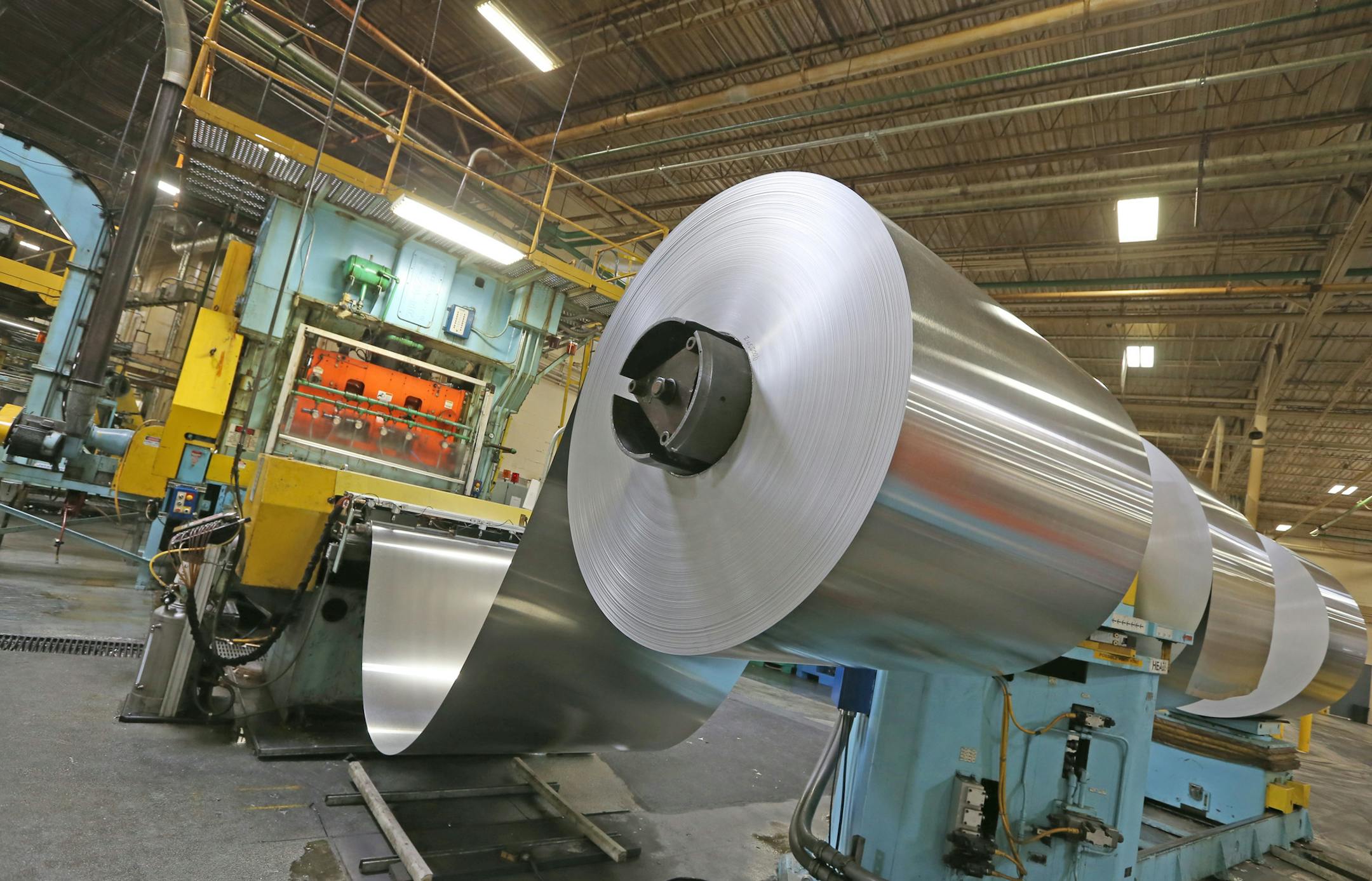
Inside its St. Paul plant, two-story machines stamped and punched 23,000 pounds of aluminum into millions of cans on a recent Thursday. The cans shuffled along conveyor belts into degreasing baths, whizzing labeling machines and up and down drying chutes before getting stacked 22 feet high and moved by forklift into the cavernous warehouse.

Walking amid skyscrapers of cans, Rexam plant manager Chris Karpovich said, "There's easily more than 10 million cans right here … And 68 percent of all [that metal] is recycled content."

The cans go to bottling plants across the Midwest, including Pepsi's in Burnsville and Mankato, Coca-Cola's facilities in Eagan and Winnipeg, and Schell's Brewing Co. in New Ulm.

"And we just shipped 12,000 to the State Fair," Karpovich said. "We believe in recycling and will do whatever we can to support the state's efforts. I believe we will see that 40 percent [recycling] rate go up."

In states such as Michigan, New York and Iowa, where consumers pay 5 to 10 cents for every returned can, recycling rates have been strong. The hope for Minnesota is that more of the light metal will find new life as car parts, new pop cans or even Chipotle burrito-bowl covers.

The MPCA's report on the deposits for cans is due Jan. 15, Gjerde said. If the proposal actually spurs legislation, "It would be a very long bill," he said.

That's because many players will have a stake in any state-mandated program, including county curbside programs, profit-driven scrapyards, retailers and consumers.

The downside is that consumers might balk at paying deposits for cans of soda or beer. And retailers may not want to install systems to collect used and dirty cans. Scrap yards worry that they could lose out if the state enters the business and takes some of the profits.

"It's really complicated," Gjerde said.

Last year, the state launched an initiative encouraging Minnesotans to ramp up recycling of plastic bottles. But the program, which included a giant display of bottles at the State Fair, has yet to prove successful.

Some are skeptical

Others just aren't convinced any state effort will work to ramp up recycling. "It's gotten worse. It's just too easy to throw cans in the garbage," said Ron Pooley, the former owner and current supervisor of nonferrous metals at Mankato Iron & Metal.

Minnesota's recycling rate for cans "was almost 60 percent 10 years ago," he said. "Part of the decline is that the price of aluminum has been super depressed over the last four years. Now we pay [consumers] about 53 cents a pound. Four years ago, it was 70, maybe 80 cents a pound. That [drop] discourages people."

But it's not discouraging him. The family-owned Mankato Iron & Metal regularly takes bags and truckloads of old cans from the public and scrap dealers. It shreds cans and blows the shards into giant trailers. Every seven to 11 days, a 45,500-pound load of shredded beer, Coke and Pepsi cans hits the road for out-of-state smelters. Those shards eventually become pristine rolls of aluminum sheeting.

The rolls rush back to Minnesota, often to the Rexam canning plant in St. Paul, or to Crown Cork & Seal facilities that pump out aluminum lids for soda cans in Mankato and aerosol can bottoms in Faribault. All factory scrap gets recycled.

Matt Meenan, spokesman for the Aluminum Association, said he hopes Minnesota's campaign will broaden that cycle.

"I think it's great that the state is doing this," he said. "It's cool."

If fairgoers respond to the state's new outreach, their efforts could help meet the revised goal of recycling 75 percent of all the cans in the country by 2015.

Dee DePass • 612-673-7725


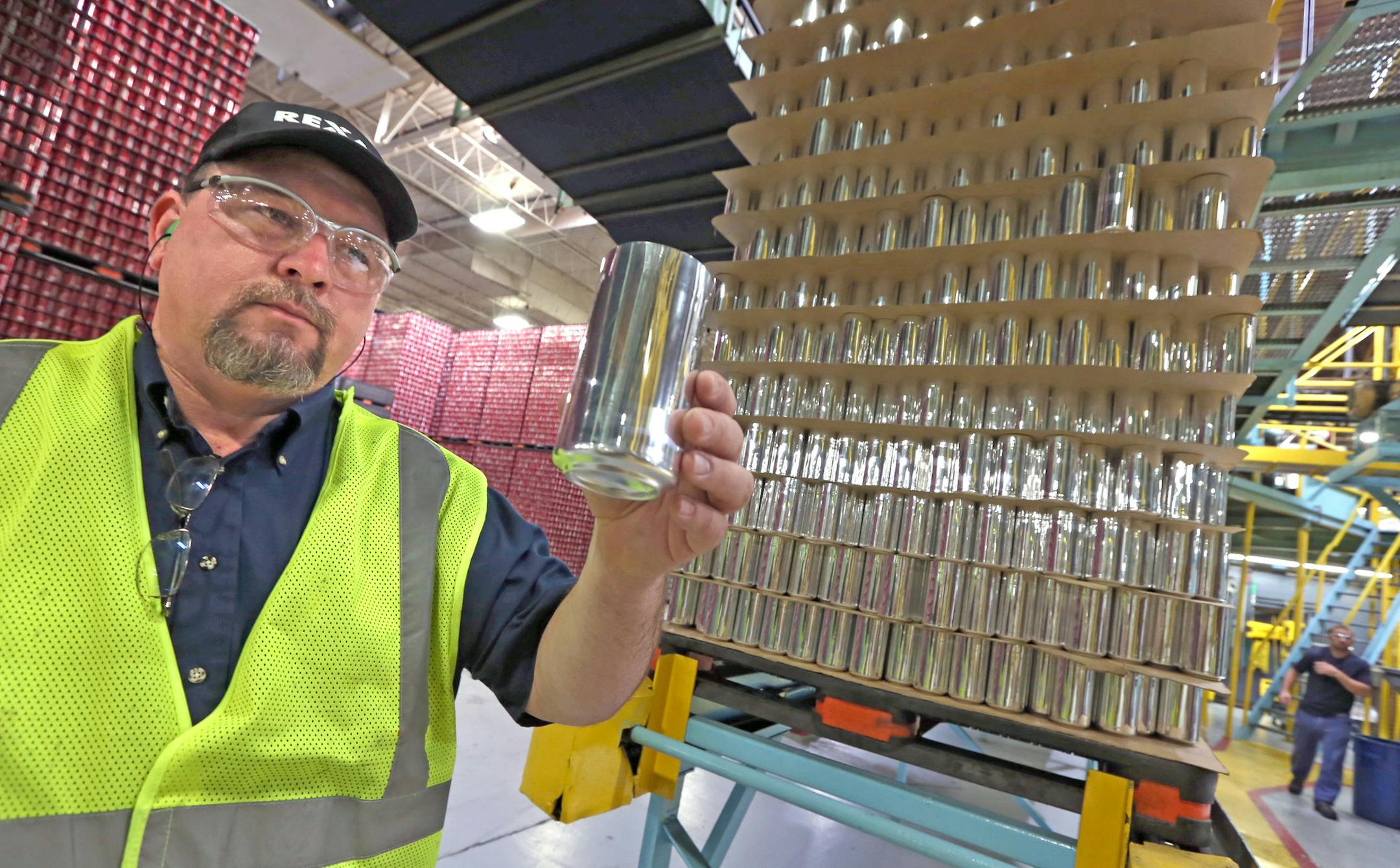
Chris Karpovich, Plant Manager at the Rexam Plant in St. Paul, held an aluminum can after it was formed and washed, just before it was painted for either Coke, Pepsi or other bottlers products on 8/8/13. Minnesotans only recycle 40% of all beer and soda cans. The nation recycles 58% of all cans. Yet the metal is easily recycled and increasingly going into cars and other items. Rexam Beverage Can Co. in St. Paul makes cans for Coke and Pepsi, etc and just made 1,200 cans for the state fair recycl
Chris Karpovich, plant manager at the Rexam Beverage Can Factory in St. Paul, held an aluminum can after it was formed and washed. Rexam makes billions of aluminum cans for Coke, Pepsi Dr Pepper bottlers and breweries across the United States. (The Minnesota Star Tribune)
Giant rolls of Aluminum coil stock are fed into machines for the first step of making aluminum cans at the Rexam Plant in St. Paul. The coils weigh around 23,000 pounds each. Minnesotans only recycle 40% of all beer and soda cans. The nation recycles 58% of all cans. Yet the metal is easily recycled and increasingly going into cars and other items. Rexam Beverage Can Co. in St. Paul makes cans for Coke and Pepsi, etc and just made 1,200 cans for the state fair recycling exhibit. About 68% of Rex
Giant rolls of aluminum coil stock are fed into machines in the first step of making aluminum cans at the Rexam plant. The metal is easily recycled for use in cans and other products. (The Minnesota Star Tribune)
Kim Perkins movied finished pallets of aluminum cans at the Rexam Plant in St. Paul, to be shipped to Coke, Pepsi and other plants around the mid-west. Minnesotans only recycle 40% of all beer and soda cans. The nation recycles 58% of all cans. Yet the metal is easily recycled and increasingly going into cars and other items. Rexam Beverage Can Co. in St. Paul makes cans for Coke and Pepsi, etc and just made 1,200 cans for the state fair recycling exhibit. About 68% of Rexam's cans are made of r
Kim Perkins moved finished pallets of aluminum cans at the Rexam Beverage Can Factory in St. Paul. (The Minnesota Star Tribune)
about the writer

about the writer

Dee DePass

Reporter

Dee DePass is an award-winning business reporter covering Minnesota small businesses for the Minnesota Star Tribune. She previously covered commercial real estate, manufacturing, the economy, workplace issues and banking.

See Moreicon

More from Business

See More
card image
Elizabeth Flores/The Minnesota Star Tribune

The holiday season started slow, and owners say they are worried about January, but several customers say they are purposely choosing independent small retailers this year.

card image
card image