St. Cloud State sees early success with controversial online programs

The accelerated online classes are helping bolster enrollment as the college digs out from a deficit.

The Minnesota Star Tribune
October 20, 2025 at 11:00AM
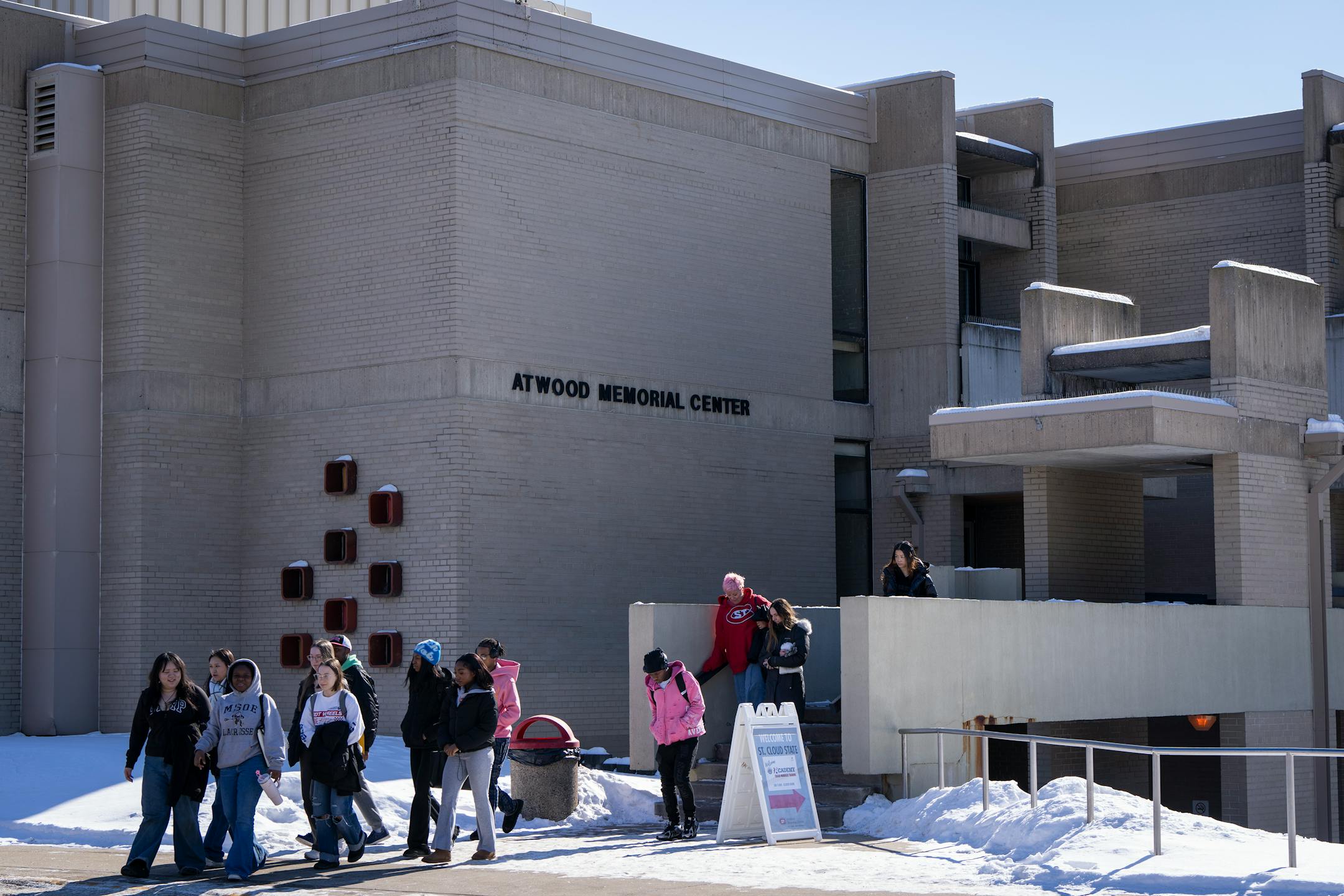
People walk out of Atwood Memorial Center at St. Cloud State University in St. Cloud in February. (Leila Navidi/The Minnesota Star Tribune)

ST. CLOUD – After a few tumultuous years that saw the elimination of nearly 100 programs and dozens of faculty at St. Cloud State University, school leaders say they have found a bright spot with their newly implemented seven-week courses.

The courses — which drew controversy when first rolled out — are part of new online accelerated programs that allow students more flexibility than typical semesterlong, in-person classes.

SCSU leaders hoped to use the online accelerated programs to scoop up some of the 1.2 million Minnesotans with college credits but no bachelor’s degree — and also lure back some of the thousands of Minnesota students taking classes with out-of-state online colleges such as Southern New Hampshire University or the University of Phoenix. The programs, along with plans next year to fold five colleges into three, are part of SCSU’s recent plans to get in the black by 2028.

“This is for Minnesotans who typically would go out of state to the for-profits,” SCSU Provost Katherina Pattit said during an interview this month. “There’s hundreds of thousands of dollars going out the door.”

Jennifer Bartlett, 50, of Zimmerman, Minn., is one of the 500 students at SCSU enrolled in the online accelerated programs. She’s taking two seven-week courses at a time and hoping to graduate in early 2026 with her master’s in business administration. She started classes in July.

“It was time for me to do that — to level myself up — to get the job that I want to get in the future," said Bartlett, who worked in education for three decades.

Three years ago, SCSU partnered with a Dallas-based company to offer the more flexible MBA and graduate-level educational leadership programs. Risepoint, formerly Academic Partnerships, provides expertise in the recruitment of potential students in exchange for 50% of tuition from the students enrolled in the courses.

After seeing early success with the graduate programs, the school expanded the courses to undergraduates last year, a move that drew pushback from some faculty, legislators and the Minnesota State system. Critics, which included professors, worried the partnering companies would take advantage of students by targeting them to sign up for classes but not caring about student success, leaving students with more debt and no college degree.

But SCSU leaders said Risepoint has marketing and recruitment expertise that the college doesn’t have to help reach potential students; and the tuition-sharing agreement helps ensure Risepoint focuses on retention because if the student stopped progressing through the program, the company stops getting paid.

After hearing concerns from faculty across the state, legislators last year passed a bill that prohibits state universities signing tuition-sharing agreements with companies such as Risepoint.

Rep. Nathan Coulter and Sen. Rob Kupec, both DFL lawmakers who introduced bills regulating online program managers, said they were concerned with what some of those companies were doing in other states — using teachers not affiliated with the partner school or stealing professors’ intellectual property.

“A lot of what we’re asking for is just transparency,” Kupec said.

Two schools with existing agreements with online program managers — SCSU and Southwest Minnesota State University — were grandfathered in, but if they want to continue partnerships after the current contracts expire, they will need to pay for the recruitment services up front instead of sharing tuition.

“Whether it’s tuition dollars coming from our students and their families, or it’s the public dollars that the state invests, we need to know up front how much these [online program managers] are being paid by these schools,” Coulter said.

After SCSU announced plans to launch a dozen seven-week programs in 2023, the Minnesota State system hit pause and instead allowed them to implement three programs — a two-year RN-to-bachelor of science in nursing, software engineering and business program — as a test run.

This fall, SCSU added three more programs in finance, marketing and management. The classes are helping bolster enrollment, said Pattit, the provost.

SCSU’s total enrollment is down about 500 students from last fall — landing at about 9,650 students as of early October — with about one-third of the decline due to fewer international students enrolling. The students in the accelerated courses, most of whom are from Minnesota, are helping cushion those losses. SCSU enrollment peaked in 2010 at about 18,300 students.

The programs also help reach often underrepresented students, Pattit said. “For the MBA, it serves a larger proportion of students of color and women,” she said. “And these programs have some of the highest retention rates.”

The average retention rate for the online accelerated courses hovers around 70%, slightly higher than the 65% one-year retention rate for all students.

SCSU was an easy choice for Bartlett, who got her associate degree from SCSU in the 1990s and her bachelor’s from the University of Phoenix during the pandemic. With that program, classmates came from around the world, making student-group collaboration difficult. In her current program, classmates — who range from farmers to health care workers — are more local, and professors have office hours in her time zone.

The strongest selling point for Bartlett — a wife, parent and grandparent — was the convenience.

“I really love being able to log on at 2 in the morning if I have the opportunity,” she said. “And the way the technology is, if you want it to be, it can be on your phone ... so you can make it as relevant in your life as you want.”

SCSU's first three accelerated online undergraduate programs — RN-to-bachelor of science in nursing, software engineering and business — have helped bolster enrollment, an official said, and three more programs in finance, marketing and management were added this fall. (Leila Navidi/The Minnesota Star Tribune)

In August, the university announced plans to merge its five colleges into three next year: the College of Business, Engineering and Technology; the College of Arts and Sciences; and the College of Education, Health and Human Services.

The restructuring should help tackle a projected $14.5 million budget shortfall over the next two years. It will lead to about 90 reductions of full-time positions — including at least six administrator positions — but about two-thirds of the cuts will be absorbed through existing vacancies, Pattit said.

Leaders at SCSU say the most drastic cuts are behind them, but they continue to look at how to best balance the budget and align program offerings with student interests, which have moved away from the humanities toward science and business in recent years.

SCSU also plans to shutter on-campus child care and move its Plymouth campus to a metro community college to save money.

“This university has such a long history and there have been chapters that were maybe not so great,” Pattit said. “But I think this is a vision of what can be and what’s going to help us really shine and grow and thrive.”

about the writer

about the writer

Jenny Berg

St. Cloud Reporter

Jenny Berg covers St. Cloud for the Star Tribune. She can be reached on the encrypted messaging app Signal at bergjenny.01. Sign up for the daily St. Cloud Today newsletter at www.startribune.com/stcloudtoday.

See Moreicon

More from St. Cloud

See More
A shrine to St. Cloud, the patron saint of the Diocese of St. Cloud, is inside St. Mary's Cathedral in downtown St. Cloud. The statue is a replica of the oldest known statue of the saint. (Credit: Jenny Berg)
card image