
Minnesota Somali community grapples with fraud cases while pushing back against stereotypes

The largest Somali community in the U.S. is finding itself the subject of unwanted attention in the wake of criminal investigations and attacks from the Trump administration.

November 26, 2025 at 11:00AM
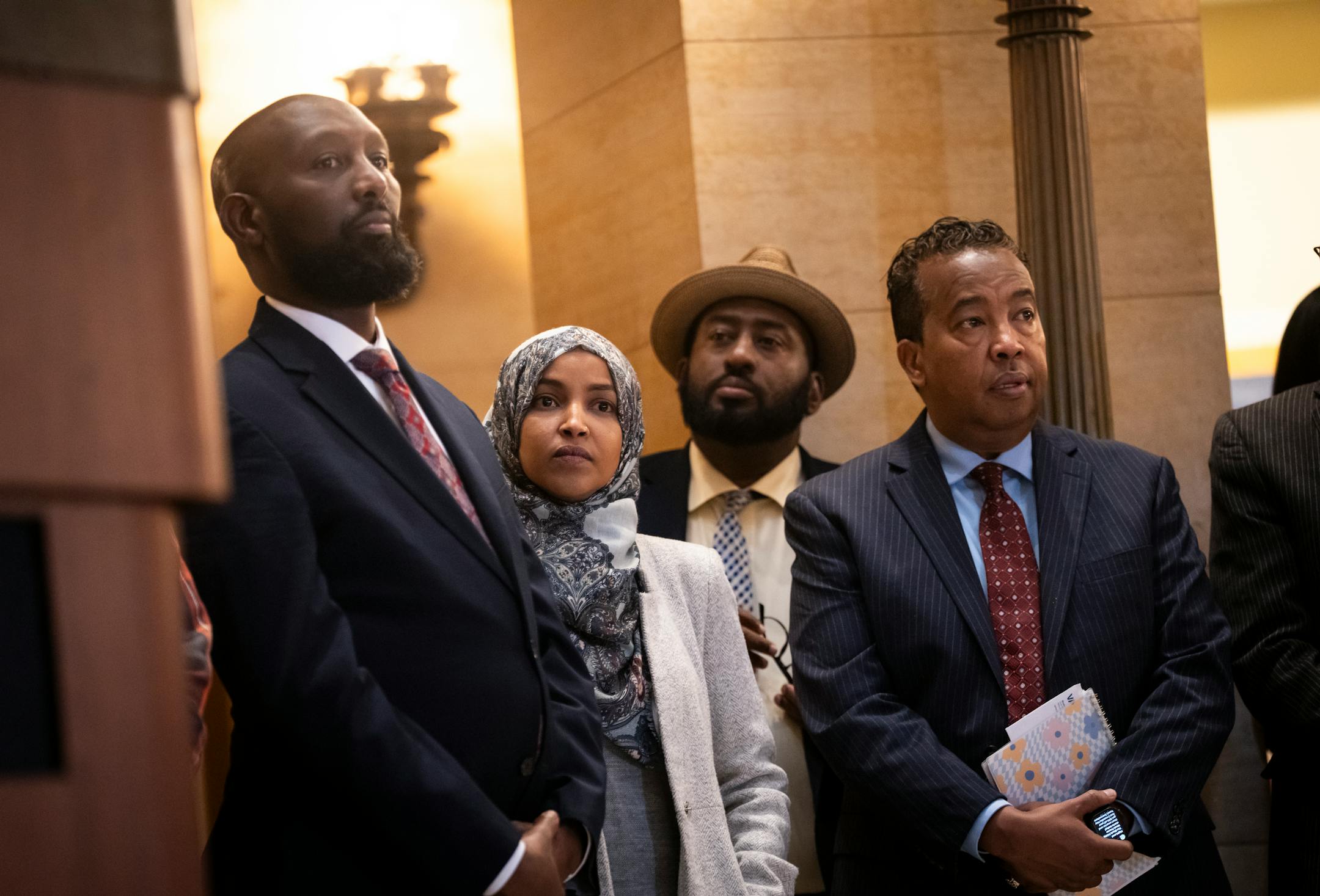
U.S. Rep. Ilhan Omar listens to other speakers at a news conference held by Somali Americans and allies in response to Donald Trump’s announcement that he would revoke Temporary Protected Status for Somalis in Minnesota, at the Minnesota State Capitol in St. Paul on Monday. (Renée Jones Schneider/The Minnesota Star Tribune)

Abdi Samatar left Somalia and arrived in the United States 34 years ago with nothing.

Now he’s a professor at the University of Minnesota, where he has watched with dismay as headlines pile up about Somali people charged with defrauding state government programs meant to feed hungry children, house the homeless and help people with disabilities.

He’s angry that people are stereotyping Somalis as criminals, but also wants perpetrators to be held accountable.

“This is big criminal stuff in my opinion, as a citizen, not as an academic, not as a Somali, but as a citizen,” Samatar said. “Whether they are Somali or Finnish or Hmong, it doesn’t really matter — the law should take good care of those people."

Minnesota’s Somali community — the largest in the U.S. — finds itself under scrutiny in the wake of criminal investigations that have revealed the theft of hundreds of millions of dollars from state-run programs. Most of the dozens of people charged, convicted and sentenced in those schemes are of East African descent.

That scrutiny intensified last week after Christopher Rufo, a conservative activist known for pushing to end “wokeness” on college campuses, alleged in an unsubstantiated City Journal report that money stolen from Minnesota programs has gone to al-Shabab, a terrorist group that controls parts of Somalia. The story cited a retired detective from Seattle who has made similar claims that were debunked in the past.

In response to Rufo’s story, President Donald Trump vowed Friday to revoke temporary asylum protections for Somali refugees fleeing war and natural disasters. In a social media post, Trump threatened to send Somalis “back to where they came from,” alleging Minnesota is “a hub of fraudulent money laundering activity.” Such a move could affect hundreds of Somalis in Minnesota.

While most charged in the cases have been of East African descent, prosecutors have never indicated any evidence that fraud proceeds ended up funding terrorism. The Minnesota U.S. Attorney’s Office declined Monday to comment on Rufo’s allegations.

Jaylani Hussein, executive director of the Minnesota chapter of the Council on American-Islamic Relations, said Minnesota Somalis are the victims of a campaign to demonize them.

He said law enforcement has traced stolen government funds to things like luxury cars, homes, vacations and even property in Kenya, but never to terrorist groups.

Hussein was one of several Somali community leaders, elected officials and citizens to speak out against Trump’s comments. Since Friday, they’ve held news conferences, rallies and even a potluck to condemn his actions.

Minnesota’s top Somali American elected officials appeared at a State Capitol rally on Monday and vowed to defend the rights of the Somali community.

“We’re not going to allow anybody to erase our presence and our contribution, and we are not going to allow anyone to scapegoat us,” U.S. Rep. Ilhan Omar said.

Omar and state Sen. Zaynab Mohamed pushed back against the notion that fraud is rampant in the Somali community.

Mohamed, DFL-Minneapolis, credited the state Senate for passing a bill last session to create an independent office of inspector general to provide more oversight of state programs.

“Somali legislators have helped get that done,” she said. The bill failed in the House.

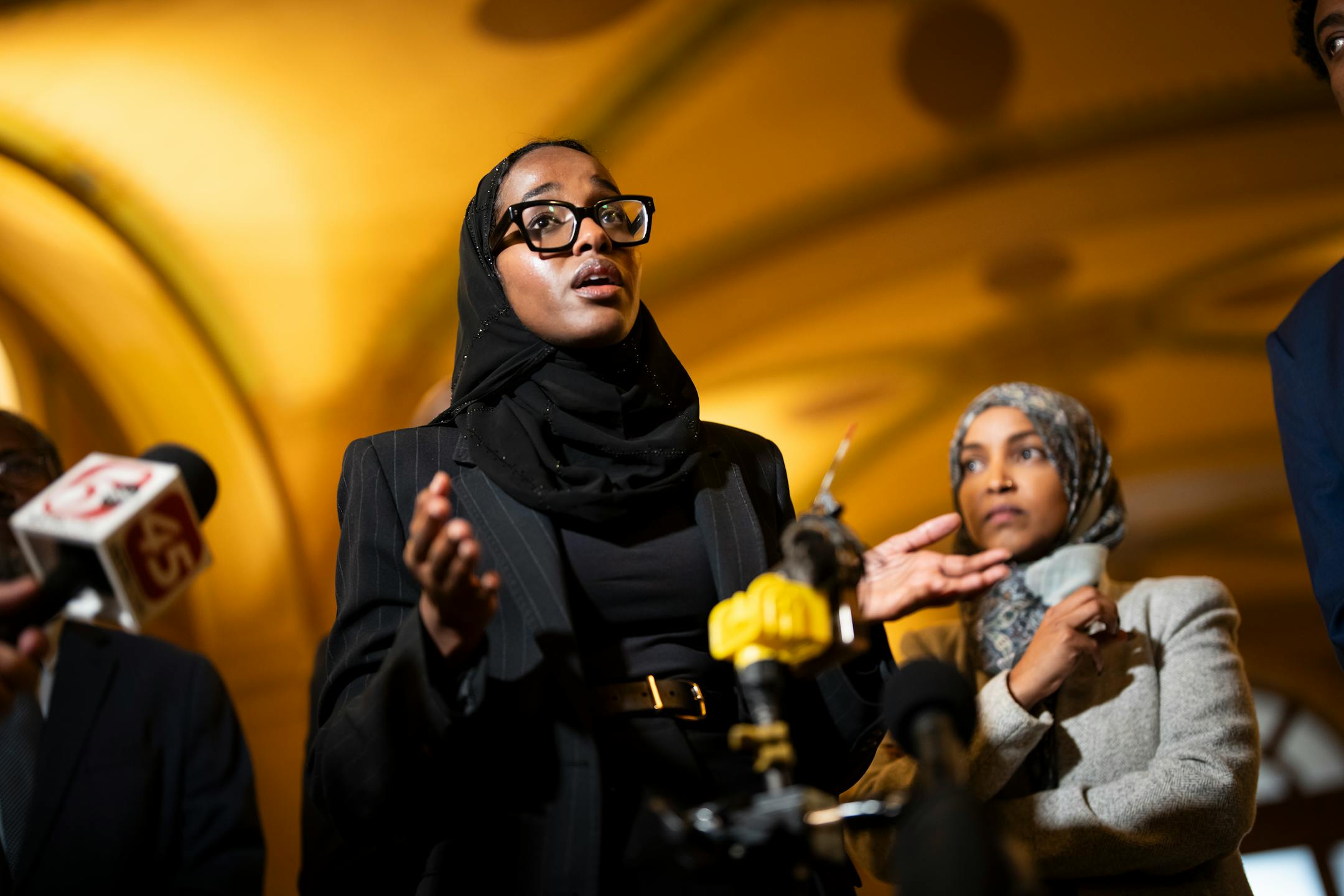
State Sen. Zaynab Mohamed and other Somali American elected leaders take questions from the press after a news conference in response to Donald Trump’s announcement that he would revoke Temporary Protected Status for Somalis in Minnesota, at the Minnesota State Capitol in St. Paul on Monday. (Renée Jones Schneider/The Minnesota Star Tribune)

As Gov. Tim Walz gears up for a run for a third term, he has taken a more aggressive approach to fraud in recent months, shutting down a scrutinized housing program and directing the Department of Human Services to close programs it deems too susceptible to fraud. Walz dismissed Trump’s missive as an attempt to distract from his own problems.

Rep. Mohamud Noor, a Somali American Democrat who represents Minneapolis, said he thinks the focus on fraud prevention will lead to additional safeguards.

“We want people to trust that the system is working as it is designed to work. We want to kick the bad actors out,” Noor said.

‘It hurts us as a business’

The president’s comments, the indictments and the investigations make it seem like all people of Somali descent are being blamed, some business leaders said. They see slurs and guilt-by-association posts on social media and news message boards.

“It hurts us as a business,” said Kassim Busuri, a former member of the St. Paul City Council who owns a child care center in Shakopee and an adult day care in St. Paul. “We follow the rules and regulations that are set by the state.”

Busuri said fraudsters need to be stopped and punished, but most of Minnesota’s 80,000-strong Somali community have gone from refugees to thriving business people through hard, honest work.

He said more than 50 people work for his businesses, paying taxes and supporting the broader community.

Busuri said those blaming all Somalis for the fraud need to look harder at the people who allowed the problem to fester and grow: state officials.

“The system is broken; that’s not our fault,” he said. “There are always going to be people who commit fraud. It’s up to the government to make sure people aren’t taking advantage of the system.”

The federal prosecutor at the center of the investigations, Joe Thompson, has laid some of the blame on state government for failing to put up guardrails to prevent and stop fraud. He has said the state’s generous social service safety net — rooted in Scandinavian models — is being jeopardized by “massive levels of fraud, waste and abuse.”

Allegations ‘soiled the water for everybody’

This isn’t the first time Somali Minnesotans have been accused of funding terrorism.

The City Journal’s reporting was based on comments by retired Seattle detective Glenn Kerns as a source. In 2018, Kerns made similar assertions in a Fox 9 story about Somalis sending suitcases of cash back home, only to have some end up in the hands of al-Shabab. That report was largely debunked by a state audit, which found no evidence of a connection between the state’s child care program and al-Shabab or other terrorists.

Samatar, the U professor, said fraud has left a stain on the community but noted, “A lot of poor Somalis who are struggling have been swindled in this process.”

Those who have abused the system have “soiled the water for everybody,” he said, by “abusing the community’s name for their individual gain.”

Samatar wishes the Somali community had mobilized against fraud, but said criminality isn’t specific to certain races or religions.

After all, he noted, the person prosecutors say was at the center of the massive Feeding Our Future fraud, the nation’s largest pandemic relief fraud that resulted in charges, was a white Minnesota woman: Aimee Bock. She was convicted of all charges and awaits sentencing.

Jeffrey Meitrodt and Christopher Magan of the Minnesota Star Tribune contributed to this story.

about the writers

about the writers

Deena Winter

Reporter

Deena Winter is Minneapolis City Hall reporter for the Star Tribune.

See Moreicon

James Walsh

Reporter

James Walsh is a reporter covering social services, focusing on issues involving disability, accessibility and aging. He has had myriad assignments over nearly 35 years at the Star Tribune, including federal courts, St. Paul neighborhoods and St. Paul schools.

See Moreicon

Nathaniel Minor

Reporter

Nathaniel Minor is a reporter for the Minnesota Star Tribune.

See Moreicon

More from Twin Cities

See More
card image
Aaron Lavinsky/The Minnesota Star Tribune

Carley Frank turned a school project into a way to honor her brother and sister, helping other students for years to come and boosting awareness about mental health.

unlandscaped noise walls in Golden Valley. handout
card image