

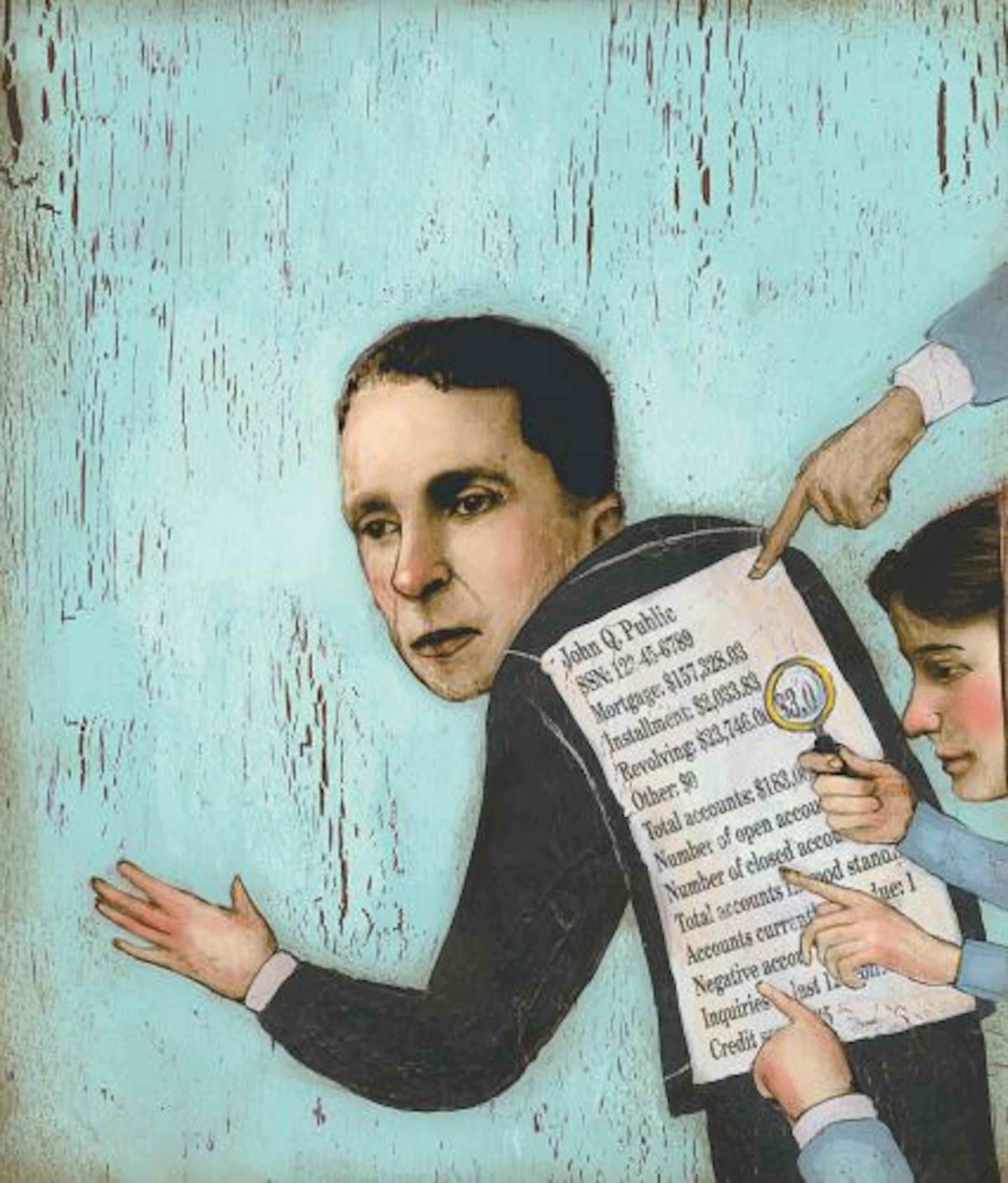
Stuck in a house you can't afford or can't sell for more than you owe on it?
Beware the Web, where you'll see plenty of claims that short sales will save your credit, simple as that. But there's nothing simple about deciding whether to sell your house in a foreclosure or in a short sale, which means you sell the property for less than you owe the bank. And in most cases, going through either process will wreck your credit score.
"Both short sales and foreclosures are considered negative by the score, because our data shows us it's very predictive of future credit risk," Tom Quinn, Minneapolis-based Fair Isaac Corp.'s vice president of FICO scores, said. "The claim that doing a short sale is not going to hurt your score is false. It's inaccurate."
Credit scores, which are designed to assess how likely it is that consumers will uphold their side of the bargain, look at the severity (are we talking bankruptcy or a late car payment?), frequency (have you skipped a payment once, or have you missed a bunch?), and recency (did you miss a payment last month or last year?) of items on your credit report.
In both short sales and foreclosures, "you made a lender eat a big number," said Alex Stenback, a mortgage banker with Residential Mortgage Group in Wayzata.
That's not to say that there aren't some instances where short sales are better. If a borrower is current at the point of a short sale, for instance, then the consumer's credit score won't sink as far as it would have if he hadn't made a mortgage payment for six months. Still, Fair Isaac says that the benefit from not having prior delinquencies on file pales when compared with the hit a score takes from a short sale.
Dan Williams, program director for LSS Financial Counseling Service, says this widespread notion that short sales are better for credit is a big problem because it deters some people from going into foreclosure when that would be the best option for them.
In Minnesota, homeowners can stay in their houses for six months after the foreclosure sheriff's sale. Factor in the fact that many banks don't start foreclosure proceedings right after the third missed payment, and families can potentially stay in a house for more than a year rent-free, hopefully saving that money to help them get back on their feet. This could amount to thousands of dollars.


