
Shakopee man sentenced to 10 years in Feeding Our Future fraud case

Federal prosecutors said Abdimajid Nur submitted the bulk of the fraudulent invoices used to support the fake claims that fueled the scheme.

The Minnesota Star Tribune
November 25, 2025 at 12:17AM
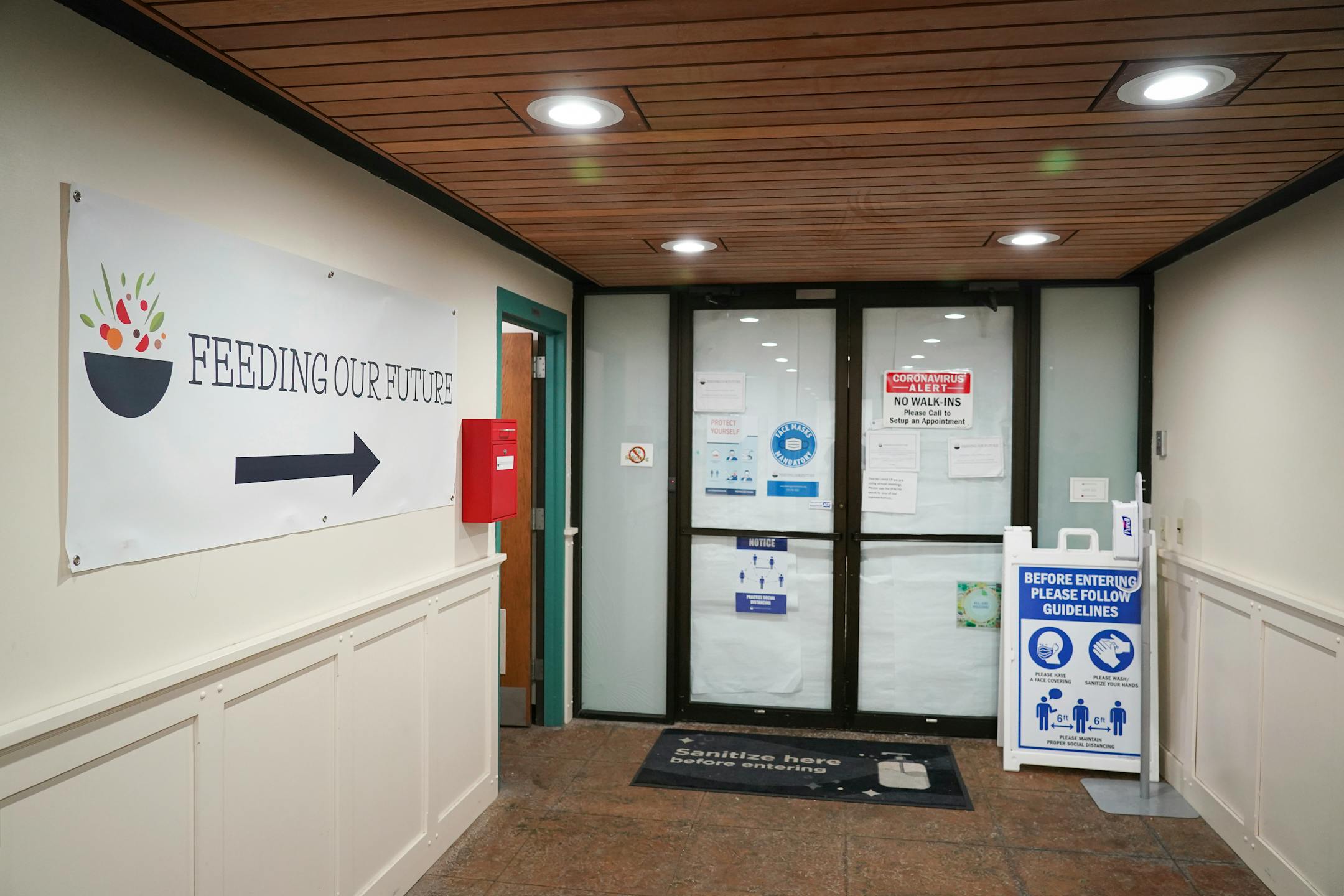
FILE - The office of Feeding Our Future is seen, Jan. 27, 2022, in St. Anthony, Minn., a week after an FBI raid. A juror was dismissed Monday, June 3, 2024, after reporting that a woman dropped a bag of $120,000 in cash at her home and offered her more money if she would vote to acquit seven people charged with stealing more than $40 million from a program meant to feed children during the pandemic. Two of the groups involved, Feeding Our Future and Partners in Nutrition, were small nonprofits before the pandemic, but in 2021 they disbursed around $200 million each. (Shari L. Gross/Star Tribune via AP, File) (Shari L. Gross/The Minnesota Star Tribune)

A Shakopee man was sentenced Monday to a decade in prison for his role in the $300 million fraud scheme that exploited a federal child nutrition program meant to feed hungry children during the COVID-19 pandemic.

Abdimajid Nur was one of the five defendants found guilty last year during the first trial of what’s come to be known as the Feeding Our Future case — the largest pandemic-related fraud investigation in the country.

Nur, who federal prosecutors said played a “key role” in the fraud, along with other defendants misappropriated more than $47 million from the child nutrition program through Empire Cuisine & Market by falsely claiming to serve meals to thousands of children per day. In reality, no meals were served at many of the sites, prosecutors said. Nur submitted the bulk of the fraudulent invoices with inflated meal counts and rosters listing names of fake children.

After enrolling Empire Cuisine & Market in the program, Nur and another defendant, Abdiaziz Farah, used $7 million in ill-gotten gains to purchase real estate in Kenya through a shell company called Empire Enterprises. Nur also started Nur Consulting LLC, which prosecutors said was another way he laundered his share of the fraud proceeds.

In total, Nur received more than $900,000 in fraud proceeds in the scheme. He used the money to buy a 2021 Dodge Ram pickup, a 2021 Hyundai Santa Fe, jewelry in Dubai and to pay for a honeymoon to the Maldives. Prosecutors at trial said Nur also used some of the funds toward an online college degree from Herzing University, to which he paid $12,000 for a company called PayMeToDoYourHomework.com to complete his coursework.

In arguing for a lower sentence, defense attorney Edward Sapone portrayed Nur as a man with a tumultuous childhood who fled Somalia but later tried to better himself by participating on his high school track team and enlisting in the U.S. Army. His life took a turn for the worse, Sapone said, when he met Farah.

The defrauding of a U.S. government program meant for needy children “doesn’t get much more detestable than that,” Sapone said. He continued that Nur accepts responsibility and “is done with criminality.” Nur said as much when addressing the court himself, stating he “had a good life before I made decisions that led me down a dark path.”

Federal prosecutors countered that the United States offered Nur “everything,” and in exchange, he attacked the “foundation that our country is built on.”

“He paid us back by playing us all for fools,” Assistant U.S. Attorney Joe Thompson said.

Nur also previously pleaded guilty to his role in attempting to bribe a juror that oversaw his own federal trial last year. According to the charges, he and others orchestrated a plan to drop off a bag carrying $120,000 in cash to a juror in exchange for an acquittal. The juror reported the bribe and was excused from the jury. Nur and other defendants charged in the bribe attempt await sentencing in that case.

In handing down her sentence, U.S. District Judge Nancy Brasel said Nur “saw money and rushed to steal” when he participated in the fraud during the pandemic. She said she took into account that Nur was only 19 when he was indicted, making him the youngest known defendant in the Feeding Our Future case. She also considered how Nur recruited his sister into the scheme, which led to her three-year prison term for fraud charges. His prison term will be followed by three years of supervised release and also calls for $47 million in restitution.

Monday’s sentencing comes after President Donald Trump said he would revoke Temporary Protected Status for Somalis living in Minnesota shortly after a report published last week in a magazine run by the Manhattan Institute, a conservative think tank. Citing federal counterterrorism sources, the report alleged that fraud carried out by members of Minnesota’s Somali community has resulted in millions in stolen money being sent to the Al-Shabaab terrorist group in Somalia.

The report highlighted the Feeding Our Future case along with the several ongoing fraud investigations focused on Minnesota programs meant to provide housing and autism services. Thompson, who announced charges against several defendants in the schemes as the temporary U.S. Attorney at the time, said some of the defendants charged in Feeding Our Future, many of whom have ties to Somali community-based programs, are also fraud suspects in the other schemes.

The allegations were not addressed during the court hearing.

The sprawling federal fraud case reached its 78th defendant on Monday after 36-year-old Abdirashid Bixi Dool was indicted on charges that he defrauded the food program by claiming to serve 40,000 children per week between two sites in Moorhead and Pelican Rapids, for which he and another conspirator received $1.1 million. The pair instead laundered the money to their families and also used it for travel and real estate purchases, federal prosecutors allege.

about the writer

about the writer

Sarah Nelson

Reporter

Sarah Nelson is a reporter for the Minnesota Star Tribune.

See Moreicon

More from News & Politics

See More
card image