
Despite successful drug busts, pipeline of meth and fentanyl continues in Minnesota

Federal drug agents seized an eye-popping amount of drugs off Minnesota streets this year. But as one channel dried up, cartels found other ways to get in.

The Minnesota Star Tribune
December 22, 2025 at 11:00AM
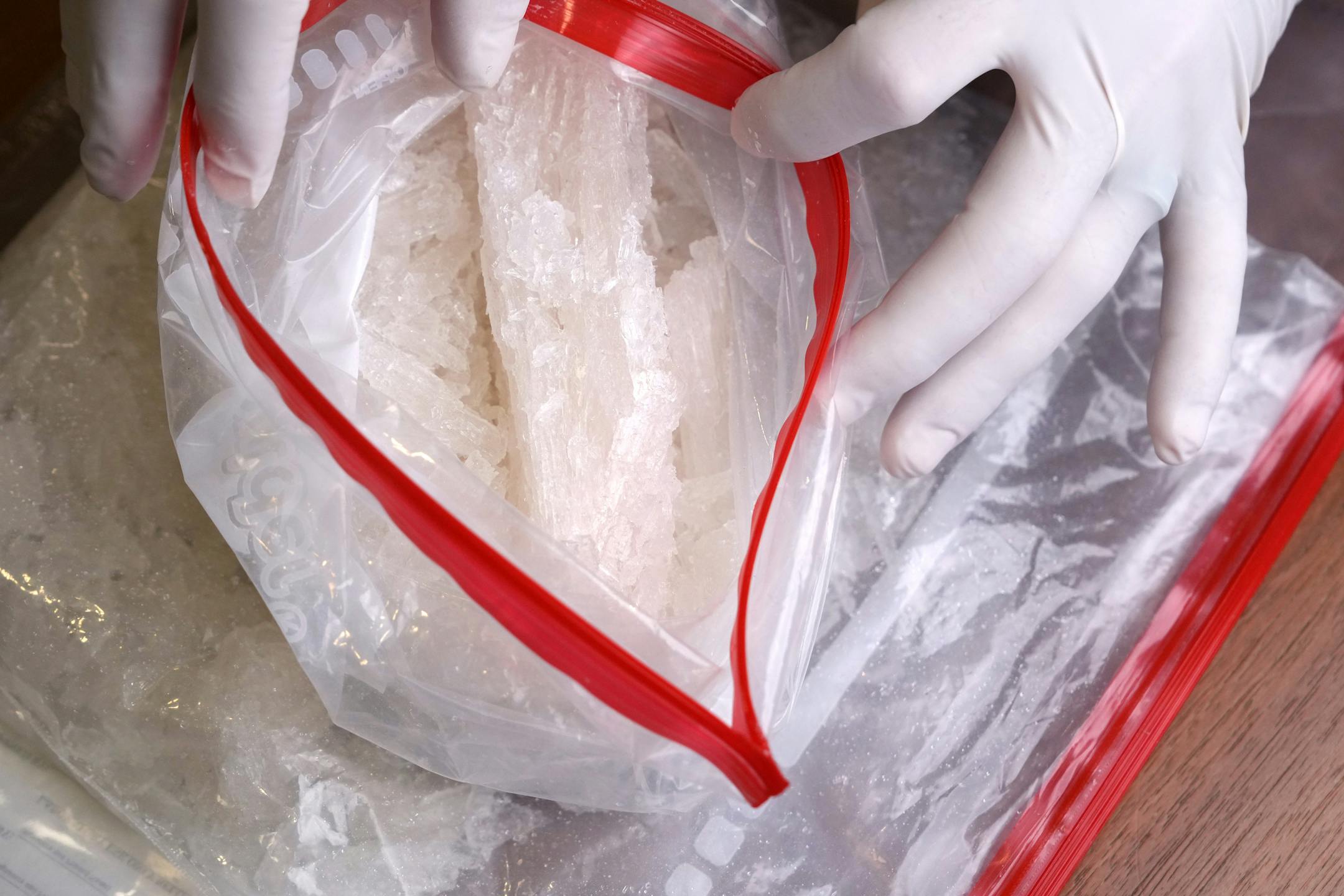
Drug Enforcement Administration officials with the Omaha Field Division show off two pounds of crystal methamphetamine from a local seizure earlier at the agency’s district office in Minneapolis Thursday. (Anthony Soufflé/The Minnesota Star Tribune)

Not long after law enforcement officials swept nearly 900 pounds of methamphetamine off the streets of Minneapolis in July, Yeng Moua and his wife, Xianna Mouayang, saw a swift effect among their clients.

Residents of the homeless encampment where they provide food and clothing suddenly stopped using illicit drugs because their supply had dried up. The couple, who founded Koom Recovery to fight substance abuse in the Hmong community, referred to that period of time as the “dry season.”

But the slowdown was only temporary, Moua said, before the faucet of illicit drugs in the encampment slowly turned on again.

By the end of 2025, Minnesota will have seen the highest level of meth seized by federal agents in at least five years — totaling 3,157 pounds.

The grim outlook is indicative of the Whac-A-Mole reality of the drug world felt both by recovering addicts and federal law enforcement responsible for choking the pipeline of illegal substances. While federal drug agents twice this year made big busts in the Twin cities metro, the recovery community says more drugs will always follow behind as cartels continue their reach into Minnesota as a hub for the Upper Midwest.

The breadth of drugs flowing through the state was clear in two busts that captured the public’s attention, including the 900 pounds referenced by Moua. Not long before that seizure, federal law enforcement announced they had unearthed another 900 pounds of meth tucked into large metal spools in a Burnsville storage unit.

Both drug captures were tied to international cartel organizations, according to court documents.

The amounts only reflect what’s intercepted by federal agents, meaning the total amount of meth in Minnesota is almost certainly higher when also considering what’s captured by local or state police.
It’s nearly impossible to estimate total the amount of drugs flowing throughout Minnesota, according to Dustin Gillespie, special agent in charge of the Drug Enforcement Administration’s Omaha Field Division, which oversees Minnesota and other midwestern states.

“I remember when I came on the job, a 5-pound or 3-pound meth seizure was significant,” said Gillespie, who was named to the role in September. “But the reality is, the cartels and our distribution transportation networks are moving multi 100-pound quantities of methamphetamine all the time.”

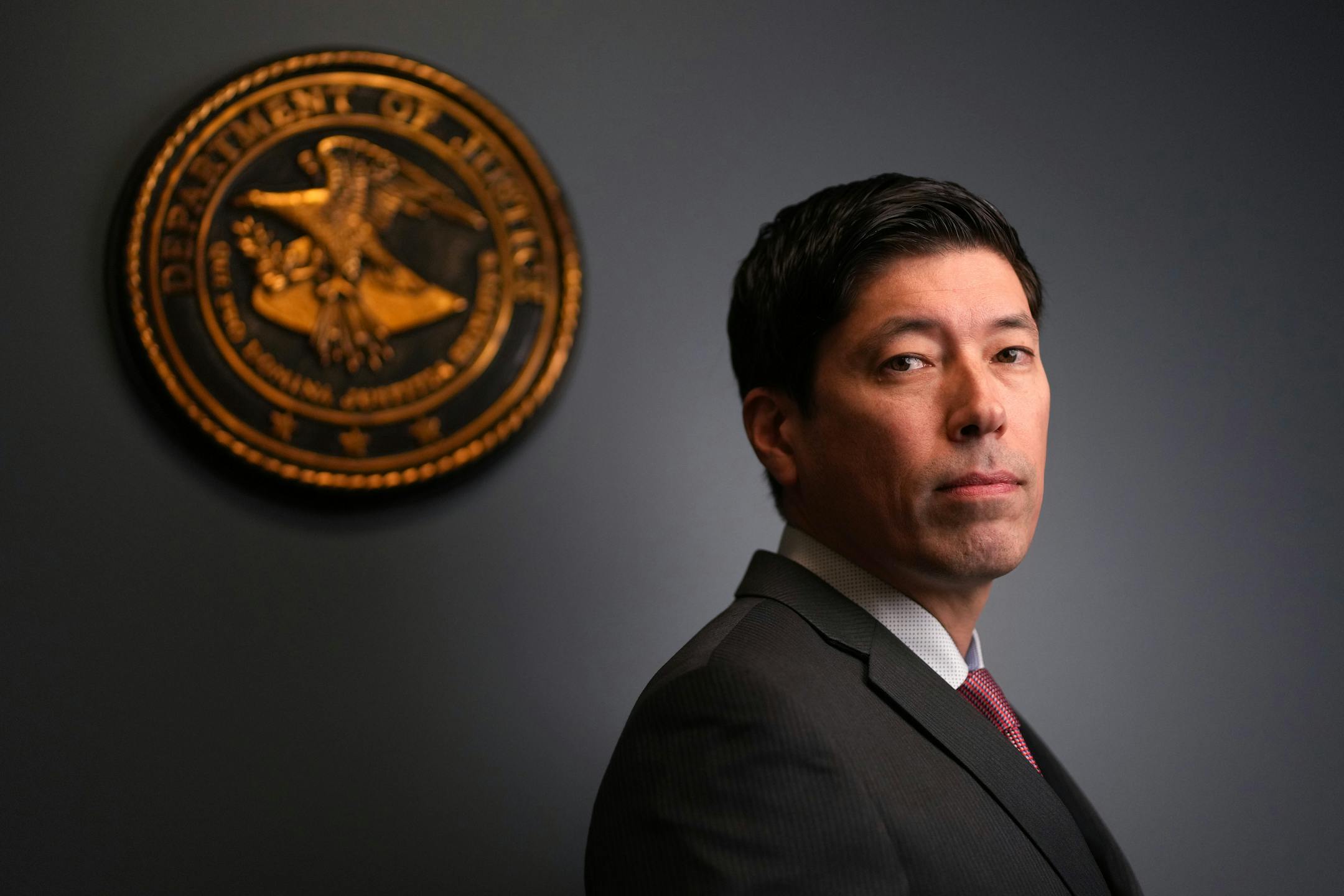
Dustin Gillespie, the special agent in charge of the Drug Enforcement Administration’s Omaha Field Division, stands for a portrait on Thursday at the agency’s district office in Minneapolis. In his role Gillespie oversees the agency’s 11 offices across Iowa, Minnesota, Nebraska, North Dakota and South Dakota. (Anthony Soufflé/The Minnesota Star Tribune)

On top of the meth seizures, the threat of fentanyl still looms large. Federal drug agents saw a 300% increase in fentanyl powder seizures in Minnesota this year, totaling 161 pounds versus 37 pounds taken all of last year.

Cartels began pushing fentanyl in powder form after the U.S. government’s aggressive “One Pill Can Kill” campaign, Gillespie said. In years past, fentanyl was commonly pressed into counterfeit pills to look like Xanax or oxycodone.

The flow of both fentanyl and meth has been observed by staff at the nonprofit Twin Cities Recovery Project, who were unaware of the rising amount of the drugs captured in busts, but were also unsurprised. Just outside the nonprofit’s doors on W. Broadway Avenue, the going rate for a handful of pills remains a measly $2.00.

“It’s been an issue,” said Greg Lowe, the nonprofit’s outreach manager. While fentanyl has mostly been responsible for ravaging their clients in north Minneapolis, staff members started to notice a rising number of their predominantly Black clientele also using meth. Now, nearly all of their clients use both.

“All of a sudden, people are talking about, ‘How did you get on meth?’ Because that was never a Black person’s drug,” said LaTricia Tate, CEO of Twin Cities Recovery Project. “Now with fentanyl being mixed, is that how we get connected to it? Those are the conversations we’ve been having around the table.”

Lowe said the shift shows the nature of the drug scene. After a tremendous undertaking by the federal government to raise awareness about fentanyl and turn the tide of overdose deaths, dealers and traffickers changed their focus to fentanyl powder and then meth, the cheaper option, to avoid heat from law enforcement.

“These are smart people. They’re business people. They’re gonna zig where they used to zag,” Lowe said.

That much was evident at the Twin Cities Recovery Project’s office in north Minneapolis on a Wednesday afternoon in December.

Inside, staffers from the Minneapolis Mobile Medical Unit handed out pamphlets with information about harm reduction tools, along with opioid reversal agent Naloxone, fentanyl test strips and information about meth.

Also on the table: a flyer warning about a new substance emerging in the illegal drug scene across the country. The paper said medetomidine is more potent than the last animal tranquilizer to hit the market and cause zombie-like symptoms.

It warned the sedative has already been found in Minnesota.

about the writer

about the writer

Sarah Nelson

Reporter

Sarah Nelson is a reporter for the Minnesota Star Tribune.

See Moreicon