

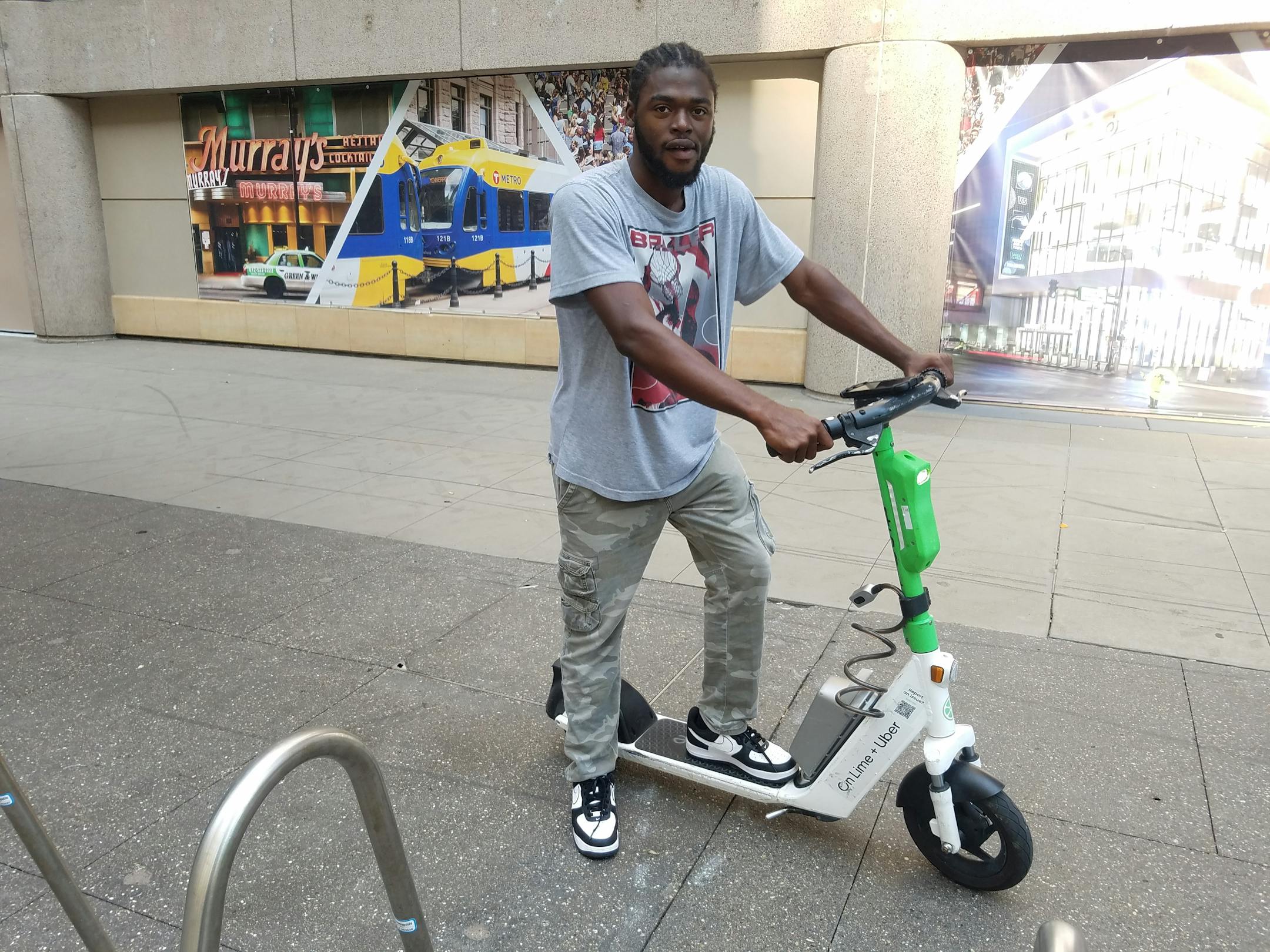
Godslove Koufie is a Minneapolis Community and Technical College student who does not own a car.
When he needs instant transportation, shared e-bikes and scooters fit the bill.
“They are fun. They are cool,” he said while riding Friday at 6th Street and Nicollet Mall in downtown Minneapolis on his way to apply for a driver’s license. “They are easy to ride.”
Like Koufie, legions of Minnesotans are hopping on the two-wheel electric-powered vehicles to get to class, to work, run errands, go out to eat, or just for recreation. Last year, riders in Minneapolis made more than 1.25 million trips on what is known as microtransit, the most since 2019. And the city is on track to smash that mark this year, said Dillon Fried, a senior project manager for the state’s largest city.
“We are seeing record ridership month over month,” Fried said. “We are seeing the highest numbers we have ever had.”
St. Paul has seen big numbers, too. Riders took 327,247 rides on the devices last year. That was down slightly from 2023, when the city recorded 328,926 trips, but some of that drop was attributed to one operator closing up shop in mid-August, long before the riding season typically ends, according to the city’s 2024 Shared Micromobility report.
With an average of 5,100 trips made on a e-bike or scooter each day in Minneapolis, the rise in usage mirrors what is happening in other North American cities. Trips taken on bike share and scooter share systems in the U.S., Mexico and Canada reached an all-time high in 2024, according to a new analysis by the North American Bikeshare and Scootershare Association. The 225 million trips logged last year was a 31% increase over 2023, the report released earlier this month said.
Locally, the two providers Lime and Spin have upgraded their scooter fleets and Lime replaced all its pedal bikes with e-bikes. Additionally, Minneapolis has invested in its All Ages and Abilities Network, a program to make bicycling and scooter riding safer.


