
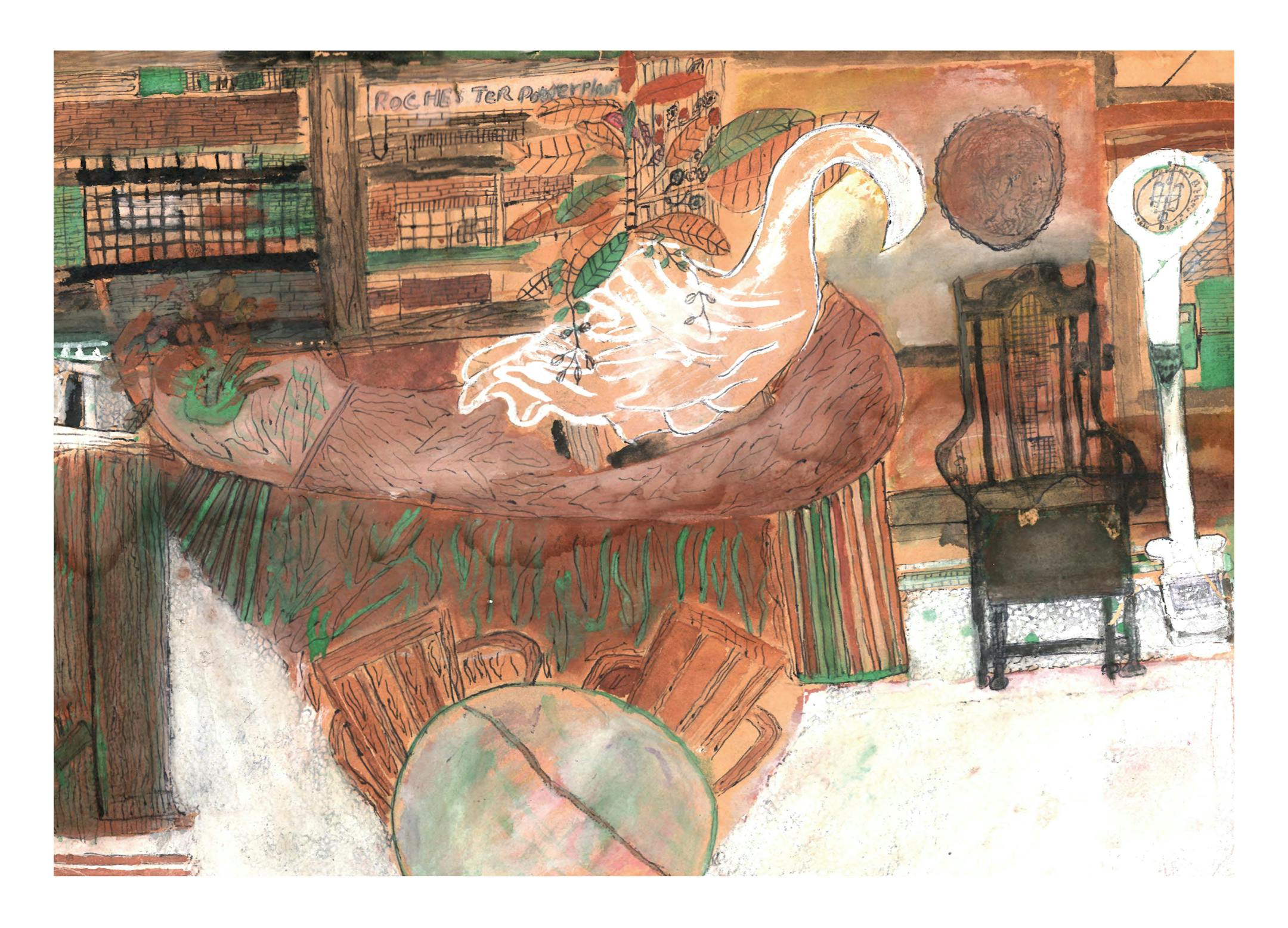
Washington: This painting by an unknown artist may hold secrets to a Green Book hotel’s past

It was purchased from a stranger in 1973 and will soon hang in the former Avalon Hotel, which for years sheltered Black and Jewish travelers turned away elsewhere.

Columnist Icon
The Minnesota Star Tribune
December 13, 2025 at 7:29PM
The Avalon lobby painting, which Gregg Mitchell purchased from a stranger decades ago for $25. (Courtesy Gregg Mitchell and Natalie Victoria)

Opinion editor’s note: Strib Voices publishes a mix of material from 8 contributing columnists, along with other commentary online and in print each day. To contribute, click here.

•••

Gregg Mitchell didn’t set out to preserve a piece of Minnesota history. All he was doing, he says, was offering a stranger a ride through a snowstorm.

“It was Christmas of 1973,” he told me from his home in Baltimore. “I was away at college and came back and was visiting friends in southwest Rochester.”

The radio reported the road headed south was closed because of a growing blizzard. As Mitchell eased onto Highway 52, he noticed “an African American man by the side of the road with a trunk,” and thought: “My goodness! He’s not going to be able to get out of town hitchhiking.”

Mitchell said he turned around and picked up the man, who said he was going south for the winter but was stopped by the storm.

They drove to Mitchell’s parents’ house, where the man was invited to stay the night. He declined, saying “he would rather sell me a painting so that he had the funds to stay at the Avalon Hotel.”
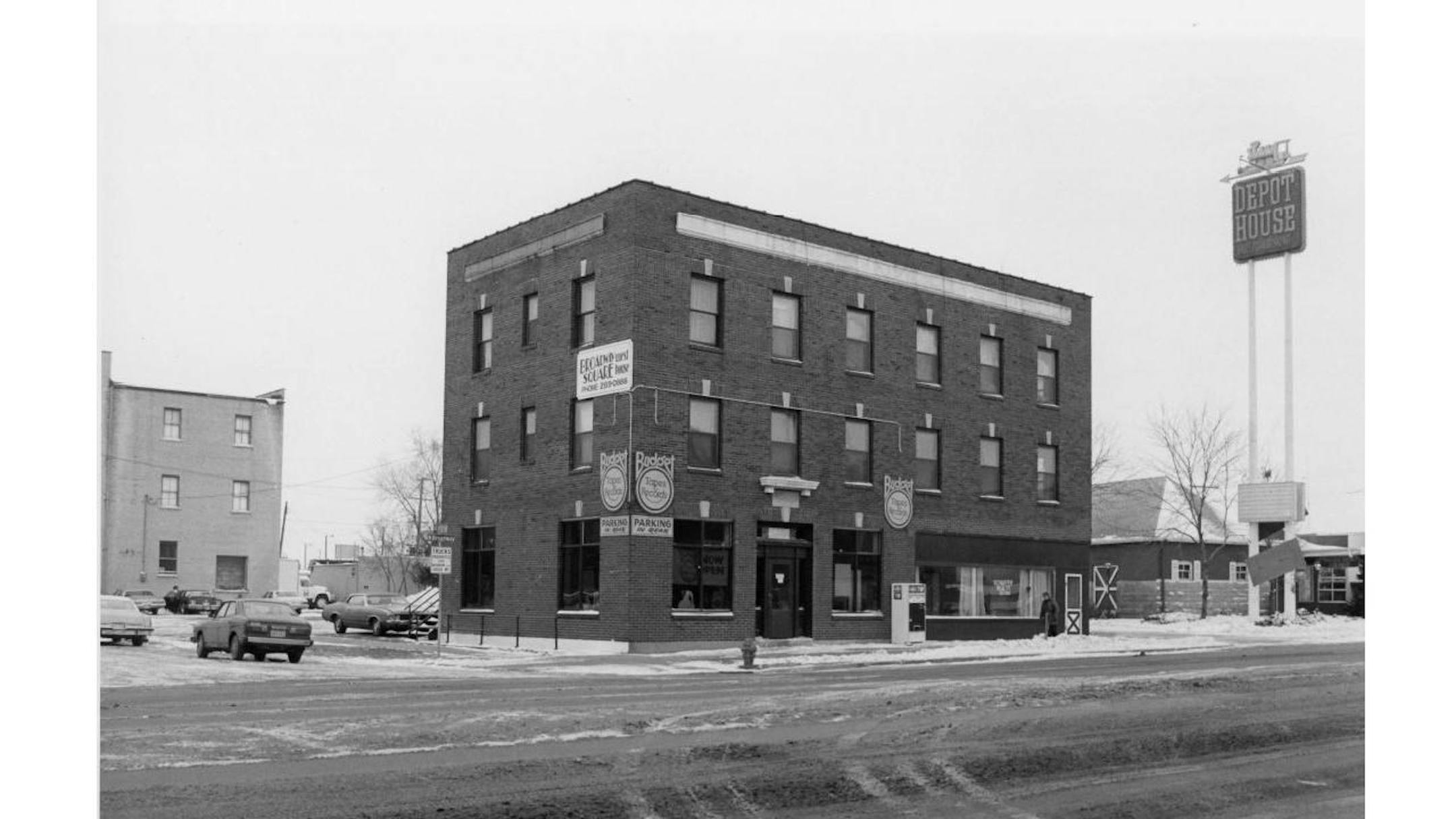
The Avalon Hotel in Rochester. (Courtesy of the Minnesota State Historic Preservation Office)

Out of the trunk came a portfolio. “I probably looked at 50 to 100 paintings,” Mitchell said. “He was really prolific.”

One stood out: A depiction of the lobby of the Avalon. Its rounded front desk was bedecked by a white swan. A medical scale and cane chair were off to the side. In the background out the window were the words “Rochester Power Plant.”

The son of an art professor and an art student himself at the time (he has since gone on to a career in nonprofit management), Mitchell said he was struck by the tilted perspective. “It kind of reminded me of what Cezanne does, where you look at it both from the foreground and above.”

“I paid him $25,” he continued. “He was happy, and that was enough for his needs and paying for the hotel room. I drove him downtown to the Avalon through the snow, dropped him off, and said goodbye.”

What he didn’t ask, or has since forgotten, haunts him to this day: the man’s name, which wasn’t on the painting, either. “I just can’t believe I didn’t get him to sign it.”

Likewise, Mitchell says he was clueless about the significance of the Avalon. Like many if not most of Rochester’s white residents, he was insulated from the discrimination Black and Jewish people faced when visiting the Mayo Clinic or coming to town for other reasons.

The Avalon had been their refuge when other lodging places turned them away. Originally the Northwestern Hotel, it was built in 1919 by Sam Sternberg as a place where his fellow Jews could stay. He sold it in 1944 to Vern Manning, an African American man whose wife was undergoing treatment at Mayo. Listed in the Green Book, it was open to all races, hosting Black luminaries such as Duke Ellington and serving as a gathering place for intellectuals of every ilk.

That heyday had long passed by the time it was placed on the National Register of Historic Places in 1982. Abandoned and in disrepair, it passed through several owners before being acquired in 2023 by Natalie Victoria and her business partner Christine Stahl. They are now refurbishing it as an event venue.

Victoria, who with her husband also owns Victoria’s restaurant, says she was fascinated by its past.

“We really kept getting drawn back to the building because of the history,” she said. “It is remarkable what happened in both the Sam Sternberg era and the Vern Manning era. The intellectuals, the doctors, the philosophers — they would get their coffee and meet and they would discuss a whole host of different topics.”

At the same time, Gregg Mitchell’s brother, Robb, who lives in St. Paul, was also researching the building’s history in the hopes of establishing the painting’s provenance. He connected with Victoria.

“Robb and Gregg came down to the Avalon,” Victoria said of a visit in October. “We gave them a tour and visited for a while, and they handed over the painting.

“It’s really a cool painting,” she continued, noting specifically that it captures the building’s “vibe.”

“The first thing you notice when you look at the picture is that swan,” she said — though the object is long gone from the former lobby and hasn’t materialized elsewhere in the building.

Himself an artist, Robb Mitchell dubbed the painting “The White Swan of the Avalon” and speculated on the symbolism of the work and clues about its creator.

“Is it naive art, folk art, outsider art or itinerant art that existed on the periphery of established culture in America? Probably the answer is all four,” he said. The artist, he guessed, would have been one of many in an overland network of Black artists who plied his trade as an outsider.

The painting is being framed to hang in the lobby, Victoria said. “I’m going to have a little verbiage about it so people can understand what the painting was and the significance behind it.”

History buffs aren’t the only ones who might take an interest. Art mysteries are notorious for attracting everyone from Sotheby’s curators to scam artists, who can convince collectors that a discovery is a long-lost cousin of a multimillion-dollar Basquiat.

I would hold off on raising my bidding card just yet. But as the son of a mid-century artist whose work in recent years is getting increased attention posthumously, I’ve learned how to identify works I previously assumed were indeterminate. Among my mother’s portraits are those I once thought to be of arbitrary people that I now realize were neighbors and family members whose names I know. Also telling are identifiers on the backs of canvases, such as an art store’s name and address, or the style of paper or brushstroke. One landscape of my mother’s has the exact same colors as a still life, meaning she painted them at the same time before remixing her palette.

So the scale and the chair and the swan mean something. Circa 1969, Duke Ellington wrote a tune called “Black Swan.” Not a white one — but you never know.

If somebody does, history awaits.

Robin Washington is a contributing columnist for the Minnesota Star Tribune. He is passionate about transportation, civil rights, history and northeastern Minnesota. He is a producer-host for Wisconsin Public Radio and splits his time between Duluth and St. Paul. He can be reached at robin@robinwashington.com.

about the writer

about the writer

Robin Washington

Contributing columnist

Robin Washington is a contributing columnist for the Minnesota Star Tribune. He is passionate about transportation, civil rights, history and northeastern Minnesota. He is a producer-host for Wisconsin Public Radio and splits his time between Duluth and St. Paul. He can be reached at robin@robinwashington.com.

See Moreicon

More from Contributing Columnists

See More
card image
Courtesy Gregg Mitchell and Natalie Victoria

It was purchased from a stranger in 1973 and will soon hang in the former Avalon Hotel, which for years sheltered Black and Jewish travelers turned away elsewhere.

card image
card image