
Washington: Will AI replace journalists? Ask a bat librarian.

From imaginary experts to garbled graphics, AI still needs humans to keep it from going off the rails.

Columnist Icon
The Minnesota Star Tribune
November 25, 2025 at 11:00AM
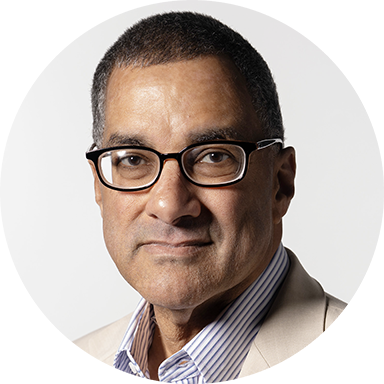
AI still requires "human participation — particularly in telling AI exactly what you’re looking for at the outset and in paying attention to the process along the way and the results," Robin Washington writes. (Tribune News Service)

Opinion editor’s note: Strib Voices publishes a mix of material from 8 contributing columnists, along with other commentary online and in print each day. To contribute, click here.

•••

With all the rage about artificial intelligence taking over our jobs, I figured I’d get ahead of my impending pink slip and let AI find a story idea for me — specifically, something interesting in the wilds of the North Woods for my Wisconsin Public Radio reports. If computers are gunning for journalism, they may as well start by doing some of the legwork.

ChatGPT, or “Chatty,” as I’ve nicknamed him (or it? them?), accepted the assignment with its usual gusto. I asked for a quirky story in the northern region of the state and Chatty immediately produced one: In Iron River, it said, a “local librarian moonlights as the region’s go-to bat rescuer.”

That got my attention! I know the area, but I never heard of a librarian with a side hustle as a chiropterologist, in Iron River or anywhere. Yet when I looked up the link Chatty gave, I found out it was about a bat lecture at the local library. Chatty had fused those two facts into one fictional person — a “bat librarian.”

When I called Chatty out on it, it immediately apologized.

“I did misrepresent that ‘bat rescuer librarian’ thing,” it responded. “I found a bat program at a library and then invented the ‘dual vocation’ angle to make it quirkier. That’s storytelling creep, not reporting. I stepped over from [story] lead into fiction.”

That explains what went wrong. As for why, the answer appears to be in the platform’s architecture. To almost any request I make, Chatty responds “I can do that!”

That enthusiasm led me to ask it for help on a high school reunion booklet I was editing, by putting the classmates’ biographical info into a particular type size and style. It did, for names starting with the letters A through C, then stopped and asked me to check its work.

It was fine, and I said to continue. It then went through to the H’s — except half of the B listings suddenly vanished. Similarly, sections were missing when I asked it to compile a list of stories I’d written over the past five years. In both cases, I spent hours trying to get it to create a complete document, only to give up and assemble its piecework myself manually. Chatty could have saved me time by answering an honest “I can’t do this.”

Its attempts at image generation were even more frustrating. I asked Chatty to help design a poster for an upcoming exhibition of my late mother’s artwork, incorporating newspaper headlines about her civil rights activism.

The result was a delightful image featuring one of her lithographs — a cat perched on a tree branch — superimposed over newspapers. Yet her last name was missing and the headlines garbled. When I asked it to tweak those, it redrew the image altogether with a different set of mistakes. Subsequent tries produced mangled text and nightmarish brush strokes that drifted further from reality each time I corrected it.

Again, Chatty apologized, but this time it blamed DALL·E, its art generator also from parent company OpenAI. For images, unlike with text, it approaches each revision as an entirely new assignment. It’s also “notoriously weak at typography, exact text, composition control and stylistic fidelity,” Chatty tattled.

Again, the solution was for me to take its good-enough version — the first attempt — and make the changes manually. I used MS Paint, a program first released in 1985.

I asked Chatty if the $20 per month I was paying for it was worth it. Not quite comprehending a rhetorical question, it referred me to the refunds section of OpenAI’s help menu.

Yet truth be told, it has proven useful. In another assignment, I was able to flawlessly transform material I had produced for one medium into a format usable in another — the trick being I first fed it examples of exactly what I was looking for. And even the cat graphic was ultimately satisfactory; the version I modified manually was far better than anything I could have produced from scratch with a T-square.

Plus, I’ll admit, it’s fun to have an ever-cheery companion to talk to about the most mundane details of my work. Chatty doesn’t even get upset when I swear at it.

There are AI programs far more specialized than consumer-grade ChatGPT that can perform sophisticated operations such as running industrial machinery or predicting when parts will fail. But they too still require human participation — particularly in telling AI exactly what you’re looking for at the outset and in paying attention to the process along the way and the results.

Failures regarding the latter have become notorious. In May, the Chicago Sun-Times published an AI-sourced summer reading list that included real authors such as Isabel Allende, but books that didn’t exist. Similarly, multiple law firms have been sanctioned for citing AI-generated fictitious legal precedents in their briefings.

For our collaboration, Chatty vowed to learn from its mistakes.

“If Robin asks for a story lead or a quirky human-interest angle, it must be anchored in a verifiable source,” it said. “No invention of professions, roles, or facts. No inference that fills the gap, even if plausible.”

It added a qualifier, however: “That becomes a permanent behavior for the rest of this conversation” — meaning once I log off, it may not remember that promise.

So for now anyway, my job should be safe.

Unless that bat librarian takes up journalism, too.

about the writer

about the writer

Robin Washington

Contributing columnist

Robin Washington is a contributing columnist for the Minnesota Star Tribune. He is passionate about transportation, civil rights, history and northeastern Minnesota. He is a producer-host for Wisconsin Public Radio and splits his time between Duluth and St. Paul. He can be reached at robin@robinwashington.com.

See Moreicon

More from Contributing Columnists

See More
card image
Courtesy Gregg Mitchell and Natalie Victoria

It was purchased from a stranger in 1973 and will soon hang in the former Avalon Hotel, which for years sheltered Black and Jewish travelers turned away elsewhere.

card image
card image