Robbinsdale school closures loom as district confronts financial crisis

A $20 million budgeting error and declining enrollment have the district on a “precipice” and facing deep cuts.

The Minnesota Star Tribune
September 19, 2025 at 6:00PM
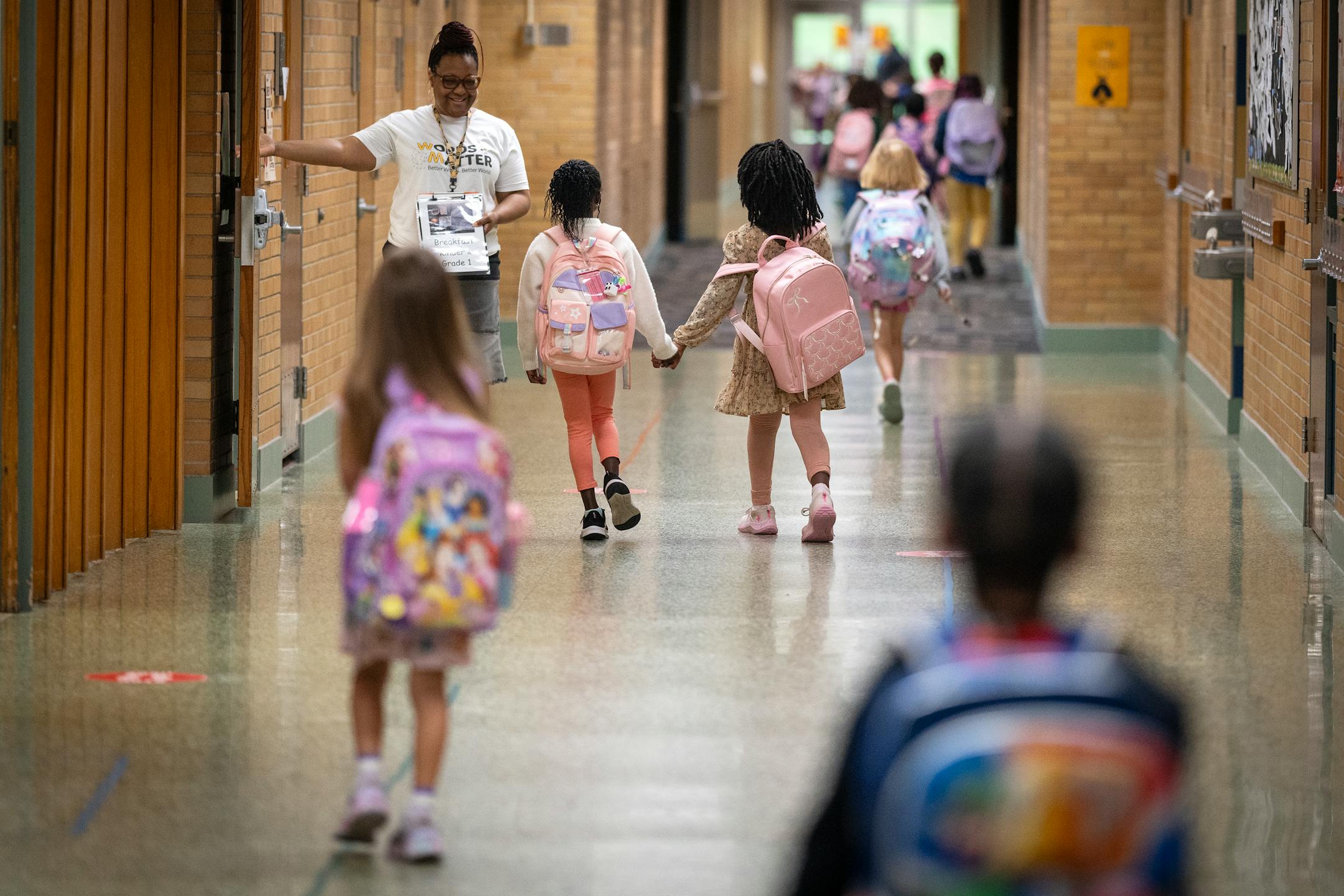
Students arrive in the morning at Robbinsdale Area Public Schools' Sonnesyn Elementary School in New Hope. (Leila Navidi/The Minnesota Star Tribune)

The group tasked with reimagining the future of the cash-strapped Robbinsdale school district gathered in a middle school this spring, poring over data showing the steep costs of repairing crumbling, under-enrolled buildings with “Star Wars”-themed names.

“Chewbacca Elementary,” for example, needs more than $3 million in maintenance over the next decade. And it’s serving just two-thirds of the students it has room for. The stats for “Skywalker Elementary” aren’t much better.

While the silly names were pseudonyms assigned to eliminate bias and emotion, the data is real and sobering, underscoring the need to right-size the struggling northwest metro school district.

On Tuesday, board members will hear for the first time the recommendations drafted by a team of 46 people in an effort called Reimagine Rdale, which has held a series of marathon meetings over the course of the last nine months.

Their lofty, five-year vision for the district’s 10,000 students will likely include school closures because of a hard truth: Robbinsdale is on a fast track toward insolvency. The district’s financial crisis was also hastened by a $20 million budgeting error uncovered last year.

“We’re kind of the most dramatic situation right now, but we can also be a model for other districts having struggles,” said Joan Evans, a longtime resident of the district and member of the Vision 2030 team. “We’re at that precipice to decide.”

By January, administrators must submit a state-required debt plan, forcing tough and rapid decisions about school closures and consolidations. But those choices will require a sign-off from a school board plagued with dysfunction. At least two board members have said they feel shut out of the district transformation process so far.

Robbinsdale enrollment declines

Schools across the state are grappling with budget shortfalls as enrollment continues to drop and operating costs rise. One-time pandemic relief funds buoyed budgets in recent years, but that money is gone.

By the end of fiscal year 2024, six Minnesota districts and eight charter schools were already in statutory operating debt. Minneapolis Public Schools, Robbinsdale’s neighbor, has grappled with ongoing deficits requiring drastic cuts, but has slow-walked a school closure plan for years.

Robbinsdale Area Public Schools serves about 10,200 students — more than two-thirds of whom are students of color — across seven cities. That number is down about 2,000 students from a decade ago, and district projections suggest it will continue to drop. In 10 years, enrollment could dip below 9,000 students.

The district’s 11 elementary schools, four middle schools and two high schools have capacity for about 14,700 students. The district last closed schools in 2009, but later repurposed the buildings for other programs.

Superintendent Teri Staloch, who took the helm in July 2024, said she was drawn to the district because she saw a chance to bring long-overdue stability to a community with rich diversity and a strong sense of pride.

“There just isn’t a metric that we are hitting the mark right now,” Staloch said in a recent interview with the Minnesota Star Tribune. “I knew this was going to be a multi-year, multi-layered process of seeking improvement.”

Staloch, who recently received a 10% performance incentive on top of her $250,000 salary, is the district’s sixth superintendent in a decade. The chief financial role has seen even more turnover. Staloch hired Kristen Hoheisel for the position in August 2024. By that fall, Hoheisel realized millions in compensatory revenue had been double-counted. The two women held a town hall last November to discuss the budget error with the community.

On an auditorium stage, Staloch told a tense crowd the short-term plan would require deep cuts. But the upheaval could also be a “pivotal moment” to reimagine the district. “We have a chance to start all over and build it up,” she said then.

Staloch has faced pushback from some board members and community members for adding an assistant superintendent and raising salaries for her cabinet members amid other staffing cuts. She defended the move, saying fewer people meant more work and the market-adjusted salaries reflect that.

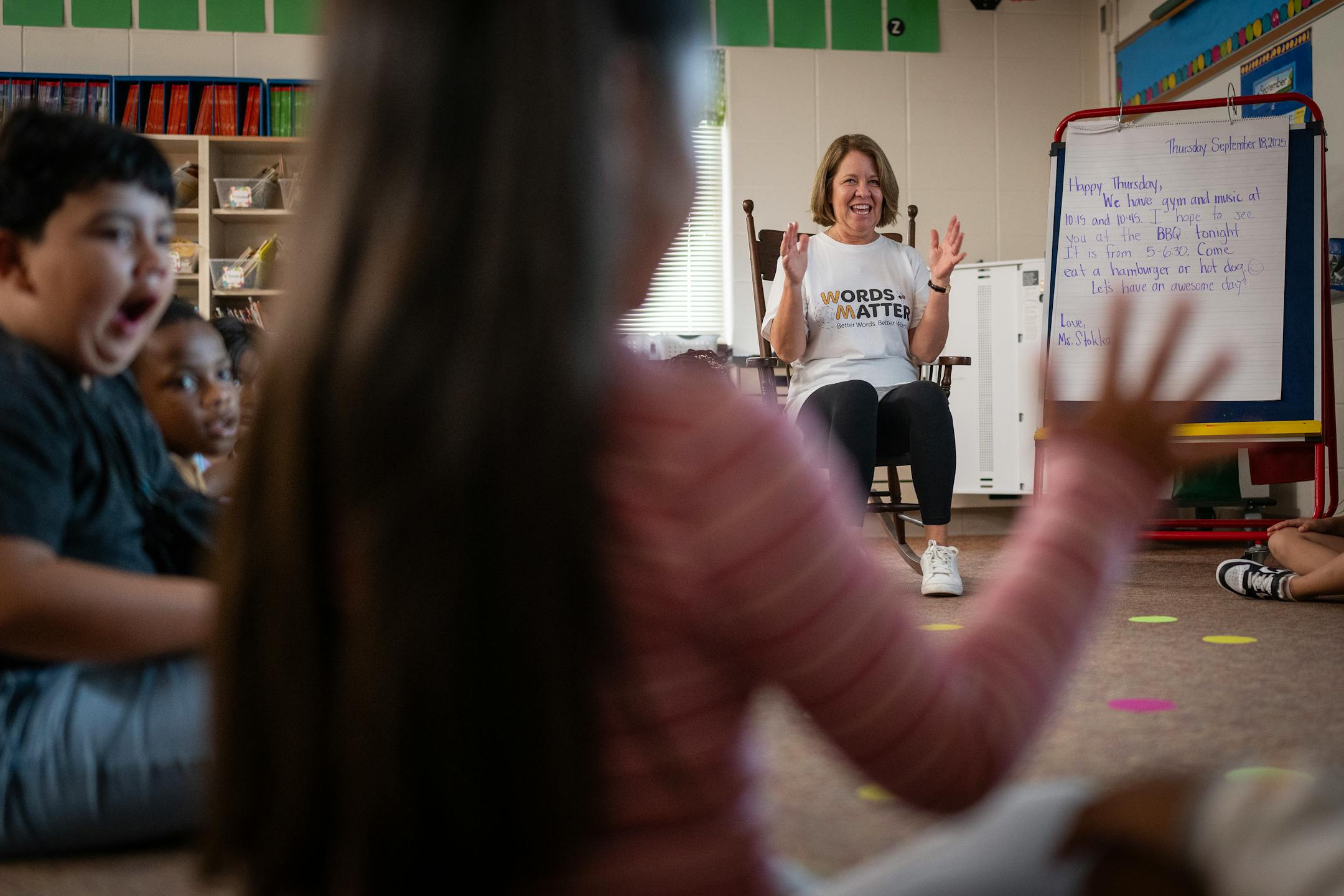
Second grade teacher Leslie Stokka leads her students during their morning meeting at Sonnesyn Elementary School in New Hope on Thursday. (Leila Navidi/The Minnesota Star Tribune)

Considering school closures

Over the last several months, the district has put out a survey, held multiple community engagement events and convened the Vision 2030 team of students, parents, teachers and community members. That team met each month since January to study district operations, finances, demographics, programs and challenges. The team also visited several suburban school sites to observe programs and new facilities in other districts.

Members of the team describe the process as comprehensive and inclusive, involving “huge data dumps,” “student voice” and “challenging discussions about difficult, complex topics,” said Barb Olson, a team member whose two children graduated from Robbinsdale schools.

“People care a lot about the experiences that their children have at school and about how their tax monies are spent,” Olson said. “They bring their own passion about what they think school looks like and what it should be for the next generation.”

Still, Olson and fellow team member Katie Mittelstadt said the discussions were respectful and collaborative.

“We’re trying to make recommendations that will positively impact as many students as possible,” Mittelstadt said. “We know that not everyone is going to like this and it will be a painful process. It’s been clear from the beginning that it will involve school closures.”

Board members Kim Holmes, Caroline Long and Helen Bassett feel the board should have been more directly involved with the Reimagine Rdale effort.

“The board has been left out of all of that,” Bassett said. “We should all be hearing things at the same time. You don’t want to wait until the last minute to give it to your school board and then say, ‘Here, make your decision.’”

Holmes agreed, adding that board members’ pushback has recently been dismissed as more evidence of a dysfunctional board.

“I don’t think the administration gets to set the vision,” Holmes said. “I don’t doubt that the team did valuable and detailed work. But the board should have been involved.”

According to the district website, all presentations given to the Vision 2030 team, including those on enrollment trends, forecasts and facilities studies, were shared with the school board. Though the meetings were not public, agendas and presentations are also online.

Greta Evans-Becker, the board chair, said in a statement that the board gets to make the final decision on the district’s path forward.

“Having board members on the [Vision 2030] team or influencing the board’s meetings would be like double-dipping our influence or overly influencing the decision-making process,” she wrote.

Her hope, she said, is that board members can set aside emotion and be “student and future-focused.”

Evans, the longtime resident on the Vision 2030 team, said her biggest fear is that, after months of work, the board will reject the recommendations. She thinks of the families who have stayed in the district for generations. It’s a “delicate moment” to balance longstanding community pride and grief over school closures, she said.

“But I do think there are enough people here who believe this is a strong community even with all its bumps and bruises,” she said. “They’ll be committed to stay here to see it evolve.”

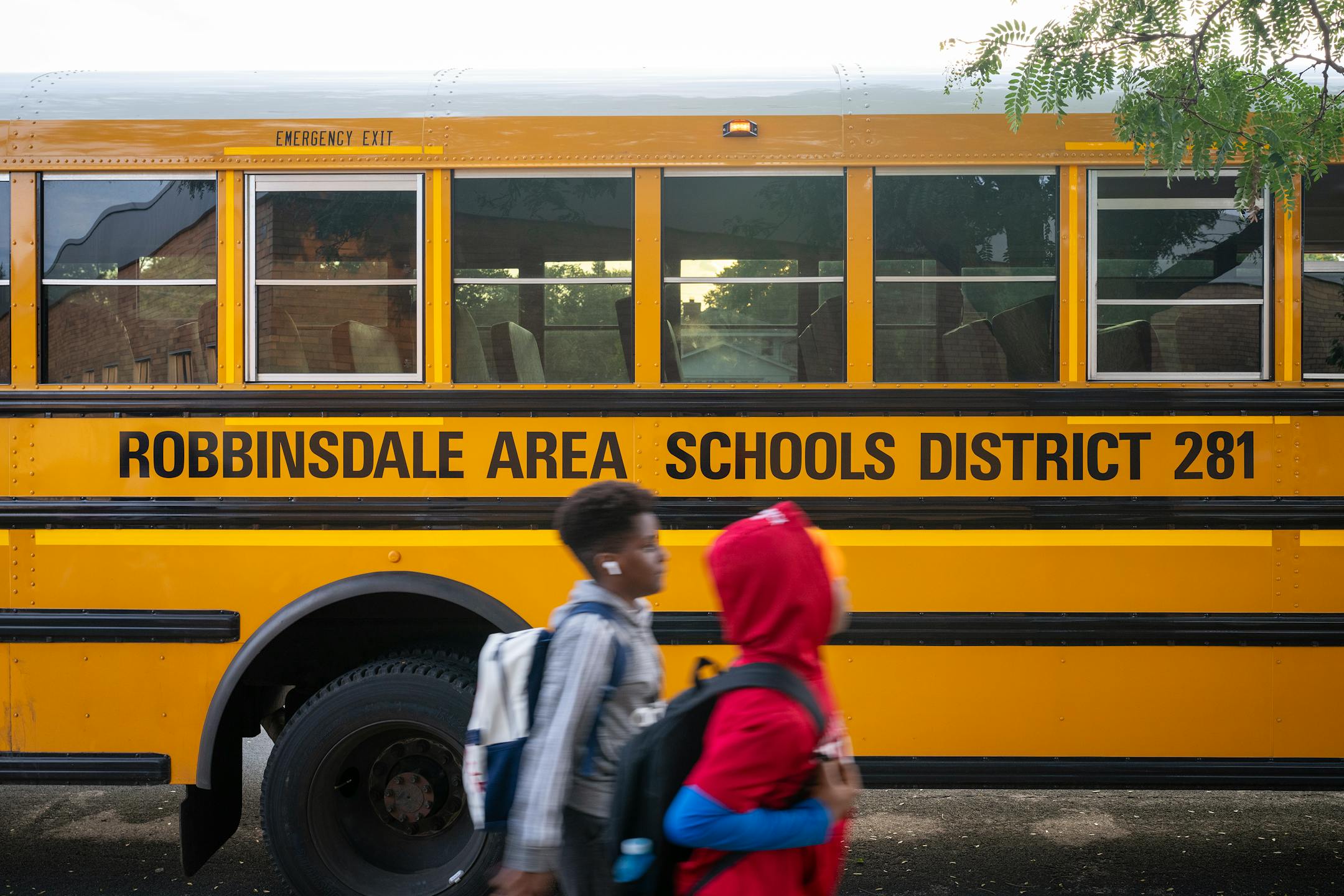
Students arrive in the morning at Sonnesyn Elementary School in New Hope on Thursday. (Leila Navidi/The Minnesota Star Tribune)
about the writer

about the writer

Mara Klecker

Reporter

Mara Klecker covers suburban K-12 education for the Star Tribune.

See Moreicon