Robbinsdale district to close three schools, district headquarters

Parents and teachers said the decision felt rushed. District leaders say choices had to be made now for a state-mandated debt plan.

The Minnesota Star Tribune
December 16, 2025 at 4:19AM
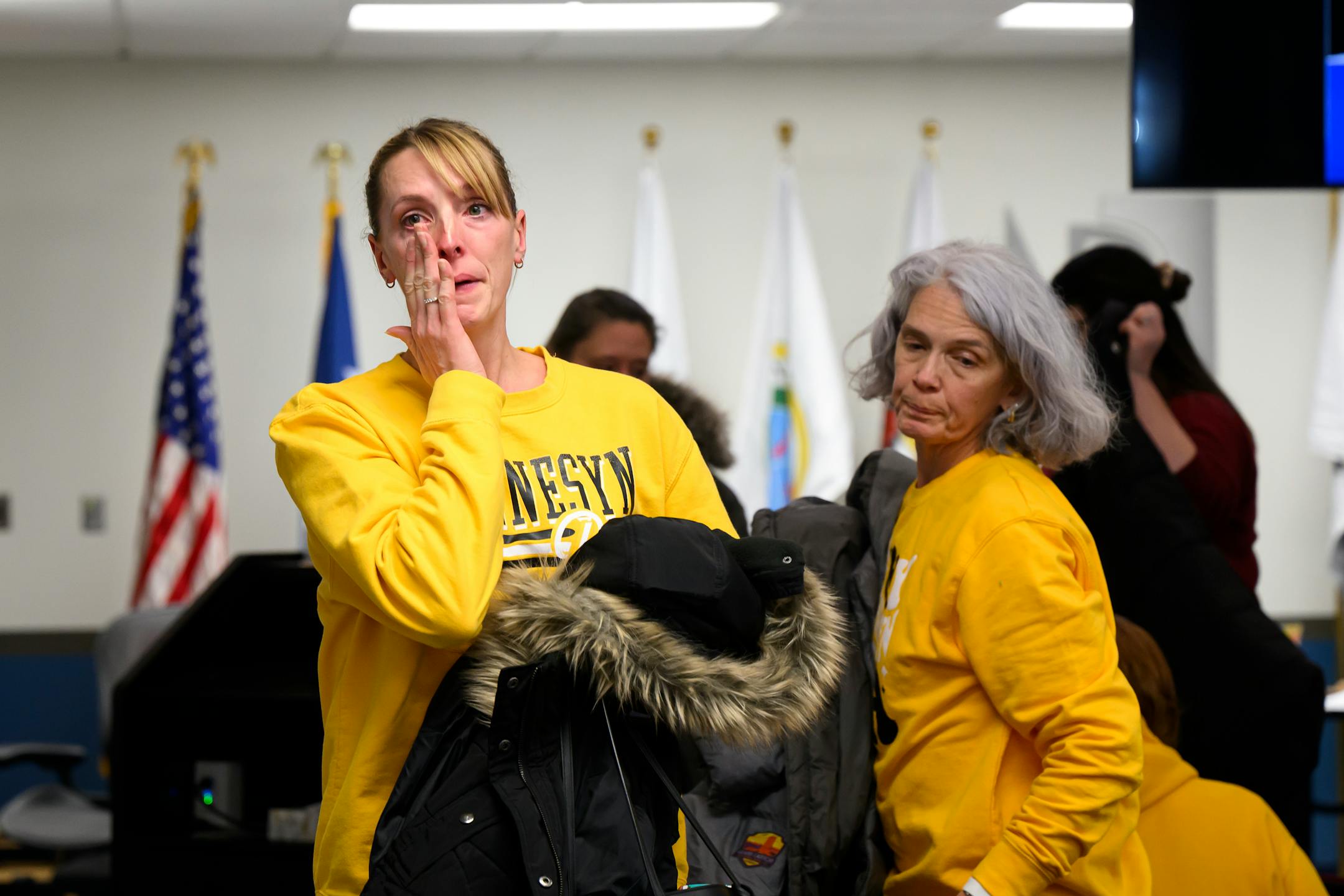
Sam Mellum, a parent of two children at Sonnesyn Elementary and the president of the Parent Teacher Student Organization, wipes away a tear after a school board vote Monday to close the school. (Aaron Lavinsky/The Minnesota Star Tribune)

Robbinsdale school board members voted to close two elementary schools, one middle school and the district’s current headquarters after an hourslong, emotional board meeting Monday night.

The schools that will close after this school year: Robbinsdale Middle School and Noble and Sonnesyn elementary schools. Board members voted against closing Lakeview and Neill elementary schools.

Dozens of families, students, staff and community members packed the boardroom and rallied outside the district office to oppose the closures.

The difficult decisions are a part of a state-mandated debt plan that comes in the wake of a $20 million budget error discovered last year. That mistake exacerbated the district’s financial challenges amid declining enrollment. The district serves about 10,200 students from Robbinsdale, Crystal, New Hope and parts of Golden Valley, Plymouth, Brooklyn Park and Brooklyn Center.

Robbinsdale Area Schools leaders forecast to end this school year $16 million in the red. They’ve said for months that re-establishing solvency will require school closures — and that those decisions must be made this winter.

The state requires a debt plan for any district with a deficit of more than 2.5% of annual operating expenses (in Robbinsdale, that’s about $4.3 million). Robbinsdale’s plan is due to the Minnesota Department of Education by Jan. 31.

Hundreds of teachers, parents and community members have signed an online petition asking for an extension of that timeline.
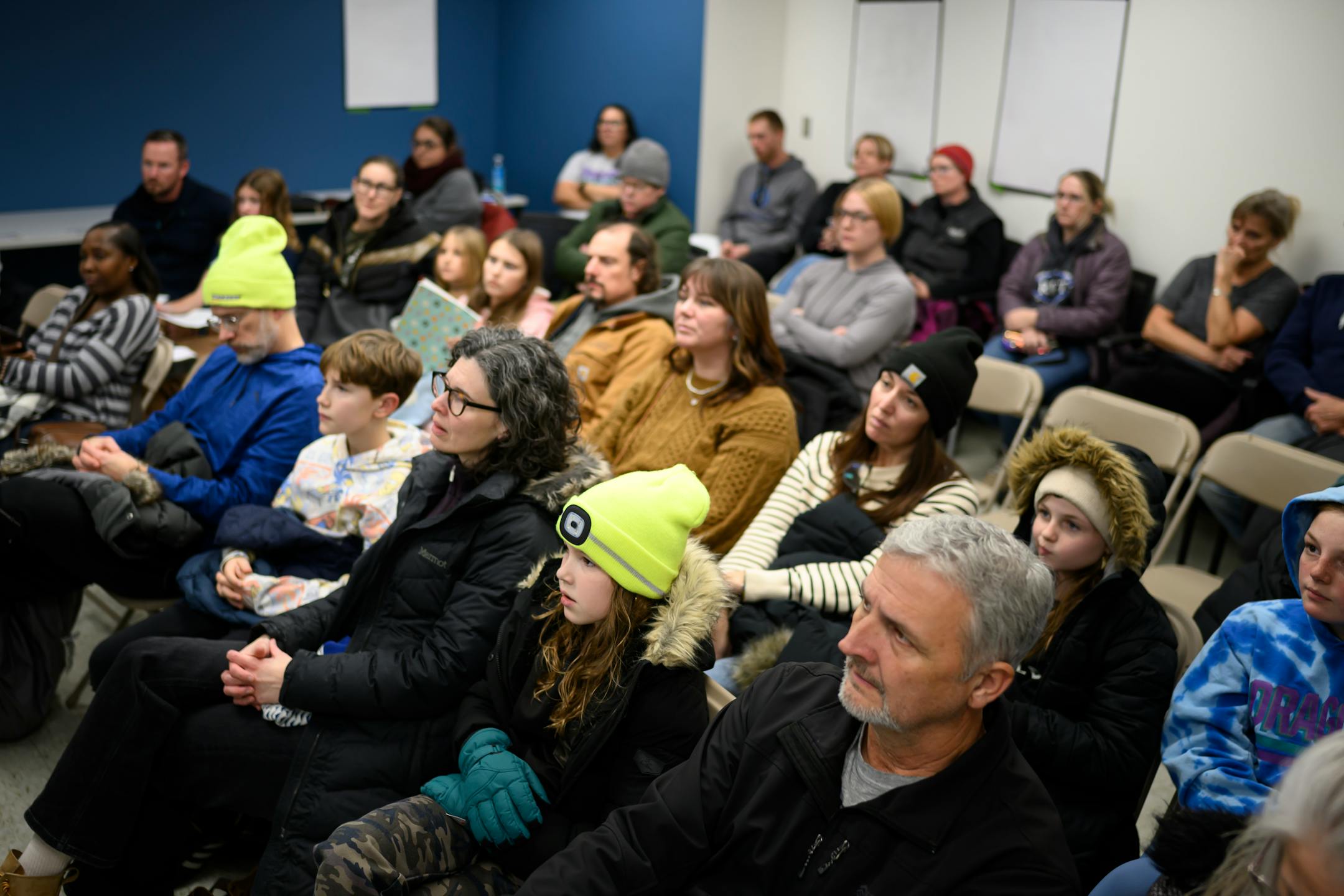
Community members in an overflow room watch a Robbinsdale school board meeting in New Hope on Monday. (Aaron Lavinsky/The Minnesota Star Tribune)

Dozens of teachers, parents and community members also spoke during a public hearing before the vote Monday. One even sang her lauding comments about Sonneyn to the tune of a Christmas carol.

Robbinsdale Mayor Brad Sutton and City Council Member Jason Greenberg encouraged board members to leave at least one school within their city’s boundaries. Board members cited that reasoning as one factor for choosing to keep Lakeview open.

Several speakers mentioned the years of leadership turnover — the district has had half a dozen superintendents and chief financial officers over the last decade — and worried that new leaders are making rushed decisions without context or community support.

“As parents and taxpayers, we did not create this financial crisis, so why are our families, our children and our dedicated staff be forced to pay the price?” Jordi Hansen, a Sonnesyn Elementary parent, asked during the public hearing.

District leaders have pushed back on claims that the school closure process has been unnecessarily rushed or dismissive of community sentiments.

“This work is complex and it will feel clunky,” Superintendent Teri Staloch said at a board meeting earlier this month. She added that it is “natural and normal” for people facing the loss of their school to question the process, the timeline, the decision and even the need for reductions.

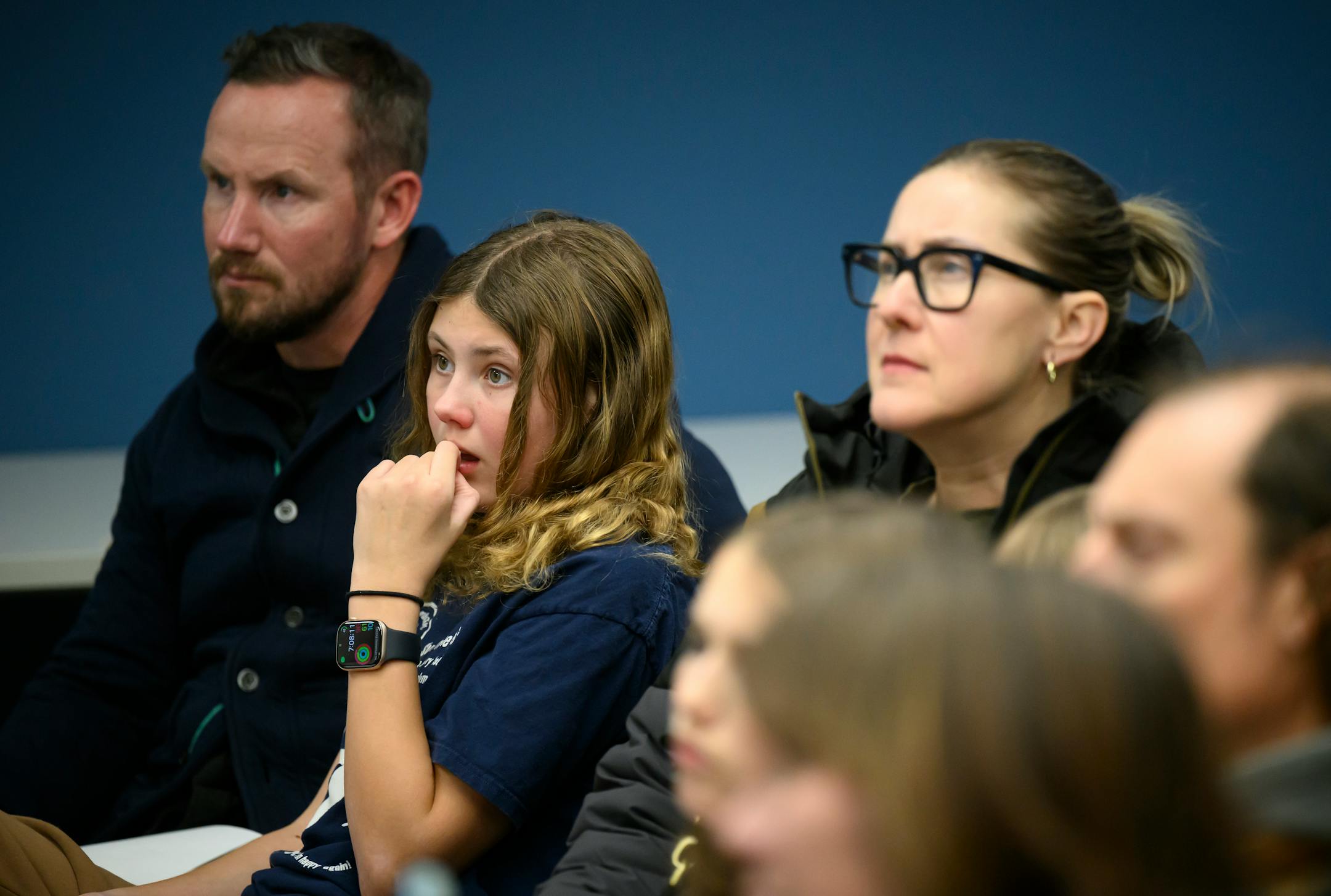
Merrin Petersen, a Plymouth Middle School student who came to speak on behalf of Robbinsdale Middle School’s theater programs, listens as others speak during the public comment portion of the school board meeting from an overflow room on Monday. Robbinsdale Middle School was voted to close. (Aaron Lavinsky/The Minnesota Star Tribune)

Tight timeline

Robbinsdale’s situation reflects a broader challenge facing school districts across Minnesota, many of which are grappling with budget deficits, declining enrollment and pressure to right-size their building footprints.

District leaders say those conversations are happening statewide, but are not always on the same schedule. In Robbinsdale, statutory operating debt has forced the board to act quickly, setting firm deadlines for closure and consolidation decisions.

Other districts, including Minneapolis Public Schools, have taken a slower approach. Minneapolis officials have said they plan to spend at least a year studying data, gathering public comments and weighing equity impacts before proposing any closures or mergers.

The district’s Chief Financial Officer Kristen Hoheisel told the board earlier this month the district is projected to end the school year with an estimated $16 million deficit. Another $9 million gap could follow if spending patterns remain unchanged.

District leaders say the school system simply operates too many buildings for its current enrollment. And enrollment projections suggest student numbers will continue to fall.

The recent budget-cutting discussions have also been shaped by the district’s Vision 2030 planning work, a community-led effort launched last year to map out Robbinsdale’s long-term future amid declining enrollment and financial pressure. The Vision 2030 team included parents, staff, students and community members, and was tasked with identifying priorities related to academics, facilities and fiscal sustainability.

District leaders say current closure proposals reflect that planning work and the district’s immediate financial constraints.

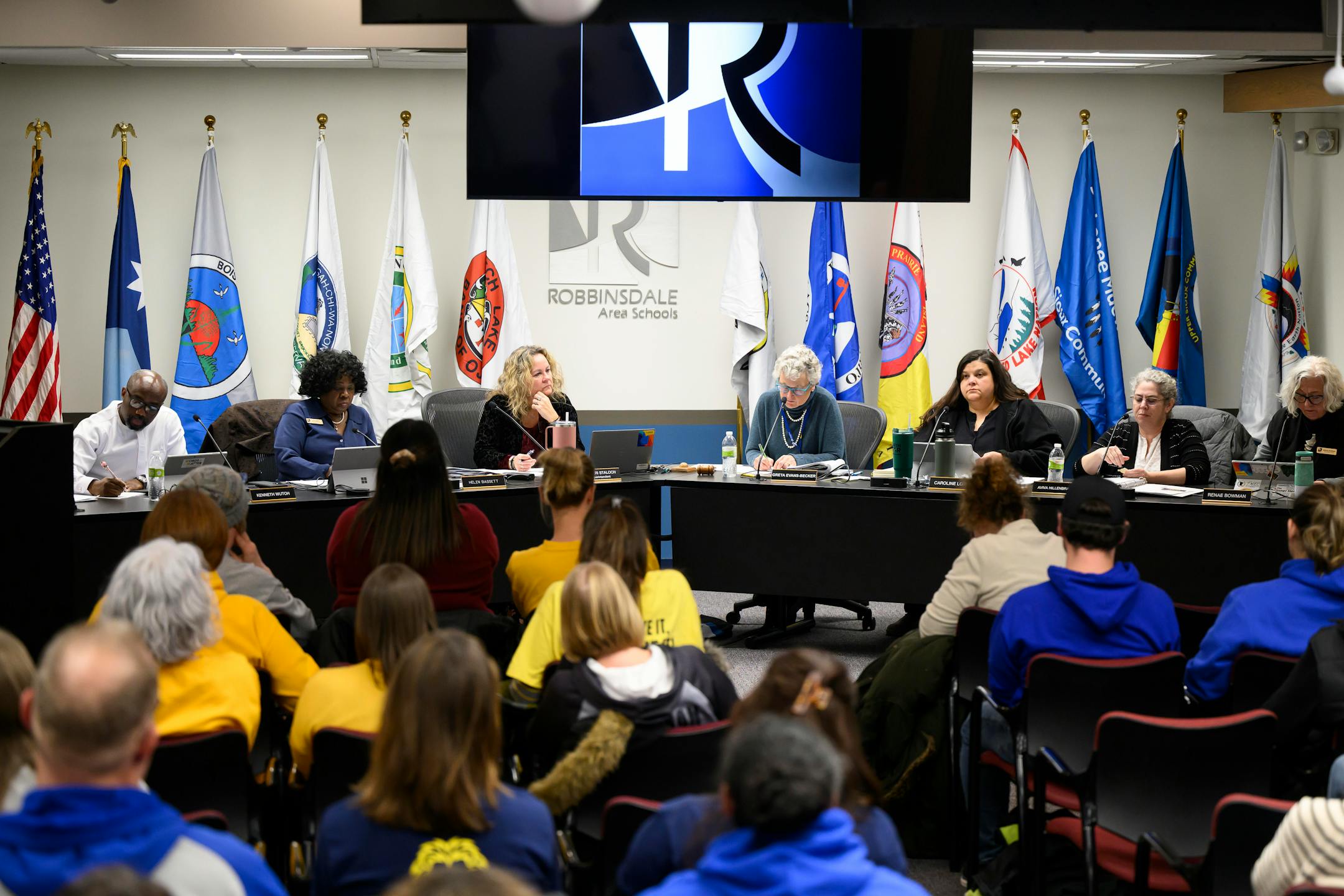
A Robbinsdale school board meeting Monday included a public hearing on which schools to close or consolidate under a state-mandated plan to address the district’s debt. (Aaron Lavinsky/The Minnesota Star Tribune)

‘This is really difficult’

Under Minnesota law, a school board may close a school only after holding a public hearing on the proposal’s “necessity and practicability.” That standard, administrators say, is met by low enrollment, excess capacity, rising maintenance costs and the feasibility of consolidation plans at the schools under consideration.

Robbinsdale Middle School enrolls about 570 students in a building designed for 1,600 students. Lakeview, Neill, Noble and Sonnesyn elementary schools all operate at less than half capacity.

“This is really difficult,” said board member Aviva Hillenbrand. “All of our schools are doing wonderful things but our job is to think strategically.” Closing schools will allow the district to “maximize resources,” she added.

The Educational Service Center, which houses the district’s enrollment office and board meeting room, has “significant maintenance needs,” said district leaders.

One of the options before the board Monday was to relocate the district offices to Lakeview Elementary if the board chose to close the school and repurpose the building.

The board voted 5-1 to keep Lakeview open.

What comes next

A separate public hearing and vote is set for Jan. 5 to consider the possible closure of FAIR Pilgrim Lane Elementary, which was not part of Monday’s vote.

The board vote on the statutory operating debt plan, which will include the approved school closures, is scheduled for Jan. 20. That plan will then be sent to the state for review.

In the moments after Monday’s meeting, Staloch said more tough decisions are still ahead. But she’s resolute.

She repeated what she said to a crowd a year ago when the budget error was first announced and it was clear school closures may be necessary: “We are going to transform this district for the better.”

“I know that tonight, no one can believe that because it’s just raw and emotional,” she said, blinking away tears. “But it’s my goal that we come together after some of the pain.”

about the writer

about the writer

Mara Klecker

Reporter

Mara Klecker covers suburban K-12 education for the Star Tribune.

See Moreicon

More from Twin Cities Suburbs

See More
card image
card image