
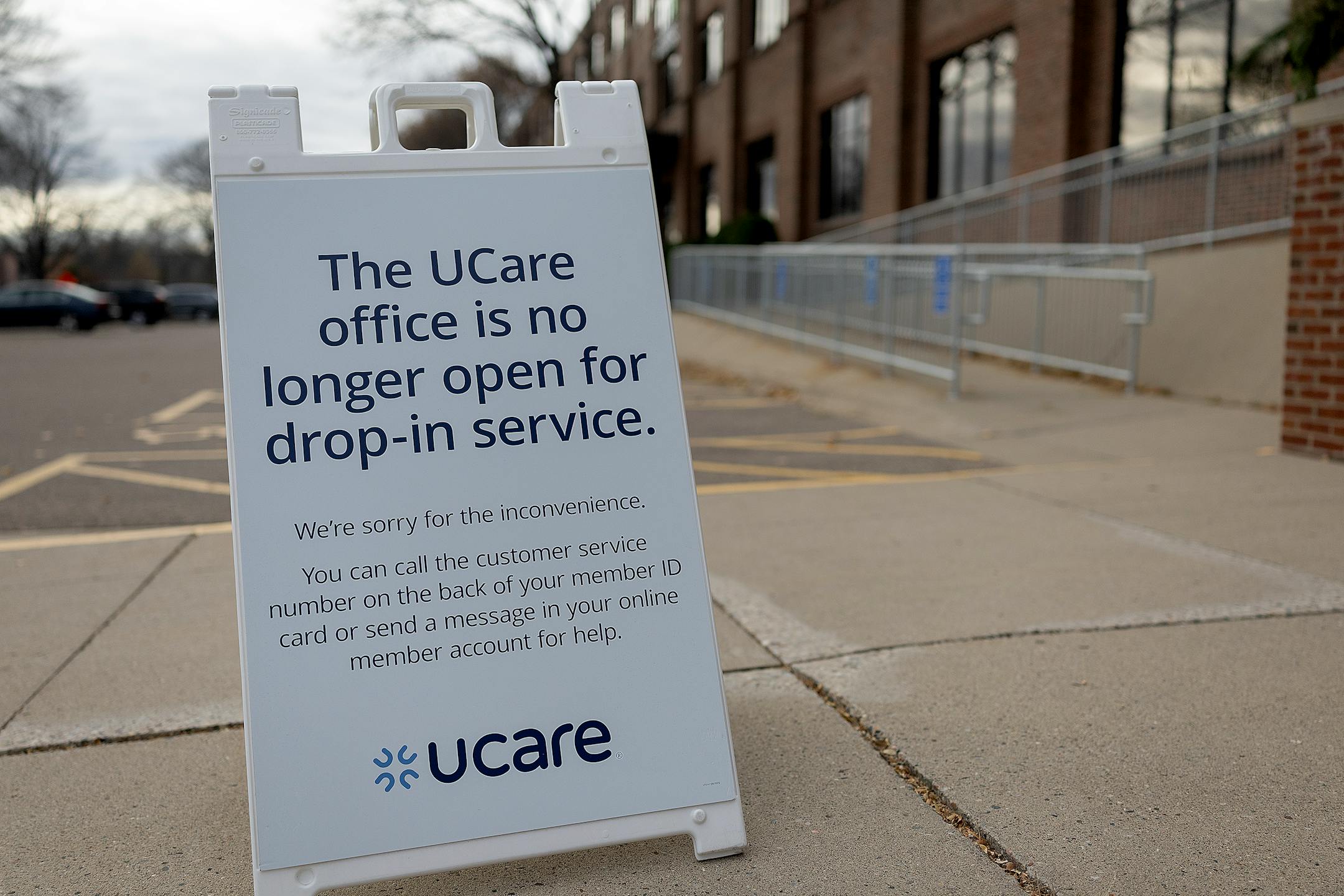
Readers Write: UCare, U President Rebecca Cunningham, science, moose, pedestrians

State must do right in wake of UCare’s collapse.

The Minnesota Star Tribune
December 27, 2025 at 7:30PM
The exterior of the UCare headquarters in Minneapolis, photographed Nov. 17. (Elizabeth Flores/The Minnesota Star Tribune)

Opinion editor’s note: Strib Voices publishes letters from readers online and in print each day. To contribute, click here.

•••

The recent article on Fairview’s and other hospitals’ and clinics’ claims on UCare’s unpaid bills (“Fairview says it’s owed $100M by UCare,” Dec. 20) highlights more than a financial dispute — it raises fundamental questions about how health care is financed and delivered in Minnesota.

As the state moves to rehabilitate UCare, health care providers are seeking payment for services already delivered. A Ramsey County Court order rightly requires the state to consider the interests of organizations owed money by UCare.

While large creditors understandably dominate the headlines, smaller providers that performed essential work for UCare members must not be overlooked. Eleven nonprofit community health centers in the Twin Cities partnered with UCare in 2025 to close care gaps for low-income Minnesotans. Together, they identified patients who had missed critical preventive screenings for breast, colon or cervical cancer and helped ensure access to other essential services such as dental visits and diabetic eye exams.

Through this partnership, nearly 4,000 patients received timely, often lifesaving preventive care — reducing avoidable hospitalizations and keeping people healthy enough to work, learn and contribute to their communities.

Yet these community health centers have not been paid for work completed in the second half of the year. They invested limited resources in good faith, fulfilling their contractual obligations while improving health outcomes and lowering long-term costs.

As the state unwinds UCare, it must recognize and honor the contributions of small, independent clinics that delivered on their commitments. Just as importantly, Minnesota should seize this moment to reaffirm a clear vision for strong, accessible primary care — because prevention only works when providers are paid to deliver it.

Jonathan Watson, St. Paul

The writer is CEO of the Minnesota Association of Community Health Centers.

•••

Jill Burcum’s Strib Voices column on Veterans Affairs in the Dec. 21 paper hit the nail on the head (“‘Zero impact,’ or rolling the dice on vets’ health care?”). As a physician whose three-year University of Minnesota residency training was about one-third completed at the Minneapolis VA, I know how vital the system was back then for education for workforce development. VA hospitals like the Minneapolis VA are almost all integrated with academic medical centers, thereby playing a huge role in educating medical students and physicians in training. Cutting back on the VA, eliminating unfilled positions, in the name of governmental efficiency would only compromise our already shorthanded medical training system.

The VA, of course, is very important to our veterans in providing affordable, accessible care. The VA as a large governmental system has been able to take the initiative in many needed reforms including electronic records and drug price negotiations, which point us in the right direction for the future. We need to strongly support the VA!

Ernest Peaslee, Duluth

The writer is a retired Essentia Health internal medicine physician.

UNIVERSITY OF MINNESOTA

Cunningham is right leader for right now

Columnist Rochelle Olson suggests in her Dec. 19 Cheers & Jeers column that efforts by the University of Minnesota to forge a new path forward for health care reflects negatively on U President Rebecca Cunningham’s leadership. As a former regent who witnessed Cunningham execute her duties, and as lawyer and former U.S. magistrate judge who mediated numerous complex cases with hugely divergent interests, I could not disagree more. The president inherited a 30-year arrangement where the status quo was no longer working for any of the parties or for Minnesotans. Since joining the university, she has worked tirelessly to reach a resolution that considers all stakeholders — the university, Fairview, M Physicians and the needs of Minnesotans for trained health professionals and research that advances medical care.

Part of courageous leadership is being willing to confront complex and difficult challenges in the interests of getting to a better place. Cunningham is the right person for this herculean task.

Janie Mayeron, Minneapolis

The writer is former chair of the University of Minnesota Board of Regents.

STATE OF SCIENCE

Literature has something to say about this

As I read the story about the mood of American scientists at their recent meeting (“Somber mood at scientists’ annual meeting,” Dec. 21), I thought of my favorite high school physics teacher. I wondered what she’d say about the shutting down of the National Center for Atmospheric Research, not to mention all the other science-related programs President Donald Trump’s party has dismantled in one way or another.

Pretty sure I know what my other respected teachers in history, government, art or literature would say, too. Maybe we should check with them. My English teacher might remind us what George Orwell wrote about Big Brother in “1984”:

“Every record has been destroyed or falsified, every book rewritten, every picture has been repainted, every statue and street building has been renamed, every date has been altered. And the process is continuing day by day and minute by minute. History has stopped. Nothing exists except an endless present in which the Party is always right.”

Christopher Moore, Belle Plaine

CLIMATE CHANGE

Fiddling with habitat won’t save moose

State officials are delusional to think that they can save the moose population in Minnesota in the ways outlined in the Dec. 21 article “Plan for moose recovery solidifies.” More accurately, they, like most, are in denial. State resources would be better used to fight climate change than to pretend that our beloved moose population can be saved by micromanaging a habitat. Winters have become milder and will continue to be milder. State officials would be better off telling citizens to stop using fossil fuels, stop supporting animal agriculture, have fewer babies and in general consume a lot less. It’s those individual actions multiplied by 8 billion that are directly causing the habitat of the moose to disappear.

A solution to a tragedy like this is being honest with people about the causes and the outcomes. If nothing changes soon, warmer winters will doom the moose of Minnesota. Furthermore, this is a high-profile animal; environmentalists should use its plight to rally people to action.

Mark Robinson, St. Paul

SAFER STREETS

Don’t blame pedestrians for getting killed

Our roads are deadly for pedestrians and cyclists. While we desperately need to cut down our dependence on fossil fuels and do everything we can to mitigate climate warming, cars are getting bigger and drivers more aggressive. Expanded transit options and street remodels are fought tooth and nail. Not many remember (or believe) that streets were made for people, for shopping, socializing and even playing. Safe and welcoming streets are key to building community and supporting our physical and mental health.

However, our streets have become dangerous, polluted thruways for single-occupant SUVs with public subsidized car storage (parking). In reading “Grim toll prompts crosswalk campaign” (Dec. 22), I cringed at the thought that somehow pedestrians are being told they are partially to blame. We need to take back the streets for people and the planet. Commuters should be routed around city centers. Roads need to be redesigned to place a premium on livability. Transit options need to be greatly expanded. Recent remodels like what was done on Hennepin Avenue in Uptown are a good start, but we can do better — we must do better.

Melanie Sedqi, Minneapolis

about the writer

about the writer