Readers Write: The First Amendment, fraud investigations, Capitol security, Minnesota businesses

Journalists should watch where they point their criticisms of the First Amendment, lest they boomerang back.

The Minnesota Star Tribune
August 9, 2025 at 8:59PM
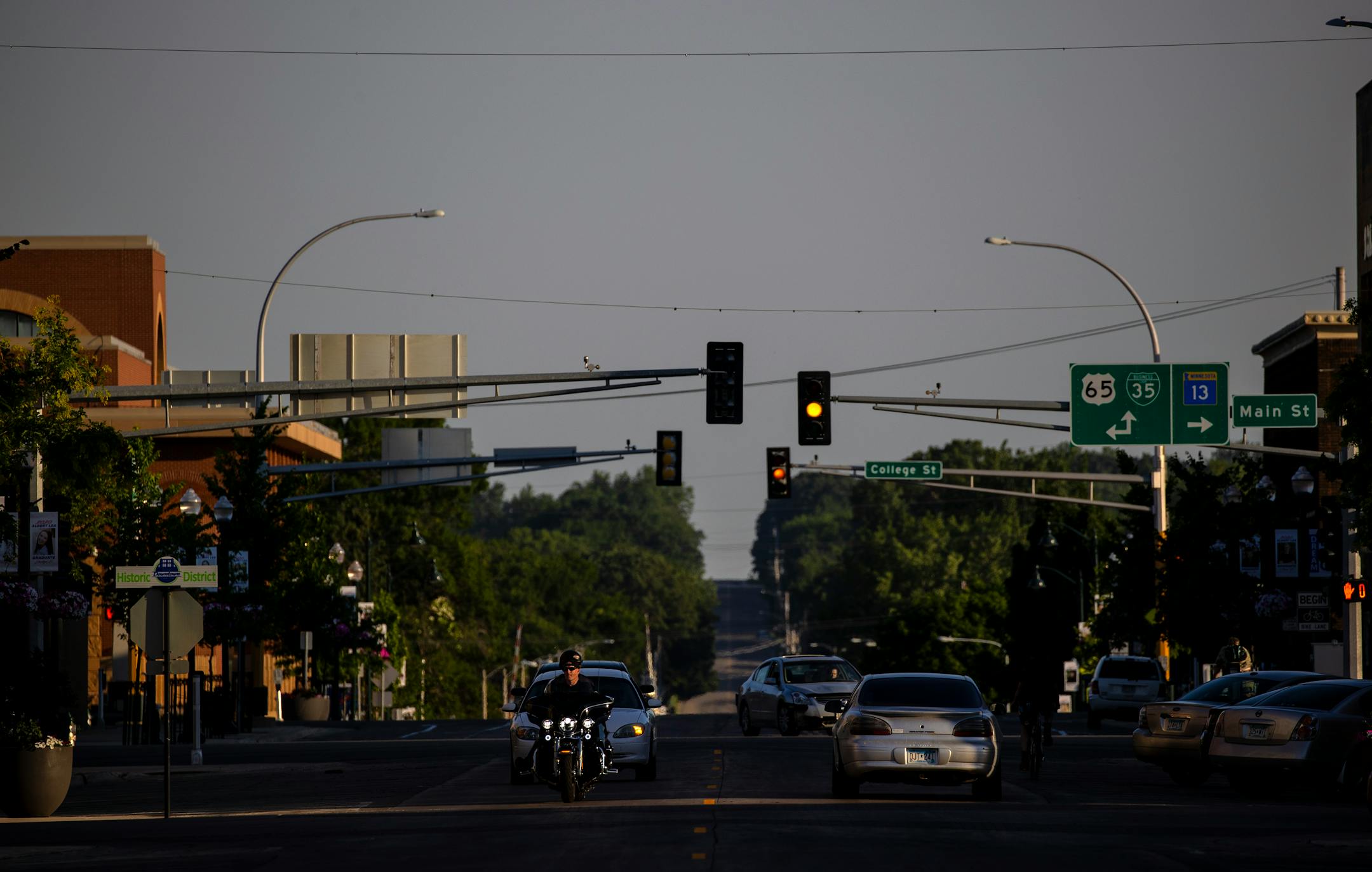
Downtown Albert Lea, Minn., in 2020. (Carlos Gonzalez/The Minnesota Star Tribune)

Opinion editor’s note: Strib Voices publishes letters from readers online and in print each day. To contribute, click here.

•••

I must take issue with the Sunday column in the Minnesota Star Tribune written by staff writer Karen Tolkkinen regarding individuals who film others in public spaces (“No need to test the right to be terrible”). In her piece, she labels these individuals as “jerks,” simply for exercising a constitutional right — their First Amendment right to record in public.

Whether or not one agrees with the motivations of those who record in public spaces, the right to do so is protected by law. The First Amendment doesn’t exist to make us comfortable — it exists to protect freedom of speech and the press, especially when it involves holding power accountable or documenting public life.

Tolkkinen is certainly entitled to her opinion. But when a journalist uses their platform to ridicule individuals for exercising a protected right, it risks undermining the very freedoms that support journalism itself. Perhaps she should advocate for legislative reform instead of resorting to name-calling.

It’s easy to support constitutional rights when we agree with how they are being used. The true test of a free society is whether we defend those rights when they are uncomfortable or unpopular.

Craig B. Larson, Lino Lakes

FRAUD INVESTIGATIONS

Don’t forget Thompson’s predecessor

Two letters to the editor (“We can’t rely on federal prosecutors alone”) and a commentary (“Land of 10,000 scams,” Aug. 2) lead us to believe that what the commentary author noted, that “No one has done more to shine a light on this disaster than acting U.S. Attorney Joe Thompson,” nominated by President Donald Trump on June 2.

U.S. Attorney Andrew Luger and Minnesota Attorney General Keith Ellison worked with the Biden administration’s FBI to investigate and prosecute the Feeding Our Future fraud and payments to fraudulent autism service providers. From 2023 to 2024, Thompson was assisting Special Counsel Robert Hur to investigate President Joe Biden for confidential documents he inadvertently but improperly had left in his home when he was vice president. (Biden immediately returned those documents to federal authorities after their discovery by his staff.)

Here is another case of Republicans claiming credit for work led by Democrats. It’s dishonest enough that Republicans take credit for infrastructure projects they voted against in federal legislation, including projects that benefit Minnesota. Now we are subjected to a saintly biography of Thompson (“Joe Thompson works to solve state’s widespread fraud crisis,” July 30) and a distortion of the history of fraud investigations since the pandemic. Such distortions will be the central Republican message for the 2026 elections.

Thompson has fraud prosecutorial experience. Will he publicize investigations to assist Trump’s revenge against those states and individuals who oppose Trump’s agenda?

Steve Suppan, Wayzata

•••

A letter writer recently suggested that large law firms assist Thompson in his laudable fraud investigations. The author apparently has chosen to ignore the administration’s vengeful and unconstitutional attacks on large law firms that have dared to oppose the president or his policies. Providing pro bono services to the government is exactly what Trump has demanded. Bowing to this pressure is yet another diminishment of the rule of law. If the U.S. Attorney’s Office is in need of personnel, it has other options.

Jon Steinberg, Minneapolis

CAPITOL SECURITY

Without safety, free expression is risky

Two of the items in the Sunday opinion section, the column by Rochelle Olson on the need for greater security at the Capitol (“Lock Capitol doors, ban guns and check bags”) and the letter from a father regarding his transgender son (“Gender affirming care is difficult to access, even in Minnesota”), merged together for me. For sure, security at the Capitol needs to be brought up to current standards. We can still be Minnesota Nice and welcoming while asking visitors to go through metal detectors and bag searches. In fact, it will make us more welcoming if no one has to worry about extremists coming armed and ready for a fight to the Capitol when they are aware of a citizens’ protest regarding something with which they do not agree, be it abortion rights or transgender rights or immigrant rights or whatever.

And circling round to the father’s letter: As the close relative of a transgender adult who feels very threatened by the antitrans movement today (even expressed by some Democrats — let’s throw them under the bus, there aren’t that many of them, it’ll buy us votes), I would very much like to participate in any transgender support rallies at the Capitol without fearing that my life will be threatened by being there. Yes, I will go anyway, and will stand up for my loved ones and their loved ones. But really, can we not have safe spaces to express ourselves?

Deborah Ellsworth, White Bear Lake

BUSINESS ENVIRONMENT

Minnesota can’t ride its reputation forever

Many decry the Trump administration’s use of tariffs — government-imposed trade barriers that stymie economic growth. Economists warn that tariffs function as a tax on consumers, inflating prices and distorting markets, while driving away potential business. At worst, they risk triggering stagflation: the painful combination of rising costs and stagnant job growth.

But Minnesota has its own version of trade barriers. While not officially labeled “tariffs,” they have the same economic effect — making it more expensive and less attractive to do business here. These homegrown barriers come in such forms as high state taxes, heavy regulation and long, uncertain permitting timelines.

So far, the U.S. is able to push through tariffs on the global stage. Despite grumbling, countries and companies accept trade restrictions because the American market is unmatched in size, dynamism and consumer demand. It is simply too attractive a market to ignore.

Minnesota, however, does not have that kind of leverage. Companies operating in the U.S. can choose from among any of the 50 states. Companies are economically rational actors, and in today’s mobile, tech-enabled economy, it is easier than ever for them to move or expand to business-friendly states.

But rather than making ourselves more attractive to investment, we have been pushing it away. In recent years, Minnesota has doubled down on our already challenging business environment by further expanding regulations, layering on new business taxes on top of what already is the highest state corporate tax rate in the country, and committing to an aggressive, but likely unrealistic, energy policy that is sure to drive up energy costs.

The results have been quick and revealing. According to data from the U.S. Bureau of Labor Statistics and data compiled by the Minnesota Chamber of Commerce’s Minnesota: 2030 reporting series, we are now in the bottom third of U.S. states for both GDP and job growth. Over the past six years, Minnesota has experienced a net outflow of business expansions: 410 outbound projects versus just 287 inbound. In 2022, companies committed to investments and expansion in Minnesota leading to 5,000 new jobs. That same year in Indiana, that number was 25,000. In North Carolina, 29,000. We are no longer a preferred place to do business.

The good news is that Minnesota still has real strengths: a legacy of innovation, a diverse industrial base and some of the most hardworking, well-educated people in the country. But those advantages are not enough to overcome the weight of our own policy choices.

It is time to lower our internal trade barriers and offer a more attractive business climate. That means adopting policies that reduce friction, encourage investment and reward innovation. If we want economic growth and more jobs, we need to make it easier — not harder — for businesses to thrive here.

Patrick Knight, Orono

The writer is the CEO of a Twin Cities-based food processing company.

about the writer

about the writer