
Opinion | Welcome to the land of 10,000 scams

Minnesota is fast becoming the state of fraud. Why, and what do we do now?

August 1, 2025 at 8:00PM
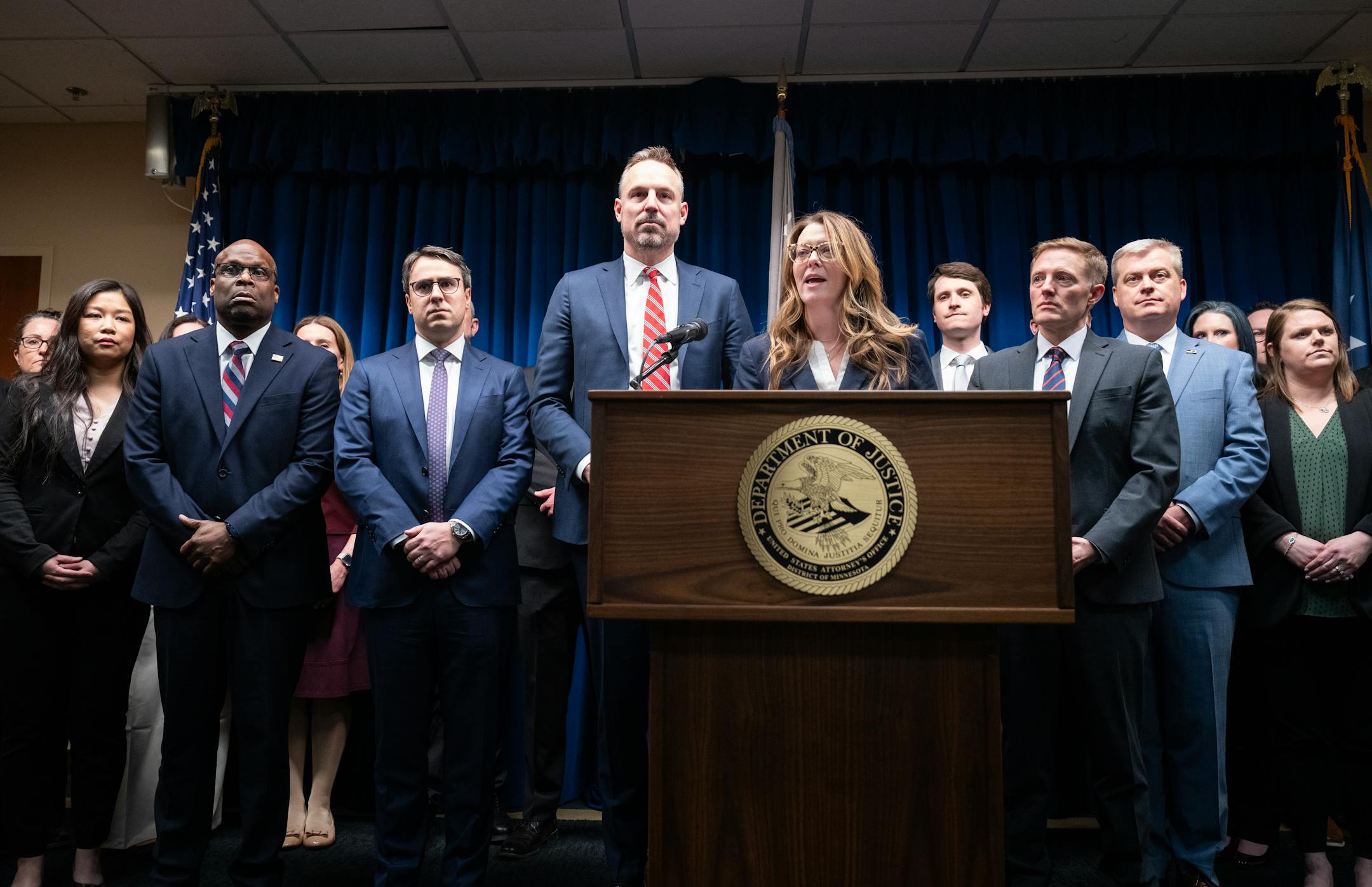
Acting U.S. Attorney Joe Thompson, center, stands beside Lisa D. Kirkpatrick, acting U.S. attorney for Minnesota, during a press conference March 19: "No one has done more to shine a light on this disaster," writes Brandi Bennett. (Leila Navidi/The Minnesota Star Tribune)

Opinion editor’s note: Strib Voices publishes a mix of guest commentaries online and in print each day. To contribute, click here.

•••

Minnesota was once a progressive trailblazer. Now it is a case study in how not to govern. We didn’t get here overnight. A toxic mix of political naïveté, bureaucratic laziness and ideological vanity has flung open the gates to fraudsters who now treat Minnesota taxpayers like a bottomless ATM.

The latest fiasco? The Housing Stabilization Services (HSS) program is a textbook case of a good idea gutted by poor design, creating an all-you-can-bill buffet for scammers (“State cuts payments as it seeks out fraud,” front page, July 29). [Opinion editor’s note: On Friday, the Minnesota Department of Human Services announced it is seeking to terminate Housing Stabilization Services. The agency said it intends to redesign and relaunch the program.]

The HSS program, launched in 2020, was meant to be a lifeline. It aimed to leverage Medicaid dollars to help people with disabilities, mental illnesses or substance use disorders find and maintain housing. The idea was noble: Stable housing is a cornerstone of health and self-sufficiency. But noble intentions don’t survive contact with reality when oversight is an afterthought.

The numbers are staggering. Initially projected to cost $2.6 million annually, HSS payouts ballooned to $107 million in 2024, with more than 1,700 providers cashing in. How did this happen? Minnesota officials deliberately designed a program with almost no eligibility checks and laughable accountability. Providers simply had to check a box claiming they had watched an online video, and presto! They were eligible to bill Medicaid.

This isn’t an isolated incident. It’s the latest installment in Minnesota’s rapidly growing Fraud Hall of Fame. We are already the epicenter of the Feeding Our Future scandal, the largest COVID-related fraud scheme in the country, with more than $250 million stolen under the guise of feeding hungry kids. Fake names. Fake meals. Fancy cars. First-class flights. All paid for by our taxes, while the Department of Human Services and the Department of Education dithered and looked the other way.

How about the autism therapy centers? Eighty-five of them are under federal investigation for overbilling Medicaid, another multimillion-dollar hole in our supposedly watchful welfare net. Then there’s the Child Care Assistance Program, where rampant fraud was reported as early as 2015, with millions siphoned off by providers allegedly inflating attendance numbers. Whistleblowers were ignored, oversight was nonexistent, and those who dared raise the alarm were treated as the problem.

No one has done more to shine a light on this disaster than acting U.S. Attorney Joe Thompson. He’s the man behind the prosecution of Minnesota’s most egregious fraud schemes, including the $250 million Feeding Our Future theft, the abuse of autism therapy reimbursements, and now the full-scale looting of the HSS.

Thompson estimates Minnesota’s fraud total could surpass $1 billion, a jaw-dropping figure for a state of 5.7 million people. Taxpayers are being bled dry bankrolling this clown show. Our hard-earned money isn’t just being wasted, it’s being stolen, systematically, and often with the state’s unwitting complicity.

Now, again, we’re told that “lessons have been learned,” “reforms are underway” and “bad actors will be held accountable.” Forgive Minnesotans if we don’t break into applause. We’ve heard this all before. After all, these are not isolated missteps, but part of a disturbing pattern of fraud scandals that have turned Minnesota into a national cautionary tale.

So what went wrong?

Everything.

Minnesota’s leaders confuse compassion with competence. They rush to be first in the nation to try progressive programs without first thinking it through. They prioritize equity over efficacy, feelings over facts and optics over outcomes. They trust but never verify. Programs like HSS weren’t just poorly designed, they were built for abuse. The state basically invited fraudsters to the table and handed them a silver spoon. Minnesota has become a sucker state. One ripe for exploitation by anyone with a printer, a business license and the desire to swindle, scheme and scam.

The excuses are as insulting as the crimes. DHS blames understaffing. Gov. Tim Walz says prosecutions are proof the system “works.” No, Governor. Prevention is success. Prosecution just documents your failure.

And let’s not forget the victims, the real ones. Not just the taxpayers, but the vulnerable Minnesotans these programs were meant to serve. Homeless veterans. People in addiction recovery. Disabled adults. Their personal data was misused and their hope betrayed. Their needs were turned into billing codes. Their trust was currency for crooks.

Minnesota’s fraud epidemic demands a reckoning. Lawmakers like state Rep. Kristin Robbins, R-Maple Grove, are right to call for stronger internal controls and a truly independent Office of Inspector General, not one buried within DHS. Minnesota must stop treating fraud as an afterthought and start designing programs with accountability from Day One.

Until we do, Minnesota will remain the land of 10,000 scams, where feel-good policy meets real-world failure and the people always pay the price.

Brandi Bennett is a longtime Minnesota resident who works in criminal justice, focused on victim services. The opinions here are her own and do not reflect those of her employer.

about the writer

about the writer

Brandi Bennett

More from Commentaries

See More
card image
Leila Navidi/The Minnesota Star Tribune

In government leadership, young people need to be ready to accept the torch, but previous generations can’t slow down their leg, or delay the pass.

card image
card image