

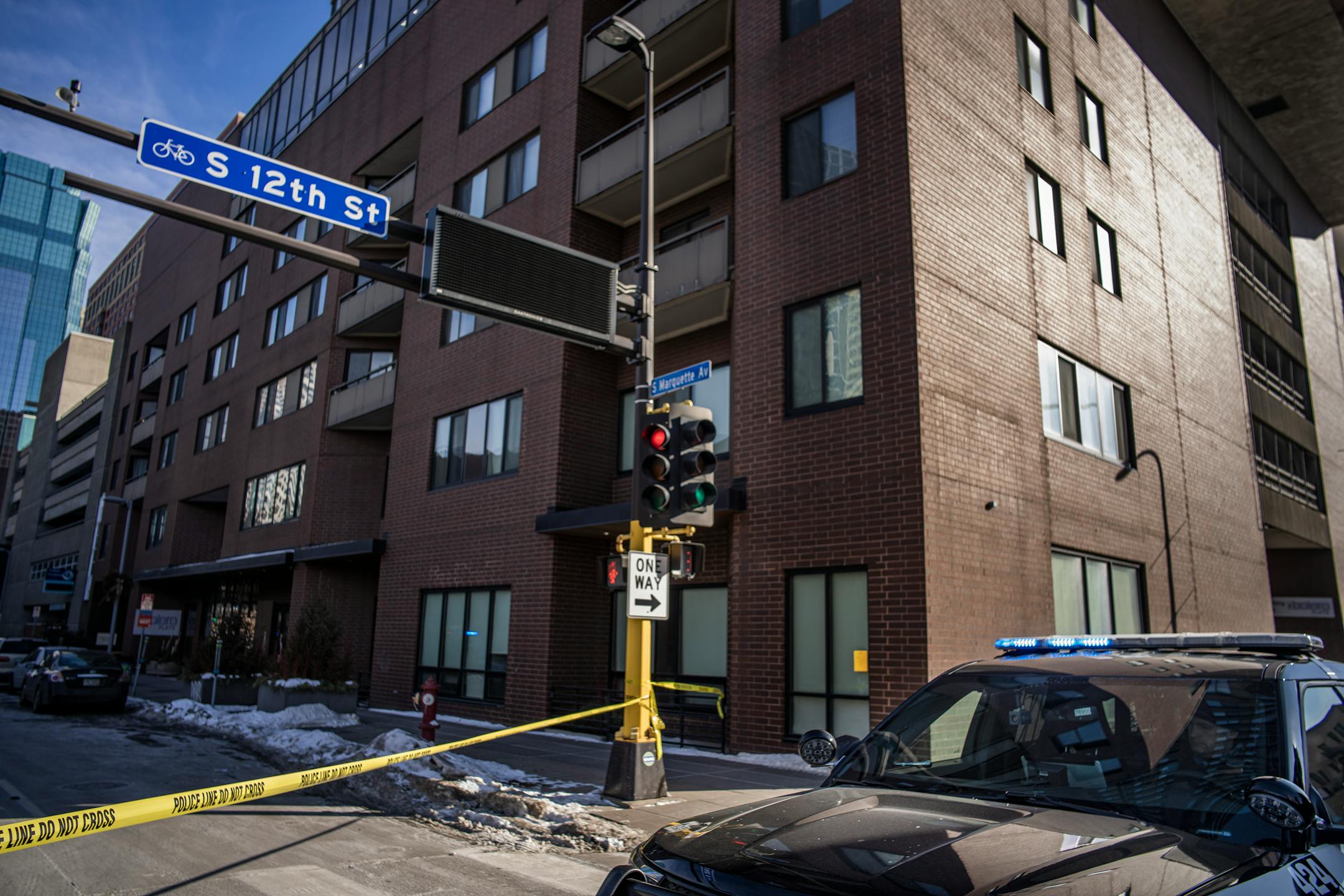
I was more than a little disappointed with the tone and tenor of Jennifer Brooks' column "For lawmaker, this shooting hits home" (Feb. 3), regarding the Wednesday police shooting at the Bolero Flats Apartment Homes. It's very unfortunate and tragic that a man was killed. It's much less tragic that state Rep. Esther Agbaje didn't know in advance what the police were up to as they served a search warrant in connection to a homicide investigation. What exactly would Brooks and Agbaje have the police do as they execute a dangerous and risky operation? Ignore homicide investigations? Broadcast intentions in advance to all parties in vicinity? The police have a very difficult job, and I'm growing weary of their critics piling on before any semblance of an investigation can occur.
John Chapman, Victoria
•••
The article about the fatal shooting at the Bolero Flats Apartment Homes by a Minneapolis police officer says the "shooting comes at a crossroads for the city's police force, which is still trying to reform itself after George Floyd's death at the hands of Minneapolis police officer Derek Chauvin ..." ("Mpls. cop shoots, kills man in apartment," Feb. 3).
The Minneapolis Police Department was never, and is never, going to "reform itself." At least 44% of Minneapolis voters know that. Actually, this latest officer-involved killing comes at a time when:
- A report finally released this week suggests that more than a quarter of 911 calls could be addressed by non-police responders — despite mandated staffing in the 60-year-old charter provision (that was hammered out as a job-security scheme for police).
- Evidence — including a detailed Reuters report published last fall — continues to mount that, in light of heightened scrutiny and the legal consequences following George Floyd's killing, MPD officers have essentially refused to do their jobs.
- Community members are rightly wondering whether restrictions on "no-knock warrants," announced with great fanfare by Mayor Jacob Frey and then-Chief Medaria Arradondo in 2020, really amounted to anything — or whether MPD is simply ignoring them, much like ...
- ... its officers were trained to ignore the city Civil Rights Department's findings on ketamine and "excited delirium," per testimony this very week in the federal trial of former officers Tou Thao, Thomas Lane and J. Alexander Kueng ("MPD use of sedative cited at officers' trial," Feb. 1).
- We have learned that liability payouts from 2020 claims against MPD officers could cost our city more than $111 million.
- Which is on top of the $29 million in workers' comp claims by MPD officers in 2020.
And it comes just months after Minneapolis voters wrestled with whether to maybe, at long last, try a different approach to public safety: to thoughtfully invest — after decades of racialized police violence and mass incarceration of Black boys and men — in strategies that address the root causes of crime.
We could have actually expanded our public safety efforts instead of defaulting to the same broken, police-only approach that has failed us for decades — an approach that's been utterly lacking in transparency and accountability. So far, given this latest tragedy and the lack of information about what led to it, that hasn't changed.
Maybe, hopefully, in the days to come we'll see that it has. But if attempting structural, data-driven changes to how we do public safety seems naive, I'd argue that waiting for MPD to "reform itself" is even more so. This has got to stop.


