Ramstad: Why DigiKey made huge investment in northwestern Minnesota, despite slowing economy

DigiKey seven years ago made a huge bet on staying in Thief River Falls. It built the state’s largest building, adopted new processes and sees no limits to its opportunities.

Columnist Icon
The Minnesota Star Tribune
December 6, 2025 at 1:00PM
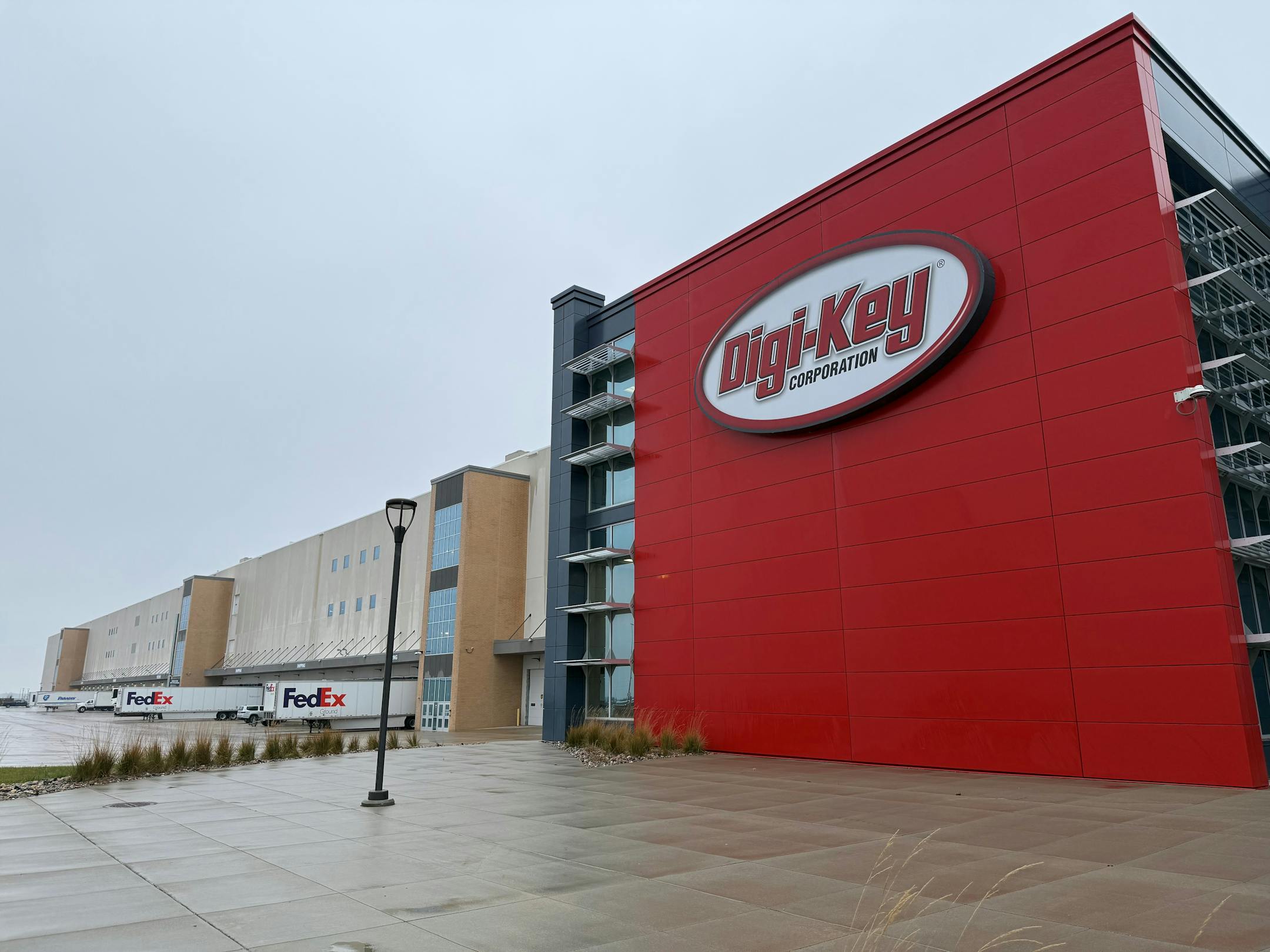
DigiKey in 2022 opened this 2.2 million-square-foot distribution center for tech supplies in Thief River Falls, Minn. It's one of the biggest buildings in the state, ranking just below Terminal 1 at Minneapolis-St. Paul International Airport. (Evan Ramstad/The Minnesota Star Tribune)

THIEF RIVER FALLS, MINN. – There are too many patches of woods around this northwestern Minnesota town of 8,800 people to see a dramatic vista of one of the largest buildings in Minnesota.

But that’s OK. The real drama of DigiKey’s 2.2 million-square-foot product distribution center — twice the size of the Amazon fulfillment center in Shakopee — is that it’s there at all.

DigiKey confronted Minnesota’s biggest economic challenge — the low rates of population and workforce growth — before other companies and political leaders clued in on them.

A decade ago its leaders, including company founder and Thief River Falls native Ron Stordahl, felt the company was getting too large for the town and seriously considered moving. They examined Des Moines, Omaha and Sioux Falls and other Midwest cities with convenient shipping logistics and more people in the hiring pool.

“It was pretty much a given that it wouldn’t be here,” Dave Doherty, DigiKey’s president, told me as he recalled that time.

Then, in the biggest gamble of its 53-year history, leaders of the privately held company decided in 2018 to stay in Thief River Falls, construct the giant building and create a new way to sort millions of electronic parts for customers all around the globe.

Three years since that building opened, the bet has paid off. DigiKey continues to grow its sales, and its workforce of nearly 3,400 is more productive than ever. Even office workers train in “second skill” tasks to help out in the mega-warehouse.

Inside the new product distribution center at DigiKey in Thief River Falls, Allie Weyers grabs an electrostatic bag to package and ship a set of microchips she picked from one of the beige reels behind her. Weyers is one of several hundred pickers at DigiKey, the main people who put together orders at one of the world's largest distributors of electronics components. (Joel Butkowski /DigiKey)

And yet, the search for more workers and greater productivity continues. The company already employs half of the working people in Pennington County and, despite attractive wages and perks like easy access to hunting and lake country, northwest Minnesota remains slow-growing.

The state Department of Employment and Economic Development projects the population in northwest Minnesota to grow 3.8% from now to 2035 while the workforce grows a mere 2.8% as aging baby boomers retire. Both are lower than comparable rates for the overall state in the 2020s, which I’ve often noted are the lowest in Minnesota history.

“So many companies are automating to squeeze costs and squeeze jobs out forever,” Doherty said. “Well, our challenge right now is there’s not enough labor to continue to support the growth.”

Stordahl, now in his 80s, remains the sole owner of DigiKey. He started the company in the 1970s after creating a digital keying device for ham radio operators communicating by Morse code. For its first 20 years, it remained a relatively small business, employing a few hundred people who distributed an ever-growing selection of electronic components at the start of the personal computer age.

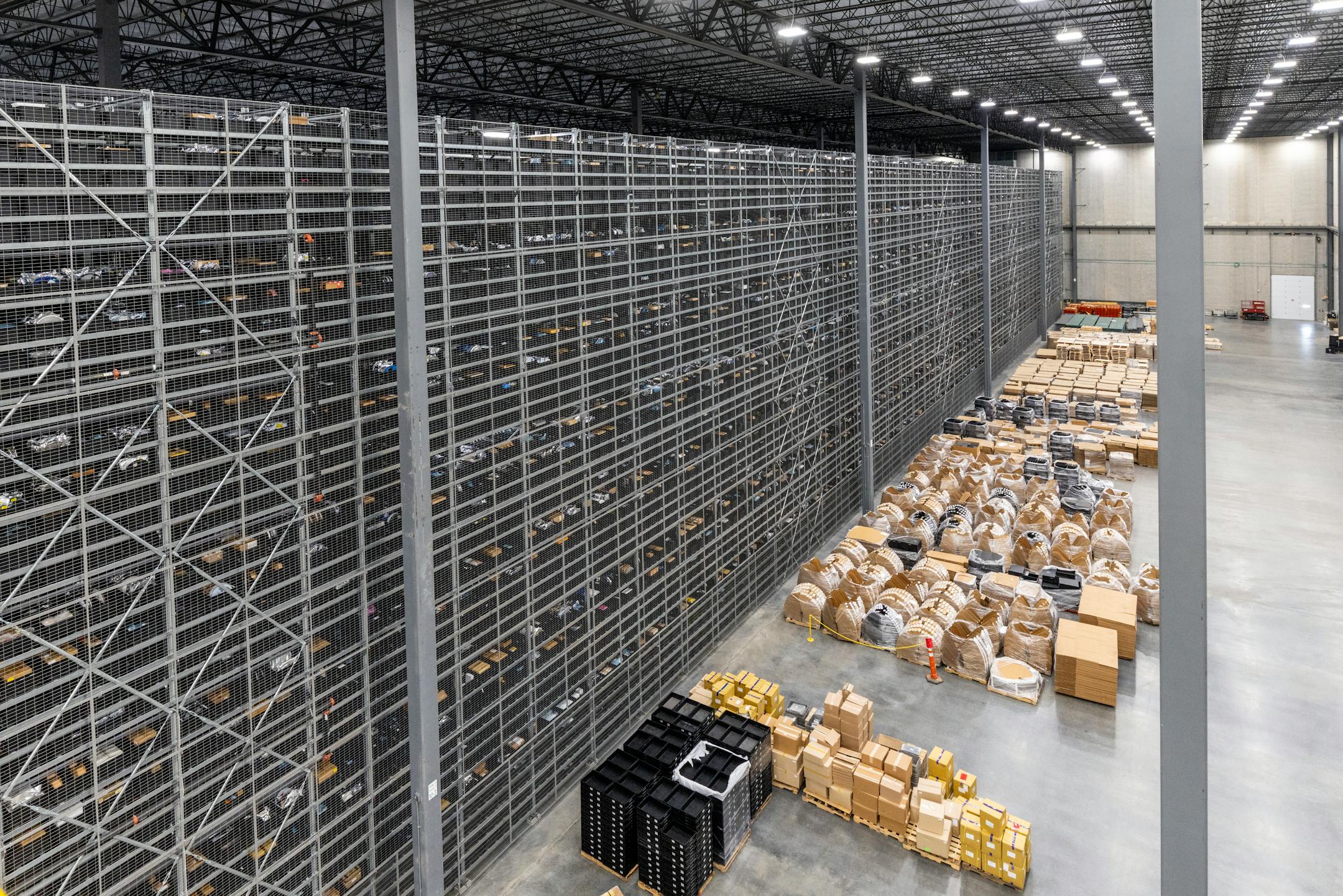
DigiKey now stores inventory in 35 rows of racks that are 70 feet high and accessed only by automated movers. This photo is taken at the halfway point on the end row of the racks. It also shows packaging materials on the ground floor. (Joel Butkowski/DigiKey)

Today, DigiKey distributes approximately 1% of the world’s electronic components — millions of microchips, circuit, cables, wires, and fans, plus the enclosures, panels and connectors to put them together.

The simultaneous rise of e-commerce and logistics companies played a huge role in DigiKey’s explosive growth. Today, FedEx, UPS and DHL all have staff on-site at DigiKey, running trucks and multiple flights a day directly to their own distribution hubs.

Meanwhile, DigiKey has staff on-site at Google’s marketing office in Chicago. They constantly adjust to changes in algorithms to ensure that anyone doing an internet search for the simplest resistor or piece of wiring will see DigiKey as a potential source.

Between 20% and 25% of DigiKey’s business comes from people who are using internet search engines to find parts. Even the biggest names in electronics parts rely on DigiKey to reach customers they consider too small to sell to directly.

“In some cases, we’re an extension of the marketing team for some of the manufacturers,” said Tim Carroll, DigiKey’s vice president of e-commerce.

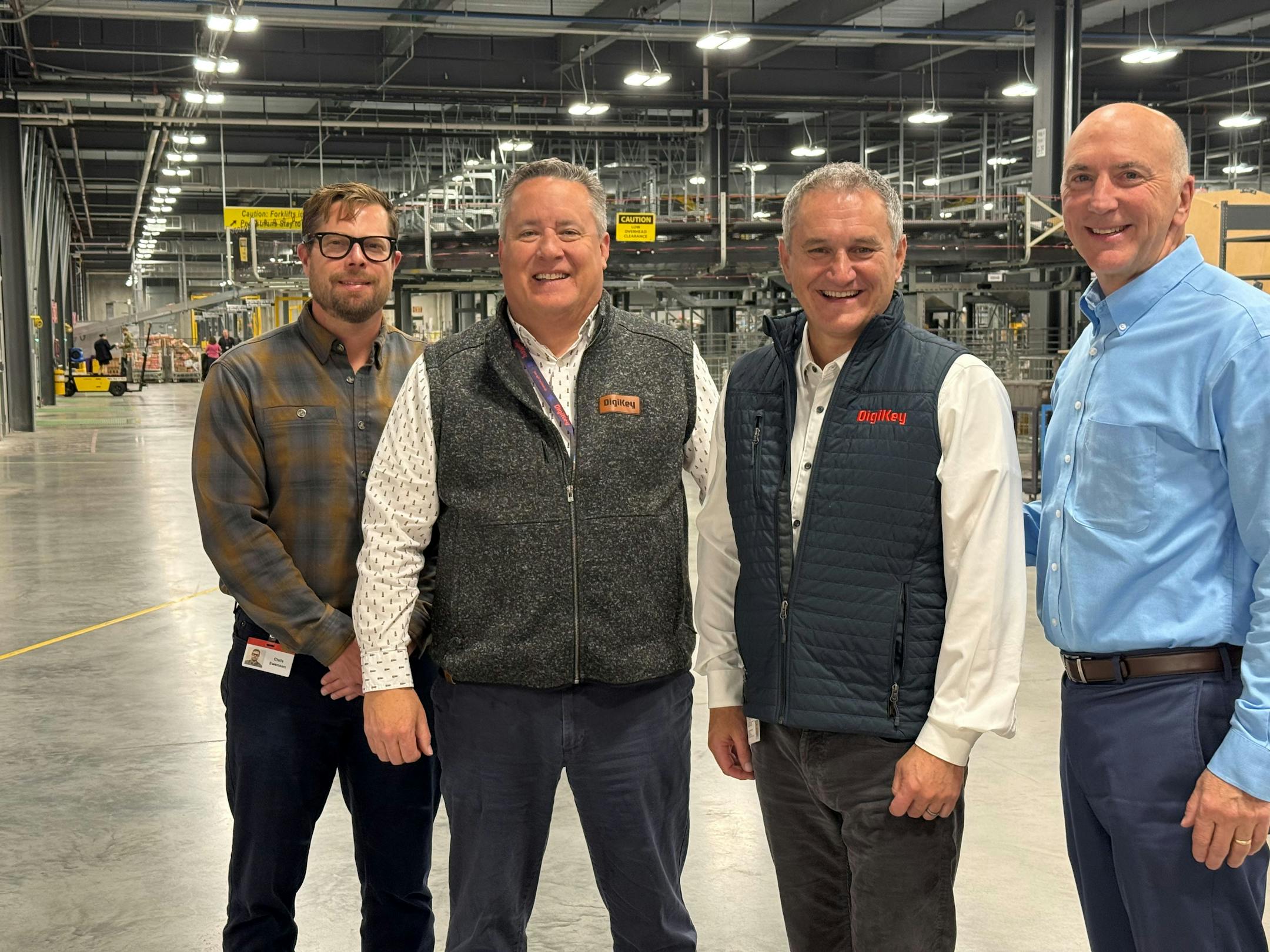
Leaders of DigiKey Electronics stand inside its 2.2 million-square-foot product distribution center. From right, Dave Doherty, president; Tim Carroll, vice president e-commerce; Chris Lauer, vice president order fulfillment and Chris Swenson, vice president warehousing. (Evan Ramstad/The Minnesota Star Tribune)

And some customers count on DigiKey as a just-in-time supplier of parts, or a consolidator of inventory. For them, DigiKey has converted lead time for parts into simply the time it takes to get a product from Thief River Falls to them.

As a result, said Doherty, “No longer does the location matter.”

That was one key insight playing a role in the 2018 decision to stay in Thief River Falls. Another was that moving away would have meant leaving behind the employees who knew how things worked.

“We’ve got people with 10, 20, 30-plus years of experience and we leverage their know-how, not just their hands and feet,” Doherty said. “And that drives efficiency.”

DigiKey’s longtime warehouse, across the street and connected by skybridge to the new one, was a building originally owned by its next-door neighbor, Arctic Cat, maker of snowmobiles and other outdoor vehicles. DigiKey grew it to 600,000 square feet, but employees often felt cramped.

They invented new styles of bins and other ways to squeeze more parts into the space. When DigiKey people talked publicly about the tight fit, people around Thief River Falls offered to help. “We got people that said, ‘Oh I’ve got room in my dairy barn,’” Doherty said.

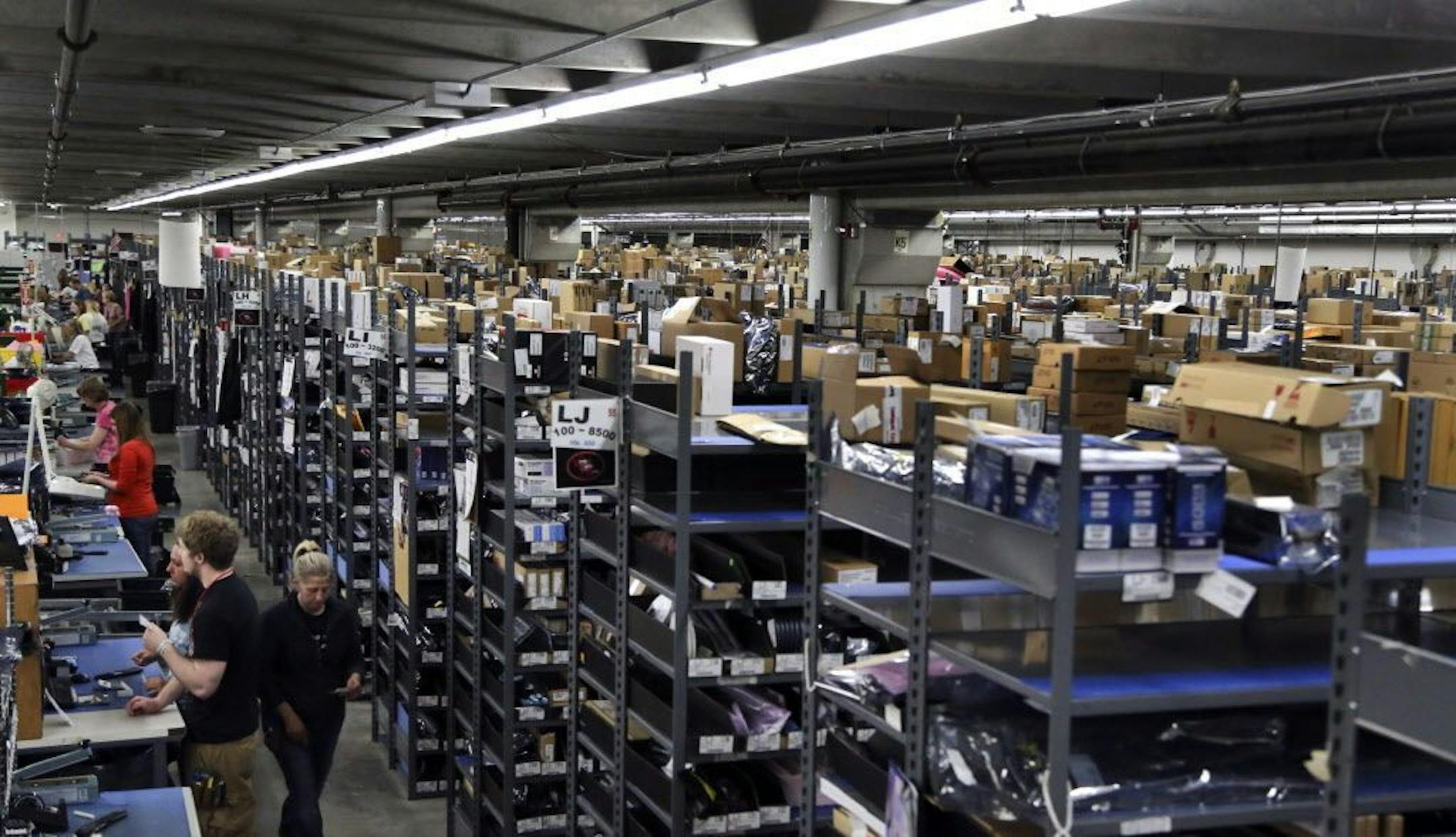
Digi-Key pickers line the warehouse floor Tuesday, May 14, 2013 in Thief River Falls, MN. With projected sales of $1.6 billion in 2013 and 840,000 parts on the shelf it its vast inventory, Digi-Key is among the world's heavy weights in internet electronics parts firms.
DigiKey's older warehouse, shown in this 2013 photo, required pickers to walk back and forth through aisles of parts. In its new facility, parts come to the workers. (The Minnesota Star Tribune)

The solution, said Chris Lauer, DigiKey’s vice president of order fulfillment and logistics, rested in a fundamental change in the way DigiKey worked. For years, DigiKey’s pickers, the people who grab parts out of the warehouse to be sent to customers, walked up and down rows of inventory, reaching up and down for the parts, scanning them and bringing them back to a station to be sent along for final packaging.

In the new building, DigiKey makes the parts come to the pickers, as Amazon and many others do in their warehouses. Instead of racks that were about 8 feet high, DigiKey now stores parts in 35 rows of shelves that are 70-feet tall and stretch for hundreds of yards.

When DigiKey gets an order, its computers trigger an automated mover inside those racks to bring out a tray with the relevant part, then deliver it to one of nearly 200 pickers, who begin preparing it for shipment. The result: pickers process 25% more items per hour than in the old building.

“There are many nuances, but our engineering team ultimately took us to the right solution of what’s efficient, what’s good for the team and how do you get a lot more done with the same number of folks that we’ve got,” Lauer said. “That journey hasn’t stopped.”

There’s room to add more racks as sales grow and more inventory is needed, and there’s even space to extend the giant building.

“It’s a strategic advantage to be in one site with this amount of inventory,” said Chris Swenson, vice president of warehousing and distribution. The question, he said, is “How do we continue to maintain that growth with the supporting area of labor and the team we have? Because we can’t go to a different area.”

Sign up at startribune.com/evanalert to receive an e-mail from Evan when his columns publish.

about the writer

about the writer

Evan Ramstad

Columnist

Evan Ramstad is a Star Tribune business columnist.

See Moreicon

More from Business

See More
card image
Evan Ramstad/The Minnesota Star Tribune

DigiKey seven years ago made a huge bet on staying in Thief River Falls. It built the state’s largest building, adopted new processes and sees no limits to its opportunities.

card image
Berkshire Hathaway Chairman and CEO Warren Buffett, left, and Vice Chairman Charlie Munger, briefly chat with reporters Friday, May 3, 2019, one day before Berkshire Hathaway's annual shareholders meeting. An estimated 40,000 people are expected in town for the event, where Buffett and Munger preside over the meeting and spend hours answering questions. (AP Photo/Nati Harnik) ORG XMIT: NENH1