

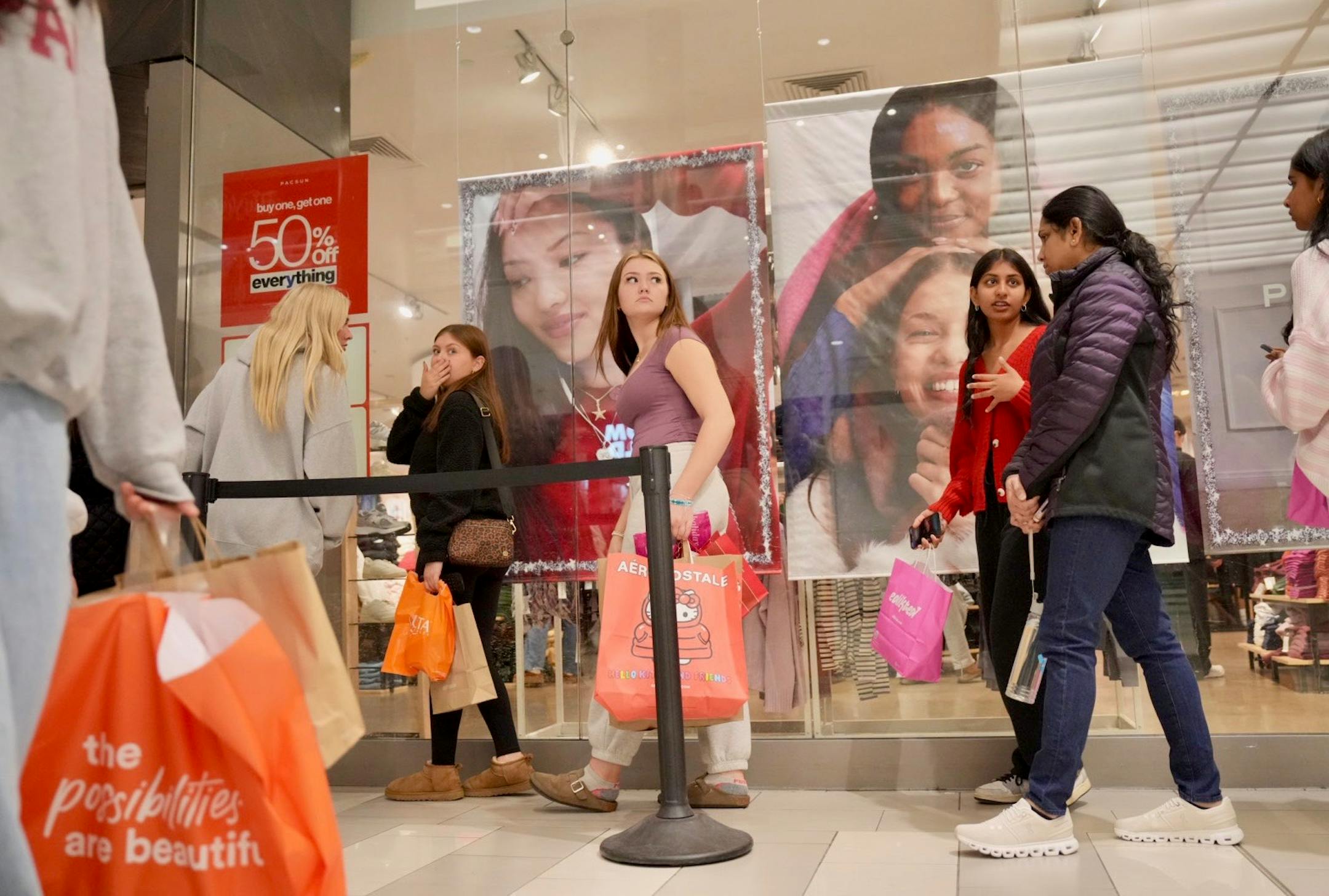
Thousands of shoppers bustled through stores — or flicked through retailers’ websites — this past weekend for Black Friday, Small Business Saturday and Cyber Monday deals.
Advertisements for “regular price: $299, our price: $199” or “this weekend only: Save 40%!” were everywhere.
Americans have become accustomed, and addicted, to sales. But according to nonprofit consumer group Consumers’ Checkbook’s recent investigation, most stores’ sale prices are bogus discounts, with retailers offering the same “sale prices” more than half the time. The investigation found nearly all retailers use fake sales to mislead their customers. And this practice keeps worsening.
Beginning in February 2025, once a week for 24 weeks, Consumers’ Checkbook’s researchers tracked the prices that 25 national chains offered for 25-plus items. Researchers selected on-sale products representative of each company’s primary offerings (i.e. tools and appliances at Home Depot, clothing and housewares at Kohl’s, big-ticket electronics at Best Buy).
This research expands on similar projects completed in 2015, 2018 and 2022, when the organization spent 40 or more weeks tracking major retailers’ prices. Through those 10 years, fake sales have become far more prevalent. During Consumers’ Checkbook’s 2018 project, six retailers — JCPenney, Kmart, Kohl’s, Macy’s, Neiman Marcus and Sears — offered at least half of the tracked items at fake discounts more than half the time. Now, far more of the stores — 21 out of 25 — advertised sale prices more than half the time.
By constantly offering items at sale prices and rarely, if ever, offering them at regular prices, retailers are engaging in deceptive advertising to boost their profits. Seeing 50% or 60% off a regular price doesn’t mean anything if the retailer rarely, if ever, charges the higher price for it. The only way to make sure you’re snagging the best deal is to shop around.
Consumers’ Checkbook found nearly every store in the study was guilty of using misleading sales. Bass Pro Shops, Bed Bath & Beyond, Dick’s, Foot Locker, Gap, JCPenney, Michaels, Nordstrom, Old Navy and Wayfair were the biggest fake-sale offenders. Most of the items tracked at those stores were always or almost always on sale.
Only Apple, Costco and Dell consistently conducted legitimate discounts. Walmart was a borderline case: 10 of the 24 items researchers tracked for it were on sale at least 50% of the time. Overall, the items tracked at Walmart were on sale 48% of the time.


