In the shadow of the Whipple Building, a prayer camp springs up on sacred land

The camp was established this week at Coldwater Spring, or Mni Owe Sni, a sacred area for the Dakota and other tribes.

The Minnesota Star Tribune
February 14, 2026 at 3:00PM
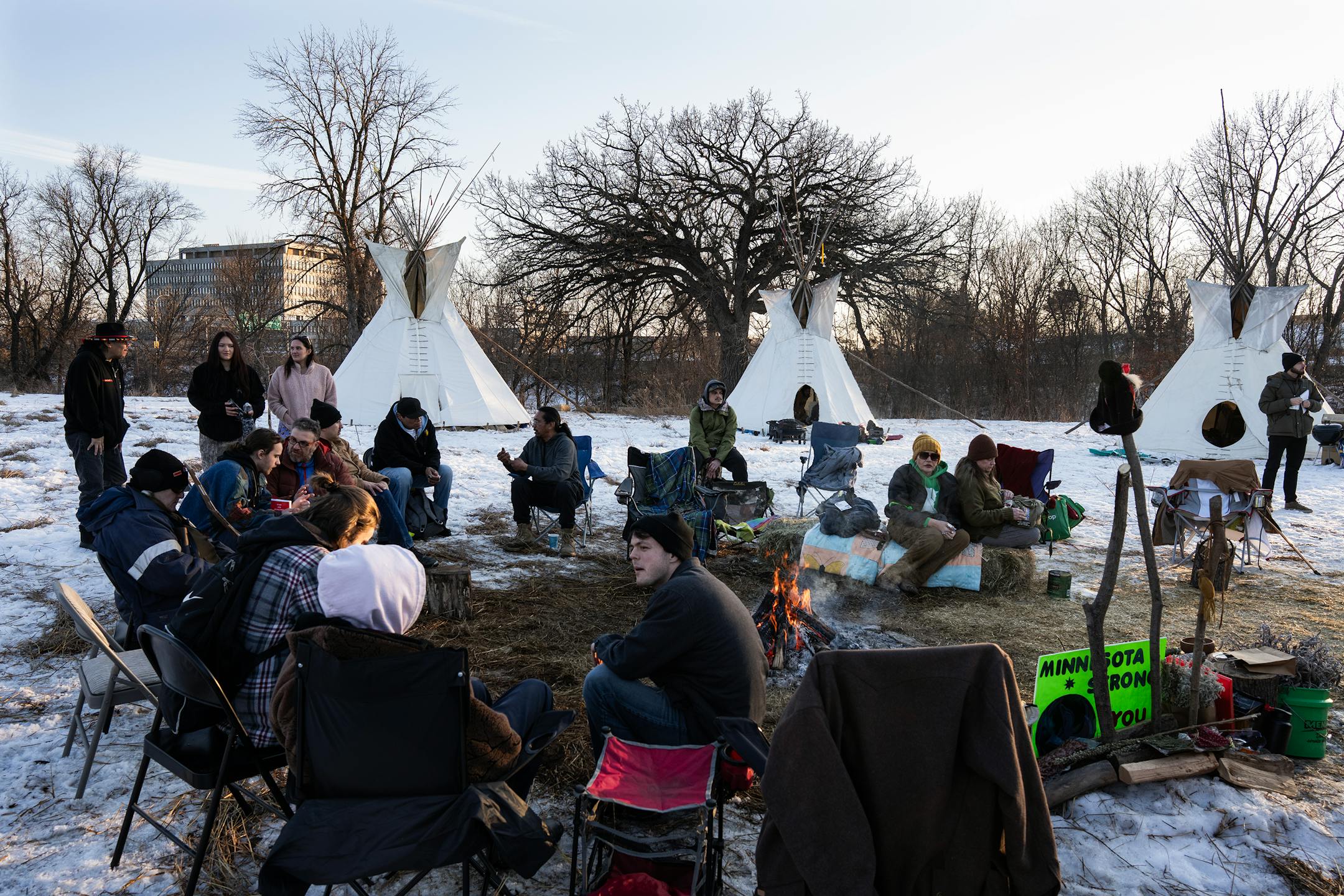
A fire is at the heart of an Indigenous prayer camp not far from the Whipple Federal Building at Fort Snelling on Thursday, Feb. 12. Native activists say they're praying for families impacted by immigration detentions. (Richard Tsong-Taatarii/The Minnesota Star Tribune)

From New York City, Hoⁿga Wa’u had been watching what she considered “state-sanctioned violence” in Minnesota and felt a certain kind of pain.

She has friends in the Twin Cities and felt a calling to travel there and lend support where she could. She arrived more than a week ago without much of a plan.

By Wednesday, Wa’u, a member of the Omaha tribe from Nebraska, found herself among a few dozen people camping in tipis and yurts. It is part of a prayer camp set up by Indigenous community members at Coldwater Spring, or Mni Owe Sni – a sacred area for the Dakota and other tribes near the Mississippi River.

It is this place, which happens to sit in the shadow of the Whipple Federal Building, the de facto headquarters of an aggressive immigration crackdown, that has soothed the pain Wa’u felt from afar.

“We’re taking up space and loving each other,” she said. “We’re feeding each other, we’re laughing, we’re making art.

“This is really how we should be living. We should all be taking care of each other.”

The camp, which was established Monday and has no plans to disappear as the deportation operation winds down, was created to reassert the area as Native land while also providing a space for healing, camaraderie, comfort and togetherness, said Wasuduta, a member of the Dakota tribe and leader of the campsite.

“This is our land,” he said. “We’re not running. We’re here.”
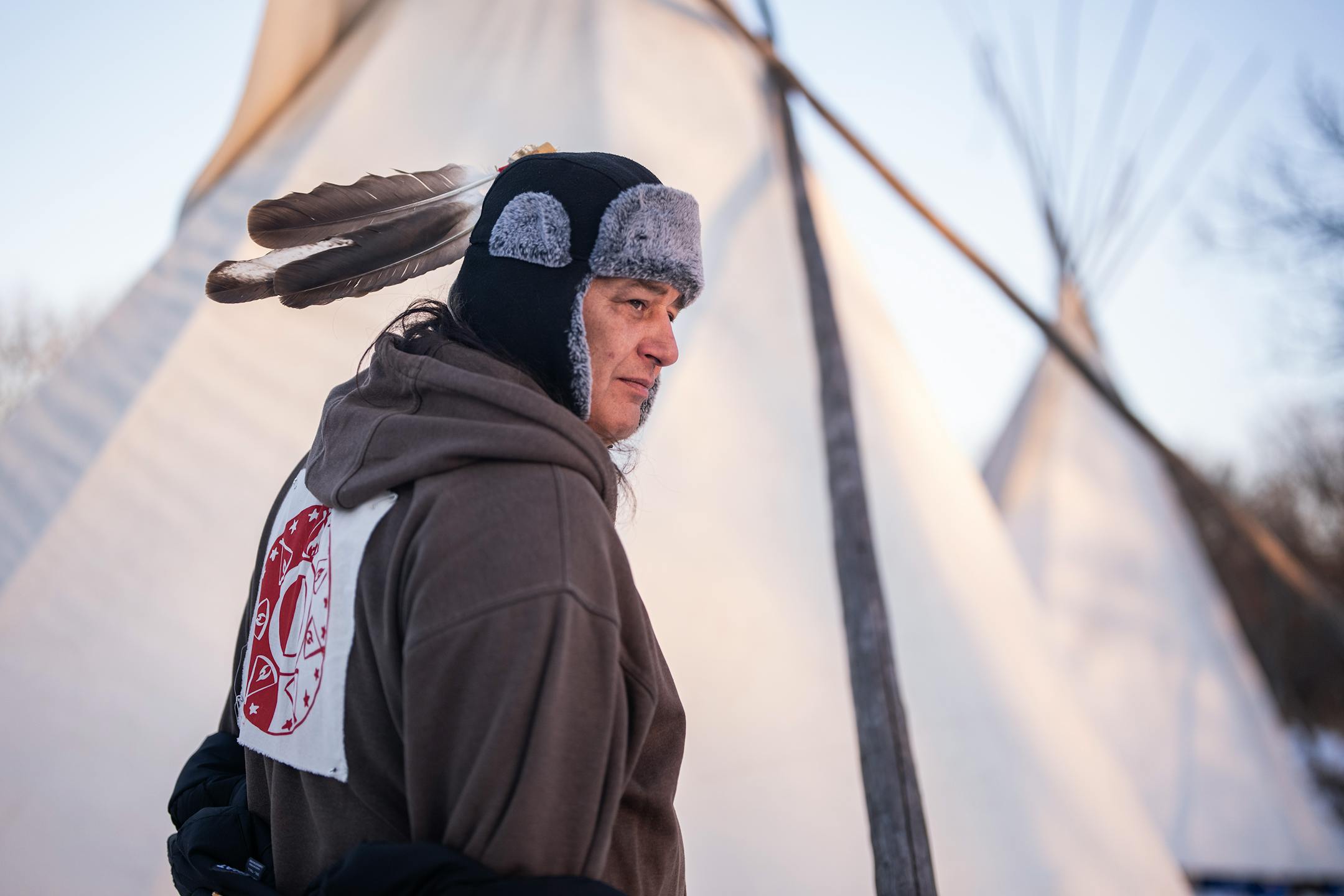
Prayer camp leader Wasuduta considers it a healing place after the trauma of the ICE surge. (Richard Tsong-Taatarii/The Minnesota Star Tribune)

Unity, not protest

History runs deep at the campsite. Mni Owe Sni has for centuries functioned as a traditional gathering place for the Dakota and other Indigenous nations, according to the National Park Service, which partners with 18 tribes in managing the grounds.

In 1820, the U.S. Army began building Fort Snelling nearby. After the U.S.-Dakota War of 1862, more than 1,600 Dakota people were moved to a concentration camp at Fort Snelling. Later, hundreds of Ho-Chunk people were also briefly held there, according to the Minnesota Historical Society. Both groups were eventually removed from Minnesota.

The sight of tipis sitting in a snowy field, with the brutalist design of the Whipple Building looming in the background, is a powerful visual for the campers.

“It’s the federal government concentration camp over there,” said Tim Sullivan of St. Paul as he stood by an easel and painted the scene. “And this is where regular people are, helping each other out.”

The campsite is not about chanting in protest, nor has it necessarily been a place for speeches.

“It’s about coming together and understanding what unity truly means in your prayer, your thoughts, your heart,” Wasuduta said.

By Friday, the camp had grown to four tipis, five yurts, two tents and a kitchen serving soup and other foods. At the center of the camp is a fire that is always lit, meant to symbolize prayer, determination, faith and hope.

Wasuduta said there are no plans to leave the site, despite park rangers having visited several times to issue warnings. The National Park Service did not respond to a request for comment.

Prayers rise

The camp is open to all visitors. About 50 people hung around Thursday and Friday afternoons eating food, making art, hauling in firewood and chatting. The hum of a nearby highway filled an otherwise quiet scene. Several dogs sniffed the grounds with excitement.

Justina Grant, a member of the Dakota tribe, held court near the fire, instructing visitors on how to make prayer ties: pinches of tobacco wrapped in fabric that are tied along a string and used to send prayers.

“It’s an honor,” she said of her involvement. “It makes me feel happy.”

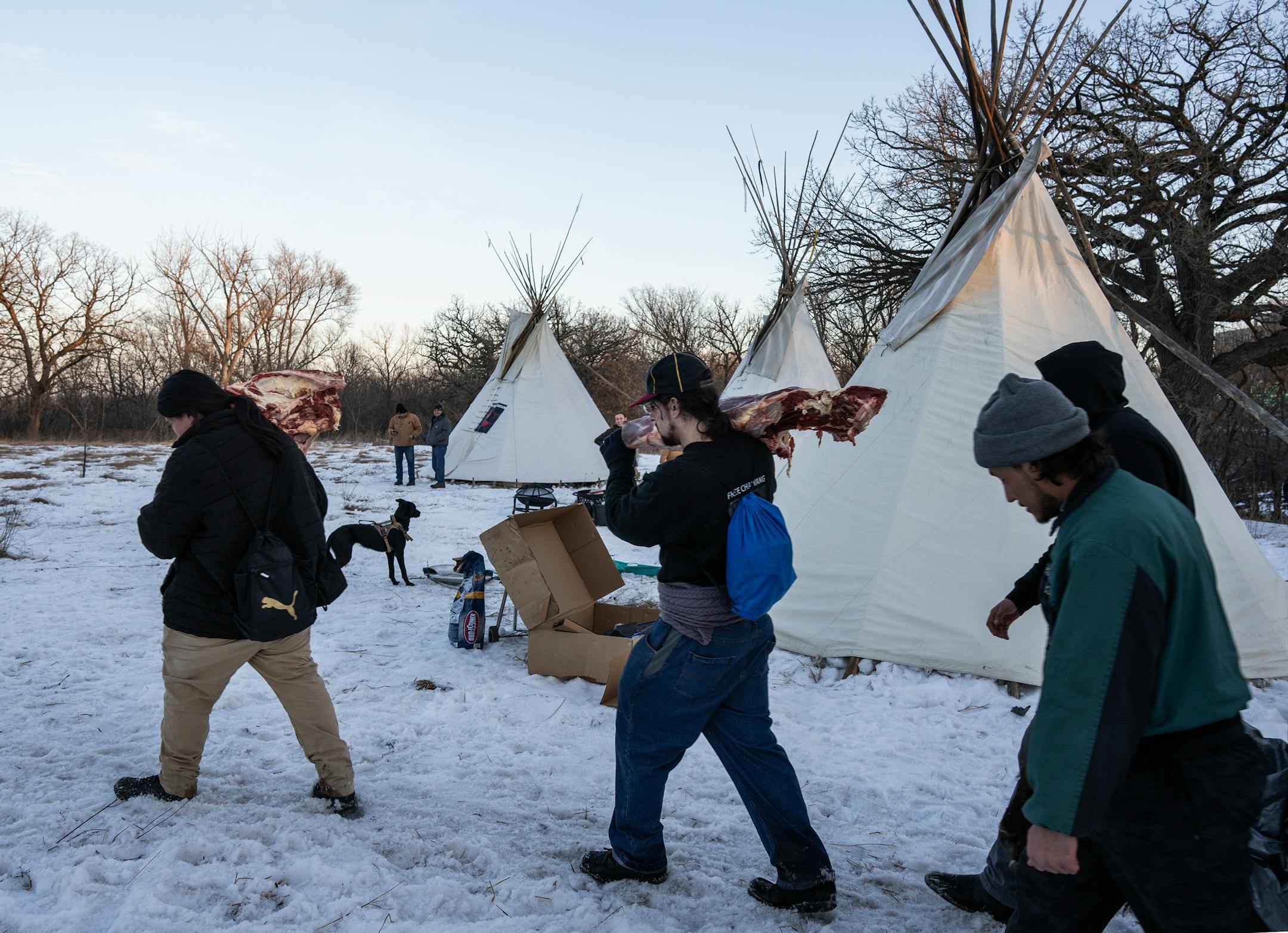
Late Thursday afternoon, a group of men entered the camp carrying the carcass of a bison. They laid the cuts on a blue tarp, and soon dozens of people circled around it.

As the sky turned pink and purple, a Dakota man led a prayer and sang a song to thank the animal for its life and for feeding the people before him.

Meanwhile, a woman went from person to person, presenting them with a bowl of burning sage. They wafted its smoke over their heads as a way to cleanse themselves, restore balance and be one with each other and the universe.

“This is the way we were for a very long time in our history,” Wasuduta said.

A group arrives with a butchered bison to be further prepared for cooking at the prayer camp. (Richard Tsong-Taatarii/The Minnesota Star Tribune)
about the writer

about the writer

Elliot Hughes

Reporter

Elliot Hughes is a general assignment reporter for the Star Tribune.

See Moreicon

More from News & Politics

See More
card image
Renée Jones Schneider/The Minnesota Star Tribune

A preliminary report estimates millions in lost wages and revenue for businesses during the surge.