

INDIANAPOLIS – The news from Hoover, Ala., trickled out Wednesday evening and gained full steam with multiple media reports Thursday and Friday. Texas and Oklahoma, a pair of historical blue bloods in college football, are preparing to leave the Big 12 Conference to join the Southeastern Conference.
Media speculation quickly had Kansas and Iowa State as possibilities to join the Big Ten, with other Big 12 schools scattering to join other conferences. The jolt from SEC country reverberated 500 miles north, where Big Ten coaches, officials and players gathered for the conference's media days on Thursday and Friday in Indianapolis.
The reaction was a mixture of surprise and intrigue about what the future might bring as the start of another big change might be coming to college football.
"It definitely caught me off guard, to be honest,'' Indiana coach Tom Allen said Friday at Lucas Oil Stadium. "The landscape is changing. West Virginia is in the Big 12. It doesn't make sense to me. I was raised when everything was regional. Those barriers are kind of breaking down.''
Indeed, they are, and there's sure to be plenty of interest in the developments from the Big Ten, the conference that started it all by adding independent Penn State in 1990. Nebraska made it 12 teams in the Big Ten by leaving the Big 12 in 2011, and Rutgers (formerly of the Big East, then American Athletic Conference) and Maryland (formerly of the Atlantic Coast Conference) made it 14 in 2014.
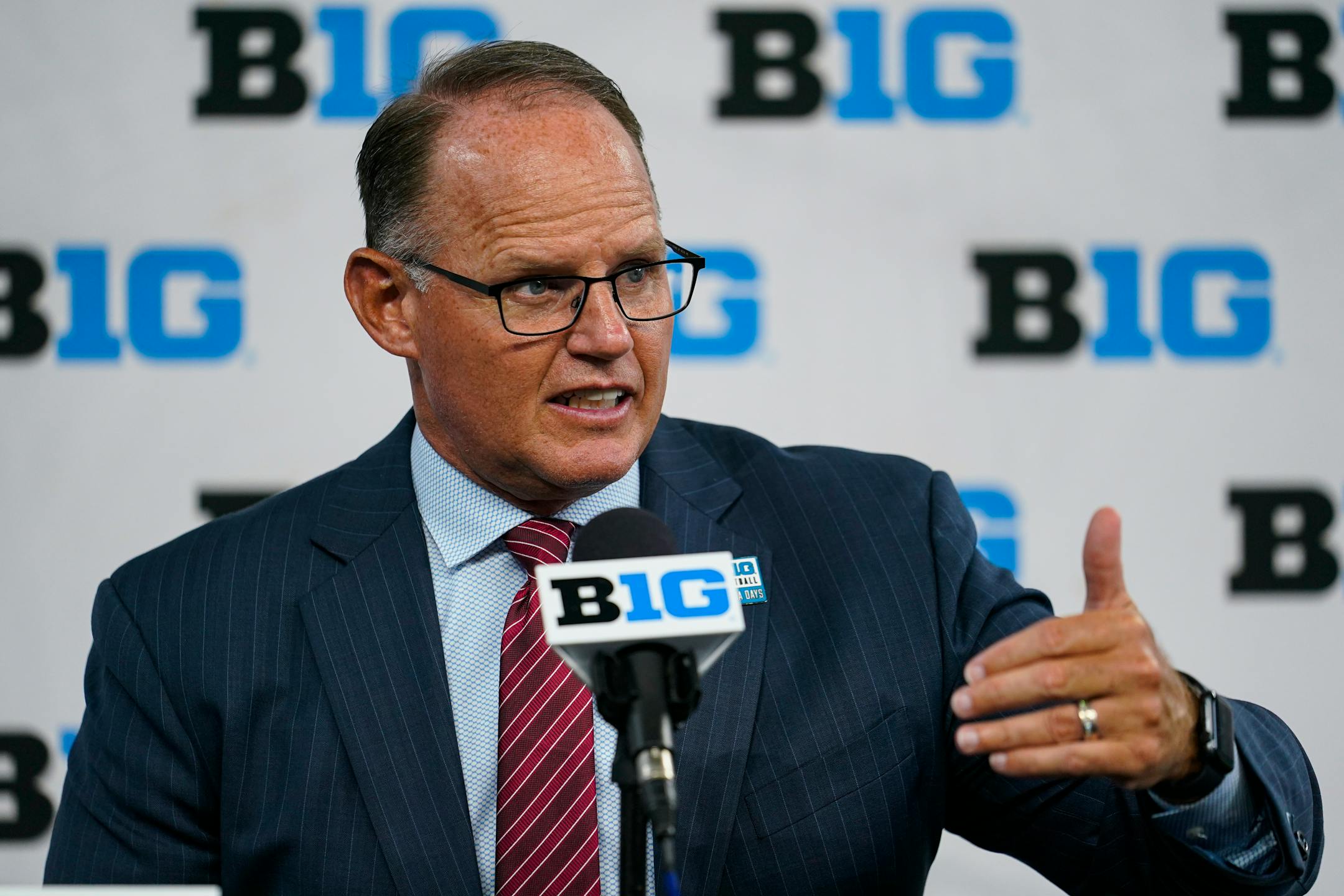
Big Ten Commissioner Kevin Warren on Thursday mainly took a wait-and-see approach to the Texas and Oklahoma news, calling the changing times "an inflection point in college athletics.''
"We're always constantly evaluating what's in the best interests of the conference,'' Warren said. "It will be interesting to see how that story … evolves and where it lands, but I think that reiterates where we are in college athletics.''
To help navigate these changes, Warren hired former Wisconsin coach and athletic director Barry Alvarez to be a special adviser on football.


