
Popeyes planning to take over 14 metro KFCs

A bankrupt KFC franchisee is selling the Twin Cities fried chicken restaurants; KFC is trying to keep them under its banner.

October 27, 2012 at 1:58AM
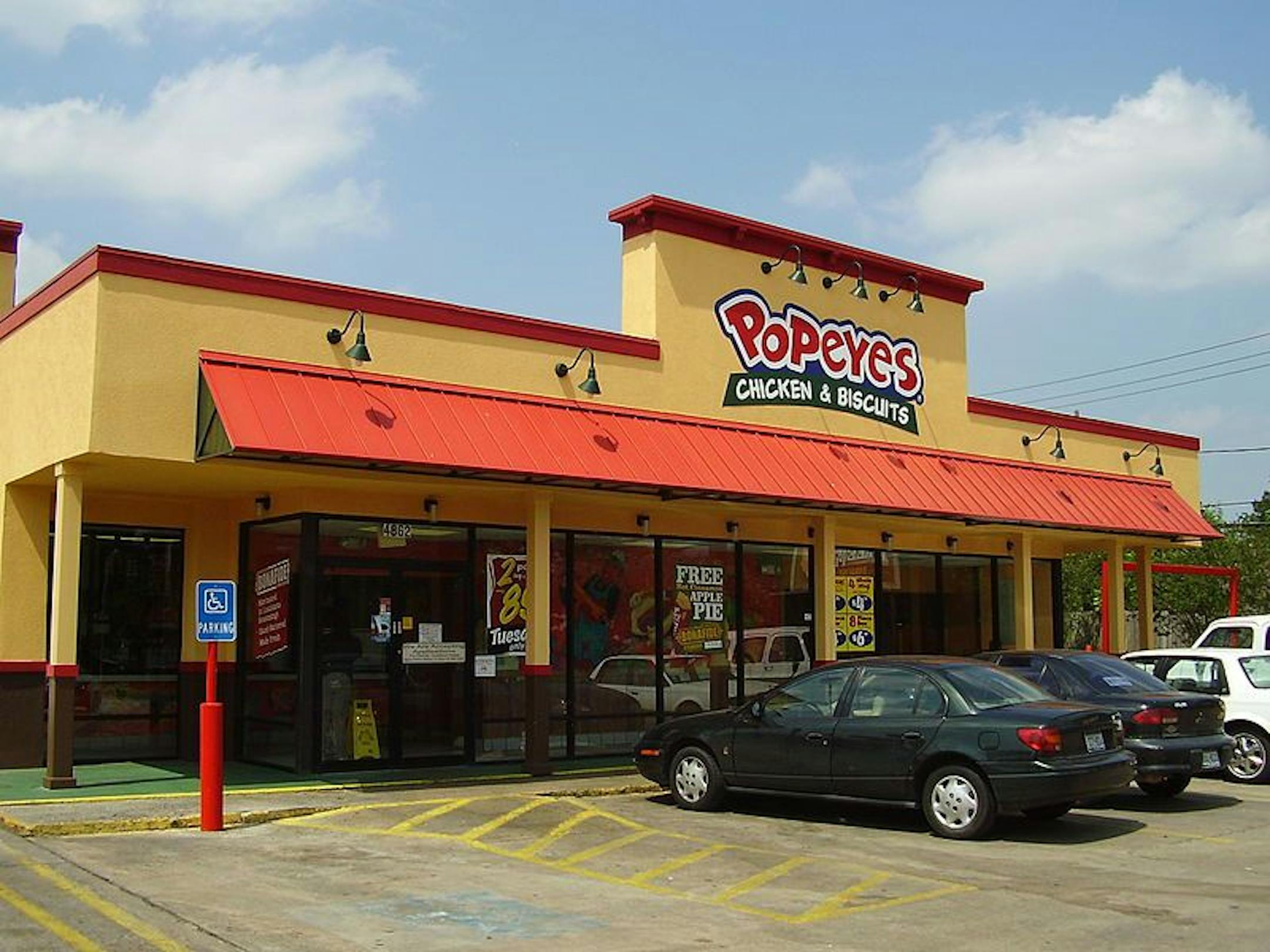
Popeyes Chicken & Biscuits location at 4862 Willowbend, Houston, TX
wikipedia photo
Popeyes, known for spicy chicken and its red beans and rice, has more than 2,000 locations, mostly in the South. (Star Tribune/The Minnesota Star Tribune)

Popeyes, the second-largest U.S. fried chicken chain, is planning a major push into the Twin Cities at the expense of KFC, the nation's top chicken chain.

AFC Enterprises, Popeyes' suburban Atlanta-based parent, has agreed to buy 14 Twin Cities KFC outlets from a bankrupt KFC franchisee. The bid is expected to go before a bankruptcy judge for approval next month.

The deal would greatly boost Popeyes' Twin Cities profile -- it has only a lone outpost on Lake Street in south Minneapolis -- while taking a bite of KFC's market share. KFC's website indicates the chain has at least 40 restaurants in the Twin Cities, including the ones AFC plans to buy.

KFC, a unit of Louisville-based restaurant giant Yum Brands Inc., appears none too pleased with the Popeyes incursion. KFC "intends to make every effort to see that as many restaurants as possible continue to operate as KFC restaurants with the same employee teams but under new ownership," the company said.

The company said it is "intimately involved" in discussions over the bankrupt KFC outlets, but declined to say whether it plans to object to the Popeyes deal in U.S. Bankruptcy Court in Minneapolis.

Popeyes, known for spicy cuisine and its signature red-beans-and-rice side dish, has just more than 2,000 restaurants nationwide, with heavy concentrations in Texas, California, Louisiana, Florida and Illinois. Its Upper Midwest presence is limited.

AFC has agreed to pay $13.8 million for 28 restaurants owned by bankrupt KFC franchisee Wagstaff Management. Half of those restaurants are in the Twin Cities, half in northern California, where Wagstaff is based.

Bankruptcy records say Wagstaff has one KFC each in Hopkins, Inver Grove Heights, Richfield, Savage, Rosemount and Bloomington; two in each of Minneapolis and Brooklyn Park; and four in St. Paul.

AFC plans to quickly convert the KFCs into Popeyes Louisiana Kitchens at a cost of $11.5 million, and then lease the restaurants to its own franchisees.

"The rapid opening of 28 new Popeyes restaurants will give Popeyes a major footprint in places where we currently have almost no presence," AFC's CEO Cheryl Bachelder said in a statement.

Wagstaff in April 2011 filed for Chapter 11 bankruptcy, which gives companies the chance to financially reorganize while shielded from their creditors. But Wagstaff says in court filings that reorganization isn't feasible, and liquidating assets is its only option.

Consulting firm Alvarez & Marsal (A&M) was brought in to market Wagstaff's properties. It contacted prospective buyers from a "universe" of KFC franchisees, non-KFC franchisees, financial buyers and real estate investors, court documents say.

It got five bids by an April 30 deadline, but among other issues, none was acceptable to GE Capital, Wagstaff's major creditor. AFC later submitted a bid that was the highest offer and also acceptable to GE Capital, bankruptcy documents say.

A&M claims it reached out to KFC to help market the restaurants, particularly since any potential buyer who wanted to retain the KFC brand would need the chicken chain's approval.

"However, [KFC] refused to actively engage with A&M or [Wagstaff] in the marketing process, which substantially hindered the entire sales process," Jonathan Tibus, a A&M senior director, said in an affidavit.

Popeyes was founded in 1972 by a New Orleans entrepreneur who grew a single chicken shack in Louisiana into a major chain. AFC bought Popeyes in the early 1990s after Popeyes itself went bankrupt, the result of an ill-fated merger with Church's chicken.

Mike Hughlett • 612-673-7003

about the writer

about the writer

Mike Hughlett

Reporter

Mike Hughlett covers energy and other topics for the Minnesota Star Tribune, where he has worked since 2010. Before that he was a reporter at newspapers in Chicago, St. Paul, New Orleans and Duluth.

See Moreicon

More from Business

See More
card image
Anthony Soufflé/The Minnesota Star Tribune

Minnesota jewelry designer Emily Johnson is among those upset with Amazon over its new AI feature, which uses product images and descriptions from their websites.

card image
card image