
Advertisement

Pope Francis wows Brazil, but battles lie at home

The pope wows Brazil. But battles — and traps — lie at home.

August 5, 2013 at 9:44PM
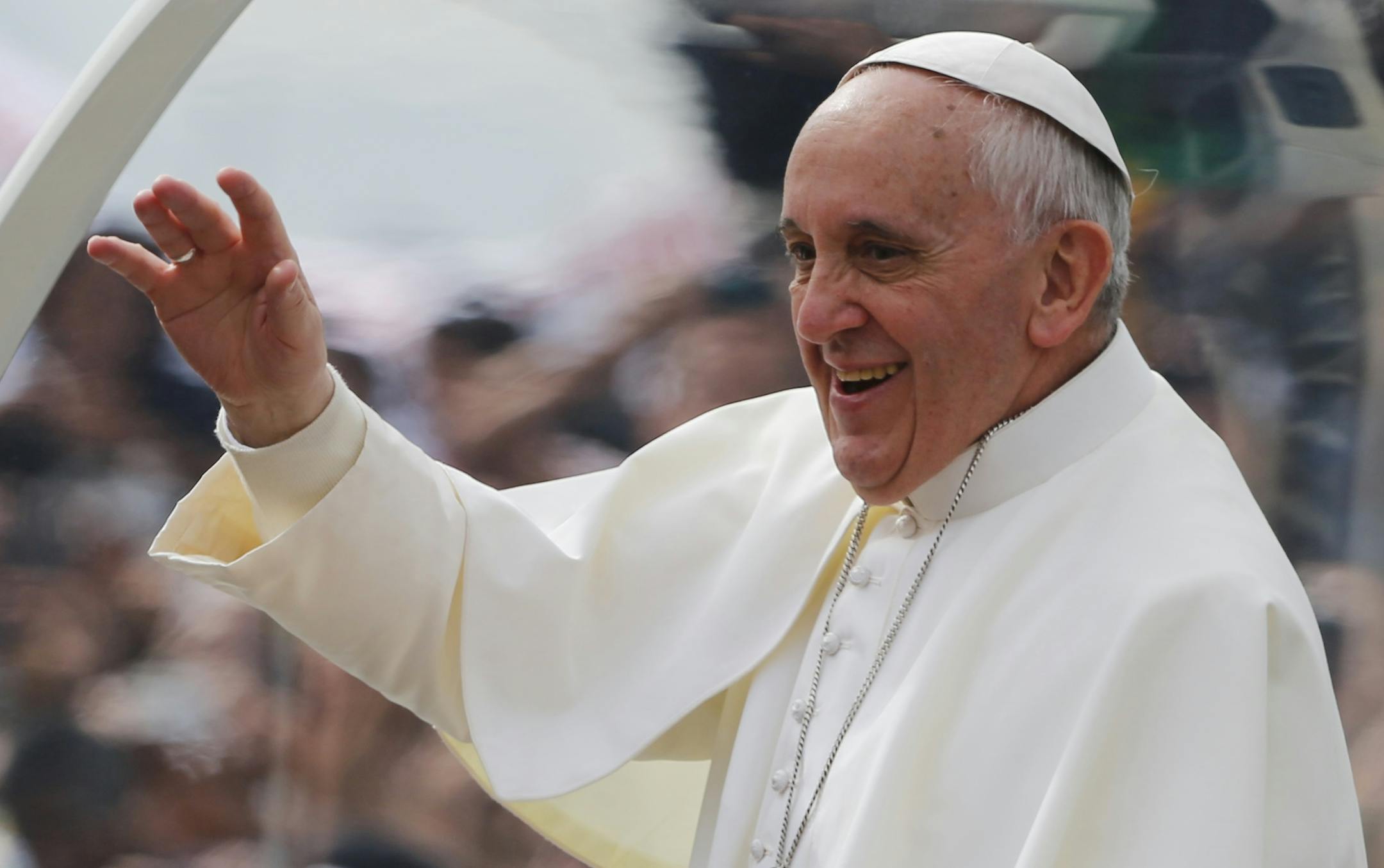
Pope Francis waves from his popemobile along the Copacabana beachfront on his way to celebrate Mass in Rio de Janeiro, Brazil, Sunday, July 28, 2013. Hundreds of thousands of young people slept under chilly skies in the white sand awaiting Francisí final Mass for World Youth Day. (AP Photo/Jorge Saenz) ORG XMIT: MIN2013080515030837
Pope Francis waved from his popemobile along the Copacabana beachfront on his way to celebrate the mass. (The Minnesota Star Tribune)
Advertisement

On his debut abroad the first Latin American pope put a spring in the church's step in the world's largest Roman Catholic country. He also — with a long, informal news conference — underlined the new style that his papacy has brought, heralding a softer tone on sexual issues, and a tougher line on Vatican cliques.

Humble and plain-speaking, Francis drew huge crowds despite the wet and cold of the southern winter. His energy and urgency was a marked break with the sense of drift that has afflicted the Latin American church. And it contrasted with two lackluster visits by his cerebral predecessor, Benedict.

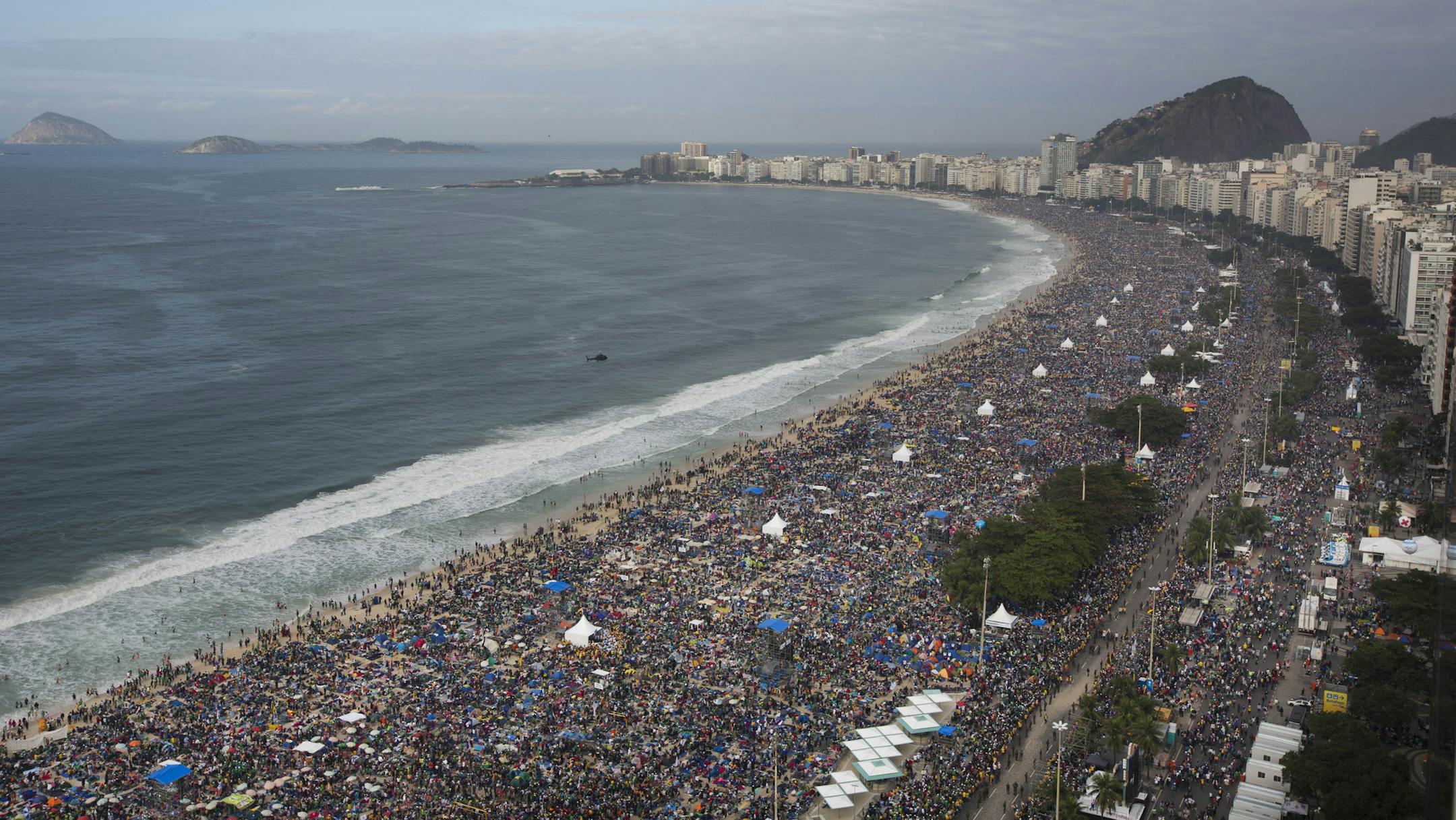
A final mass on Rio's Copacabana beach drew 1 million people, a record rivaled only by John Paul II's trips to Poland. Francis he told them: "Do not be afraid to go and to bring Christ into every area of life, to the margins of society, even to those who seem farthest away, most indifferent."

At a meeting of bishops, he called for a new "missionary spirit" and decried "obsolete structures." He led by example, visiting a favela (slum) and meeting the sick, young offenders and former drug addicts.

In word and deed, that was a rebuke to the church for its retreat from the poor urban peripheries, where Pentecostalist competitors have flourished. He also, by implication, challenged the Pentecostalists' theology, often a gung-ho message of prosperity through piety, with a forthright attack on capitalism's "disposable" culture.

Brazilians' verdict on their own country's performance in Rio during the papal visit was immediate and negative: a worry with the World Cup final looming in 2014 and the Summer Olympics in 2016. The faithful stoically endured many inconveniences (including a breakdown for several hours of the metro). Secular sports fans will be fewer — but may also be less patient.

The trip underlined Francis' image of a "barefoot pope" who lives in a hostel, not the papal apartments, cares for the poor and is endowed with a human warmth that Benedict seemed at times to lack.

In the plane on his return home Francis seemed buoyed by his visit. Other popes have also spoken to the traveling press corps. But this first news conference was long, at 82 minutes, and relaxed: quite unlike the stilted affairs of past years.
Advertisement

What particularly caught the headlines was a notably nonjudgmental remark about homosexuality. Francis also said gays should be "integrated" not marginalized. Though the generous tone (as with his remarks about women's service to the church) was new, he stressed that church teaching is unaltered.

The intriguing aspect of his remark, however, was the question that prompted it: about Monsignor Battista Ricca, appointed by Francis in June to perhaps the most sensitive job in the Vatican, the Prelate of the Institute for the Works of Religion (IOR), popularly known as the Vatican bank. He will be the pope's eyes and ears in an outfit that has besmirched the image of the papacy, and which Francis seems set on overhauling.

Now many wonder if Francis was set up — perhaps deliberately misinformed about his choice. Shortly before he left Rome L'Espresso, a newsweekly, reported that Monsignor Ricca's time as a Vatican diplomat in Uruguay had been beset by scandal. It said he had arrived with a gay lover whom he had housed and employed; that he had been beaten up in a gay bar, and caught in the middle of the night with a young male prostitute. Though strongly denied, the claims would, if true, deal a blow to Francis' plans for reform of the curial administration.

In February La Repubblica, (a daily sister publication) reported that Vatican investigators had identified a network of gay prelates, some of whom were being blackmailed. Details of this "gay lobby" are supposedly in a dossier on the "Vatileaks" affair, prepared by three cardinals on Benedict's orders. Vatileaks involved the leaking by the papal butler of secret correspondence purportedly revealing scandalous maladministration.

All this adds significance to Francis's remarks: "We must make the distinction between the fact of a person being gay and the fact of a lobby." Lobbies were bad, he said. "But if a person is gay and seeks the Lord and has goodwill, who am I to judge that person?"

One worldly interpretation of Francis's remarks on the plane is that he is trying to diminish the impact of any further revelations in the Vatileaks affair. A more dramatic version is that, as he seems to have already hinted, he is preparing to strike against a homosexual network in the Vatican and wants his motives to be clear: that it is not the sexual orientation, or even behavior, of its members that he condemns, but the formation of interest groups in an organization that is meant to have only one interest, and one earthly boss.

Advertisement

Copyright 2013 The Economist Newspaper Limited, London. All Rights Reserved. Reprinted with permission.

People pack Copacabana beach in Rio de Janeiro, Brazil, Sunday, July 28, 2013. Hundreds of thousands of young people slept under chilly skies in the white sand awaiting Pope Francisí final Mass for World Youth Day. (AP Photo/Felipe Dana) ORG XMIT: MIN2013072814233503
Pope Francis’ final mass of his trip to Rio de Janeiro drew a million people to the Copacabana beach on July 28. (The Minnesota Star Tribune)
about the writer

about the writer

The Economist

More from Business

See More
Cirrus Vision SF 50. Photo credit: Cirrus Aircraft Corp.
card image
Advertisement