Call Patricia Lockwood’s latest a memoir, a novel or anything you want

Nonfiction: The “Priestdaddy” writer will be in the Twin Cities Thursday for Minnesota Star Tribune and MPR News’ Talking Volumes.

The Minnesota Star Tribune
September 23, 2025 at 4:02PM
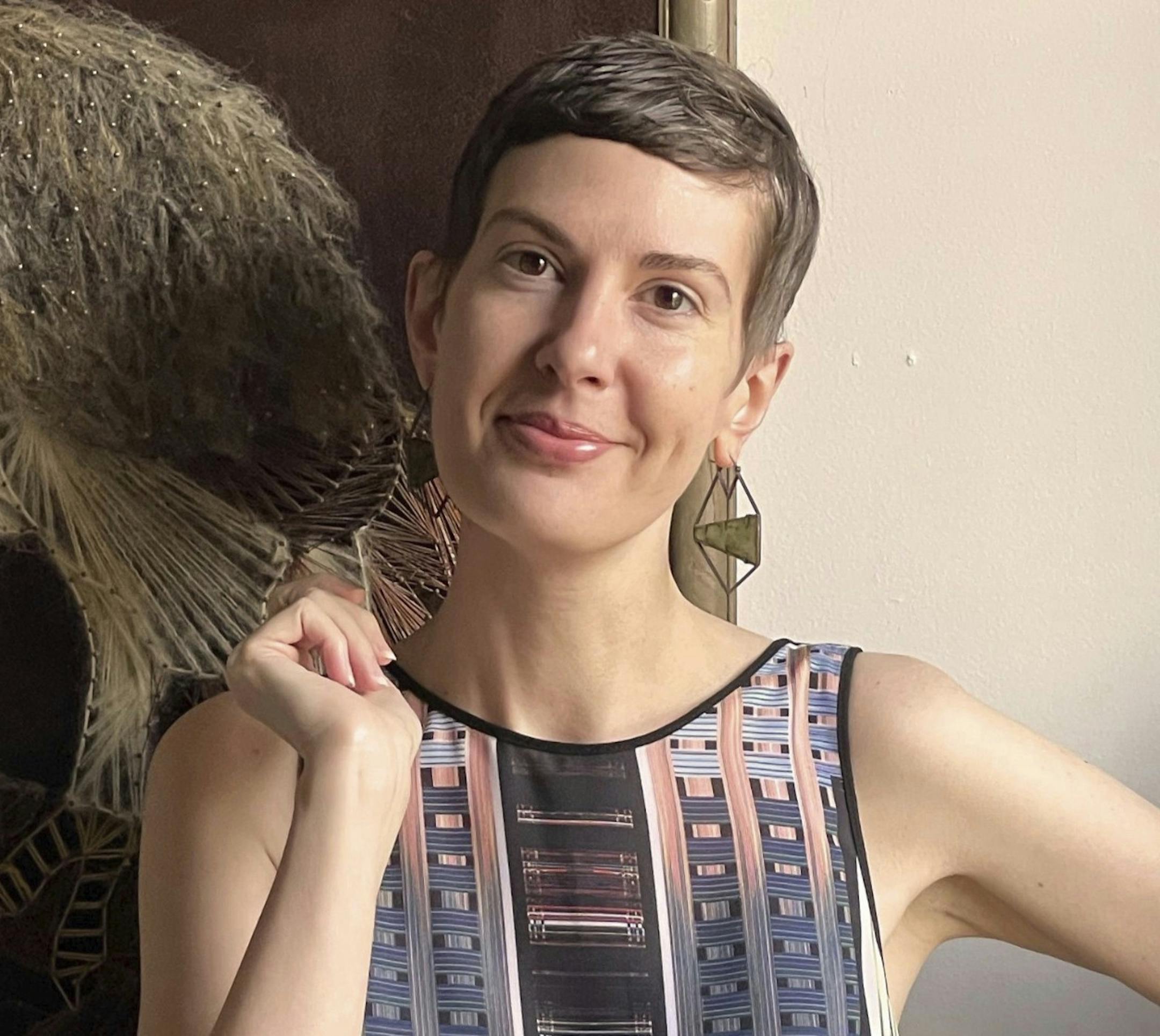
photo of author Patricia Lockwood
Patricia Lockwood (Jason Kendall/Riverhead)

Patricia Lockwood’s life and art are so closely linked that it’s appropriate for a cat meowing in the background during a phone interview from her Savannah, Ga., home to make it into this story.

That cat, Miette, also is in Lockwood’s novel “Will There Ever Be Another You,” in fact. “Will There Ever” is a tricky book, with a narrator who shares biographical details with Lockwood, including a horrifying bout with long COVID, a seriously ill husband, a niece who died in infancy and a father fans will remember from memoir “Priestdaddy” (her novel “No One Is Talking About This” also was a bestseller).

That word “memoir” is inadequate for the hilarious, wildly gifted Lockwood’s stream-of-consciousness work, which can seem to be thriller, poetry, literary fiction and, yes, autobiography all at once. She doesn’t love those labels, but says her “Will There Ever” was driven by the conviction, in the midst of her months-long COVID zombification, that “if you really described the feeling of disorientation, of going into Wonderland, you would carry readers along.”

She’ll discuss that and more with MPR News host Kerri Miller at Talking Volumes Thursday. She may even offer household hints (the following has been edited for length and clarity):

Q: What would you do if you weren’t a writer?

A: I would be a plumber. I know this about myself. I know I’d be the most amazing plumber the world has ever known.

Q: Any tips?

A: It’s all in the rhythm. It’s a kind of poetry. You’re going to get in there with the plunger and plunge down with your entire body, as if you yourself are going to be plunged. At the moment of greatest depression, you’re going to yank it up and flush at the same time.

Q: How did you find that calling?

A: I lived in a house with seven people [which she wrote about in “Priestdaddy”]. I was the genius of the toilet room.

Q: It feels like sentences are the most important thing in this book, rather than paragraphs or a theme. Does that make any sense?

A: I think it does. I experienced something during the writing of the book that I referred to a little bit but ultimately left out. I call it “the refrains.” It’s what the inside of my mind was like as I was writing. I was experiencing the persistence of sentences — maybe couplets or a single sentence would run over and over in my brain. I knew those were important, so I was writing them down, but then how did they relate to each other?

Q: Long COVID put songs in your head that would not go away. It sounds like a nightmare but was there anything you could learn if you listened to them?

A: Unless they are going to drive you around the bend, it becomes interesting, yes. “What is love/Baby don’t hurt me” [by Haddaway] becomes sort of profound when you listen to it. So what does that mean? I had something odd where I started to write poetry again, after not having written it for a long time, and it seemed to solve the problem of the novel I had been working on the whole time: Are these lyrics? Is this poetry? Is this a novel? In the book, she doesn’t know where to put anything. But, in writing poetry, you know where everything goes.

Q: As the only writer ever named to the New York Times’ annual “10 best books” lists for both nonfiction (“Priestdaddy”) and fiction (“No One Is Talking”), it doesn’t seem like categorization is a huge concern for you?

A: Everyone in the world is probably more interested in genre or category than I am. It’s something that is applied to the book after it’s done. It’s not how I begin a book. I started referring to it recently as “all-genre,” which I think is something I’m trying to write towards, where all things are elements in whatever I’m doing.

Q: So it just sort of flows from you?

A: I do conceive of books first, but I don’t think, “This is going to be a body horror novel.” It’s what is in front of me at the time.

Q: You mentioned Wonderland earlier. “Alice in Wonderland” is kind of a body horror novel. Are you a fan?

A: I love “Alice in Wonderland.” Lewis Carroll experienced the sort of migraines I do. Sure, you can have head pain but the primary feature is the world reverses, becomes strange to you.

Q: Your books spill the beans on not just you but your family members. Do they have veto power?

A: I take carte blanche. Everyone in my family has been extraordinarily kind and that includes my father, whose immense gesture of generosity is he doesn’t read them. He says people belong to themselves.

Q: You also don’t seem to draw distinctions between “high art” and “low art,” sometimes quoting poet Rainer Maria Rilke and “The Golden Girls” on the same page.

A: They exist on the same plane of thought. We’ll devote as much time in our flickering minds, thinking about Estelle Getty’s wig, as we do this amazing black-and-white photo of Rilke. I don’t know if I’m going to sit down and marathon “Golden Girls” for the rest of my life. But I had that snobbery instilled in me as a child: “You have one reading life/Don’t waste it on these things.” But the puzzle piece you need could be there, just as likely as it could be in the sort of highbrow thing.

Q: With so much happening in your work, are you nervous to release it into the world of readers?

A: Not at all. It’s absolutely OK if someone doesn’t understand or thinks I’m wackadoo nuts. It’s a very serene feeling.

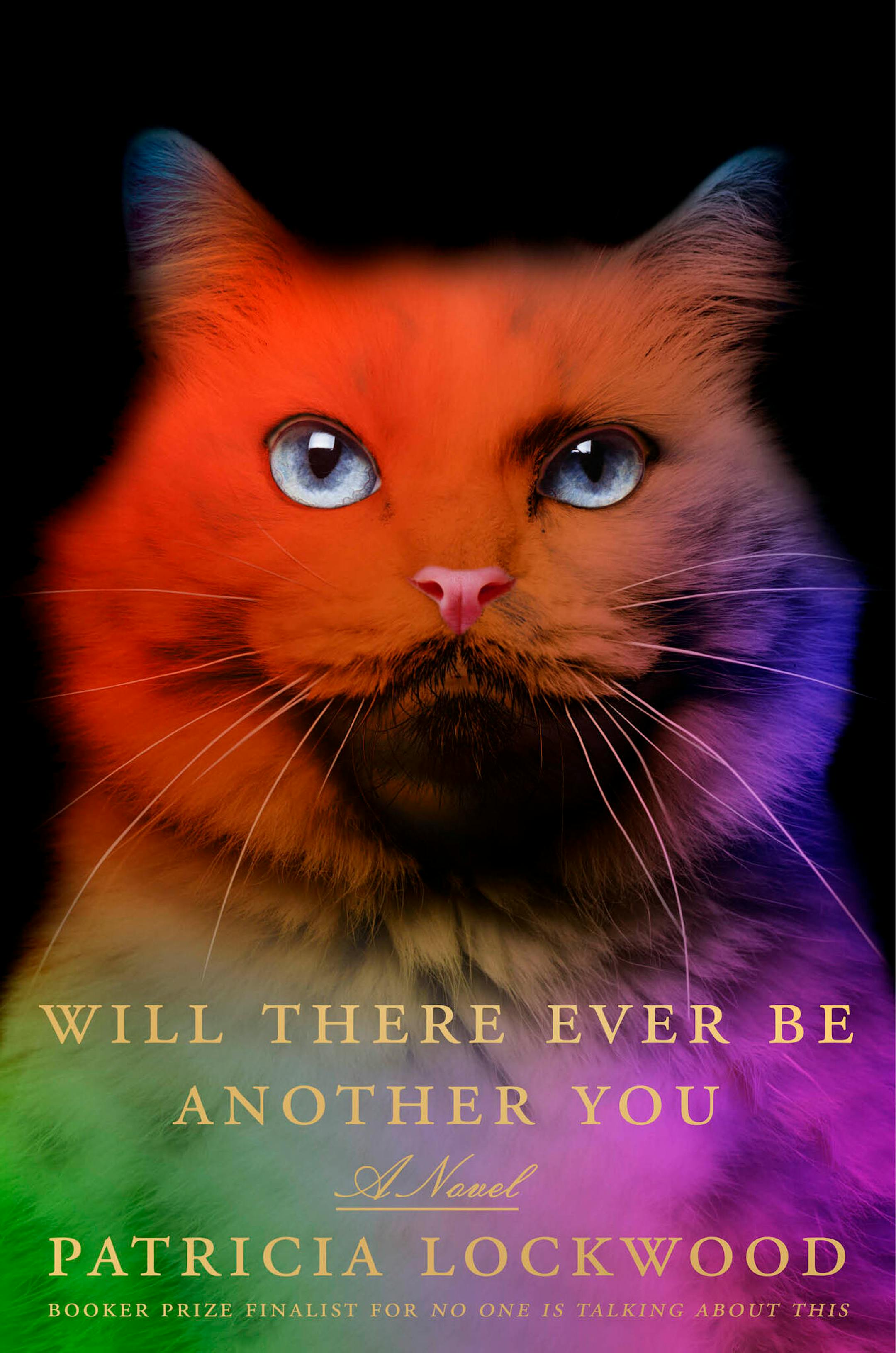
cover of Will There Ever Be Another You is a multicolored image of a cat staring at us
Will There Ever Be Another You (Riverhead)

Talking Volumes with Patricia Lockwood

Who: Sponsored by Minnesota Star Tribune and MPR News.

When: 7 p.m. Sept. 25.

Where: Fitzgerald Theater, 10 E. Exchange St., St. Paul.

Tickets: $35, mprevents.org.

Excerpt from “Will There Ever Be Another You”:

The first sign of trouble is that you begin to believe you are lying. The second sign of trouble is that you begin to believe you are not a person. The third sign of trouble is that you begin to believe you are bleeding out, through speech, the living images of those you love. Memories that are allowed to run on inside you maintain a kind of vascular velvet, a receptive lushness that stirs with the grass, air in every pore. But what am I thinking about? Maybe if I hadn’t written about my niece I wouldn’t have anything to hold on to at all. The past year seems to have erased time backward. I text Maryann one morning in a panic. “Did David Bowie die? I dreamed that he did.” “Girl,” she responds, appalled, delighted, “David Bowie died five years ago.”

“So I did predict it then,” I say.

I am to be dressed and lit like a “Dutch painting,” for a remote photoshoot in my apartment. Coincidentally, it is the same night my sister is to be induced. I maintain the same position for two hours, framed by a window overgrown with ivy. (No photographer, on meeting me, ever wanted me to leap, or even smile. Always the Dutch painting thing.) But, “Is she having the baby?” I keep whispering to my husband, who has one foot almost in the cat box, trying to hold our most flattering lamp over my head. I cannot feel anything from the waist down. Jason feeds me a handful of cashews very carefully, through my motionless Dutch lips. At one point the photographer accidentally deletes all the pictures and we have to start again. “Is the baby being born?” He better hurry, I think, so he can have his picture taken. He better hurry, so we can interview him about his breathtaking debut.

“Did I talk about not being a neurotypical person?” I ask Jason, who listens from the other room in case I need to know something crucial, like where I live. “No,” he says, “but you did talk about having synesthesia. You said you saw ice cubes every time you read the word ‘refrigerator,’ and every time you heard a fife, you thought of the Revolutionary War. I don’t think that’s synesthesia,” he says after a moment. “I think that’s just knowing what words mean.”

Reprinted by permission of Riverhead Books. Copyright 2025 by Patricia Lockwood.

about the writer

about the writer

Chris Hewitt

Critic / Editor

Interim books editor Chris Hewitt previously worked at the Pioneer Press in St. Paul, where he wrote about movies and theater.

See Moreicon

More from Books

See More
photo of author Matthew Pearl
Bachi Frost/Harper

Matthew Pearl’s literary satire features a novelist who’s out of touch with his humanity.

card image