
Park Dental Partners raises $20 million from initial public stock offering

The Roseville-based company is looking to expand nationally while keeping its Minnesota roots intact.

The Minnesota Star Tribune
January 23, 2026 at 12:00PM
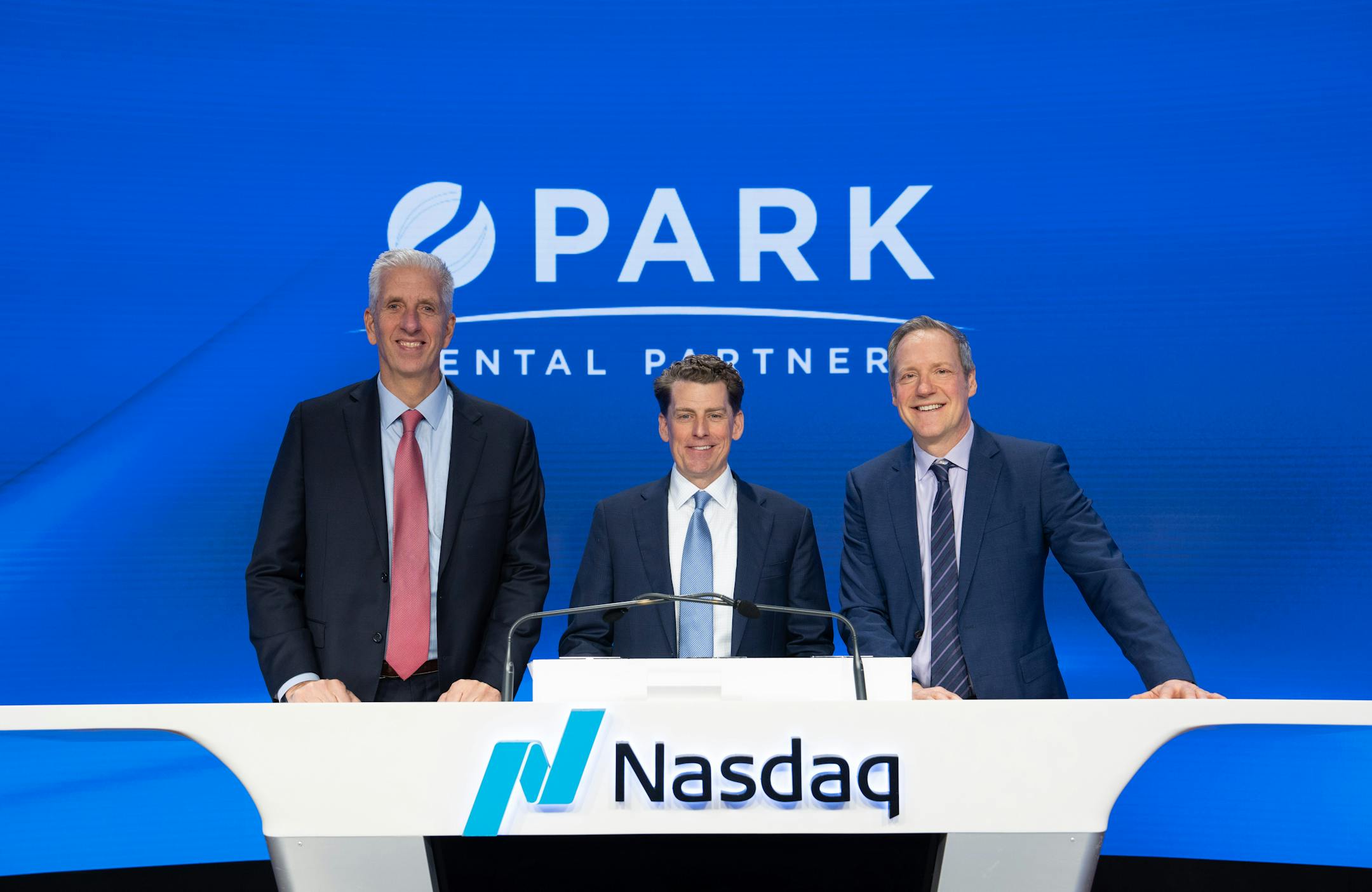
Officials from Park Dental Partners celebrate the company's IPO by ringing the closing bell at Nasdaq. From left, Dr. Chris Steele, chief clinical officer/general practices; Pete Swenson, chief executive; and Dr. Alan Law, chief clinical officer/specialty practices. (Park Dental Partners)

More than half a century after what began as a two-dentist operation in Brooklyn Center, Park Dental Partners has gone public with an eye toward national growth.

The Roseville-based dental practice completed an initial public stock offering in December and raised about $20 million, which executives said will go toward expanding the company’s footprint and the number of dentists on the company’s payroll.

The IPO was a milestone for the 53-year-old organization as it looks to keep pace with an evolving industry, one in which small, locally owned dentist offices are disappearing amid competition from private-equity-backed chains.

Park Dental Partners has managed to stake out a middle ground. The company grew rapidly in the lead-up to its IPO, thanks in large part to about 40 acquisitions since 2014. It reported $230 million in revenue in 2024, a nearly 3% bump from the prior year.

Still, it has remained a Minnesota company, with local leaders at the helm — including the son of one of its founders — and majority ownership in the hands of its dentists, even after the IPO.

“We were really trying to position the company for the next 50 years,” said Chief Executive Pete Swenson, whose father, Dr. Greg Swenson, co-founded the company with Dr. Brian Murn in 1972.

Today, Park Dental Partners has 84 locations across Minnesota and Wisconsin and employs more than 200 dentists.

The company said it expects to more than double the number of dentists in existing markets within the next 10 years. The goal, Swenson said, is to expand regionally and then into “select national markets.”

Park Dental Partners filed its initial registration statement Sept. 3, but the 43-day federal government shutdown delayed the IPO. Shares sold at $13 apiece, the midpoint of the company’s previously disclosed offering range. Shares have recently traded around $18.49.

Private-equity competition

Private-equity investors have flooded the dental industry in recent years, drawn to its potential for long-term growth.

As of October, the nonprofit watchdog group Private Equity Stakeholder Projects had tracked 122 private-equity-backed dental care deals nationally — after 161 in 2024 and 146 in 2023 — making it one of the top health care categories for private-equity investment.

“Private equity has rapidly reshaped the dental industry, accelerating the shift away from small, independent practices toward large dental chains,” said Matt Parr, the group’s communications director.

Private-equity investors can provide dental offices with needed capital and reduce costs by consolidating back-office operations, such as scheduling, billing, marketing and finance. That frees dentists to concentrate on providing care.

But the boost in efficiency can also mean a lack of autonomy and control as private-equity firms push for increased profits.

“As consolidation continues, it is essential that regulators and the public understand how these ownership models can influence clinical decisionmaking and limit families’ ability to choose truly independent dental providers,” Parr said.

While Park Dental Partners has the most affiliated dentists of any group in Minnesota, many national outfits have also set up shop here.

Aspen Dental has more than 1,100 locations across the country, including in 23 Minnesota cities. Smile Brands has 600-plus national locations operating under various names, including Midwest Dental, which has 23 Minnesota locations.

Park Dental Partners distinguishes itself from private-equity-backed Dental Service Organizations (DSOs) by referring to itself as a Dental Resource Organization (DRO). With a large ownership interest, its dentists have a say in company governance, including the right to name three board members.

The company also aims to compete with the range of services it offers, from general dentistry to specialty dental treatment and surgery.

“We also differentiate ourselves by being one of the few accredited practices in the country that meet or exceed all state, local and national standards,” said Dr. Chris Steele, one of three dentists on the Park Dental Partners board and the company’s chief clinical officer in charge of general dentistry.

Changing industry

Minnesota law requires dental practices to be dentist-owned, which places some guardrails around corporate ownership.

Park Dental Partners, like its private-equity-owned competitors, provides business services to affiliated offices that dentists own, allowing them to meet the ownership requirement in Minnesota and other states with similar laws.

Still, big dental practices have proliferated in Minnesota and across the country as the rising costs of dental education and launching a business make it harder for new graduates to set out on their own.

According to the American Dental Association, the median cost of a four-year dental education in the U.S. is $236,000. Opening a dental practice requires a capital investment of about $800,000, according to Park Dental Partners’ registration statement.

“Coming out of school with increasing amounts of debt related to dental school, that’s delaying dentists’ entry into practice ownership,” said Carmelo Cinqueonce, executive director at the Minnesota Dental Association.

Two-thirds of dentists nationally work in a group practice, according to the Health Policy Institute of the American Dental Association. In Minnesota, just 18% of dentists are solo practitioners, the lowest share of any state.

Park Dental Partners offers a path for new graduates, with an option to join a group practice where they can focus on building skills and treating patients.

Even those who’ve managed to start a practice are finding joining Park Dental Partners an attractive option, Swenson said.

“We’ve had other late-career dentists transition their practice to us and say they wish they would have done it a lot sooner,” he said.

about the writer

about the writer

Patrick Kennedy

Reporter

Business reporter Patrick Kennedy covers executive compensation and public companies. He has reported on the Minnesota business community for more than 25 years.

See Moreicon

More from Business

See More
card image
Park Dental Partners

The Roseville-based company is looking to expand nationally while keeping its Minnesota roots intact.

card image
card image