State and federal officials clash over shooting investigation

State leaders successfully sued the Trump administration to force it to preserve evidence in the fatal shooting of Alex Pretti.

The Minnesota Star Tribune
January 25, 2026 at 9:01PM
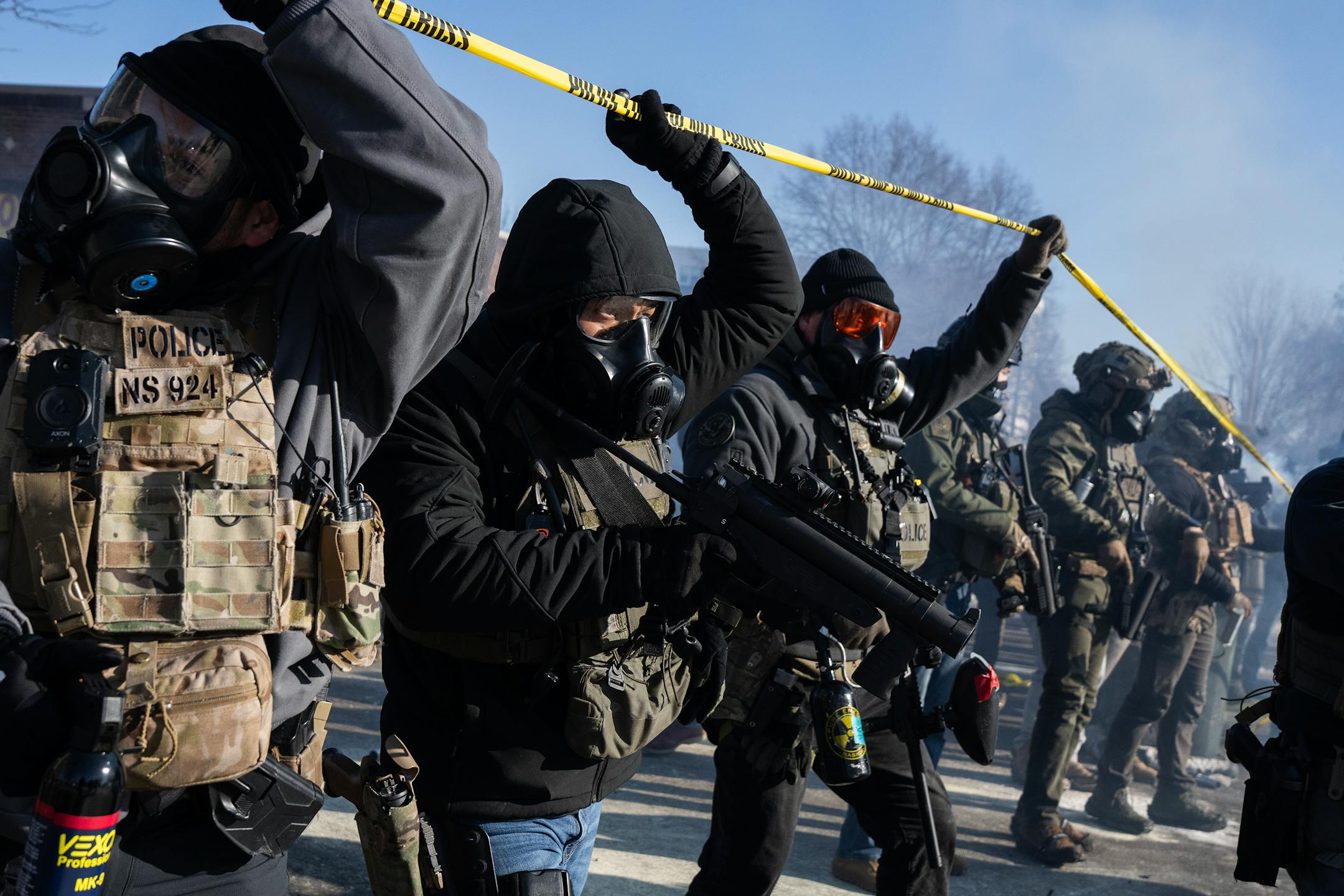
Federal agents move toward protesters at the scene where a federal agent shot and killed Alex Pretti in south Minneapolis on Saturday, Jan. 24. (Richard Tsong-Taatarii/The Minnesota Star Tribune)

The killing of a Minneapolis man by federal agents is escalating a standoff between state and federal officials over the Trump administration’s massive deportation operation in Minnesota, prompting tense and urgent debates over federal jurisdiction and the rule of law.

In the wake of Alex Pretti’s killing on Saturday, Minnesota leaders sounded alarms about federal agents violating Minnesota law while they carry out Operation Metro Surge.

A federal judge ordered Trump administration officials not to destroy evidence related to the shooting, after the Hennepin County Attorney’s Office and Minnesota Bureau of Criminal Apprehension filed a lawsuit to preserve crime scene materials.

On Sunday, Homeland Security Secretary Kristi Noem defended the shooting, saying her agents feared for their lives and that her office would lead the federal investigation of their use of force. State officials have said they are conducting their own probe. State investigators accessed the crime scene for the first time on Sunday, one day after Pretti, a protester who was recording agents as they attempted arrest an immigrant, was shot and killed.

The clash between federal and state officials first boiled after the shooting of Renee Good, another protester killed by agents. Minnesota Gov. Tim Walz, a Democrat, has called on Immigration and Customs Enforcement to leave the state, saying its officers are trampling on Minnesotans civil rights. Federal officials say they have a right to enforce immigration law and have accused Walz of trying to obstruct their work.

Six hours after Pretti, a 37-year-old ICU nurse with the Minneapolis VA, was shot and killed on a busy stretch of restaurants by federal agents, Defense Secretary Pete Hegseth, a Minnesota native, posted a statement to social media that included a simple argument:

“ICE > MN”

If the statement was meant to be provocative — the second-highest ranking military commander in the country belittling his home state as it wrestled with another tragedy — it was also hard to dispute given the facts on the ground.

Federal agents quickly left the scene after shooting Pretti, leaving it unsecure as protesters swarmed to the area and potential compromising evidence. State investigators were physically blocked from accessing the crime scene to conduct an independent investigation.

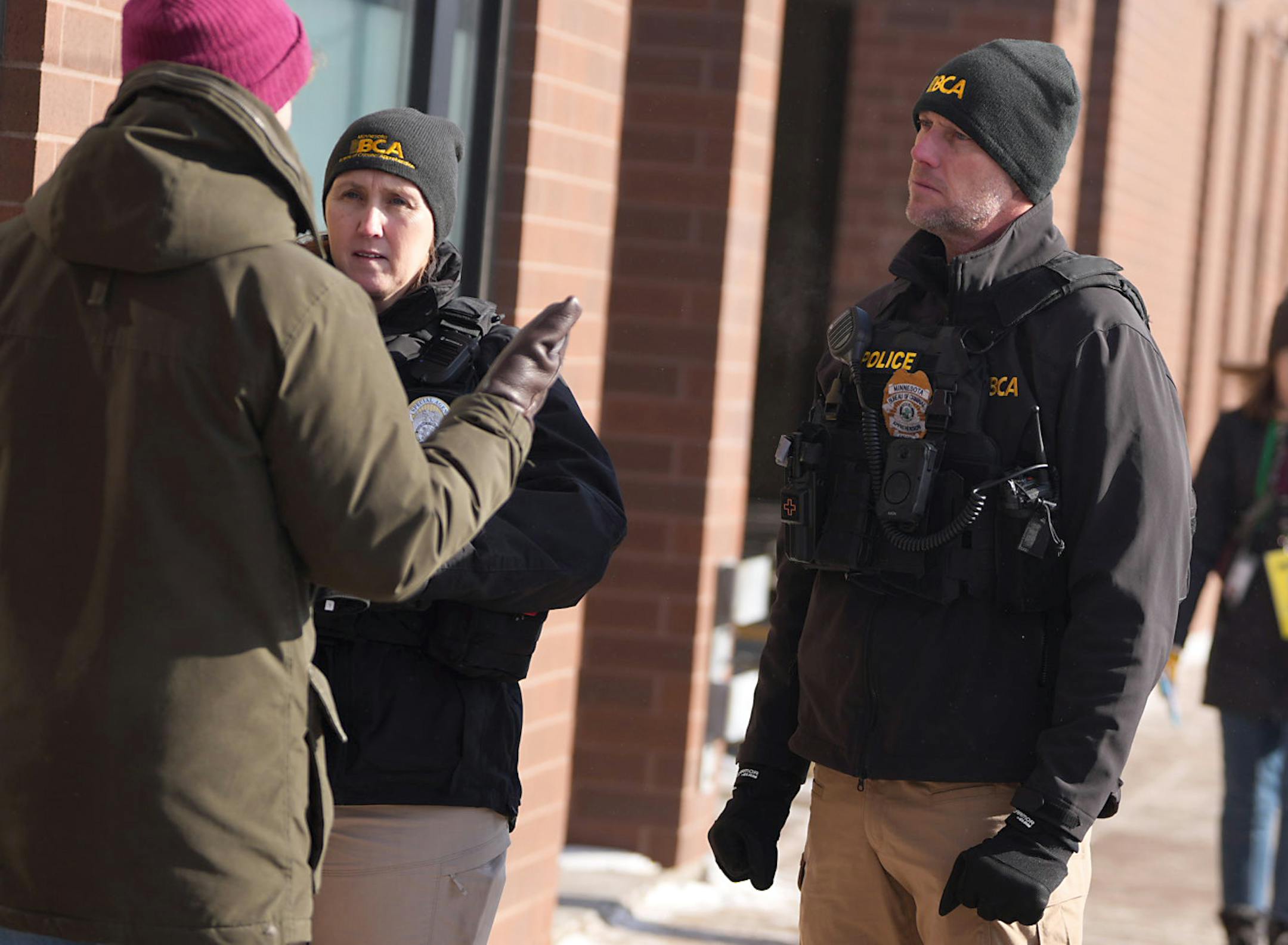
That limited their access to evidence like shell casings, DNA samples and witness interviews. State investigators obtained a warrant, but were still denied access, according to Drew Evans, the head of the Bureau of Criminal Apprehension.

“This is nothing anybody here, or probably anybody in the country, has ever experienced,” Hennepin County Attorney Mary Moriarty told the Minnesota Star Tribune on Sunday. “Our own federal government not following the law.”

Walz said on Saturday that it baffles him that federal officers can shoot and kill someone on Minnesota’s streets and simply walk away.

“You kill a man, and then you just leave?” Walz said. “You’re law enforcement, and you just leave. Is there a single case in American history where you just like walk away and say, ‘I guess that just happened’? And we’re not going to clean up our mess?”

After decades of normal relationships, relationship between federal and state officials are rapidly deteriorating.

Evans said local leaders are having active discussions to try and make sure local, state and federal law enforcement do not end up in an armed standoff

“It is important for people to understand across Minnesota that there are two different sets of legal entities in the United States that conduct law enforcement operations: state, local and federal and then tribal, territorial,” Evans said. “Under normal circumstances, we work hand-in-hand and in partnership on a variety of different criminal investigations.”

For weeks, federal agents have move through the city and state in unmarked vehicles. They wear face coverings and often have no visible badge numbers or other identification. Anyone whom they believe is interfering with their operations can be detained and charged with a federal crime.

When federal agents carry out a potential criminal act under Minnesota legal statutes, they do not hesitate to remove anyone involved from the scene. Quickly afterward, federal officials as prominent as President Donald Trump and Vice President J.D. Vance have made public statements arguing the officers did nothing wrong.

A person who said they witnessed the fatal shooting of Alex Pretti but wished to remain anonymous gives an account to BCA agents on Sunday, Jan. 25. (Richard Tsong-Taatarii/The Minnesota Star Tribune)

The Trump administration continues to publicly argue that ICE agents have immunity from state prosecution. Internal memos show that agents are told they can enter homes without a judicial warrant.

The U.S. Court of Appeals for the 8th Circuit ruled last week that ICE agents can retaliate, detain, arrest and use force against peaceful protesters. The U.S. Supreme Court has given ICE agents carte blanche to stop people over “apparent ethnicity.”

All of this places local law enforcement in a tense reality. The estimated 3,000 agents on the ground for Operation Metro Surge dwarf any local police force.

If local law enforcement detains a federal agent for a potential criminal act, they could be charged with a federal crime or vilified by the Trump administration.

Last week, several police chiefs in the Twin Cities held a news conference where they said their own officers had been racially profiled and stopped by ICE agents. In an interview with CNN on Sunday, Minneapolis Police Chief Brian O’Hara referred to this as “uncharted territory.”

Moriarty, meanwhile, said her office is prepared to prosecute federal officers for crimes. Her office has told local police chiefs that federal agents do not have any immunity from state prosecution and to bring her casework.

She said her primary goal as an elected official and prosecutor is to transparently pursue casework — a process her office has already undertaken for the killing of Good by ICE agent Jonathan Ross — and to show that legal guardrails are still in place.

“The only way people will feel there’s accountability or have any trust in anything right now is if we can make a decision in these cases and be very public about why we’re making it,” Moriarty said. “We decide whether charges are appropriate or not. ... There is anger, there is grief, there is fear in the community. What I see is we’re under siege by our own federal government.”

about the writer

about the writer

Jeff Day

Reporter

Jeff Day is a Hennepin County courts reporter. He previously worked as a sports reporter and editor.

See Moreicon

More from News & Politics

See More
card image
Anthony Souffle/The Minnesota Star Tribune

More than 60 Minnesota executives penned a letter Sunday calling for an ‘immediate deescalation’ after the killing of Alex Pretti.

card image
card image