Roper: How the ‘slate for change’ could upend the Minneapolis mayoral election

An alliance between Jacob Frey’s challengers may prove significant in the ranked-choice election.

Columnist Icon
The Minnesota Star Tribune
October 29, 2025 at 11:00AM
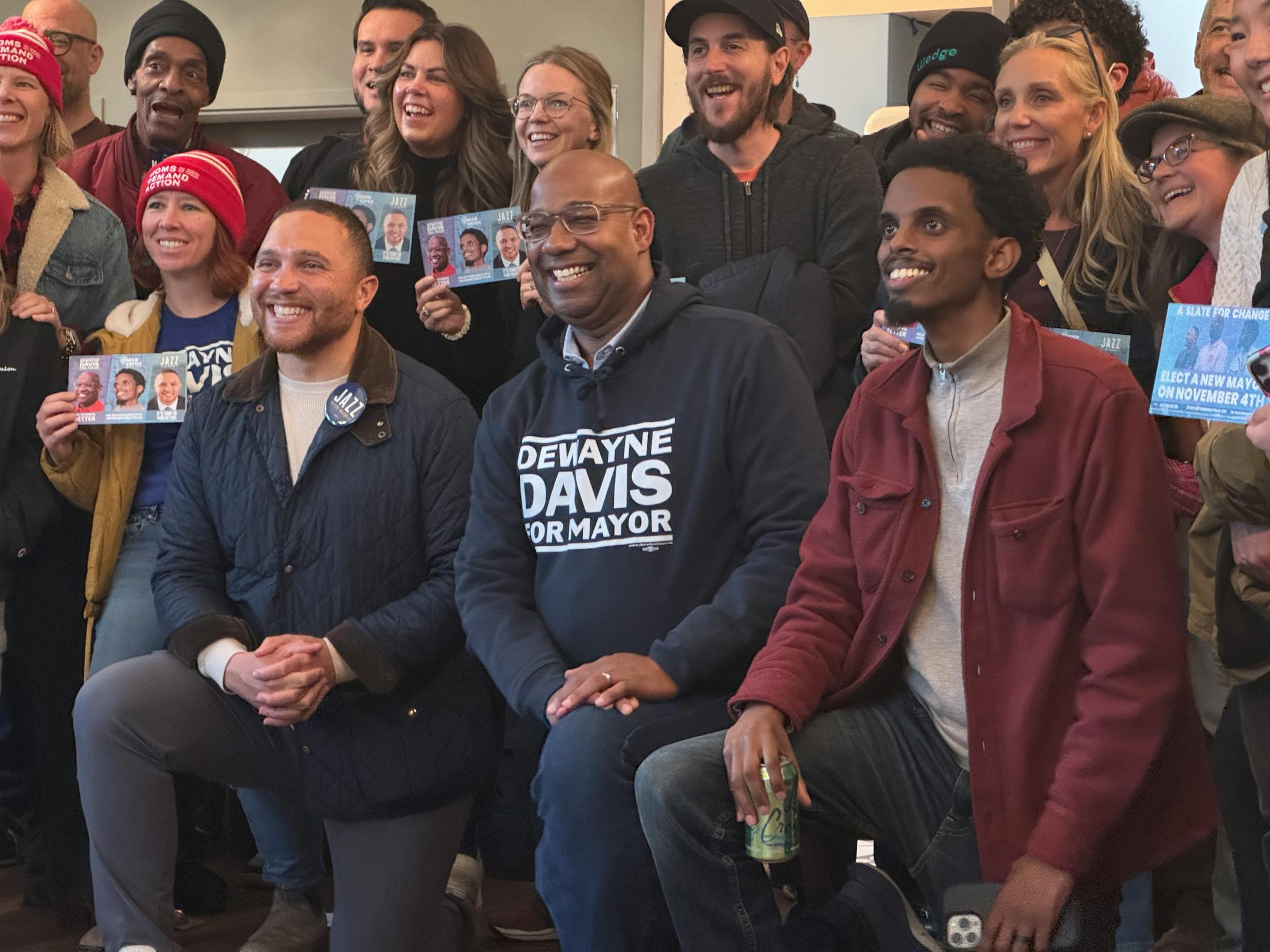
Jazz Hampton, the Rev. DeWayne Davis and Sen. Omar Fateh at a door-knocking event for all three candidates in October, hosted by the Southwest Alliance for Equity. (Eric Roper)

Sign up here to follow this column by email.

Volunteers were assembling for a political door-knocking event on a recent evening in south Minneapolis when Sen. Omar Fateh arrived with the goods.

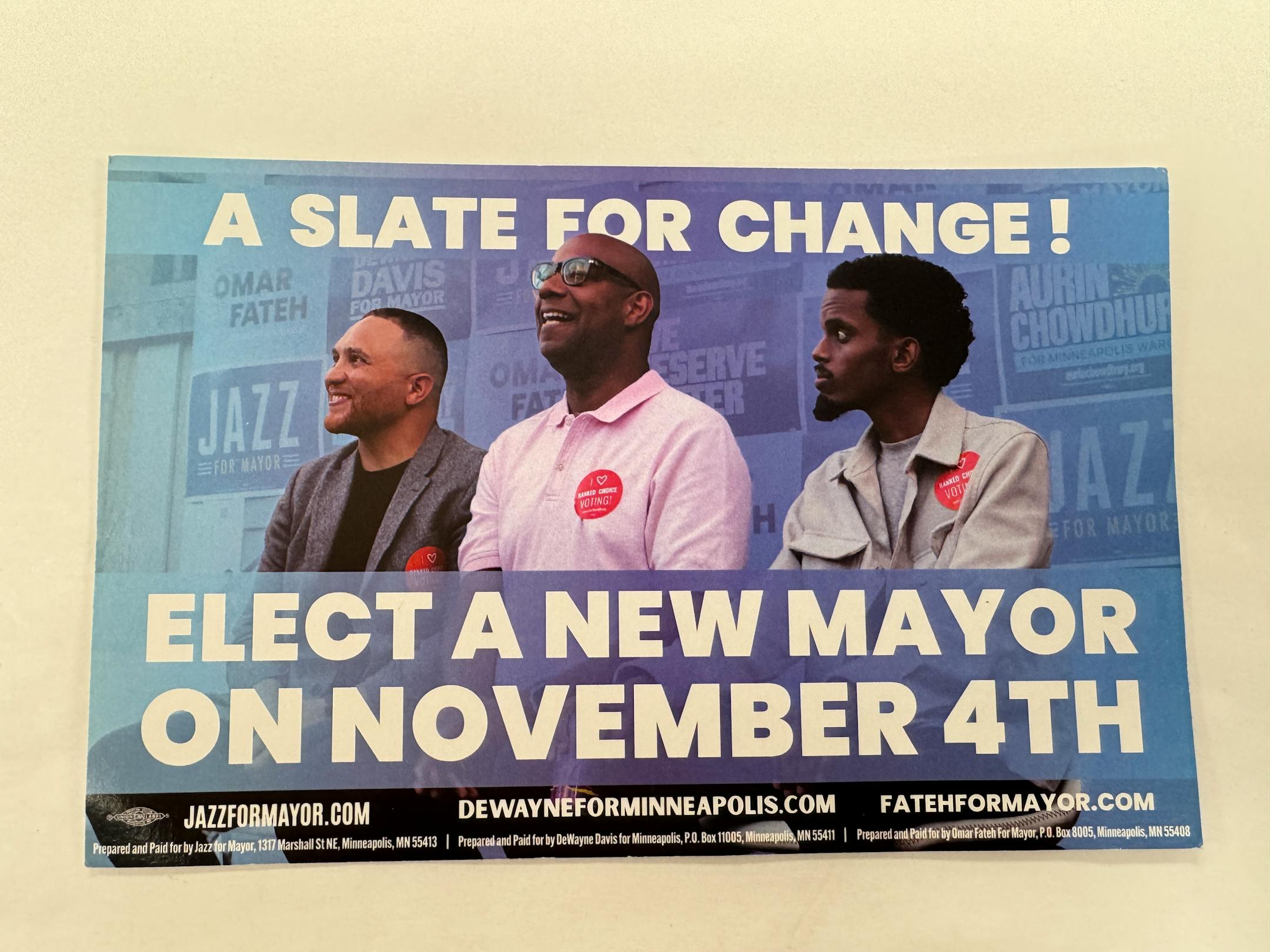
The mayoral candidate carried a box of postcards emblazoned with “Slate for Change!” and photos of Fateh alongside rival candidates DeWayne Davis and Jazz Hampton. All are running to unseat incumbent Mayor Jacob Frey.

The campaign literature is emblematic of an awkward alliance forged among this trio, which has been drawing more attention in the countdown to Election Day, particularly from Frey and his allies. Linking with Fateh has helped Davis and Hampton spread the word about their campaigns. But in the process, they have avoided explicitly highlighting their disagreements with Fateh’s leftist agenda.

The “slate for change” message is that the mayor doesn’t deserve a third term and voters have three other viable options for their ranked-choice ballot. It could be viewed as a survival strategy in this ranked-choice election, since the only chance Fateh, Davis or Hampton have of winning is by accumulating voters’ second and third choice votes.
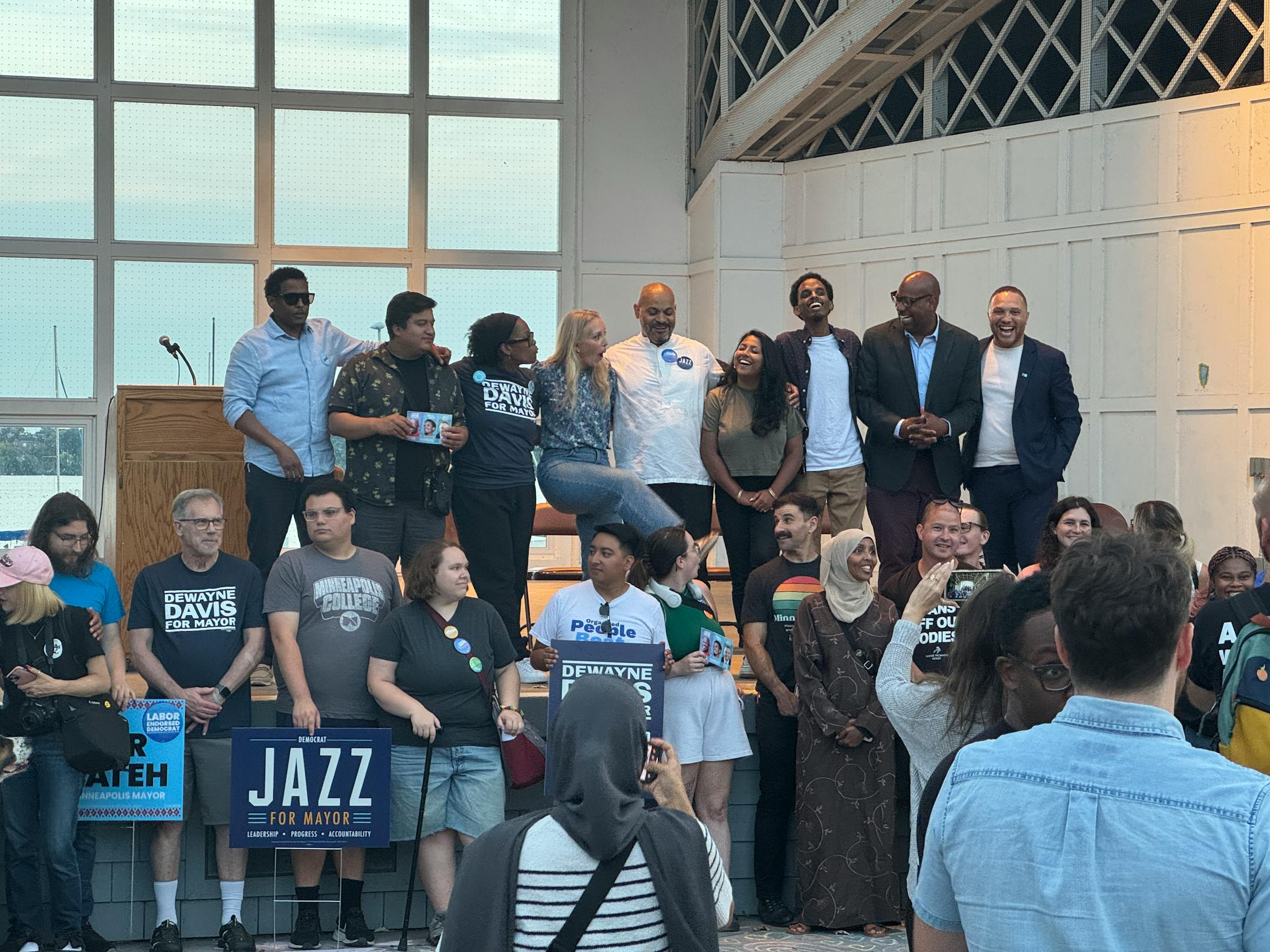
A crowd gathers for a group photo at the "Rally for Change" at Lake Harriet Bandshell in September. (Eric Roper)

It is also a political gamble. Davis and Hampton could have spent the summer painting themselves as more palatable alternatives to Fateh’s democratic socialism. Instead, they’ve played Minnesota Nice and let Frey and his allies do the dirty work of criticizing Fateh.

I began working on this column under the suspicion that the “slate” was a shadow effort to elect Fateh.

After all, it’s been accompanied by a pro-Fateh “Rank All 3″ campaign from the democratic socialist-friendly political action committee Minneapolis For the Many. That PAC has endorsed Fateh as their top choice, followed by Davis and Hampton, which is how they order the candidates on lawn signs and mailers (a recent mailer even featured a sample ballot).
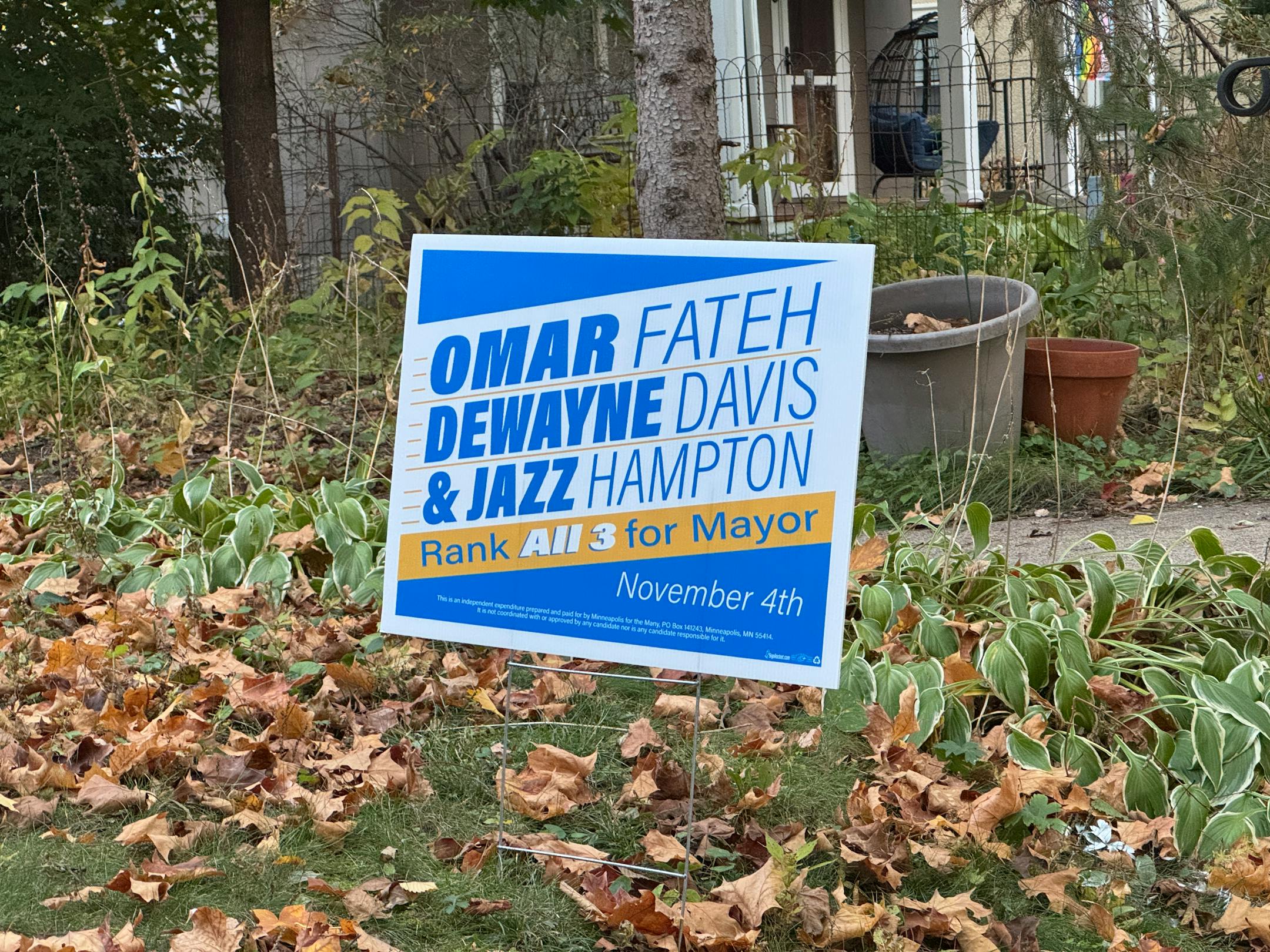
A Minneapolis for the Many lawn sign. (Eric Roper)

A similar pattern has emerged in endorsements. Fateh, Davis and Hampton all boast endorsements on their websites from U.S. Rep. Ilhan Omar, City Council President Elliott Payne and City Council Member Aurin Chowdhury. Yet all those people have endorsed Fateh as their top choice.

“I ask everybody here to rank your slate for change,” Payne told the “Rally for Change” at Lake Harriet Bandshell this summer, featuring the three challengers. “Rank the way your heart desires. Because you cannot lose when you rank for change.”

Here’s how a Fateh win could play out: If Fateh places a strong second among first-choice votes, a successful “rank all three” strategy could put him over the top as Hampton and Davis’ votes are redistributed. That would subvert the traditionally more moderate preferences of the citywide electorate, launching a far-left candidate into the mayor’s office for the first time in recent history.

Actual voters tend to be much more complicated, however. They generally don’t play three-dimensional chess in the way local activists hope they do. So I doubt the “slate” works cleanly.

"Slate for Change" campaign literature that was distributed at the "Rally for Change." (Eric Roper)

But here’s the other twist.

Frey’s campaign said recently that their data shows Fateh is “our only viable challenger.” But polling in municipal races is notoriously unreliable — due in part to unpredictable turnout — and most of what has been released publicly is old. Many voters are only now tuning into the race, just as Fateh is getting pummeled with attack ads over fraud and other issues.

There is a chance that Davis — or possibly Hampton — will have the second-most number of first-choice votes. In that scenario, the redistribution of Fateh’s votes could put one of them over the top. This is speculation, to be sure, but it illustrates one reason why the challengers have made this bargain.

The “slate for change” represents a more refined version of what occurred in 2021, when two challengers coalesced behind an anybody-but-Frey message. (The candidates cross-endorsed in that case, which hasn’t happened in 2025.)

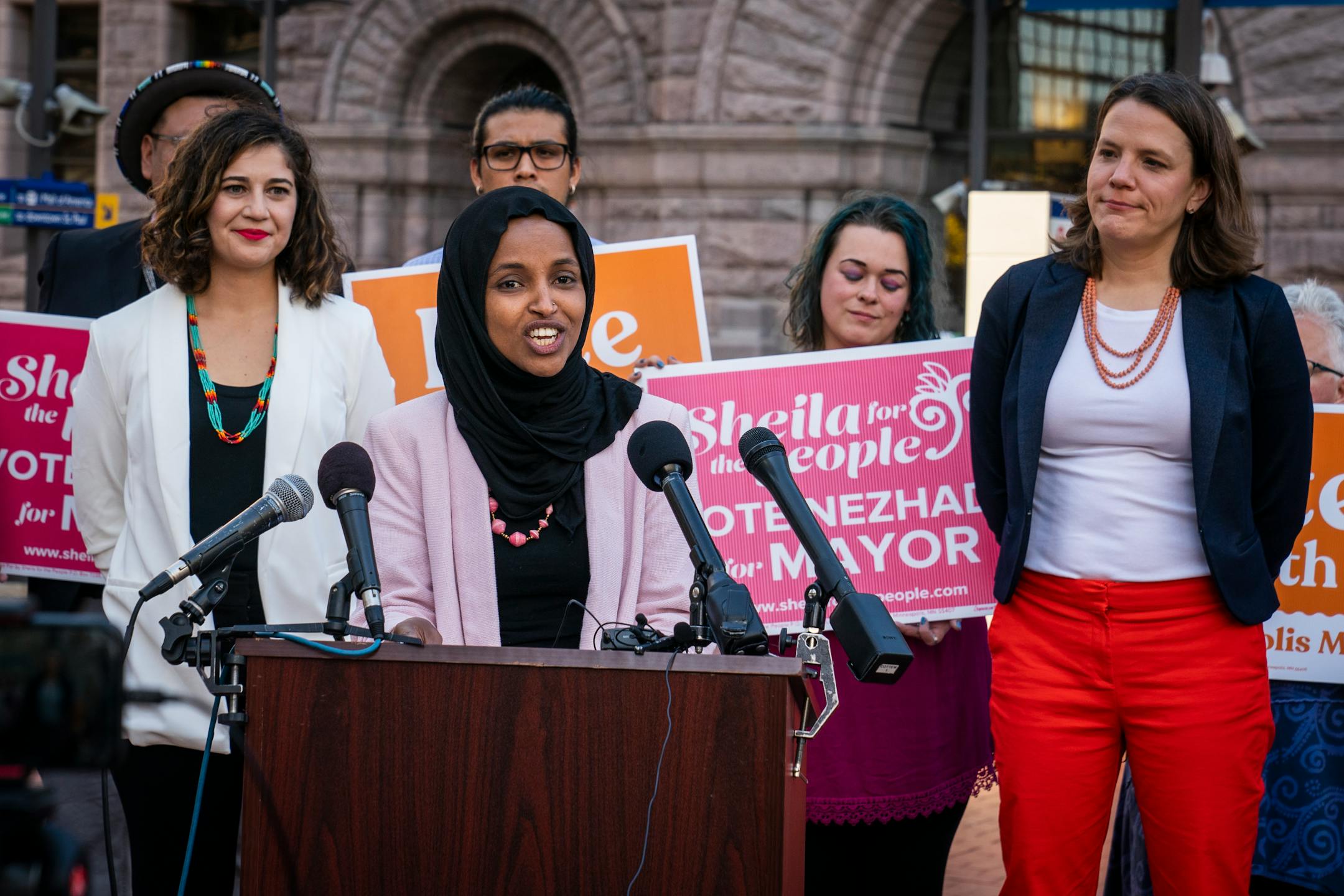
U.S. Rep. Ilhan Omar, center, endorsed Minneapolis Mayoral candidates Sheila Nezhad, left, and Kate Knuth, right, during a press conference in front of City Hall in 2021. (Leila Navidi/The Minnesota Star Tribune)

The results were interesting. Democratic socialist Sheila Nezhad finished second after Frey among first-choice votes, but did not advance over Kate Knuth to the final round because she lacked enough second- and third-choice votes.

The lesson from ’21 seems to be that a challenger — especially a further-left candidate fueled by a fervent base — needs to make sure they are picking up lots of second- and third-choice votes.

Frey still won re-election with an 11-percentage-point advantage over Knuth, who absorbed a lot of Nezhad’s second-choice votes. The mayor was aided by a referendum on dismantling the police department, which turned out a record swath of residents — 54% of registered voters — who rejected the idea. It’s hard to say whether voters will be as energized in 2025.

At the recent doorknocking event, I asked Davis if the slate hinders him in differentiating himself from Fateh.

“This is a strategy of people who want new leadership, and they’re saying they’ll have … either one of us as new leaders,” Davis said. “That’s very different from what my strategy is.”

He is making the case for himself, he said: “I’m making closing arguments about why I’m the strongest candidate, and I’m differentiating myself from all of the others.”

Volunteers gathered at a "Rank 3 for Change" doorknocking event in south Minneapolis in October. (Eric Roper)

I asked him why he didn’t challenge Fateh’s DFL endorsement back in July, which could have inserted Davis early on into the binary Frey vs. Fateh narrative about the race. (The Fateh endorsement was rescinded after challenges revealed that a faulty voting system improperly prevented Davis from advancing to the second round of the convention.)

“Our strategy hinged upon no one getting the endorsement,” Davis said. “When the endorsement was received, I had no time to waste. My campaign said: Here’s the scenario without DFL [voter data], here’s the amount of money you have to raise.”

Davis said he chose not to get bogged down in a challenge, which would have consumed precious time.

Hampton’s role on the slate is a bit more complicated, since he is the most moderate of the challengers. Despite the “don’t rank Frey” implications of the slate, Hampton insists that he’s never said those words. He sees the slate as an opportunity to pool resources.

“I want people to be fully aware of all of the choices, and then they’ll choose me,” Hampton said at the doorknocking event. “And if this helps get my name in front of more people, that’s the ultimate goal.”

Whether the slate has an impact this November will depend heavily on how voters feel about Frey. I don’t think the alliance is great for voters, who already have the tough task of differentiating the nuanced flavors of liberalism. But if it works, expect it to be replicated in the future.

about the writer

about the writer

Eric Roper

Columnist

Eric Roper is a columnist for the Star Tribune focused on urban affairs in the Twin Cities. He previously oversaw Curious Minnesota, the Minnesota Star Tribune's reader-driven reporting project.

See Moreicon

More from Minneapolis

See More
card image
Richard Tsong-Taatarii/The Minnesota Star Tribune

Largely uncooperative home countries and federal legal protections leave immigrants in limbo, attorneys say.

card image