
Olson: Hope Hoffman’s 911 call raises questions about police response to lawmaker shootings

The haunting question: Why weren’t the Hortmans warned?

Columnist Icon
The Minnesota Star Tribune
October 22, 2025 at 3:11PM
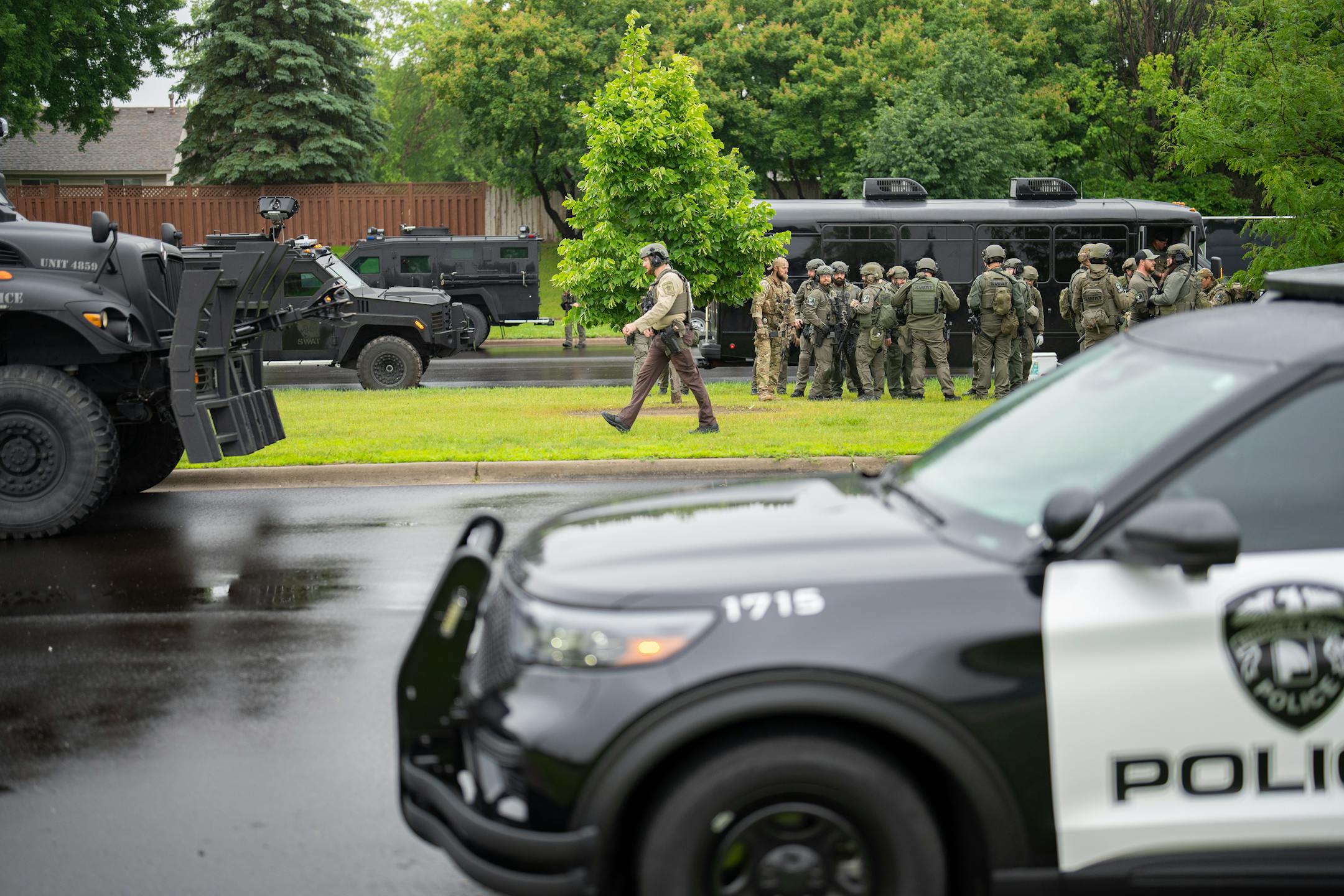
"Hope Hoffman’s 911 transcript adds urgency to the most haunting question of all: Should the Hortmans have been warned?" Rochelle Olson asks. Above, at least one hundred law enforcement officers including local police, sheriffs and the FBI, stage less than a mile from the home of Minnesota DFL State Representative Melissa Hortman in Brooklyn Park on June 14. (Alex Kormann/The Minnesota Star Tribune)

Opinion editor’s note: Strib Voices publishes a mix of commentary online and in print each day. To contribute, click here.

•••

The release of the 911 transcript from the shooting of state Sen. John Hoffman and his wife, Yvette, reminds us of the haunting unanswered questions that remain regarding the law enforcement response to an assassin’s deadly rampage June 14.

A transcript released late Monday provided the first word-by-word accounting of the critical insights and detail that the Hoffmans’ daughter, Hope, gave law enforcement moments after her parents were shot in the family’s Champlin home.

The level of detail Hope Hoffman provided renewed urgent questions about why law enforcement didn’t act more quickly to issue a widespread warning about an armed and aggressive fake police officer hunting down elected leaders.

The fight by multiple media organizations for access to the transcript also intensifies lingering concerns about law enforcement’s willingness to conduct a thorough review of their handling of one of the most horrific attacks in state history.

It’s hard to fathom a crime of greater public significance than the stalking and killing of elected officials. The Hoffmans survived, but former Minnesota House Speaker Melissa Hortman and her husband, Mark, were assassinated that morning in their home. The family dog, Gilbert, also was shot by the alleged assassin and had to be euthanized.

That Hope Hoffman’s 911 transcript was released only after a legal fight between Hennepin County law enforcement and multiple media organizations, including the Minnesota Star Tribune, is troubling.

Hennepin County Sheriff Dawanna Witt’s office fought release of an unredacted transcript under the Minnesota Government Data Practices Act. Witt’s office claimed the transcript was confidential because it contained health records and nonpublic data from an active criminal investigation.

The Hennepin County Attorney’s Office supported Witt’s decision, allowing for the release of a redacted transcript that revealed only the Hoffmans’ address and an indication that help was on the way.

It wasn’t until Monday that Witt’s office released the full transcript after both the state Department of Administration and Attorney General Keith Ellison’s office sided with the media organizations.

Law enforcement agencies are no doubt worried about critiques of their handling of the chaotic and unprecedented attacks, but a detailed accounting of those events must be made, and that includes giving the public access to the information that guided the law enforcement response.

Four months after the shootings, law enforcement has provided little to no explanation for key decisions that meant life or death for some legislators. Star Tribune reporters managed to put together a timeline of events, but we still don’t know key elements or have a full understand of pivotal law enforcement decisions that morning.

One of the biggest questions became even more pressing in light of the critical details Hope Hoffman provided instantly by telling law enforcement that her father is an elected state senator: Why was no widespread warning provided to other legislators so they might take refuge and prepare for an armed and aggressive fake police officer at their door?

The attack by a single assassin started at 2 a.m. on June 14, when the Hoffmans were shot multiple times in their doorway. Five minutes later, Hope Hoffman was on the phone with a 911 dispatcher, clearly explaining that her father is a state senator and that an attacker disguised as “fake police” and wearing a mask had repeatedly rung the doorbell and shot her parents.

At 2:25 a.m., law enforcement viewed Ring camera footage from the Hoffmans’ home showing the masked gunman wearing tactical police gear and driving a police-style SUV.

At 2:36 a.m., a New Hope police officer went to the home of state Sen. Ann Rest to check on her. En route, the officer, who has not been publicly identified, stopped alongside a police-style SUV and attempted to speak with the gunman in the driver’s seat. The gunman didn’t respond, the officer drove away to visit Rest’s house and the driver left.

We do not know who dispatched the officer to Rest’s house, nor do we know details about the officer’s attempted conversation with the gunman. Why did the officer not alert others to the police-style SUV and uncooperative man in the driver’s seat? We don’t know.

At 3 a.m., Anoka police stopped at the home of Republican state Sen. Jim Abeler to tell him a colleague had been shot.

It wasn’t until 35 minutes later, some 90 minutes after the Hoffmans were shot, that the alleged assassin showed up at the Hortmans’ home. The Hortmans lived roughly 15 minutes away from the Hoffman house.

Hope Hoffman’s 911 transcript adds urgency to the most haunting question of all: Should the Hortmans have been warned? By the time Brooklyn Park police pulled up to the Hortmans’ home, the assassin was at their door and the deadly shootings were underway. Why was no one dispatched to their house sooner?

In the 90-minute span from shooting the Hoffmans to arriving at the Hortman home, the assassin went to Rest’s home and the Maple Grove house of a state representative who was away. Why did law enforcement provide a safety check on Rest’s home and alert Abeler but provide no warning to the Hortmans?

Why was there no widespread alert to legislators, especially those living near the Hoffmans?

The assassin was later revealed to have a list of legislators he was potentially targeting, but it was hours before many on that list were warned about an attacker in a fake police SUV and a mask.

To state the obvious: Nothing we learn now can change the events of that night. But we all need to understand, preferably sooner rather than later, as much as possible about the information that was available and the decisions that were made.

An honest, full accounting and public conversation about the response to those events is the only way forward, to learn, adjust and attempt to do better the for the next unprecedented attack on our democratic leaders.

about the writer

about the writer

Rochelle Olson

Editorial Columnist

Rochelle Olson is a columnist on the Minnesota Star Tribune Editorial Board focused on politics and governance.

See Moreicon

More from Columnists

See More
card image
Mark Vancleave/The Minnesota Star Tribune

As Faribault joins the list of cities without a birth center, it may be time for the Legislature to get involved.