
Northfield is often named one of the ‘best places’ to live. Finding a house there isn’t easy.

The historic town that bills itself as an intellectual oasis is dealing with a dearth of affordable starter homes.

The Minnesota Star Tribune
September 8, 2025 at 11:00AM
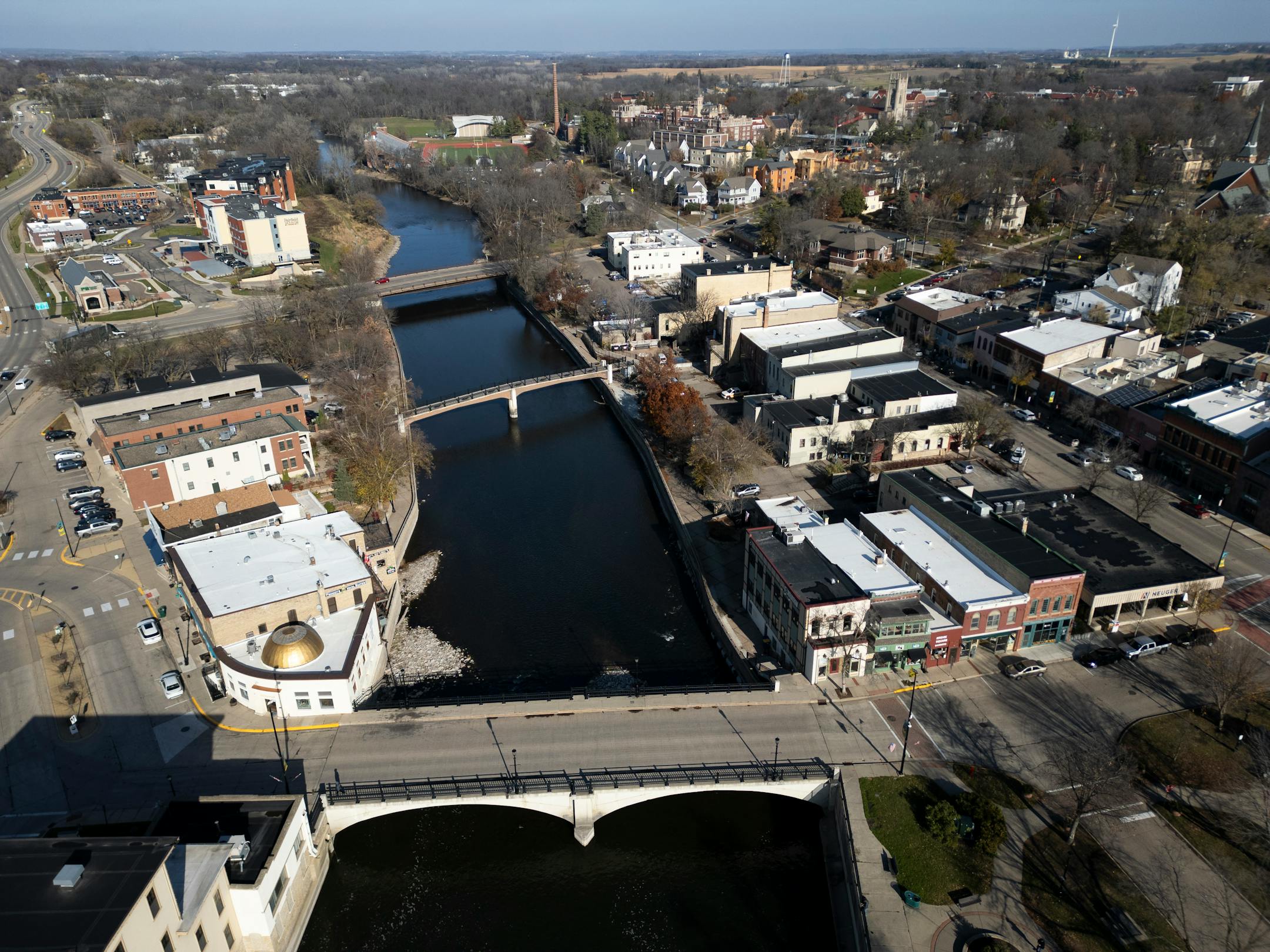
The Cannon River runs through Northfield. The city is attempting to address a shortage of affordable housing. (Aaron Lavinsky/The Minnesota Star Tribune)

Real estate agent Pete Mergens knows that housing in the city where he lives is in high demand.

“There’s always somebody looking to come to Northfield,” he said.

With its bookstores and bakeries, two prestigious colleges and quirky summer festivals, it’s easy to see why the community on the banks of the Cannon River is a desirable place to live.

Finding housing there is a bit more complicated.

Last year, Northfield issued just four construction permits for single-family homes and three permits for duplexes, a city building official said. The market for existing homes, meanwhile, is notoriously tight: This summer, roughly 30 houses in the city of 21,000 people were for sale, with the average sales price nearing $420,000.

The combination of limited construction and listings has deepened Northfield’s reputation as an expensive — and somewhat exclusive — place to live. And it sharply contrasts with cities to the north like Lakeville and Rosemount, where building is booming and for-sale signs are abound.

The housing crunch isn’t limited to Northfield. But it has taken on a particular urgency in the town known for “Cows, Colleges, and Community,” which has struggled at times to square its progressive politics with a long-simmering unease over rising costs.

Real estate agents, school district leaders and city officials say Northfield’s situation has complex roots — from a relatively stringent zoning code that can make it hard to build, to a slowdown in construction after the 2008 market crash from which the city never fully recovered.

Elected officials are experimenting with a slew of approaches to solve the city’s housing issues and open the coveted community to more people. But Mergens said it’s precisely Northfield’s reputation as an intellectual oasis that’s partially to blame for some of its housing woes.

“Keeping the town a very Mayberry-like community, there’s a cost for that,” he said.

Building slump

To understand Northfield’s housing challenges, consider this: Hundreds of people earn a $25 hourly wage at the Post factory, Northfield’s largest employer, Northfield Community Development Director Jake Reilly said. Yet many of those employees can’t afford to live in the city where they work.

How did that happen?

Mergens, the realtor, said part of the story starts at the Great Recession. For years, a healthy stock of between 90 and 120 homes was typically on-sale at any given time.

That supply shot up to 300 when the housing market collapsed and foreclosures spiked. Homebuying gradually resumed over the next few years, but the economic downturn permanently put many small-time builders out of business and halted construction in Northfield.

Over 15 years later, the city’s housing stock still hasn’t recovered.

“We need building, no matter what, to help support inventory,” Mergens said.

Meanwhile, big-name builders that have amped up construction in some Twin Cities suburbs haven’t pursued projects in Northfield at the same pace.

“It’s unclear to me why,” Reilly said, though he added the dearth of large-scale developments has a clear consequence: a lack of affordable starter homes.

Compounding that crisis is the fact that older residents tend to hold onto their homes, because they can’t find cheaper downsized places or available retirement communities. That, too, keeps attainable properties off the market.

As for many of the custom-built homes that are for sale?

“I don’t know how we expect somebody between the ages of 25 and 35 to be able to even come close to affording them,” he said.

Zoning woes

Compared to nearby Dundas, a rural town of 1,700, the number of home construction permits Northfield issued last year doesn’t stand out. But measured against nearby fast-growing suburbs like Rosemount or Lakeville, the rate of new building in Northfield appears to be proceeding at a crawl.

Mergens said the city’s slower growth has a lot to do with zoning. “Cumbersome” building requirements make it costly to construct new homes in Northfield, Mergens said, pointing to rules about bike lanes and garages that keep the city pedestrian friendly and picturesque.

At the same time, “it adds thousands of dollars on the cost of that lot that ultimately ends up in the consumers’ lap because they want this friendly, inclusive community,” he said.

Northfield, he added, “is very open to anybody and everybody. But the way it’s run, they make it quite difficult for a lower-income family to live there.”

Reilly pushed back on the assertion that Northfield’s rules are unusually burdensome.

“There is nothing I can think of in our zoning code that would make a developer not interested in building here,” he said. “Our standards are very similar to the standards in other places.”

No ‘silver bullet’

Some of the drivers of Northfield’s housing ills affect communities nationwide. Inflation, labor shortages, supply chain snarls and tariffs have all made it more expensive to build a new home — and consequently intensified competition for existing properties.

Northfield, for its part, is attempting to address these problems. Reilly said officials are exploring “subsidizing the market” for starter homes, with the city stepping in to close the gap between what a seller wants to earn and what a buyer can afford.

One long-term city plan lays out an ambitious goal for new residences: 50 apartment or condo units and 50 single-family homes added every year beginning in 2026.

To get there, the city hopes to recruit large-scale homebuilders, as well as industries that could offset some of the tax burden that falls on residents, making living in Northfield a possibility for more people.

Council Member Davin Sokup said the city is already working to beef up housing stock. Elected officials recently eliminated an ordinance that limited the number of rental units on each block. And officials plan next year to rewrite the city’s zoning code with the goal of attracting developers by slashing what Sokup called certain “overly onerous ordinances.”

He hopes the combination of these approaches, and the City Council’s sustained focus on affordable housing, will begin to chip away at a problem that’s plagued Northfield for years.

“The housing crisis is not going to be solved by a silver bullet that comes from the federal government,” he said. “It’s going to be like all of these little incremental tweaks. But it’s incremental and slow-going, and that can be really frustrating.”

about the writer

about the writer

Eva Herscowitz

Reporter

Eva Herscowitz covers Dakota and Scott counties for the Star Tribune.

See Moreicon

More from News & Politics

See More
card image
card image