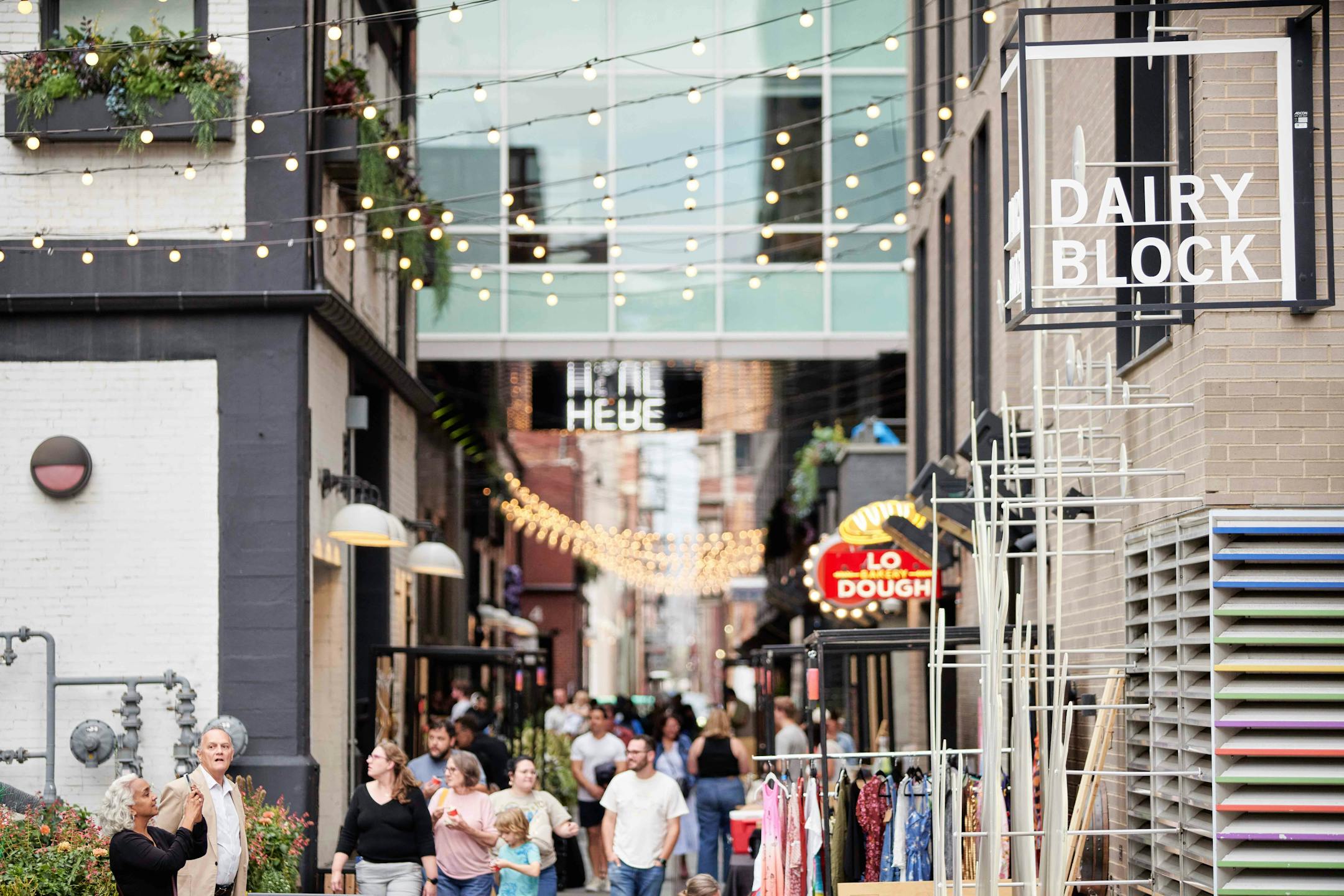
In recent weeks, Twin Cities business leaders have visited Detroit and Denver on a mission to bring back revitalization ideas for our downtowns. The biggest takeaways? We need more lights, color and optimism.
City reps from Detroit wondered why the Minnesotans were there.
“They see Minneapolis-St. Paul as the winner,” said B. Kyle, president and CEO of the St. Paul Area Chamber, who led the Detroit InterCity Leadership Visit along with Mike Logan, president and CEO of the Minneapolis Regional Chamber. “We are objectively performing better than them on most things,” Kyle said, citing crime, employment and median income. “We are our own harshest critics.”
But Detroit has us beat on momentum and good vibes, and that seems to be just the kick in the pants Twin Cities boosters needed. “There’s an ‘us against the world’ mentality” in Detroit, Kyle said. (Being the largest American city ever to declare bankruptcy will do that.) “They talked about recognizing [that] no one was coming to save them. They had to invest in themselves.”
The Minnesota contingent returned from Detroit committed to improving how we collectively speak about opportunities rather than challenges in our region. That, and a billionaire booster like Detroit’s Dan Gilbert could do a lot to help Minneapolis and St. Paul.
Meanwhile in Denver, Dario Anselmo led a Minneapolis Renaissance Coalition tour, from the RiNo Art District to 16th Street Mall, a milelong tourist destination in the heart of the city that is what Nicollet Mall used to be — scratch that, thinking positively — what Nicollet Mall could be again.
Anselmo, a former state representative who also owned the Fine Line Music Café, pointed to Denver’s pro-business mindset as a key differentiator from Minneapolis. There are fewer redevelopment hurdles in Denver, he said, and more tax credits.
Deanne Erpelding, managing director of Gensler’s Minneapolis office, echoed that takeaway on the effectiveness of Denver’s public-private partnership. She pointed to the Mile High City’s Dairy Block for its cohesiveness, from activated alleyways to consistent design aesthetics of the retail shops and restaurants. “The common thread is a strong brand story,” Erpelding said.