
Opinion | Minneapolis mayoral history has guidance for Omar Fateh

The city once elected a member of the Socialist Party, Thomas Van Lear. The lesson for today’s democratic socialist candidate is that there’s a political tightrope to walk.

August 14, 2025 at 10:59AM
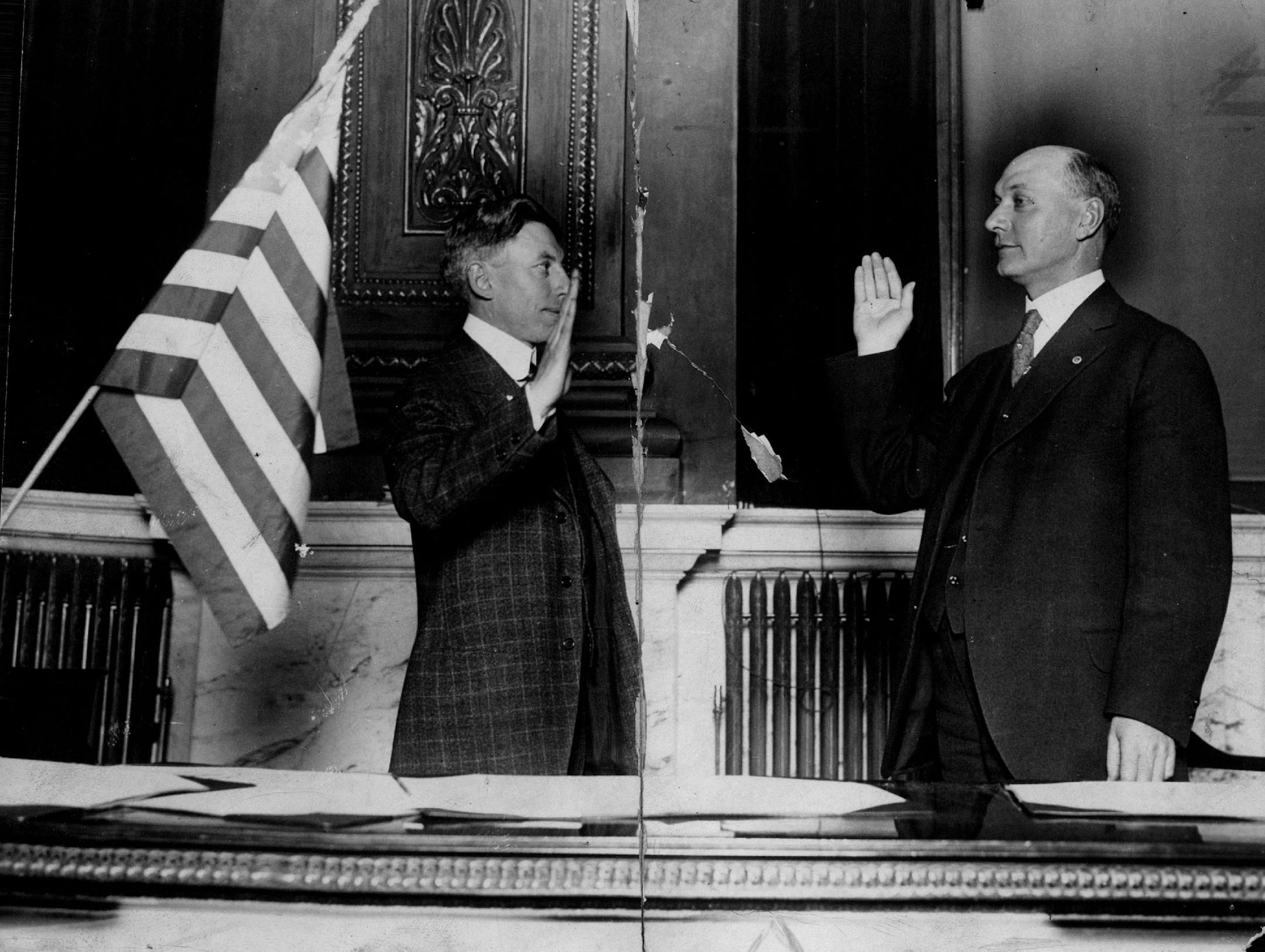
Thomas Van Lear, right, was elected the first Socialist mayor of Minneapolis in 1916.
Thomas Van Lear, right, was elected the first Socialist mayor of Minneapolis in 1916. (The Minnesota Star Tribune)

Opinion editor’s note: Strib Voices publishes a mix of guest commentaries online and in print each day. To contribute, click here.

•••

If he ousts Mayor Jacob Frey from Minneapolis City Hall in November, DFL-endorsed candidate state Sen. Omar Fateh, an avowed democratic socialist, will push Minneapolis politics to the left. But Fateh wouldn’t be the city’s first socialist mayor. That title belongs to a long forgotten but charismatic political figure named Thomas Van Lear, who served one term as mayor during World War I.

Van Lear’s time in office provides a cautionary tale for Fateh. Then and now, the two men’s political affiliations opened them to charges that their socialist label put them outside the American political mainstream. Van Lear’s election in 1916 represented a sharp break from the series of mainly wealthy businessmen who had served as the city’s chief executive up until then.

Van Lear was not wealthy and he was not a businessman. He had been a skilled factory worker and union organizer before his election. But it was his membership in the Socialist Party of America that outraged the city’s conservative business establishment.

In 1916, Minneapolis had been the scene of a bitter strike by Van Lear’s union, the International Association of Machinists. As the election campaign got underway, the strike galvanized labor support for Van Lear and his pledge to refrain from using the city’s police officers as strikebreakers. Van Lear was able to broaden his appeal to local voters by vowing to rein in the city’s two key public utilities, the street railway and gas company, both of which had a major impact on daily life in Minneapolis.

Mobilizing the labor movement as his base of support, Van Lear was elected mayor with 54% of the vote. As his two-year term began in January 1917, the city’s new chief executive expected to focus on local issues, but international events soon cast a shadow over Van Lear’s mayoral administration.

Minneapolis’ Socialist mayor took office only months before the U.S. declared war on Germany. As war fever swept the country in 1917, Van Lear found himself under attack by his political opponents, who equated his ties to the antiwar Socialists with disloyalty that bordered on treason. Despite his efforts keep the focus on his battle with the utilities, the loyalty issue would continue to trail him as he campaigned for re-election in 1918.

Within days of the congressional war declaration, the Socialist Party of America met in an emergency session in St. Louis. In what came to be known as the St. Louis Platform, the party adopted a strongly worded statement calling the war “a crime against the people of the United States.” The platform went on to urge “vigorous resistance to the draft,” and to any efforts aimed at limiting labor union organizing.

Despite his efforts to deflect the loyalty issue, Van Lear found himself on the defensive as the mayoral campaign heated up in 1918. At a pre-primary candidate’s forum at the end of May, the mayor was backed into a corner when the issue of the Socialist Party’s St. Louis Platform was raised. When one of his primary opponents asked Van Lear if he supported the platform that called the U.S. war declaration “a crime,” the mayor replied that it was not a city matter.

On Election Day, Van Lear lost his re-election bid, but narrowly — by less than 1,700 votes. Clearly, he had been hurt by his connection to the St. Louis Platform, but he may have lost some support as well from hard-core Socialists who believed that he had not adhered strictly enough to the party’s doctrines.

Fast-forwarding to 2025, Fateh won’t have to contend with the antiwar provisions from the 1917 platform, but he will need to deal with its modern-day equivalent — a Democratic Socialist of America stand on key hot-button issues. In a statement published on the group’s website, the DSA — a political organization but not a formal party — declared that, “we want to win ‘radical’ reforms like single-payer Medicare for All, defunding the police/refunding communities, the Green New Deal, and more as a transition to a freer, more just life.”

Fateh has attempted to distance himself from a key provision in the DSA statement, saying that he no longer supports defunding the police. Even so, he will have to walk a tricky political tightrope, maintaining the enthusiastic support of his most committed DSA supporters while persuading a broader mainstream electorate that he is in tune with more moderate political values. No easy task.

Iric Nathanson, of Minneapolis, writes about local history.

about the writer

about the writer

Iric Nathanson

More from Commentaries

See More
card image
Julia Demaree Nikhinson/The Associated Press

The greatness of a nation is not measured by whom it casts out, but by whom it gathers in.

card image
card image