

Opinion editor’s note: Strib Voices publishes a mix of guest commentaries online and in print each day. To contribute, click here.
•••
I work in Minneapolis politics. I’ve knocked the doors, made the calls and stood in the cold trying to elect real Democrats who know how to govern, not just posture. And from where I sit, the rise of candidates backed by the Democratic Socialists of America is not the start of some political revolution. It is a symptom of what happens when online organizing, procedural loopholes and national donor networks overrun local politics. If we in the DFL Party let this moment define who we are, we’ll be surrendering the very coalition that made us strong in the first place.
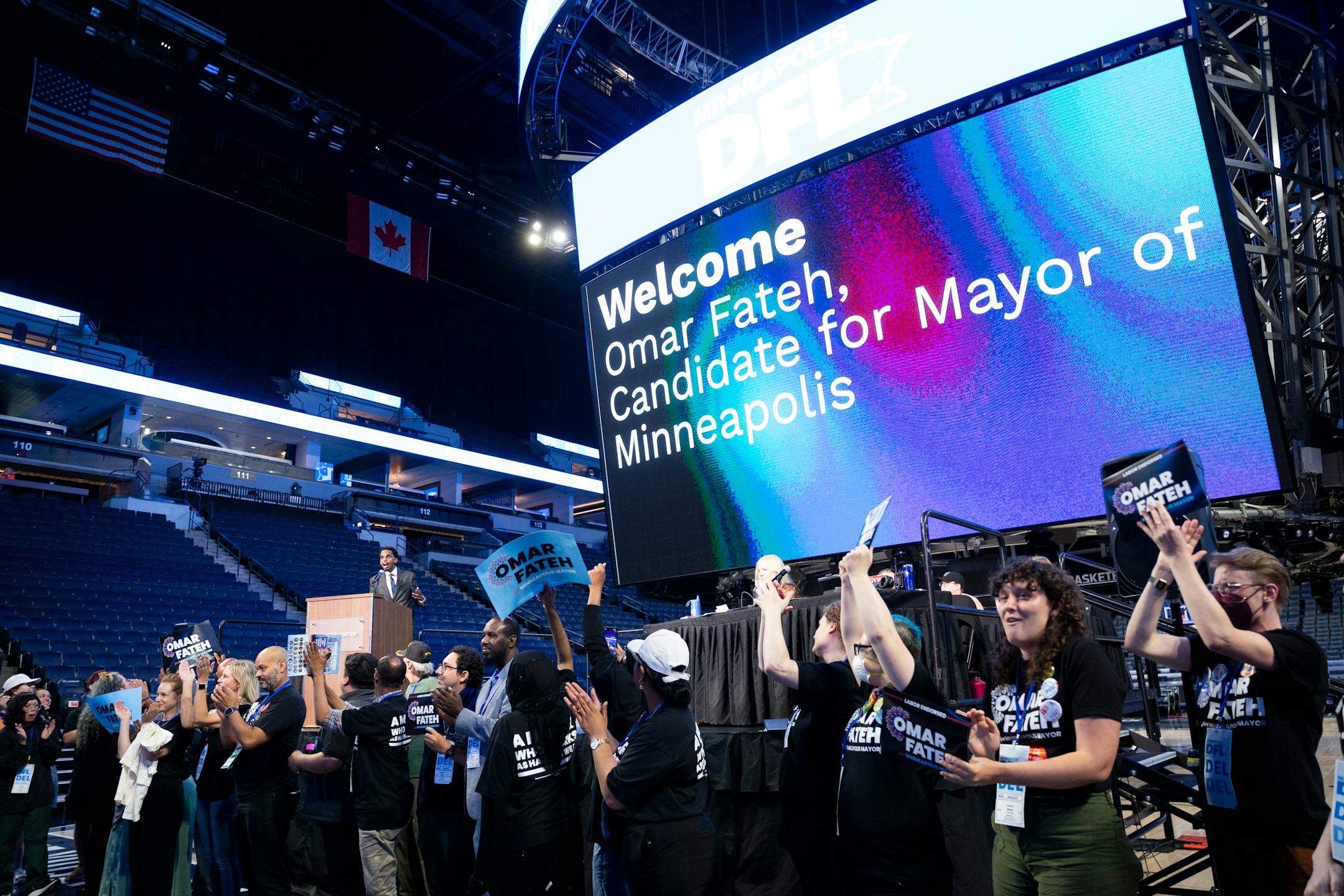
Let’s take a hard look at what just happened in Minneapolis. Omar Fateh, a sitting state senator who has built a career taking shots at his own party, was endorsed by the DFL for mayor. That endorsement didn’t come from a wave of voter enthusiasm. It came from a chaotic convention that most voters weren’t a part of. A system of electronic voting and poor credentialing created confusion and excluded many. The result was not a groundswell. It was a technical victory for a well-organized group that thrives in low-participation environments.
Fateh is often held up as an example of this new wave of “progressives,” but there’s a pattern worth noting. He’s made a name for himself by attacking fellow Democrats, not Republicans. He routinely undermines statewide DFL priorities while painting himself as the only one with moral clarity. And despite claiming to speak for marginalized communities, he often skips the hard votes and avoids doing the actual work of governing. You don’t get to ignore the process and then pretend to represent the people left to live with the results.
After Gov. Tim Walz vetoed an early rideshare bill, Fateh didn’t look for a path forward. He went after the administration, saying they had “not one conversation” with drivers before making the decision. In the final stretch of the 2024 session, as the Senate worked to close out its agenda, he used the rideshare issue as a bargaining chip, signaling he was willing to stall other DFL priorities until he got the outcome he wanted. And when the Senate passed a $24 million emergency EMS funding bill with unanimous bipartisan support, Fateh didn’t cast a vote at all. That is not principled independence; it is walking away from the job of governing when the work doesn’t fit his own script.
This is not the politics of building something. This is the politics of tearing it down.
The DSA claims to be reviving the spirit of the Farmer-Labor Party, but that comparison doesn’t hold. The Farmer-Labor movement united working people from across the state. It stood for building coalitions and delivering material change. Today’s democratic socialists are more interested in purity than progress. If you don’t support rent control or abolitionist rhetoric, you’re labeled corrupt or compromised. They are not here to grow the party. They are here to replace it. (“Democrats just might find democratic socialism refreshing,” Aug. 1)


