
Opinion | Child protection: When tragedy is used to justify more harm

Family preservation laws were not created to shield bad parenting, but to correct generations of harm done to children of color through family separation.

August 7, 2025 at 10:59AM
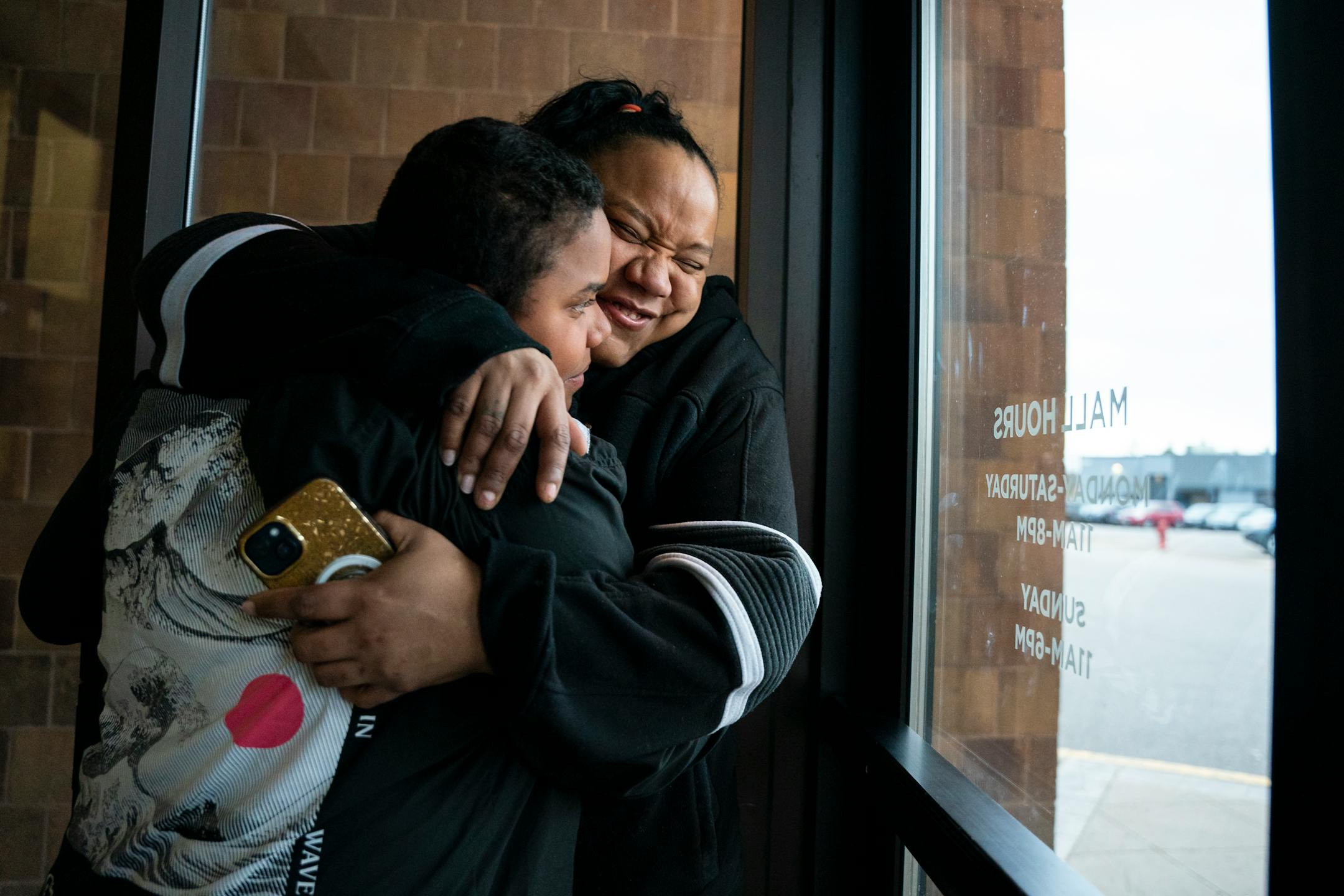
Latasha Bacon tightly hugs her son Davonte, 13, in Blaine in April 2024. When Davonte and his sister Layla Jackson were taken from Latasha by child protective services in 2018, they ended up with an abusive foster home. The foster father killed 18-month old Layla and Latasha has since become a strong advocate for amending the foster care and how it disproportionately affects native families and families of color. (Angelina Katsanis/The Minnesota Star Tribune)

Opinion editor’s note: Strib Voices publishes a mix of guest commentaries online and in print each day. To contribute, click here.

•••

Every time the news reports a child’s tragic death, public sorrow quickly turns to outrage — and the targets are often the very policies meant to keep families intact. In Minnesota, recent family-preservation laws aim to strengthen support for struggling parents and prevent the trauma of unnecessary removals. Yet when fear takes the wheel, calls to roll back that approach grow the loudest, despite decades of evidence that reactionary crackdowns clog caseworker caseloads, stretch resources thin and —ironically — leave the most endangered children less protected.

The heartbreaking death of Niindonis Goodman has once again kickstarted a familiar pattern: An extreme and devastating case is used to create fear and push back against family preservation policies that prevent abuse and neglect, address root causes and help build parental capacity.

Let me be clear: Niindonis’ death was a tragedy. Her life mattered. Her loss should spark reflection, accountability and resolve. But it should not be used to undermine pieces of legislation like the Indian Child Welfare Act (ICWA), the Minnesota Indian Family Preservation Act or Minnesota’s new African American Family Preservation and Child Welfare Disproportionality Act. (“Will a new law really give Minnesota a gold standard in child protection policies?” Strib Voices, July 22.) These laws were not created to shield bad parenting or excuse harm — they were created to correct generations of harm done to children of color through family separation, cultural erasure and state-sanctioned surveillance.

Often, criticisms imply that attempting to preserve families puts children in danger. But decades of research and lived experience show that removing children from their families causes life-long, predictive, intergenerational — and often avoidable — harm. One hundred percent of children separated from their families experience the lifelong trauma of family separation. That includes the 600 Minnesota children who age out of foster care each year with no legal family at all.

Family separation is traumatic. It’s associated with higher rates of chronic illness, homelessness, incarceration and suicide (see the CDC’s Adverse Childhood Experiences study and research from Harvard’s Center on the Developing Child). This trauma ruptures a child’s sense of safety, identity and connection. All of this, while being a much more costly option for our communities than family preservation efforts. Alia — the Minnesota-based nonprofit I had the privilege of founding and currently lead — produced a detailed report in 2019 that clearly outlines the cost of family separation (see our Social Return on Investment study at tinyurl.com/alia-sroi).

Furthermore, when we try to frame foster care as the “safer” option, we cannot ignore the well-documented prevalence of abuse and neglect in foster care — by adult caregivers and other young people in the very settings the system uses to “protect” children.

In many cases the danger doesn’t even begin until the government intervenes. When children are removed from their homes — not because of severe abuse but due to poverty, housing insecurity or untreated mental health needs — the state becomes the source of new trauma. These removals don’t just hurt children; they devastate families, destabilize communities and reinforce cycles systemic abuse.

Niindonis’ story is one of unimaginable loss. Yet, we could fill pages with stories of children removed unnecessarily, stripped of their family, culture and identity — never to return. That, too, is loss. That, too, is trauma for hundreds of thousands of children in the U.S. every year. And it is not a tragedy born of inaction, but of a system built on the myth that child safety requires family separation, which is rarely the case.

Family preservation doesn’t mean ignoring harm. It means understanding the full context in which that harm occurs — and investing in solutions that break cycles rather than reinforce them. And when a parent cannot immediately safely care for their child, the answer isn’t to erase their family. It’s to ask: What does this family need to stay safely together?

For decades, child welfare has asked the wrong questions. It has asked: “How do we keep children safe from their family?” Instead, we should ask, “How do we keep children safe with their family?”

The inconvenient and painful truth is that is no approach will keep 100% of children safe 100% of the time while upholding our individual rights and liberties.

Are tragic mistakes ever made when reunifying families? The answer is a devastating “of course,” because every system that involves human beings will have exceptions, failures and heartbreak. But how much predictable, lifelong harm are we willing to knowingly perpetrate by separating children from their families in the name of a false sense of safety?

Amelia Franck Meyer is a social worker and the founder/executive officer of Alia, a Minnesota-based national nonprofit that supports innovative leaders and systems related to child welfare.

about the writer

about the writer

Amelia Franck Meyer

More from Commentaries

See More
Left, U.S. Rep. Tom Emmer. Right, Minnesota House Speaker Lisa Demuth.
L to R: Tom Williams/TNS; Leila Navidi/The Minnesota Star Tribune

U.S. Rep. Tom Emmer and House Speaker Lisa Demuth know the truth about their Somali constituents. But in today’s GOP, they are trading courage for political survival.

card image
card image