
Opinion | Will a new law really give Minnesota a gold standard in child protection policies?

A policy that leans into family reunification may produce sometimes harmful outcomes without reducing disparities.

July 22, 2025 at 10:59AM
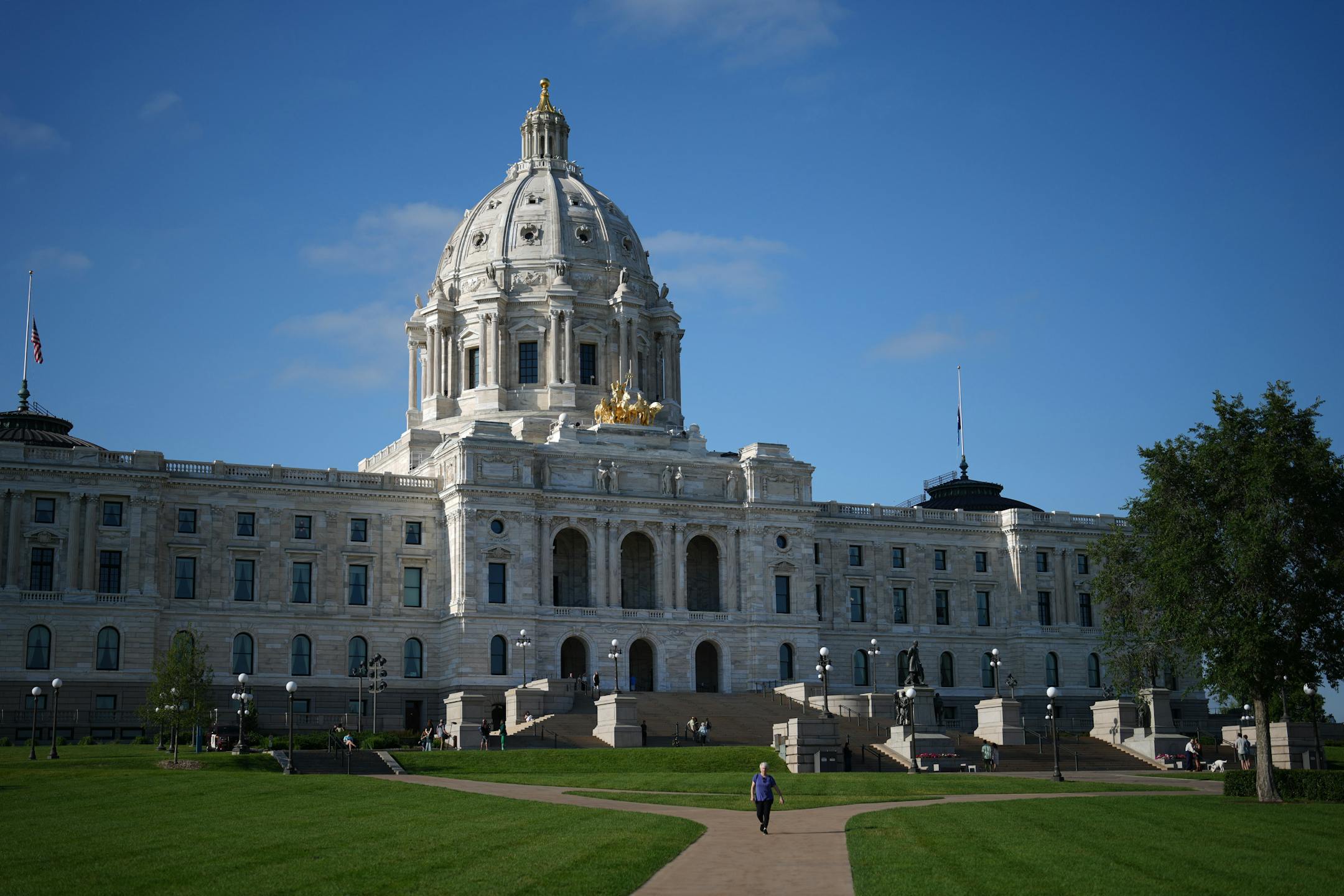
The last mourners trickle out of the Minnesota State Capitol after the Lying in State for Minnesota State Representative Melissa Hortman, Mark Hortman and their dog, Gilbert, in St. Paul, Minn. on Friday, June 27, 2025.
"Expanding [Indian Child Welfare Act] standards to nearly all children may endanger them without reducing disproportionality. One reason is that ICWA standards require states to make 'active efforts' to preserve families and reunify children — without exception," the writers say. (Alex Kormann/The Minnesota Star Tribune)

Opinion editor’s note: Strib Voices publishes a mix of guest commentaries online and in print each day. To contribute, click here.

•••

A new Minnesota law will make it harder to protect children from abuse and neglect.

In May 2024, 2-year-old Niindonis Goodman died of fentanyl poisoning in a Minneapolis homeless shelter, with her mother passed out nearby. Born with drugs in her system to a mother with a long history of drug addiction who had relinquished custody of other children, Niindonis spent less than two months in foster care after birth before returning to her mother. Child welfare and court oversight ended six months later. Despite new allegations of drug use weeks before her death, no protective action was taken.

Niindonis was a Native American child, meaning she fell under the jurisdiction of the federal Indian Child Welfare Act (ICWA) and the more expansive Minnesota Indian Family Preservation Act.

The ICWA was passed in 1978 to address historical abuses of government power, including the removal of Native American children from their families as a result of cultural biases. It endows Native parents with expansive rights to retain and regain custody of children and makes it harder for state officials to intervene. Originally deemed the “gold standard” for recognition of tribal sovereignty, the ICWA has been widely embraced as the gold standard of child welfare practice for all children.

Minnesota legislators seem to agree.

The 2024 Minnesota African American Family Preservation and Child Welfare Disproportionality Act, enacted with unanimous support in the state House, extends key provisions of the ICWA to nearly all children. The act is premised on the belief that non-Native children, lacking ICWA-like protections, routinely experience unnecessary and traumatic state interventions on the pretext of maltreatment.

Paradoxically, the ICWA (and Minnesota’s expansion) has not reduced disparities. Before ICWA, congressional testimony asserted that Indian children in Minnesota are placed in foster care or in adoptive homes “at a per-capita rate 5 times greater than non-Indian children.” Today, Minnesota’s Native American children enter foster care at 13 times the rate of non-Native children.

Native American children also die from abuse and neglect at extraordinarily disproportionate rates.

As part of the Lives Cut Short project, we reviewed Minnesota fatality records for 2022 to 2024. We found that Native American children accounted for 6% of all child deaths and 17% of child maltreatment-related deaths — 12 times their population share.

Concerns of disproportionality among other populations drove support for Minnesota’s new law. Children who are Black (not multiracial) account for 11% of the state population and 13% of foster care entries. The combined population of Black and multiracial Black children accounts for approximately 15% of Minnesota’s child population and 25% of the foster care population. Tragically, Lives Cut Short found that this population of children accounts for 21% of all child deaths and 36% of maltreatment-related deaths.

Expanding ICWA standards to nearly all children may endanger them without reducing disproportionality. One reason is that ICWA standards require states to make “active efforts” to preserve families and reunify children — without exception. The more flexible “reasonable efforts” standard, which applied to non-Native children before the new law was enacted, included exceptions for “aggravated circumstances” such as severe or chronic harm, sexual abuse, murder or manslaughter. The new law does not. Likewise, under the new law children cannot be placed in foster care — and parents cannot be court-ordered to participate in rehabilitative services — absent “clear and convincing evidence” rather than “a preponderance of the evidence.” Proponents believe these higher standards ensure parents have a fair shot at family preservation or reunification. But active efforts have led agencies to spend time and resources on unreasonable and sometimes harmful efforts to preserve and reunify families.

After Niindonis died and manslaughter charges were filed against her mother, a reunification plan with “active efforts” was created for her 7-year-old sister. According to court records obtained by Safe Passage for Children of Minnesota, these efforts included paying for her mother’s hotel accommodations, transportation, gas cards, relocation support, phone cards, hygiene supplies and pizza delivery — even as the mother continued to skip treatment intakes and visits with her daughter. It did not matter that this surviving sibling had spent most of her life with relatives and returned to her mother’s custody only shortly before Niindonis died. Nor did it matter that she had witnessed her sister’s death and an earlier nonfatal overdose. The reunification plan continued, even as she suffered “behavioral regression, sleep disturbance, and psychosomatic symptoms,” including anxiety-induced vomiting.

These ICWA provisions will soon apply to almost all children in Minnesota. Voicing support for this expansion, state Rep. Ben Davis argued, “Every parent deserves a second, third or fourth chance.”

Is that what Minnesotans have in mind?

Sarah Font is a professor in the Brown School at Washington University in St. Louis and Emily Putnam-Hornstein is a professor in the University of North Carolina Chapel Hill School of Social Work. They co-lead the Lives Cut Short project on child maltreatment fatalities.

about the writer

about the writer

Sarah Font and Emily Putnam-Hornstein

More from Commentaries

See More
card image
Leila Navidi/The Minnesota Star Tribune

In government leadership, young people need to be ready to accept the torch, but previous generations can’t slow down their leg, or delay the pass.

card image
card image