


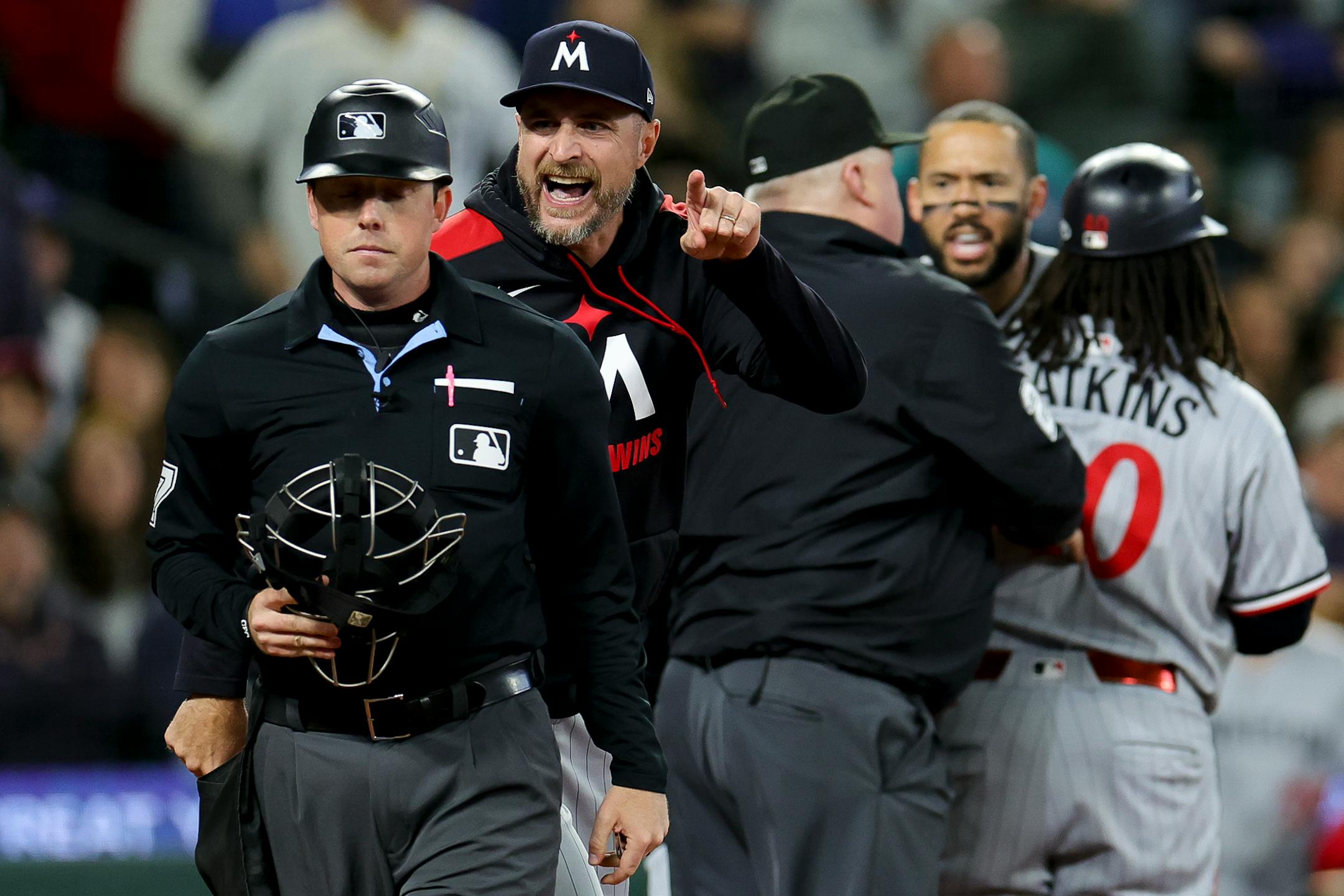
Major League Baseball will make its initial foray next season into “robot umpires,” a rather hilarious term that conjures up images of Star Wars droids barking out ball and strike calls but is in reality a system of precision cameras.
In the rule that will be implemented next season, teams will get two challenges per game (more if it goes to extra innings) to ball and strike calls. Only a batter, pitcher or catcher can signal for a review, which will trigger a quick process to see whether 12 powerful cameras determine if the call was correct.
If the challenge is successful, the call is reversed and the team keeps retains the challenge. If not, it loses the challenge.
That seems like a fine compromise when considering all the competing factors at play in getting any sort of ball-strike review implemented. Commissioner Rob Manfred’s statement after the rule passed Tuesday reflected that: “I commend the Joint Competition Committee for striking the right balance of preserving the integral role of the umpire in the game with the ability to correct a missed call in a high-leverage situation, all while preserving the pace and rhythm of the game.”
Manfred frames it as the best of all worlds. On Wednesday’s Daily Delivery podcast, I wondered if the system was the worst of all worlds.
My least favorite things about sports’ seemingly never-ending quest to correct officiating mistakes are: 1) They interrupt the flow of the game, often taking minutes to sort out; and 2) Fans never quite know for sure if they can celebrate a play in real-time, knowing that a review might change the outcome.
Baseball had an option that could have ensured virtually every ball-strike call is correct — as opposed to the 94% accuracy rate of human umpires — had they chosen to implement the “robot” system for all balls and strikes.
When they tried it in the minor leagues, it was seamless and instantaneous, with the ball-strike call immediately sent to the home plate umpire’s earpiece for him or her to announce.


