Calls flooded Vietnamese community leader Tri Tang’s phone on the morning of Saturday, Jan. 24, as word spread that federal agents had shot and killed an observer in the Whittier neighborhood of south Minneapolis. The immediate area is a hub of Asian-owned businesses, and the shopkeepers were quickly closing as protesters swarmed the scene.
In just a couple hours, Tang’s nonprofit, the Vietnamese Community of Minnesota , was supposed to kick off its flagship, two-day Vietnamese New Year Celebration at the Burnsville Center. People were worried about safety, as a number of local police officers who had signed up to provide security were drawn away to south Minneapolis. Some parents of children in dance troupes that were set to perform thought it better they stay home. Volunteers were backing out.
Tang encouraged everyone to do what was best for themselves, but he decided to continue with the celebration. Vietnamese New Year, or Tet, is one of the Asian community’s first big events of 2026 through the end of February, when many ethnic groups were expecting to mark the lunar new year with their own celebrations. Tang wanted to set an example and let others know that the Vietnamese community wouldn’t go into hiding.
“My biggest fear is other would see this as we’re going on as usual and being unfeeling towards other people,” said Dave Hoang, a board member of Tang’s nonprofit. “But the reality is we are hurting, too, and we want to make sure that we take care of our own people’s needs, provide a space for people to come together and feel safe in this moment.”
The fall of Saigon in April 1975 at the end of the Vietnam War was the beginning of the migration of many South Vietnamese individuals and families to Minnesota. Historically called the “boat people,” they fled their homeland by sea and found refugee camps in nearby countries.
Many refugees eventually reached the United States, aided by a series of programs and congressional legislation that recognized their allyship during the war by expanding their opportunities to resettle in America.
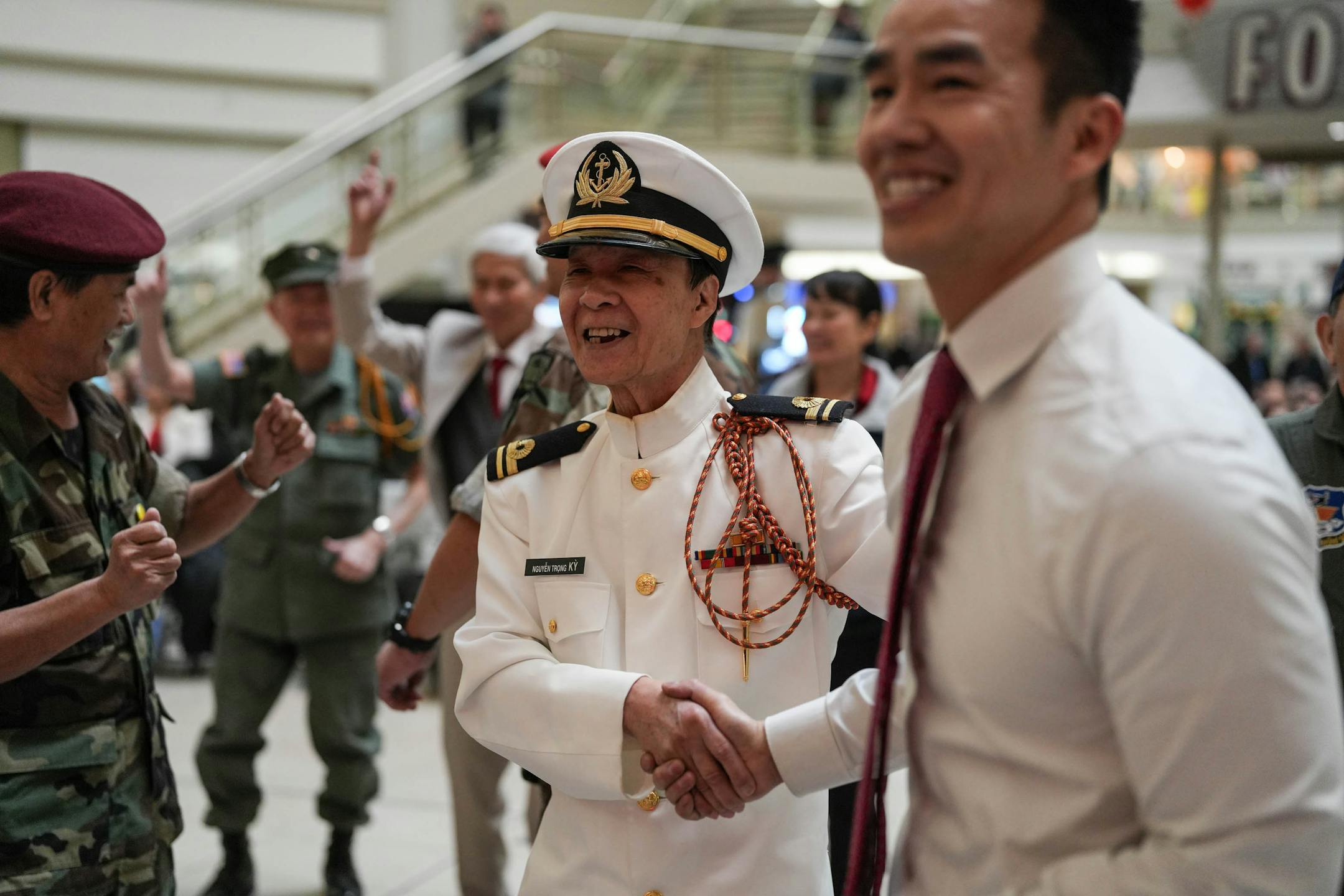
Stories of that migration were scattered throughout the Burnsville Center celebration. There was a main stage with a rotation of song and dance acts, as well as night market food, traditional clothing, museum exhibits and kids’ play areas across multiple floors of the mall.
About 30,000 people of Vietnamese heritage now live in Minnesota. Many are citizens. Yet, there are widespread anxieties about the federal government’s crackdown on illegal immigration in the state that has swept up legal residents, including refugees, and citizens.