
Minnesota’s paid leave policy launches next month. Here’s what to know.

Workers are entitled to 12 weeks of leave for a new baby, an illness or to care for a loved one.

The Minnesota Star Tribune
December 15, 2025 at 12:00PM
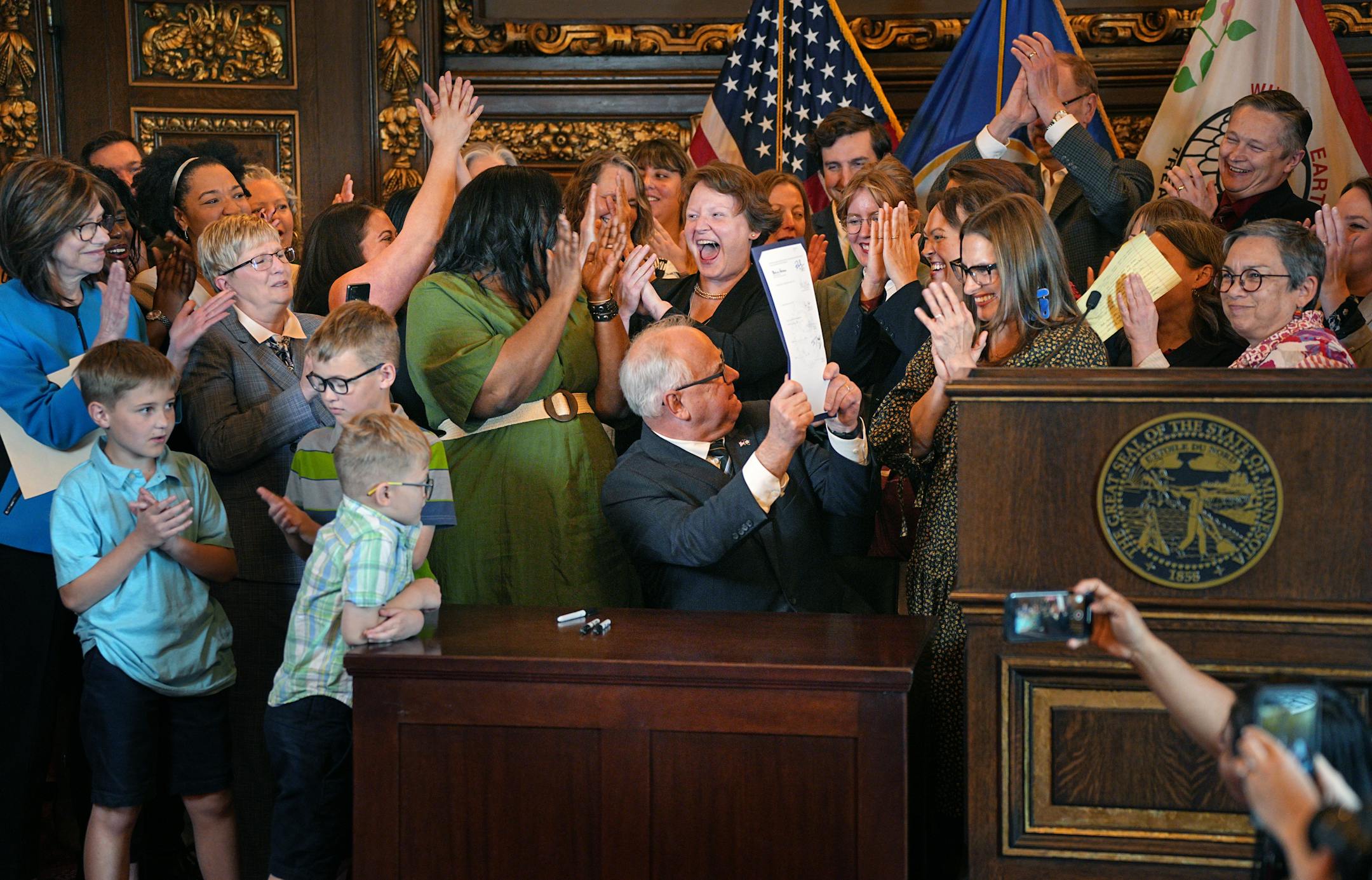
Gov. Tim Walz signed the paid family and medical leave bill into law on May 25, 2023 The law, which goes into affect in January 2026, makes Minnesota one of a dozen states that require workers are able to take time off with partial pay when they give birth or have a serious health condition. (Brian Peterson/The Minnesota Star Tribune)

Minnesota’s new paid leave policy launches next month, guaranteeing up to 12 weeks off for workers with new babies or who need time to deal with an illness or care for a loved one.

When the program launches, Minnesota will be one of 13 states to adopt mandatory paid leave policies. It covers workers at employers of all sizes.

At an event highlighting the new policy earlier this month, Gov. Tim Walz said paid leave “not only enhances quality of life, it enhances retention [and] business success.”

“It’s basically an insurance program for you that allows you ... to take care of what you need to take care of without being forced to choose between your family, your bonding with your child, your own health and your economic wellbeing,” Walz said.

Evan Rowe, a deputy commissioner at the Minnesota Department of Employment and Economic Development, who is working on the paid leave rollout, noted most other developed nations offer paid leave.

“We’re not breaking new ground,” Rowe said, “but what we are doing is making it easier for Minnesotans to take care of loved ones, to take care of themselves, and that has a whole range of positive benefits.”

Right now, the state is accepting applications for parents who welcomed a baby in 2025 and plan to take leave in 2026. The program launches for everyone else on Jan. 1.

Here’s what to know before the launch.

How does paid leave work?

Starting next year, workers will be able to apply through the state to take 12 weeks of paid leave to deal with medical conditions, bond with a new baby or take care of a loved one. Bonding leave is available to parents who welcomed a child via birth or who adopted a child or have a foster placement.

Workers can take both personal medical leave and family leave in a given year, but the total for both leaves combined is capped at 20 weeks.

How is it paid for?

Employers and employees will be subject to a new 0.88% payroll tax, at least half of which must be paid by the employer. The funds from businesses across the state will be pooled to pay benefits to workers who take leave and administered similarly to unemployment insurance.

The Legislature appropriated funds to start the paid leave fund when the program was created in 2023 so that workers wouldn’t have to pay taxes before they could take leave.

The payroll tax can be increased if needed, but is capped at 1.1%.

DEED expects about 130,000 Minnesotans to apply for paid leave each year.

Will there be cost overruns?

When Washington launched a paid leave program in 2020, it saw huge cost overruns and had to raise the payroll tax to cover the gap.

That’s something Lauryn Schothorst, the Minnesota Chamber’s director of workplace management and workforce development policy, said worries people here.

“It’s very difficult to scale back benefits once they’ve been conferred in order to right size the system,” she said. “The alternative is ... increasing taxes to finance it, and that is fundamentally a top concern of the business community and has been since day one.”

But Minnesota officials say the state benefits from not being among the first to offer paid leave. Rowe said the state hired independent actuaries to help forecast demand and set up the program.

Who qualifies?

The vast majority of workers in Minnesota are covered. While the federal Family and Medical Leave Act, which allows employees to take unpaid leave without losing their jobs, exempts small employers, Minnesota’s law does not. Small businesses, however, are subject to only a 0.66% payroll tax.

Independent contractors, those who are self-employed and Tribal Nations aren’t automatically covered but can opt in. Federal employees, postal workers and railroad employees are not covered.

Seasonal hospitality workers are also not covered.

What can people take leave for?

Workers can take leave for a serious medical condition, including pregnancy or childbirth, a chronic condition, injury or other issues certified by a medical provider.

Family leave allows workers to take time off to bond with a new baby or child placed through adoption or foster care. Workers can also take time off to care for a family member with a health condition or support a family member who’s on active military duty.

Paid leave also allows workers to take time to deal with personal safety issues, including domestic violence and stalking.

Will my job still be there when I get back?

Minnesota’s paid leave law guarantees job protections for employees who take time off through the program — if they’ve been in the job for at least 90 days — and prohibits employers from interfering with workers’ leave or retaliating against them for taking it.

Sen. Alice Mann, DFL-Edina, said when paid leave is in place “businesses actually benefit” through increased retention, productivity and profitability.

“If paid leave was something that killed businesses,” Mann said, “we wouldn’t be the only country left that does not have this policy in place.”

How much will I be paid during my leave?

Workers will be paid between 55% and 90% of their regular wages with a maximum of $1,423 per week. Lower earners will get a higher percentage of their paychecks covered. You can estimate your payments on the state’s website.

What if my employer already offers paid leave?

Employers can keep offering a private leave policy and avoid paying premiums to the state. The employer’s plan must offer the same or better coverage than the state’s policy. Employers can self-insure their leave policies or work with a certified insurance carrier.

What does my employer have to do?

Employers need to set up online accounts with the state now and must pay premiums quarterly, starting in April.

Schothorst said employers who haven’t taken action are out of compliance, but can quickly get back into compliance by creating their accounts, notifying their workers and hanging a poster mandated by the state.

What safeguards are there on the program?

With a fraud crisis plaguing Minnesota’s Medicaid program, some lawmakers have worried about the integrity of the paid leave program. Fraudsters are accused of stealing millions of dollars by billing for Medicaid services that were never provided.

Minnesota officials say they have extensive verification measures for individuals taking leave. Applicants have to upload identification and a photo. Each application requires sign-off from a health care provider.

Several Republican lawmakers, including Rep. Marion Rarick, R-Maple Lake, voiced concern during a committee hearing on fraud prevention about the number of people who could take time off to care for a single person.

“How do you verify that that care is actually being provided and they’re not just...going to Florida for a vacation and not really taking care of anybody?” she asked.

Mann said she was confident in the checks the state has in place for the program and said people are unlikely to fraudulently take time off to receive part of their normal pay.

“That’s not something many people can afford to do,” Mann said.

Rowe said DEED takes program integrity very seriously and is relying on expertise from the state’s unemployment insurance program.

about the writer

about the writer

Allison Kite

Reporter

Allison Kite is a reporter for the Minnesota Star Tribune.

See Moreicon

More from News & Politics

See More
Snow slowly melted on a branch of a Balsam tree at Hansen Tree Farm in Ramsey, Min., Thursday December 13, 2012. The farm is celebrating its 60th year anniversary this holiday season.
Star Tribune/The Minnesota Star Tribune

It’s been three weeks since the mercury hit 32 degrees or higher in the Twin Cities.