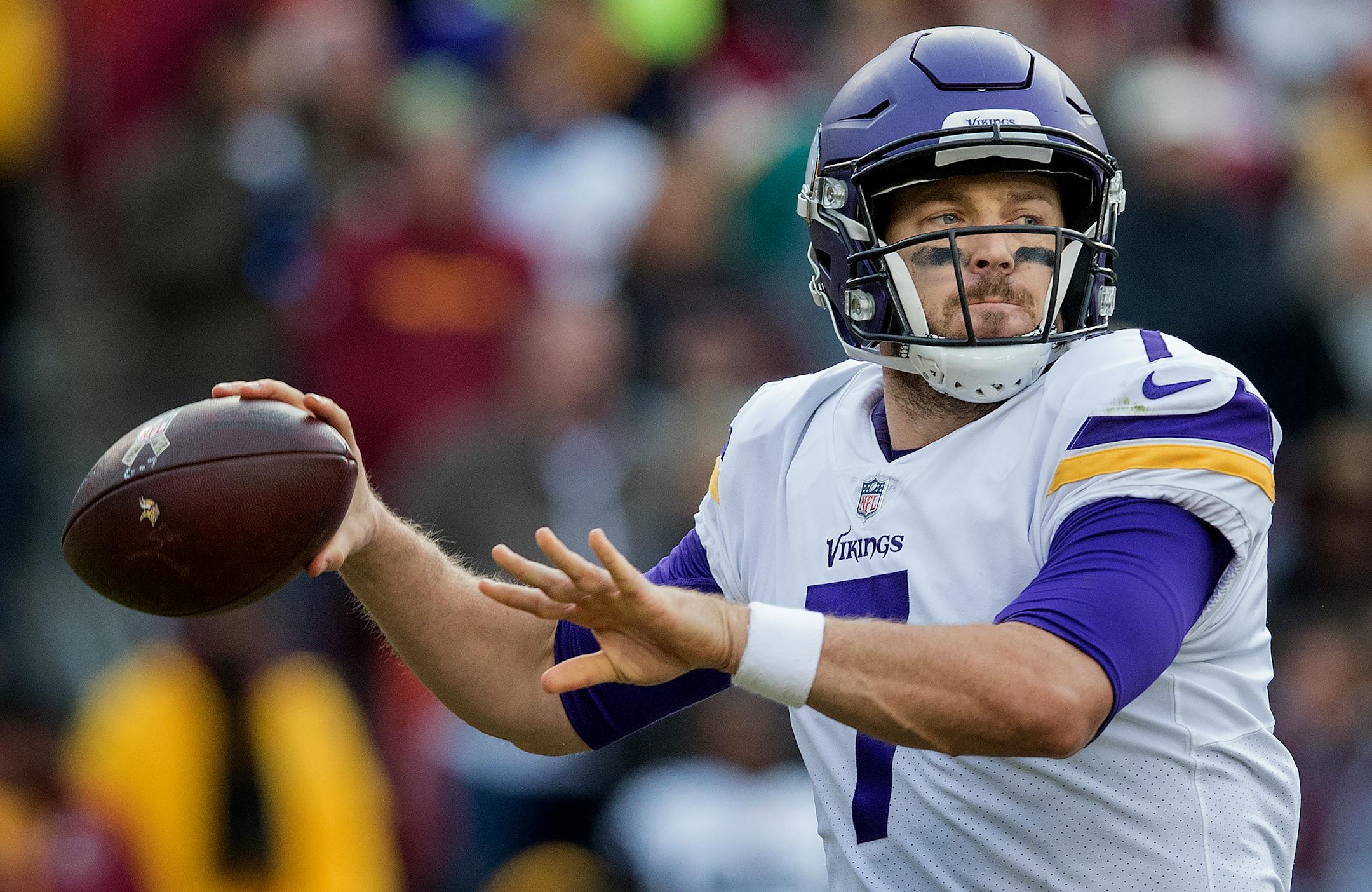
Analysis: The second-most important position in the NFL? The backup quarterback.

What makes a good, dependable No. 2 QB? The Vikings have some good examples of what to do ... and what not to do.

Columnist Icon
The Minnesota Star Tribune
September 1, 2025 at 3:00PM
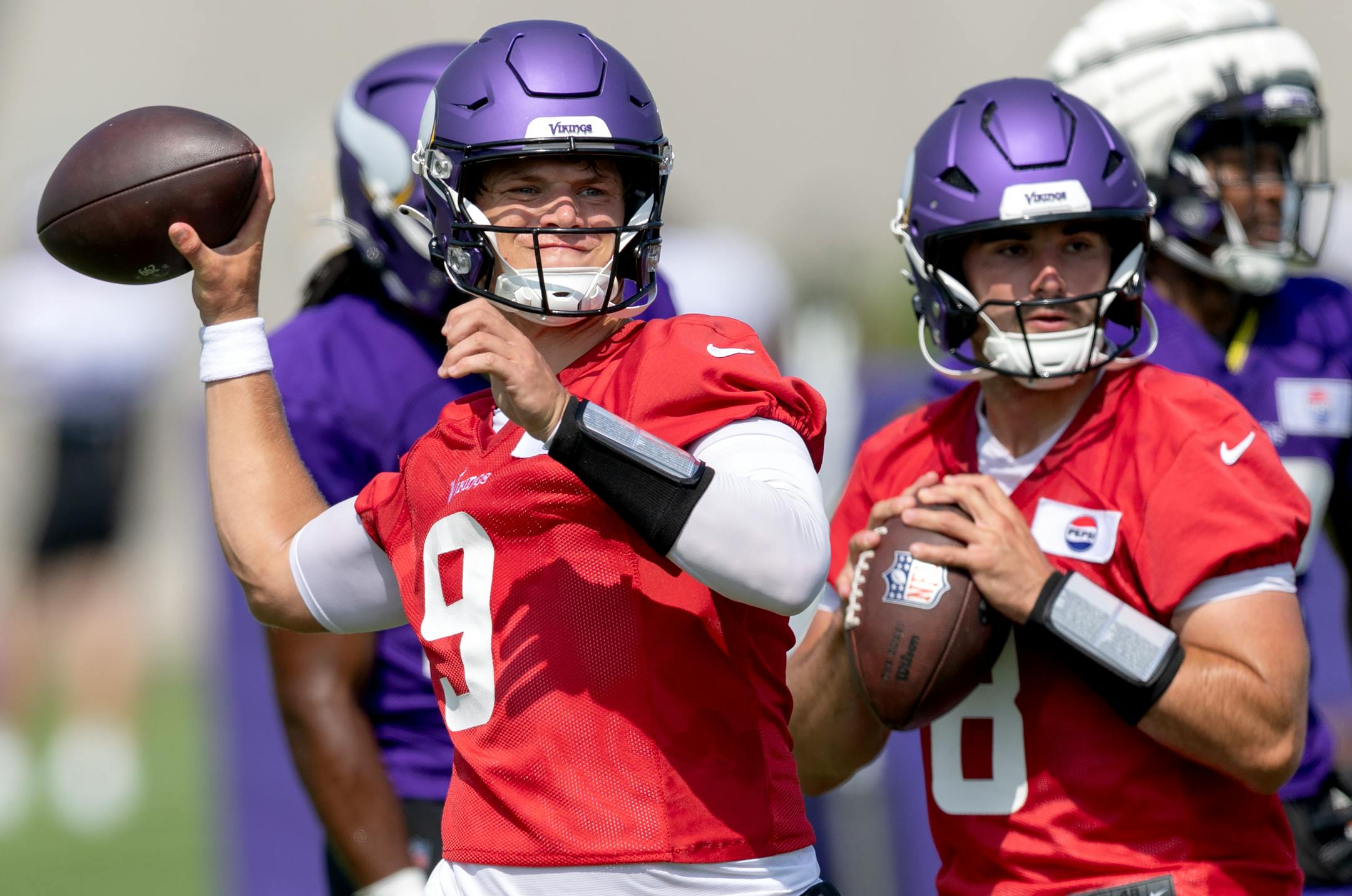
Vikings starting quarterback J.J. McCarthy, left, and his training camp backup Sam Howell during an Aug. 7 practice. Howell is no longer McCarthy's backup. (Carlos Gonzalez/The Minnesota Star Tribune)

It took the Vikings 121 days from April 26 to Aug. 24 to conclude that Sam Howell does not possess the leading trait that all good, dependable backup quarterbacks have in common.

And what, pray tell, is that leading trait?

Well, the Minnesota Star Tribune spent some time this summer asking that question to smart people. The answers were varied, nuanced and in no way described the 24-year-old Mr. Howell, whose 5-13 career record includes going 4-13 while leading the NFL in interceptions (21) and sacks (65) for Washington in 2023.

Eventually, the Vikings did what all of Vikings Nation anticipated when they discarded Howell, whom they had traded for from Seattle, to Philadelphia. In his stead, they signed Carson Wentz, who is eight years wiser than Howell, has started 76 more games (94) and has had stints under two of the league’s leading offensive gurus — the Rams’ Sean McVay and the Chiefs’ Andy Reid — the past two years.

We’ll let Kevin O’Connell bat leadoff as we try to answer the question above. Why? For starters, he’s the Vikings head coach and play-caller. Secondly, he’s also a QB guru so adept that he won 2024 NFL Coach of the Year almost exclusively because he did the unthinkable — coaxing career highs out of Sam Darnold in completion percentage (.662), passing yards (4,319), touchdown passes (35), passer rating (102.5) and, oh yeah, wins by a doubled amount (14).

“First and foremost, [the backup] has to be a guy who has ownership of the plan without taking reps,” O’Connell said. “You can count on one hand in a normal game week the reps he’ll get, especially if you have a young [starting] quarterback,” which the Vikings do in 22-year-old J.J. McCarthy, who has never started an NFL regular-season game.

So if you’re going to be a backup quarterback for the Vikings, O’Connell continued, “you need to maximize the meeting room, the walkthroughs, the [limited] reps and step in and execute the game plan that week. And do it with confidence.”

Does that describe Wentz? Well, those of us who doubted Darnold, the third overall pick of the Jets in 2018 — two years after Wentz went second overall to the Eagles — probably should reserve judgment. But here are some facts:

ADVERTISEMENT

• Since going 11-2 as an early NFL MVP frontrunner in 2017, Wentz is 29-35-1. Eagles backup Nick Foles, not Wentz, is the one who throttled the Vikings in that 2017 NFC Championship Game en route to outdueling Tom Brady in the Super Bowl played at U.S. Bank Stadium.

• Wentz is on his sixth team in six years, having spent one-year stints with the Colts (9-8), Commanders (2-5), Rams (1-0) and Chiefs (0-1).

We asked Wentz to identify the best trait that all good, dependable backups have in common.

“That’s a great question,” he said. “And I’m still trying to figure that out. I’m not going to lie.”

Helping Wentz figure it out is Vikings quarterbacks coach Josh McCown, Wentz’s backup in Philadelphia in 2019 and a guy who was mostly an NFL backup through 16 seasons and nine teams.

“I tell the [backups] to go steal a physical rep later on air with nobody watching, but to remember what you saw [in practice] mentally,” McCown said. “That’s the trait you got to have because it’s the only way you can get yourself ready to play a game when you’re not getting reps.”

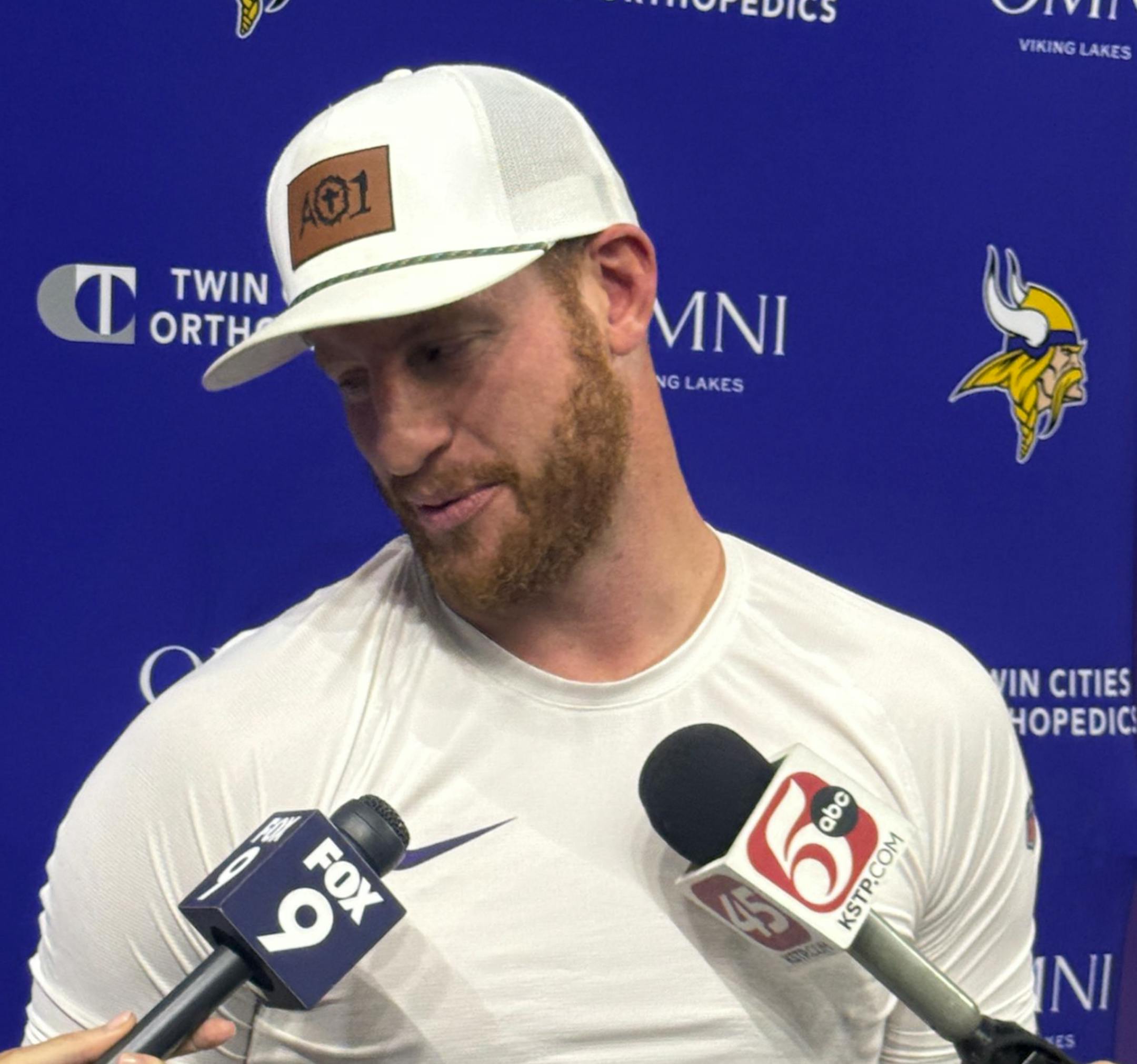
Quarterback Carson Wentz addresses the news media at TCO Performance Center in Eagan on Thursday after signing with the Vikings four days before. (Ben Goessling/The Minnesota Star Tribune)

Wentz said he thinks the key will be his “willingness to put the team first,” especially when it’s a team with a starting quarterback “who’s never even been through a game-week preparation.”

“It’s still a little new for me,” Wentz said. “But willingness to serve, however that looks. Whether it’s staying after to help a guy or watching extra film. Whatever it looks like, both on and off the field, because as QB1 there’s a lot of pressure both on and off the field.”

The subject of backup quarterbacks came up years ago in an interview with former Browns and Giants General Manager Ernie Accorsi. He had already been through the 1988 season when his Browns reached the playoffs with 10 wins while starting four quarterbacks: Bernie Kosar, Mike Pagel, Gary Danielson and Don Strock, who came out of retirement.

“The most important position on your football team is the quarterback,” Accorsi said. “The second-most important position is your backup quarterback.”

The Vikings have a long history of backup quarterbacks who have thrived when thrust into uncomfortable positions.

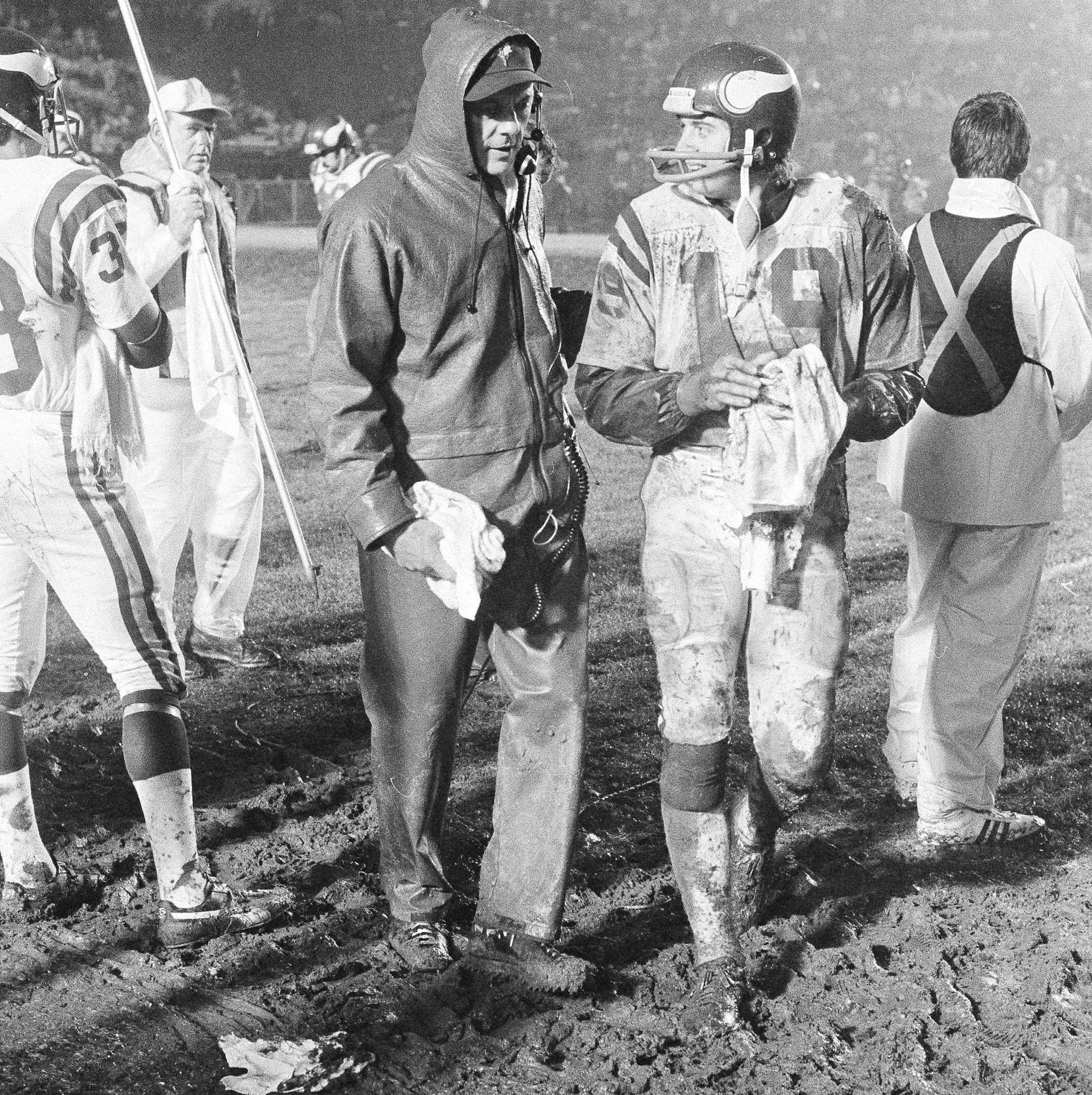
Vikings quarterback Bob Lee leaves the field with coach Bud Grant after his "Mud Bowl" 14-7 victory over the Rams on Dec. 26, 1977.

Bob Lee

Lee was Fran Tarkenton’s backup in 1977. He was mopping up in a 35-3 loss at the Rams on Oct. 24 when his passing hand suffered three fractures when caught between the colliding helmets of two defenders.

Four weeks later, he was the starter when Tarkenton suffered a broken leg.

“I’d say the trait all good backups have in common is confidence and a smart understanding of what to do and what not to do,” said Jeff Diamond, who worked for the Vikings from 1976 to 1998, rising from a low-level media relations post to general manager.

“Bob Lee had that. And he led us to the NFC title game.”

Lee was 31. He went 3-1 to end the regular season. He beat the Packers in a blizzard in Green Bay, completing five of eight passes for 58 yards, a 40-yard go-ahead TD strike to Sammy White, and a 129.2 passer rating in a 13-6 victory.

“Bob didn’t make mistakes and knew we had Chuck Foreman and a great defense,” Diamond said. “He knew he didn’t have to do it all.”

Lee was the winning quarterback in the Vikings’ famous 14-7 “Mud Bowl” playoff-opening win at the Rams. He went 5-of-10 for 57 yards. A week later, the Vikings lost the NFC title game 23-6 at Dallas.

“I still had the fractures in my hand and some torn cartilage in my knee from the preseason,” Lee said recently. “But it was all good. Being a backup, the key is you have to be patient and keep working hard even when you know how frustrating it is to prepare and not play most weeks.”

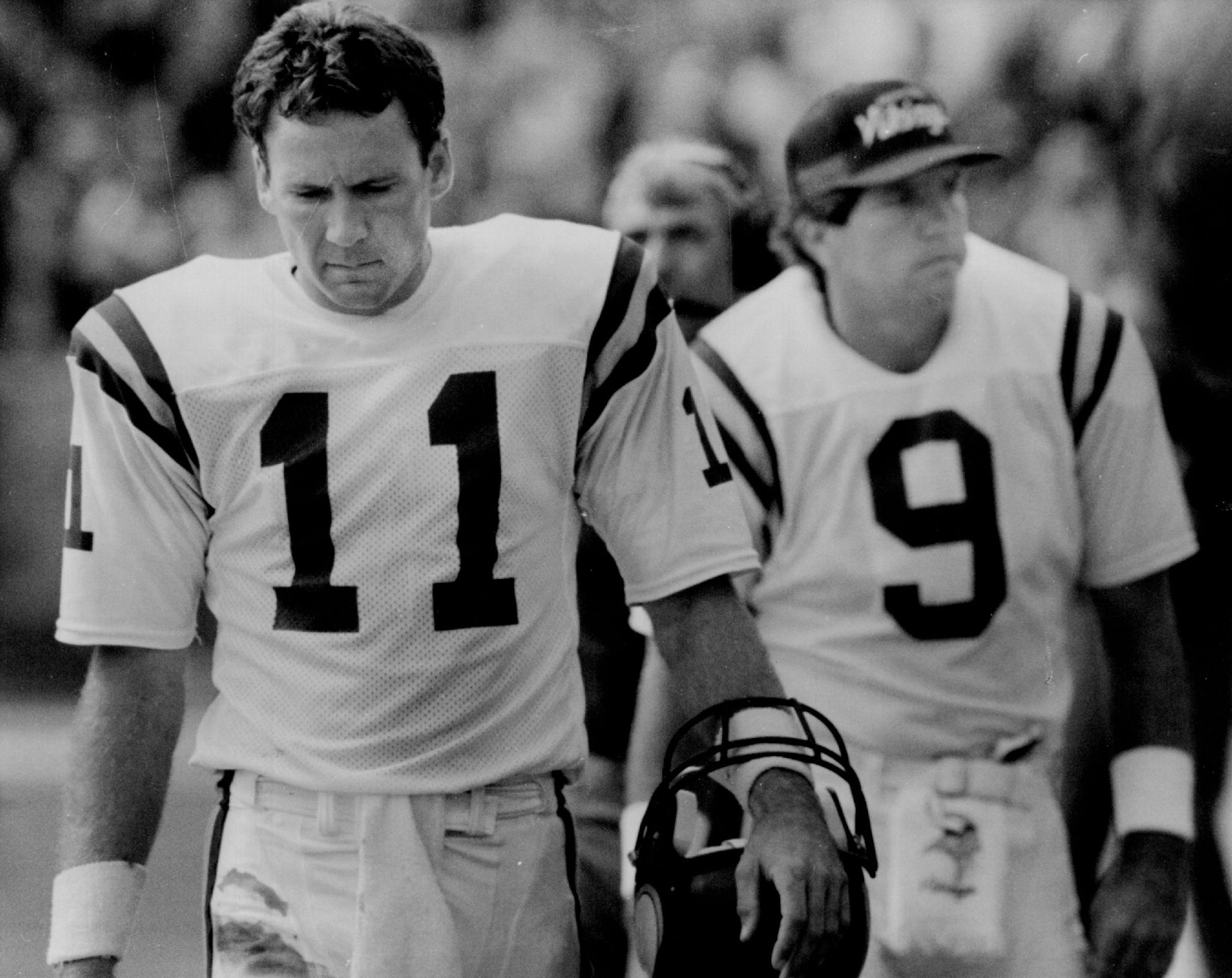
Vikings quarterbacks Wade Wilson, left, and Tommy Kramer after the season opener in 1988. (Marlin Levison)

Wade Wilson

A decade later in 1987, it was Wade Wilson who stepped in for the injured Tommy Kramer and went 5-2 to get the Vikings — who were saddled with an 0-3 record from their replacement players during the NFL players strike in October — into the playoffs as the fifth seed. The Vikings then upset the fourth-seeded Saints in New Orleans in the wild-card game, then beat the top-seeded 49ers in San Francisco in the divisional round, with Wilson throwing for 298 yards. They lost the NFC title game at third-seeded Washington 17-10 after Darrin Nelson dropped a potential tying touchdown pass in the final minute.

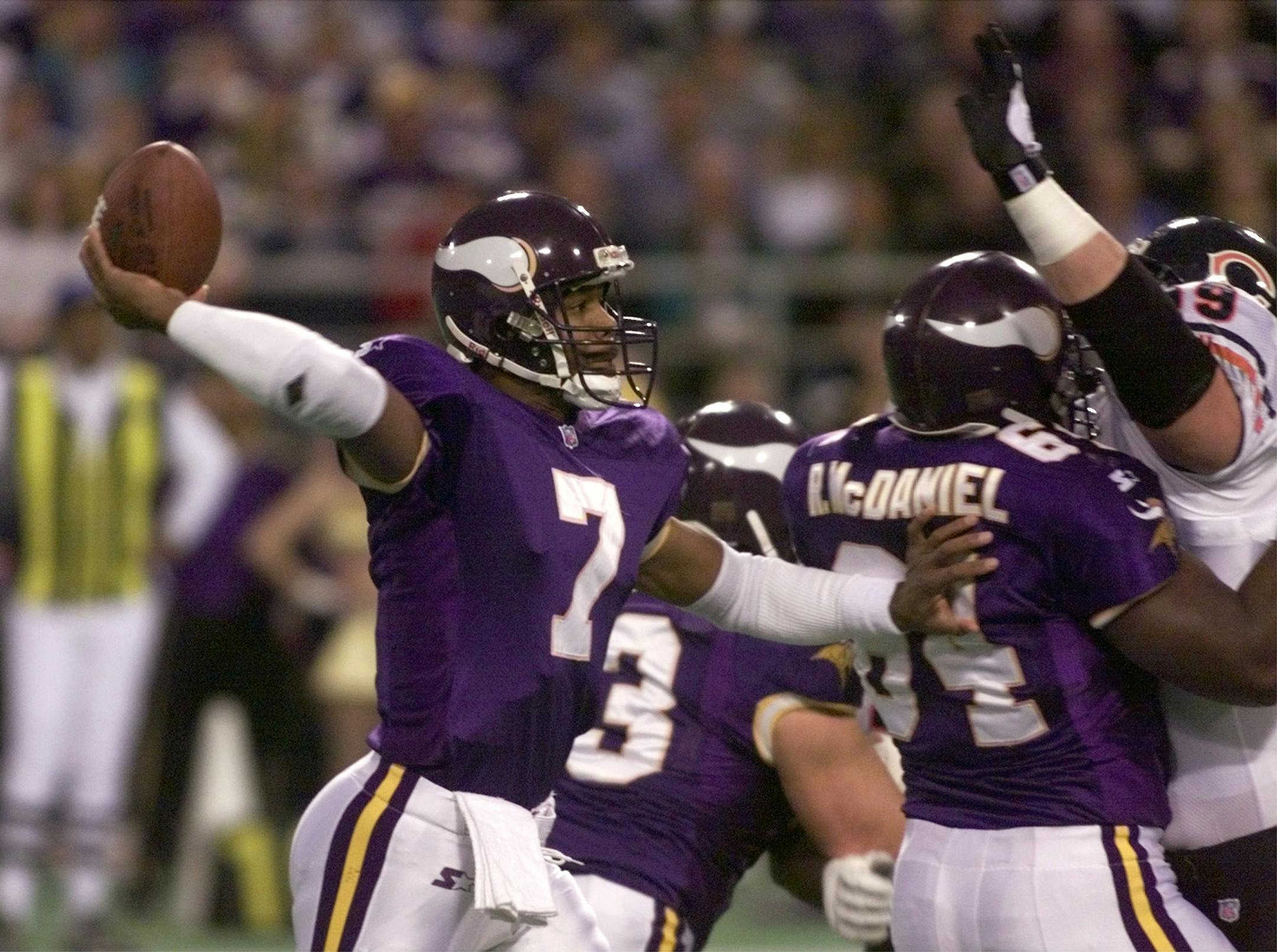
Randall Cunningham probably had the best season of a Vikings backup quarterback in 1998. (BRIAN PETERSON)

Randall Cunningham

Eleven years later in 1998, Vikings starter Brad Johnson sprained an ankle in Week 2. All Cunningham did was step in and go 13-1 while winning league MVP honors as the Vikings reached the NFC title game. Cunningham was 35 and had retired from the Eagles two years earlier.

Case Keenum may have the most memorable moment for a Vikings backup QB. (Carlos Gonzalez/The Minnesota Star Tribune)

Case Keenum

And 19 years later, Keenum — a career backup with only nine career victories before the 2017 season — stepped in for an injured Sam Bradford. He went 11-3, repeatedly getting away with ill-advised passes that left head coach Mike Zimmer unable to declare him the starter from week to week. Keenum co-authored the “Minneapolis Miracle” — a 61-yard walk-off touchdown pass to Stefon Diggs to beat the Saints 29-24 in a divisional playoff game at U.S. Bank Stadium — before the Vikings lost the NFC title game the following week at Philadelphia.

Receiver Adam Thielen, now in his second stint with the Vikings, played with Keenum that year. When asked last week to name the leading trait that Keenum shared with other good, dependable backups, Thielen first offered up one word:

“Gamers,” he said.

“Guys who can just step in, not have the reps, maybe not have a lot of attention from coaches but can just go out there and ball. I don’t know exactly how to break that down. Just a passion for the game, love for the game, an understanding of the game that is just at a level that allows them to just go out there and just be free and play football.”

And somehow win games. Howell had no track record of that. Wentz is at least a .500 quarterback – 47-47-1, including 0-1 in the playoffs.

So if Wentz was available 121 days prior to signing with the Vikings, which he was, why wasn’t he signed then?

“We acquired Sam Howell with a mindset on what that could look like,” O’Connell said. “But where we ended up with our quarterback room, the ultimate goal was to feel how we feel right now.”

O’Connell then pointed to the Vikings’ track record or getting quarterbacks up to speed quickly.

“I think Carson’s really smart,” O’Connell said. “He’s played a lot of football. Clearly, he has the physical presence of a guy that big and strong, and that applies to how he plays and has had success in this league. But there’s also an above-the-neck quality to him.”

Sign up for the free Access Vikings newsletter to get exclusive analysis in your inbox every Friday. You can also subscribe to the “Access Vikings” podcast on Spotify, Apple Podcasts and YouTube.

about the writer

about the writer

Mark Craig

Sports reporter

Mark Craig has covered the NFL nearly every year since Brett Favre was a rookie back in 1991. A sports writer since 1987, he is covering his 30th NFL season out of 37 years with the Canton (Ohio) Repository (1987-99) and the Star Tribune (1999-present).

See Moreicon

More from Vikings

See More
card image
Elizabeth Flores/The Minnesota Star Tribune

Vikings receiver Justin Jefferson said this season is among the most difficult of his career, but he wouldn’t call it a waste of one of his prime years.

card image
card image