


(NOTE: Would you like to be alerted when I post new content? Sign up here to get one — and only one, I promise — email delivered to your inbox.)
The Timberwolves stumbled through much of the first half of last season but still rallied to win 49 games before going on another playoff run to their second straight Western Conference finals.
They watched conference foes like Denver and Houston add key players in the offseason while defending champion Oklahoma City is as strong as ever. Golden State and the Lakers are lurking, too.
Where the Wolves fit into the conference landscape is a complicated question. Are they due for an overall regression, should we expect more of the same or can they take another step this season?
Much of that will be determined by both their collective effort and how some of their retooled rivals fare, but some will be determined by the individual play of several key members of the Wolves.
Chris Hine and I talked about that on a special edition of the Daily Delivery podcast (Wednesday’s regular edition featured Randy Johnson on Gophers football).
Here I’m going to devote all 10 things you need to know to 10 Wolves players with these questions for them individually: Are they most likely to regress, progress or stay the same relative to how they performed with the Wolves last season? And how much will their individual trajectories affect the Wolves as a whole?
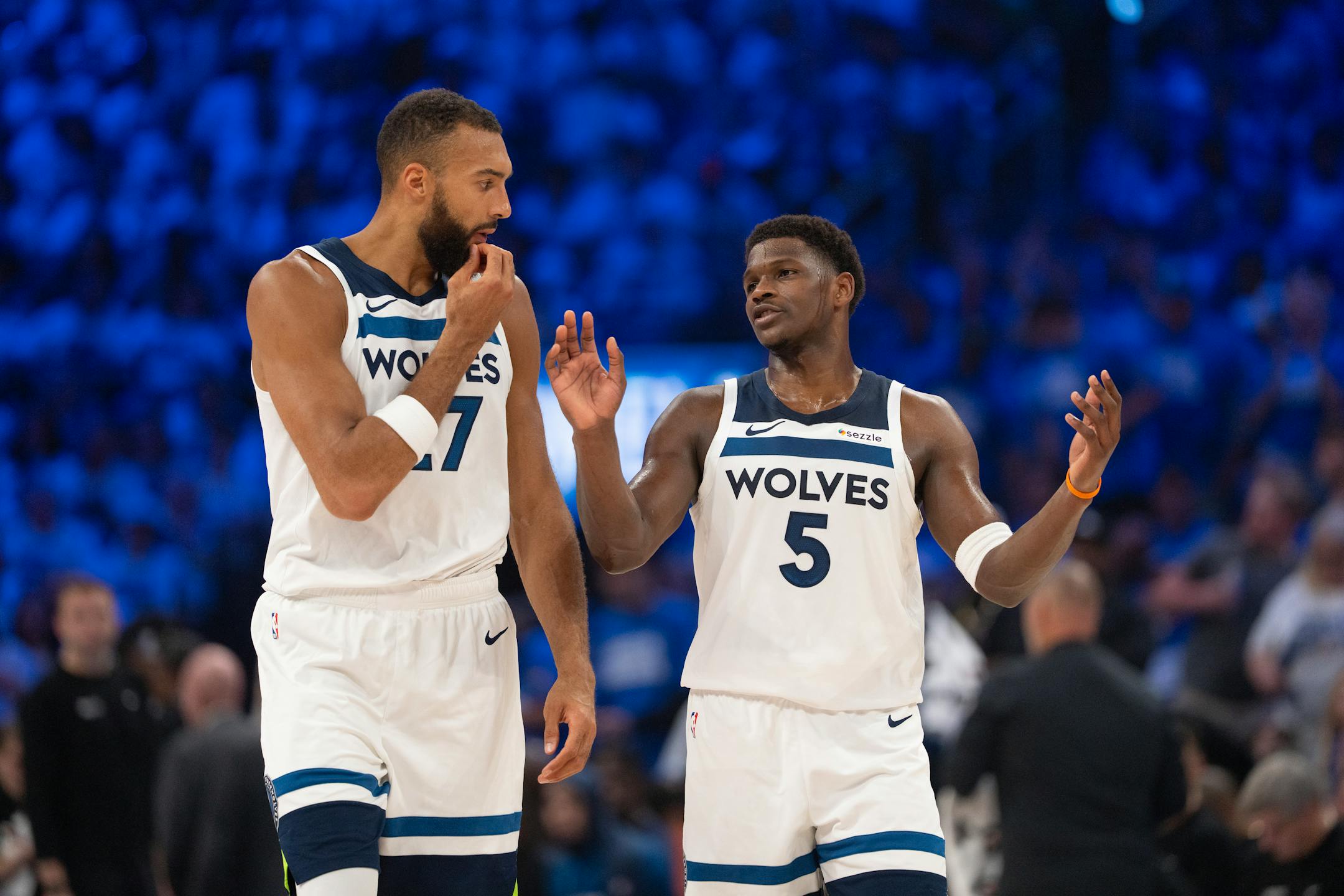
- Anthony Edwards: Let’s deal with the biggest one first. Edwards has been named second-team All-NBA each of the past two seasons. He made a leap in efficiency last season thanks in large part to increasing his 3-point volume and accuracy (39.5% on the season). Ant is still just 24, even though he’s entering his sixth NBA season. It feels like he has another gear to reach, but it also seems unfair to just expect it. Verdict: He is most likely to continue to progress, but the Wolves will probably require that to be a top-four seed.
- Jaden McDaniels: He had a breakout in the second half, including averages of 18.5 points and 8.4 rebounds in 13 February games while maintaining his elite defensive level. He just turned 25, but it’s also possible that his second half last year put him pretty close to his ceiling. Verdict: It’s possible he progresses and unlikely he regresses, but it’s probably most likely that he stays about the same as last year.
- Mike Conley Jr.: He, too, just had a birthday. Conley is now 38, and coaxing another decent season from him is important. He finished the season much stronger than he started it a year ago. Verdict: The Wolves desperately need Conley to be the effective and calming player he has been during his time here. He’s about as likely to regress, though, and the Wolves’ season might hinge on the answer.
- Rudy Gobert: He wasn’t as dominant last year as he was two years ago, being named to the defensive second team a season after winning Defensive Player of the Year. But he was still a very effective player, and the Wolves need at least last year’s version of Gobert to remain a top-10 defense. Verdict: This is the potential regression I worry about the most given Gobert’s age (33) and decline in rebound rate last year.
- Julius Randle: This is an easy one. Randle is a classic veteran whose game is well-defined and shouldn’t decline too much with age (he will turn 31 soon). Verdict: Expect Randle to be about the same as he was last year, which by the end of the season was a very valuable player.
- Naz Reid: On the podcast, Hine thought Reid was a progression candidate relative to last season because his contract situation is now in the rearview mirror. Verdict: To me, Reid is more in the “stay the same” category because it’s hard to imagine him getting a lot more minutes behind Randle and Gobert. But staying the same means being one of the top sixth men in the NBA.
- Donte DiVincenzo: He had a solid first year for the Wolves, shooting 39.7% from deep while providing defense and ballhandling. Verdict: I wouldn’t expect more from him, but I wouldn’t expect less. His role becomes more critical, though, with Nickeil Alexander-Walker no longer on the team.
- Terrence Shannon Jr.: He’s the clearest candidate for significant progression on the whole roster. Shannon flashed well in limited playing time last year and should start the year with regular minutes in the rotation. Verdict: I would be shocked if he doesn’t progress. If he shows a high ceiling, it would be huge for the Wolves and take some scoring pressure off Edwards.
- Rob Dillingham: The biggest wild card on the roster. I don’t know if he’s ready yet as a 20-year-old point guard in his second year, but the Wolves sure need him to be ready to take some minutes and give them another creative playmaker on the floor. Verdict: A progression seems most likely, but the degree to which it happens is up in the air. Any regression or even stagnation, particularly coupled with a Conley regression, would spell doom.
- Jaylen Clark: He shot 43.1% on a limited 3-point volume last season. That number figures to go down this year, but his identity as a defensive stopper who can play a major role against certain opponents is a big deal. Verdict: His role figures to be limited, so it’s hard to see a major progression. But he is a valuable depth player who should get opportunities to establish himself even more.


