
Minnesota reports 13 more measles cases, raising 2025 total to 18

This year’s total is the fifth-highest in at least 15 years in the state, where the measles vaccination rate is weakening. None of the people most recently infected were vaccinated.

The Minnesota Star Tribune
October 1, 2025 at 10:21PM
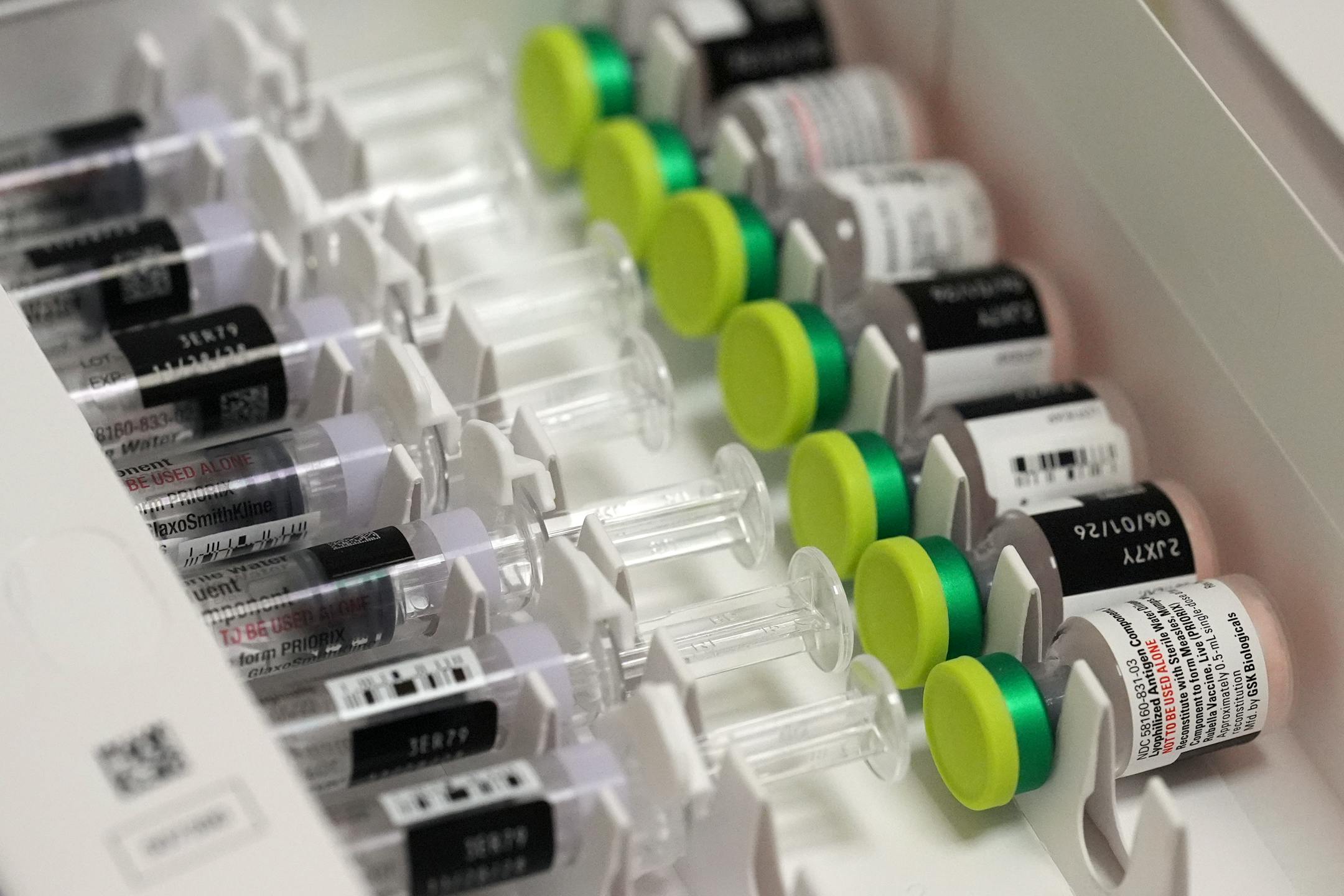
Doses of the measles-mumps-rubella vaccine (MMR) are shown last month at a CVS Pharmacy in Miami. (Rebecca Blackwell/The Associated Press)

Thirteen measles cases have been identified over the past week in Minnesota, including a cluster of 10 cases in Dakota County and three separate cases among children exposed to the infectious disease during international travels.

The clusters raise the state’s measles case count to 18 for 2025, the fifth-highest total in at least 15 years, according to the Minnesota Department of Health (MDH). None of the infected people in the latest clusters were vaccinated.

“Measles is one of the most infectious diseases on the planet. It spreads easily, and it finds those who are not vaccinated,” said Myra Kunas, an assistant commissioner for MDH’s Health Protection Bureau.

The infections occurred amid a continued decline in recommended vaccinations among Minnesota children before they enter kindergarten — a decline that was underway before President Donald Trump appointed Robert F. Kennedy Jr. as secretary of Health and Human Services.

Kennedy is publicly skeptical of vaccine safety and has expressed concerns, contradicting considerable scientific research, that the measles-mumps-rubella (MMR) combination vaccine increases risks of autism.

Measles infections circulating among children in one Dakota County family were passed along by another individual who had symptoms but was never tested, according to MDH. That individual then passed the measles to related children.

The children in that cluster tested positive last week, and no new cases have been identified since that time, said Jayne Griffith, a senior MDH epidemiologist. That’s raising hopes the outbreak in that Dakota County group has been contained.

However, Griffith said it’s possible that the three children infected during international travel have spread measles to others in Minnesota. The three newly identified cases have no apparent links, but state health investigators are still trying to determine whether their infections came from a common source.

“They did not travel together in a group or tour or anything like that,” she said.

Griffith encouraged people to seek testing if they develop fevers and other measleslike symptoms after exposure to people who have the disease, or if they develop the infection’s characteristic rash.

Unvaccinated people exposed to measles are generally asked to stay home from work and public indoor places for 21 days to prevent further spread of the infection. The measles virus is one of the most infectious agents on the planet, capable of lingering in the air and spreading to others for two hours after sick people have left the area.

A two-dose vaccine is 97% effective at preventing measles, but the infectious disease is making a comeback in the United States as parents decline the shots for their children. The 1,500 U.S. cases this year represent the highest total since 1992.

Minnesota had one of the best measles vaccination rates in the nation a decade ago, when 94% of children had received the shots in time for kindergarten. However, the state had the sixth-worst rate, 87%, at the start of the 2022-23 school year.

Three children in the recent Minnesota clusters were hospitalized, Griffith said.

The reporting of 13 cases and unrelated clusters at once is unusual and likely a random occurrence for Minnesota, she said, but it also is a “harbinger” given the increasingly unvaccinated and vulnerable population.

“There is a lot of measles out there,” she said.

about the writer

about the writer

Jeremy Olson

Reporter

Jeremy Olson is a Pulitzer Prize-winning reporter covering health care for the Star Tribune. Trained in investigative and computer-assisted reporting, Olson has covered politics, social services, and family issues.

See Moreicon

More from Health Care

See More
card image
Leila Navidi/The Minnesota Star Tribune

Following concerns that Medtronic was overspending on the high-tech system and not developing it fast enough, FDA clearance is a major victory for the Minnesota-run medtech company.

Nancy Ingham gives newborn Sophia Rash a hepatitis B shot several hours after she was born, Jan. 17, 2006.
card image