
State budget forecast projects $2.5 billion short-term surplus, looming deficit

The forecast provided leaders of both parties a starting place for their work next session — and an opportunity to attack one another.

The Minnesota Star Tribune
December 4, 2025 at 10:34PM
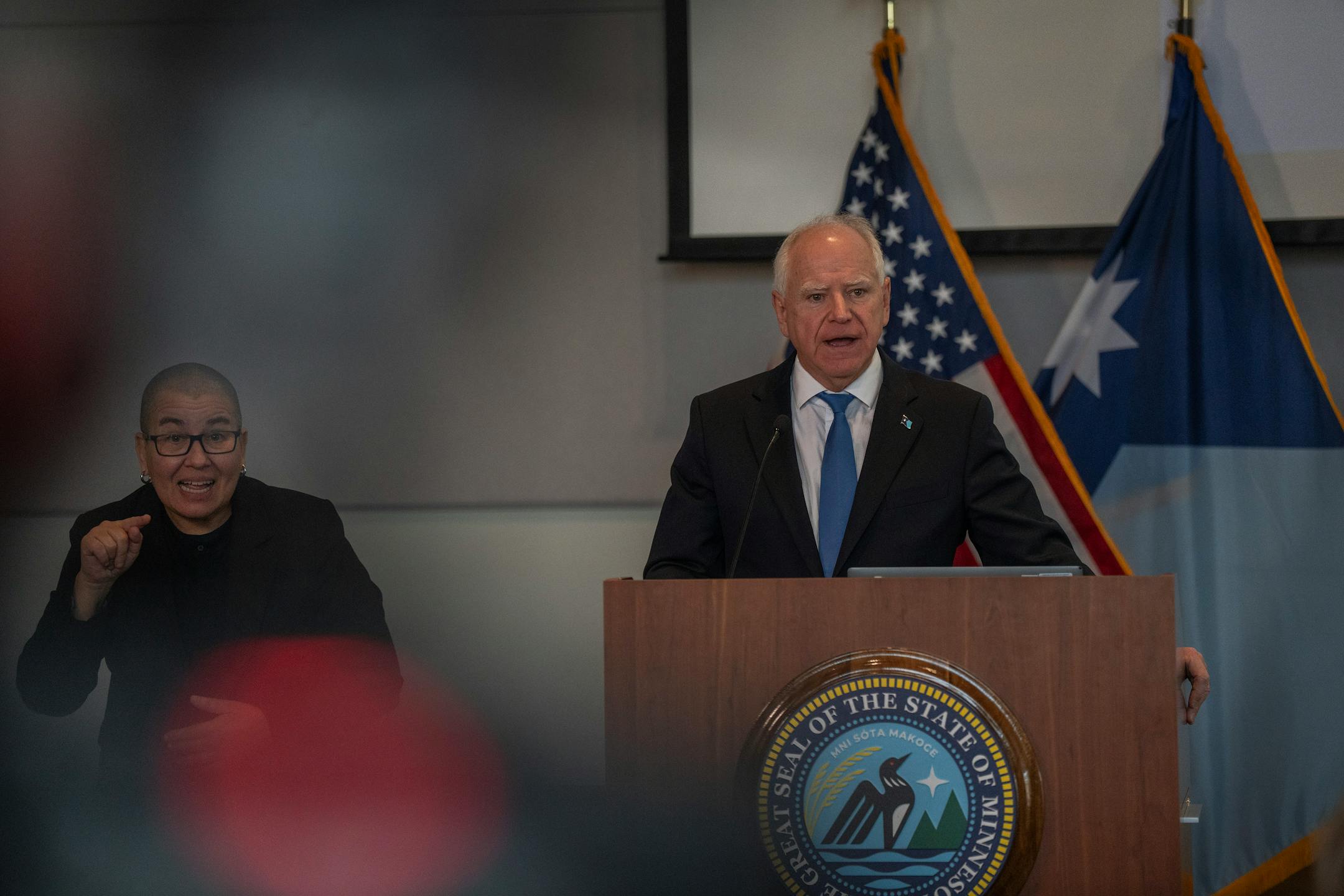
Minnesota Gov. Tim Walz speaks at the Stassen Building in St. Paul on Thursday about the state's budget and economic forecast. (Jerry Holt/The Minnesota Star Tribune)

Minnesota lawmakers will return to the Capitol in February with a near-term surplus of nearly $2.5 billion, but the latest economic forecast released Thursday sparked more debate about who’s to blame for a looming deficit in the next state budget.

The nearly $3 billion shortfall in the 2028-2029 budget period is smaller than what officials had predicted in March, when the deficit was projected to hit $6 billion. But it’s larger than lawmakers had hoped it would be after working together last session to reduce spending.

Budget officials cited slowing economic growth and increased spending projections — particularly in health and human services programs — for adding to the deficit.

“There will certainly be difficult decisions ahead as policymakers assess their priorities,” Minnesota Management and Budget Commissioner Erin Campbell told reporters.

Minnesota’s Legislature is narrowly divided between Democrats and Republicans, and the forecast provided leaders of both parties a starting place for their work next session — and an opportunity to attack one another for the financial hole that still must be filled as the economy shows signs of slowing down.

Gov. Tim Walz and Democrats blamed President Donald Trump’s tariffs and policy changes made through his tax cut and spending package that Congress approved last summer — including significant cuts to federal health care funding. Federal funds make up about a third of the state budget.

“The chaos is going to continue,” he told reporters. “We need to budget to protect Minnesotans as we have, and, as I said, we’re sitting in a stronger place because we’ve done that.”

But Minnesota Republicans blamed the DFL, saying recent tax increases drove the short-term surplus. They’ve previously lambasted DFLers for spending much of a $17.6 billion surplus in 2023 when they controlled the governor’s office and both chambers of the Legislature.

“What we are actually seeing is the negative effects from those massive changes, overregulation and overspending from one-party Democrat control. ... The projected deficit, as we’ve seen today, is nearly three times worse than what we knew and what we expected at the end of session,” said House Speaker Lisa Demuth, R-Cold Spring.

Walz said he will recommend more spending cuts as part of a new budget proposal he’ll put forward before the Legislature meets again. Demuth and other Republicans made clear they would push for cuts rather than new revenue to close the gap.

Any efforts to make adjustments to the budget could be politically fraught. The Legislature only agreed to the last budget after weeks of closed-door negotiations and a one-day special session in June.

The 2026 election campaign will also loom over any budget negotiations, as Walz and several Republican legislators, including Demuth, are running for governor. Republicans have worked hard in recent months to pin the state’s ongoing fraud crises on Walz, and Demuth continued the attack on Thursday, alleging it was contributing to the budget deficit.

“We’ve seen scandal after scandal after scandal of fraud in our social service programs on the current administration’s watch,” Demuth said.

State officials are trying to get a handle on the defrauding of Medicaid services for disabled residents, though the full scope of the fraud is not yet known. Nine people have been charged in federal court for allegedly defrauding Medicaid, and the state has imposed an outside review process and moved to shut down one program beset with fraud allegations.

Campbell said fraud was not behind the rising costs in health care, which she attributed to higher enrollments and other increased expenses in public health care programs for low-income residents.

Democrats, meanwhile, said they are working to tamp down fraud and countered that Trump and congressional Republicans’ cuts to Medicaid funding, which flows through states, were a bigger contributor to the state deficit.

“For the last two budget forecasts, Democrats have warned Minnesotans about what could happen to our state budget and our economy as a result of Donald Trump,” said House DFL caucus leader Zack Stephenson of Coon Rapids. “And now, we’re seeing the consequences: higher prices, higher health care costs, more layoffs, and more giveaways going to billionaires and big corporations at the expense of the rest of us.”

Senate Majority Leader Erin Murphy said federal health care cuts mean state legislators will have to re-evaluate state-sponsored health care programs that also rely on federal support.

“We’re going to have to look very deeply at what we deliver and how we do it to make sure that we can commit and keep our promises to Minnesotans that they have access to health care where they live — in a way that we can afford," she said.

about the writers

about the writers

Nathaniel Minor

Reporter

Nathaniel Minor is a reporter for the Minnesota Star Tribune.

See Moreicon

Allison Kite

Reporter

Allison Kite is a reporter for the Minnesota Star Tribune.

See Moreicon

More from Politics

See More
card image
Renée Jones Schneider/The Minnesota Star Tribune

The two-year pause, intended to ward off fraud, will leave programs in limbo and clients’ needs unmet, providers say.

card image
card image